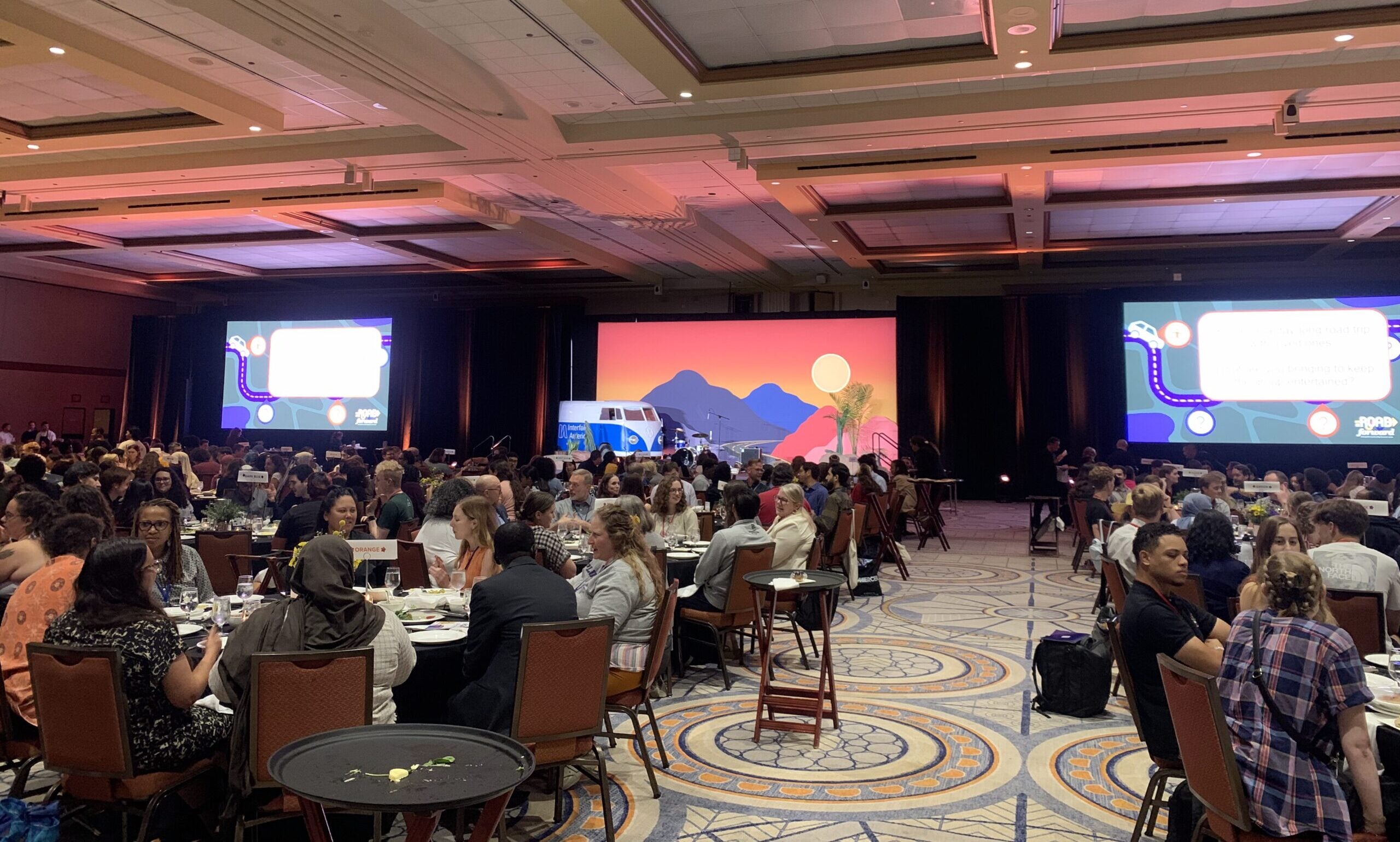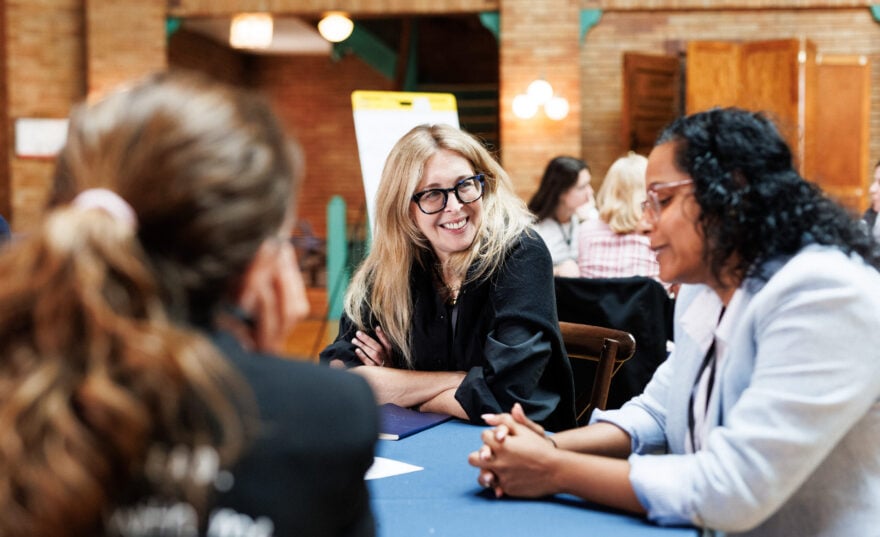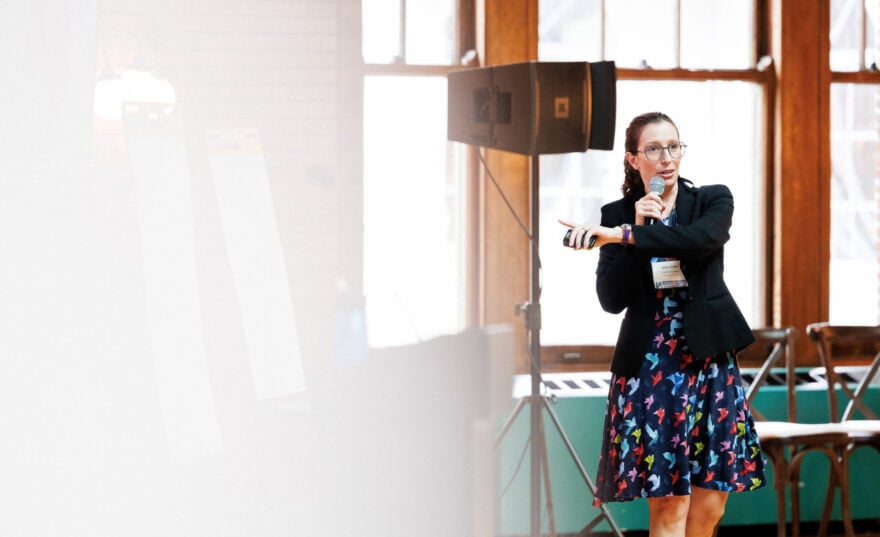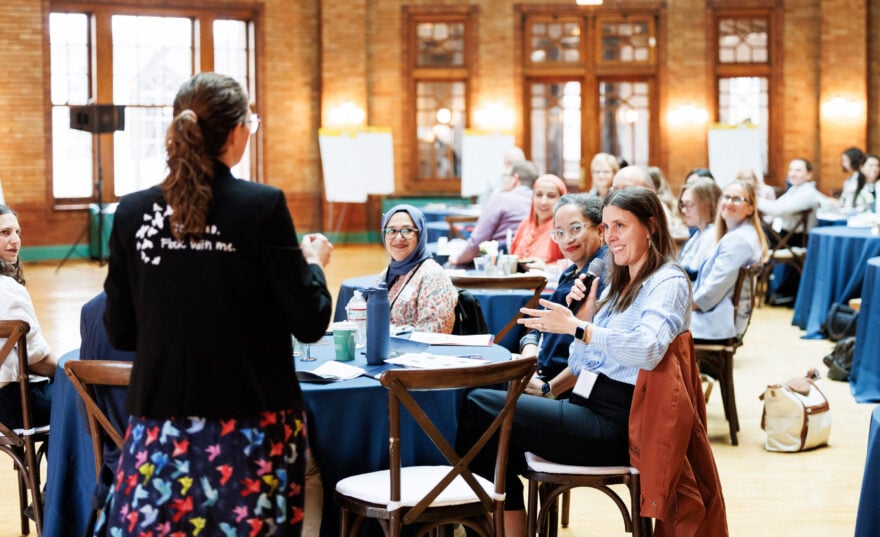

I walked into a room of 150 corporate inclusion and belonging leaders representing organizations based across the country and world. I, an interfaith leader and scholar of religion, felt energized and ready to learn, but somewhat out of place as I took my seat.
Suddenly, the chords of a keyboard piano rang through the room, a familiar tune I’ve heard in predominantly Black Baptist church services I’ve visited at home in New York City. A man took the stage and started singing: “Ain’t no stopping us now! We’re on the move.”
Before I knew it, we were all on our feet, dancing, singing, clapping, and smiling ear to ear. Some people’s hands lifted in praise, and some hollered affirmations to the man on stage who stood before a backdrop that read in large letters: “RELENTLESS. UNSHAKEABLE. DEFINING.” I was at church!
In reality, I was at the BRIDGE26 convening in Newport Beach, California, an invitation-only gathering hosted by BRIDGE, an organization “turning inclusion into growth by connecting workplace culture with marketplace impact.” In its fourth year this year, the convening brought together corporate senior executives and departmental heads of inclusion, marketing, and HR to strategize and build a collective vision for advancing the work of inclusion and belonging in a political and economic environment in which such initiatives are being systematically dismantled.
Over the course of two days, I listened intently to how business leaders are navigating the chilling effect permeating across the private sector after the president’s 2025 executive orders curtailing DEI initiatives among federal agencies and contractors. Here’s what I learned:
Editor’s note: Names and organizations have been omitted to respect the closed-door nature of the BRIDGE26 convening.
Corporations are keeping — and even growing — their inclusion and belonging teams.
In a time when tense political realities and the demonization of DEI in the public sphere has resulted in several corporations publicly curtailing their inclusion initiatives, experts in the room named that many more are maintaining their commitments to workplace belonging.
In a session titled, “The CDO Role Reimagined,” a professor of marketing at a top 30 business school cited a 2025 Seramount study reporting that 85% of organizations have either maintained or grown their DEI staff. According to the same study, 71% of CDOs (or Chief Diversity Officers) said they report directly to their organization’s C-suite, marking a continued commitment to this work from corporate executives.
Inclusion is a trust-building project.
Consumers are holding businesses accountable to the commitments they made in 2020 to advance racial equity, using their dollars as an expression of trust and ethical alignment.
In a fireside chat kicking off the convening, one corporate DEI leader representing a national retailer shared, “When we lean into inclusion, that’s about trust-building.” She added, “Our silence? That broke a lot of trust,” referring to her company’s recent DEI rollback and the resulting reputational damage that her team is now endeavoring to repair. She currently leads a bigger inclusion and belonging team with a larger budget than her department had been previously granted. Another leader representing a national media company named it plainly: “Companies didn’t pause their [DEI] strategy, they sacrificed a relationship.”
Establish metrics to track progress toward your goals and stay agile as needs evolve.
Among a series of recommendations to help brands “win with inclusion,” a business scholar and a marketing executive parsed out the important difference between “taking stands and taking steps.” Organizations must walk the talk and demonstrate their progress toward inclusion with metrics (such as product-market fit and employee retention) that CEOs, CFOs, and investors can track over time.
Importantly, these metrics may evolve as employee and consumer needs change. A representative from a multinational tech company invited participants to ask themselves, “Are the things we’re doing having the impact we want?” Another leader representing a midwestern healthcare system urged DEI leaders to be “stewards, not owners,” adding, “We reimagine this [CDO] role every 18 months. It’s always changing and evolving.
The legal risk of advancing inclusion is currently low.
Perhaps the most anticipated discussion of the weekend occurred on the convening’s final day: assessing the legal landscape of DEI. The session’s primary speaker — a legal scholar, workplace advocate, and former federal government leader — warned corporations not to engage in anticipatory rollbacks of DEI, despite a growing number of lawsuits filed by the U.S. Equal Employment Opportunity Commission (EEOC) alleging discrimination based on the presence of DEI initiatives. The EEOC, she said, only has “interpretive authority over the law,” and the current presidential administration is “overreading” that law as they take on “shock and awe” cases targeting LGBTQ+ rights, in particular.
While naming that the legal risk of advancing inclusion remains low, the session’s speaker invited organizations to audit their DEI initiatives for existing legal risks, not new ones. Programs open only to those of specific backgrounds, for instance, are likelier to be read as “high-risk” and should be amended to include all stakeholders regardless of background.
BRIDGE26 set itself apart among the plethora of convenings and conferences I’ve attended over the past year for its honest and supportive approach to the difficult task of advancing authentic DEI efforts in the present political moment. Participants brought profound, existential questions and concerns to the space that were met with compassion, clarity, and conviction in an effort to empower corporate leaders with the precise tools and knowledge they need to preserve the work and long legacy of workplace inclusion and remain relentless, unshakeable, and defining in the fight ahead.
Harmeet Kaur Kamboj
Harmeet Kaur Kamboj is Assistant Director of Workplace Strategy at Interfaith America.