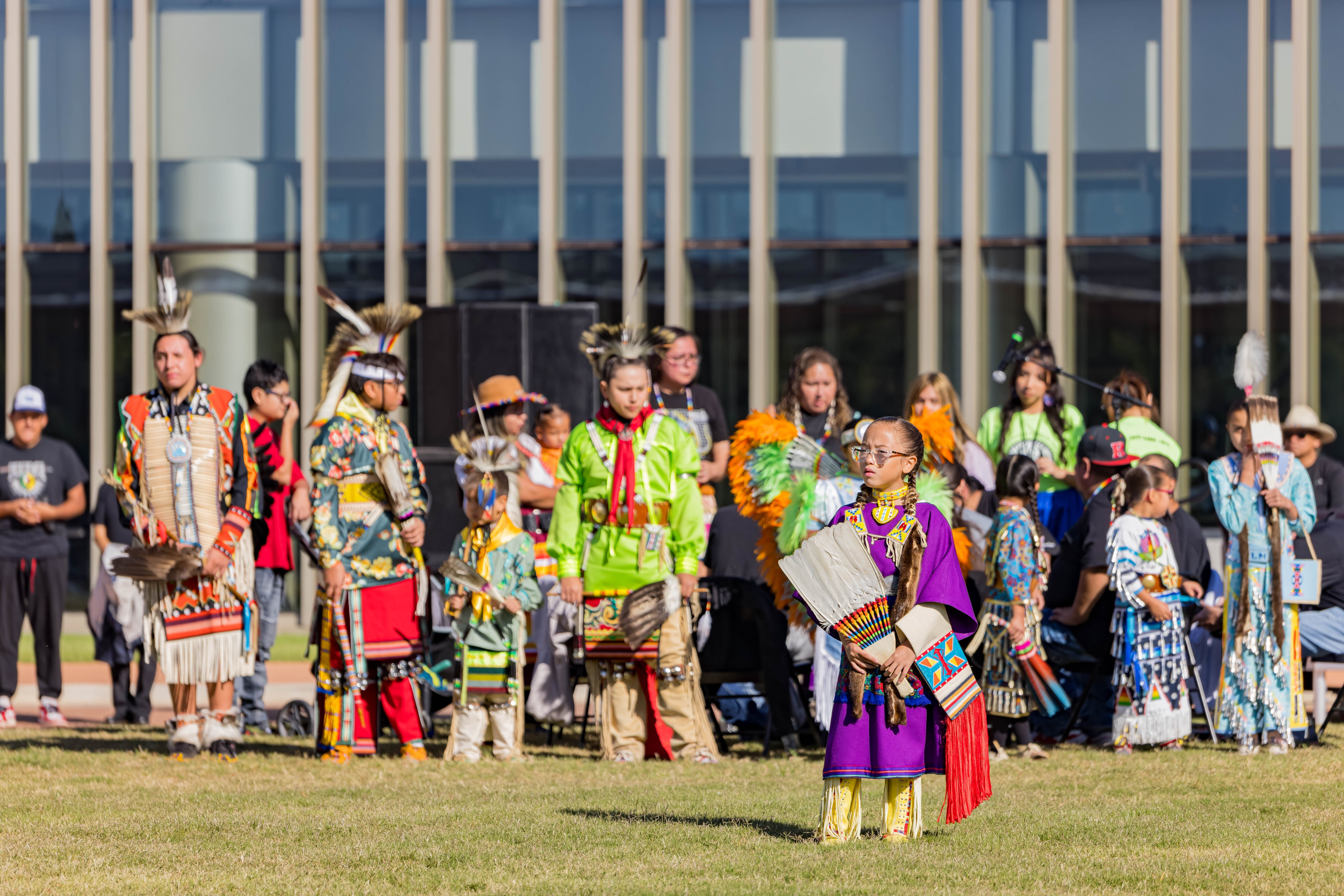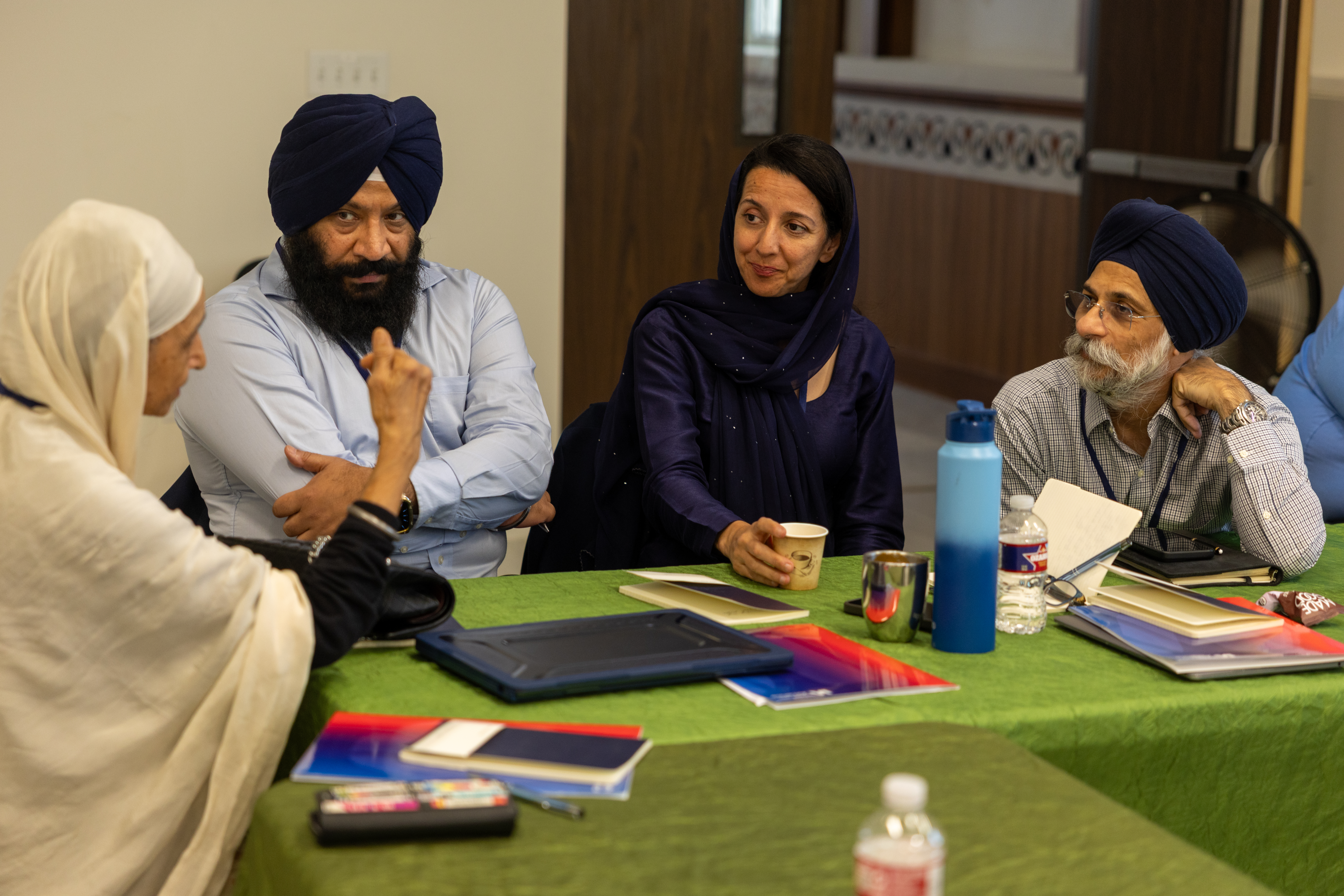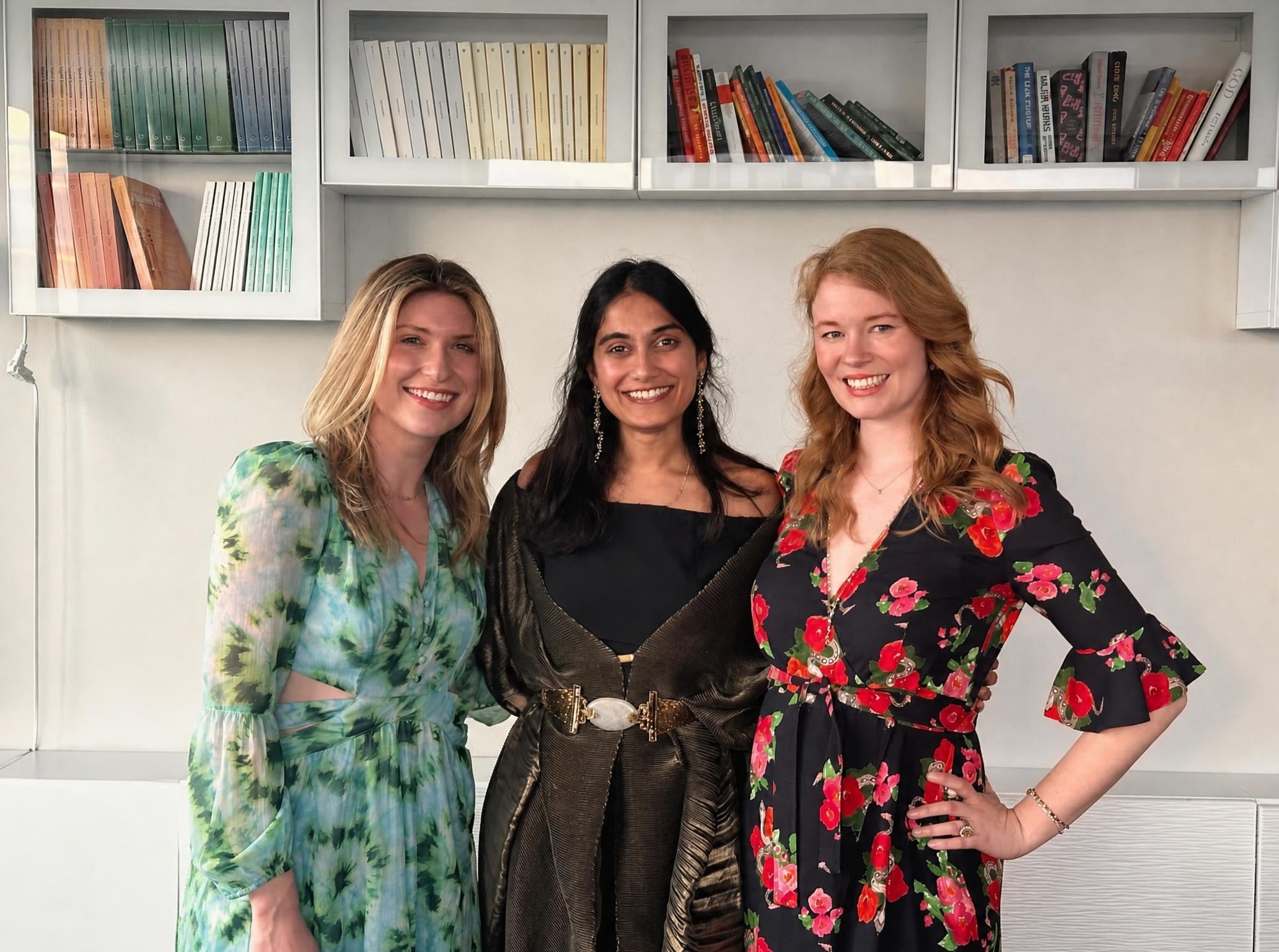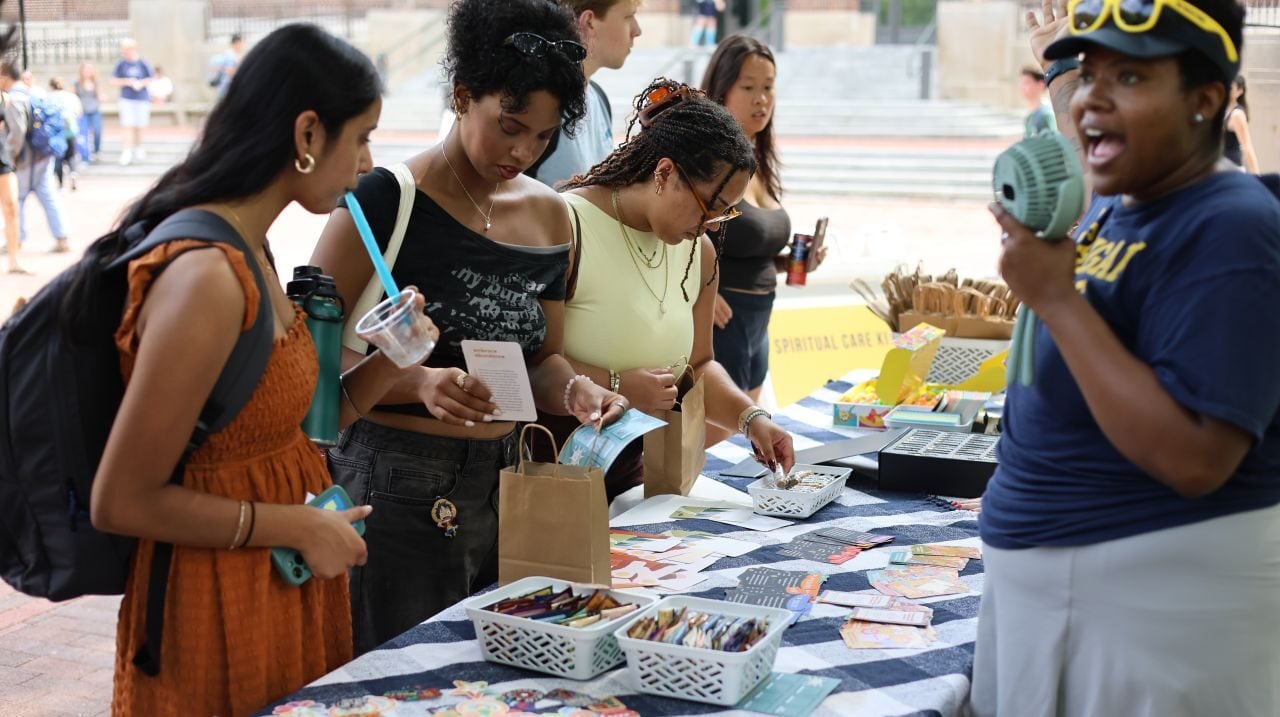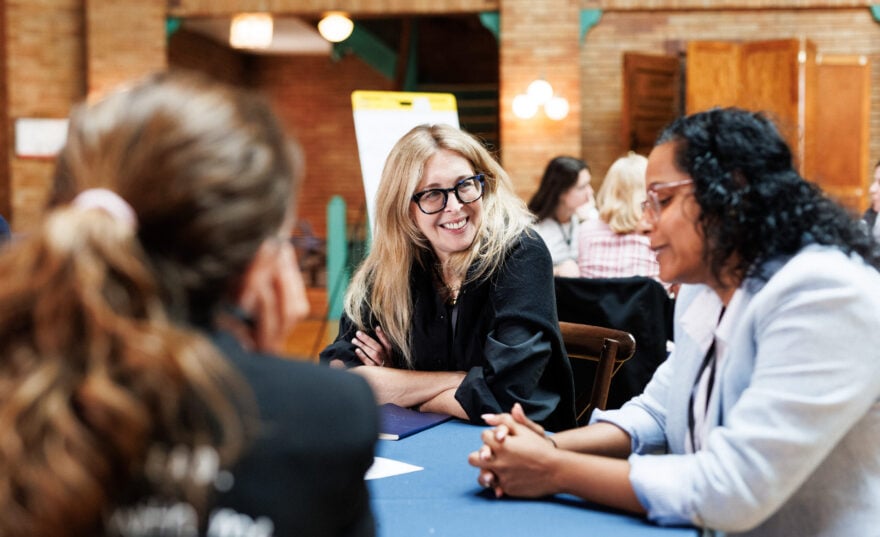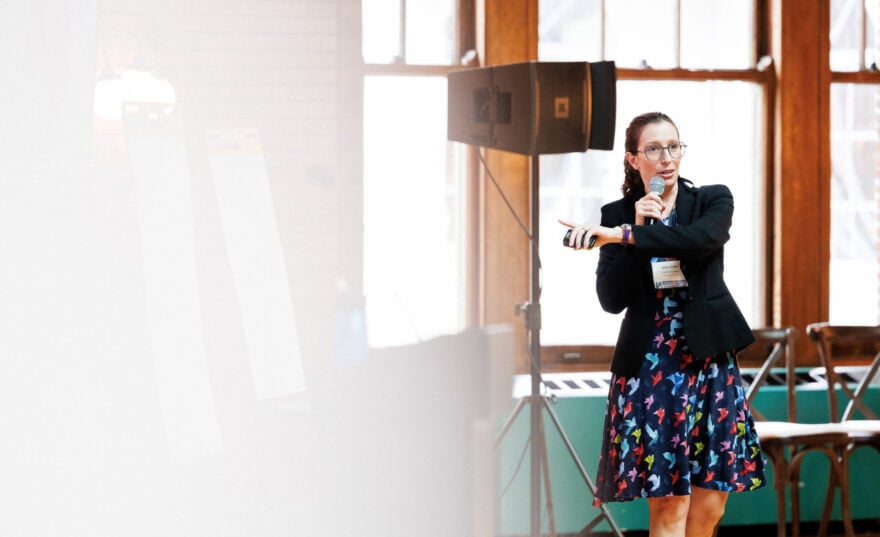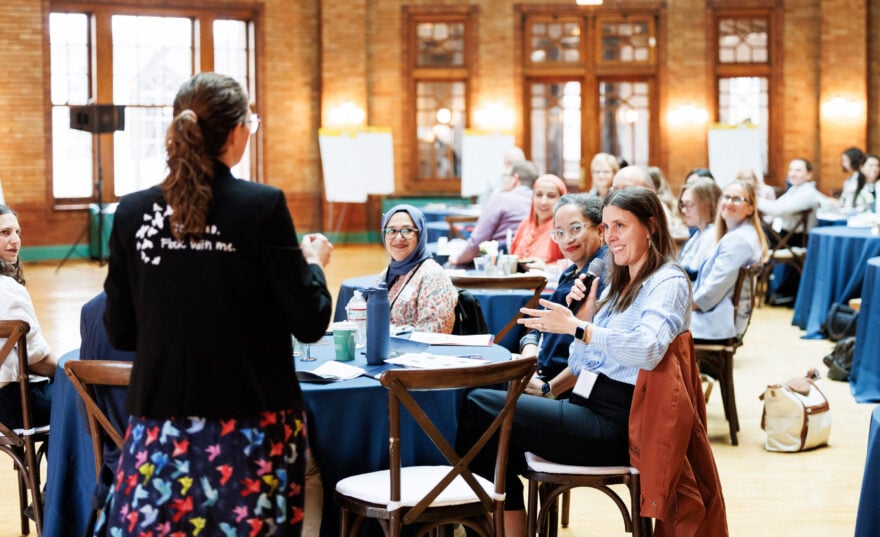
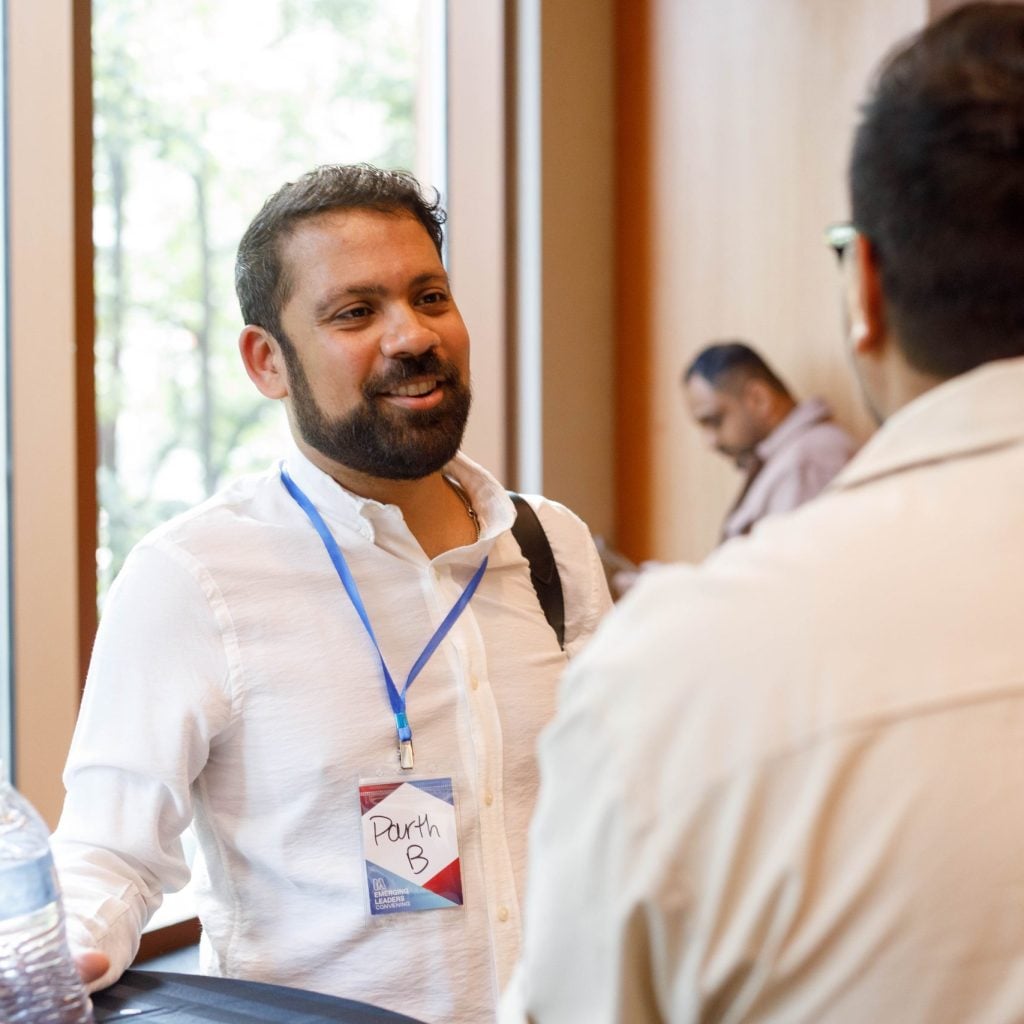
At the 2025 Interfaith Leadership Summit, IA network members joined StoryCorps One Small Step for 30-minute, one-on-one conversations across lines of difference. These kinds conversations happen every day among students, co-workers, and family members in America, and the Summit is a space where participants can learn to seek them out with the purpose of respecting diverse identities, fostering meaningful relationships, and cooperating for the common good.
Matthew Young and Parth Bhansali, who each hold advanced degrees in business administration, discuss their experiences at the Summit, the role family plays in values and tradition, how faith shapes their daily lives, and why bridgebuilding is essential — especially in the workplace. Listen to the full conversation.
Matthew Young and Parth Bhansali agree that faith and spiritual identity are not things you can leave at the office door.
“It feels really good to bring that part of yourself out in a professional way,” said Young, who is a member of the Church of Jesus Christ of Latter-day Saints.
Young holds an MBA from the BYU Marriott Business School and is the co-founder of the Faith & Belief at Work National MBA Case Competition — a yearly event where teams of business students compete, presenting their ideas and strategies for building religiously pluralistic workplaces that generate positive business outcomes.
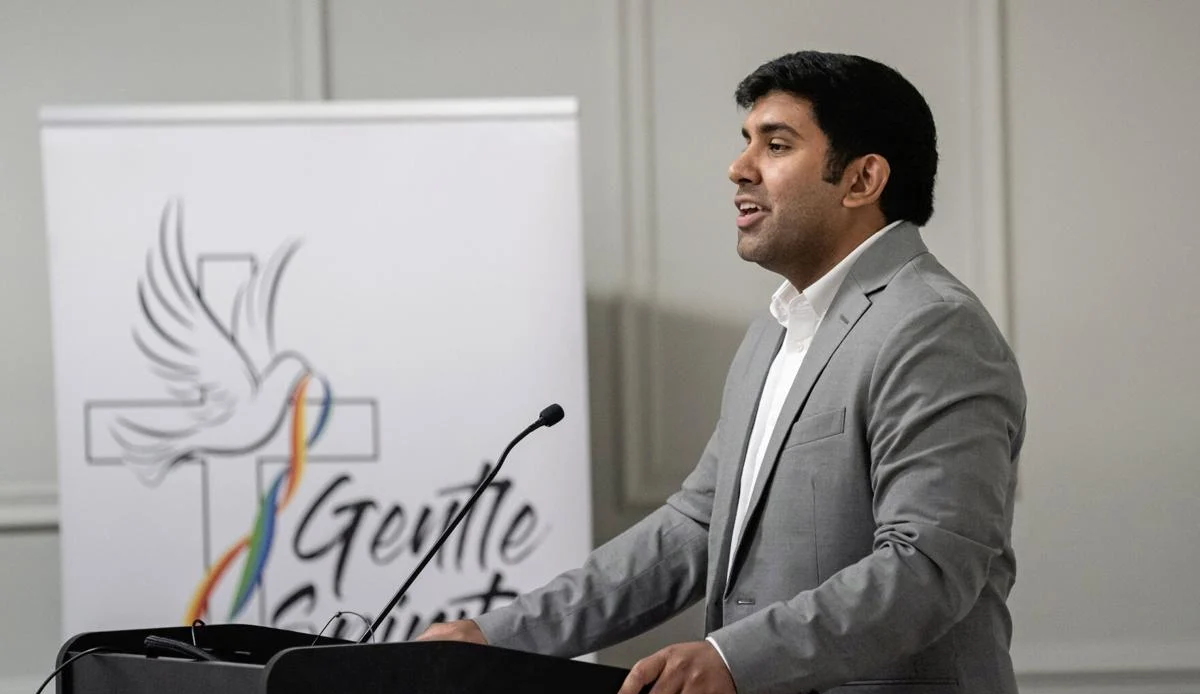
At the 2025 Interfaith Leadership Summit, Young spoke on a “Navigating Faith in the Workplace” panel alongside Bhansali, an EMBA graduate of Marquette University, who has been involved with IA programming for more than a decade — first as a student, now as an Emerging Leader, storyteller, and panelist.

Having grown up with a “really interesting Midwesterner background,” with time spent living in Wisconsin, Illinois, and India, Bhansali reflects on his own identity, challenging the adage that it’s impolite to discuss religion in public or social settings:
“It’s like this whole cultural clash which a lot of first-generation Americans go through, and talking about my faith is actually really important to me,” he said. In conversations at the Summit, he’s encountered other millennials and Gen-Z who grew up in a specific tradition but now identity more as spiritual.
“And I think I’m kind of that way. I’m also a Reiki Master, right? So it’s like Hinduism, plus Reiki, like, all this stuff.”
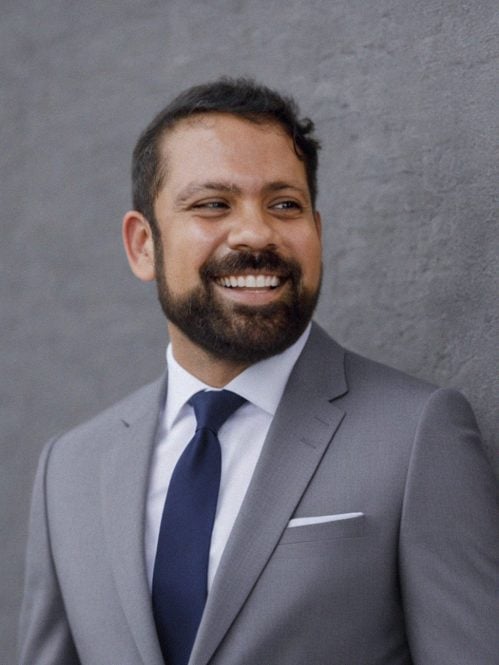
Despite their different backgrounds, as Bhansali and Young have gotten to know one another over the years, they’ve recognized how much they have in common, including how their families have shaped their understanding of their faith and spiritual lives.
For Bhansali, spiritual growth, development, and convictions as a practicing Hindu have been deepened by the people closest to him.
“A lot of it is just like learning yourself and learning from your family and your ancestors,” he said.
Young grew up watching his older siblings navigate their own faith journeys, and he credits his wife Elisa for fostering his interest in bridgebuilding at work, which ultimately led him to advocate for considering faith in conversations about inclusion at work.
“[She] really pushed me to dig deeper on understanding more about Black lives in America after the killing of George Floyd […] And because of that, I joined my company’s inaugural inclusion and diversity council.”
Young learned through experience on the council that “faith could be an avenue to a lot of inclusivity and a lot of understanding of people only because it is very core … faith as a belief system has a lot to give and offer and as a result, brings people together.”
Parth added that approaching diversity and inclusion through the lens of faith and belief has also been an introduction into meaningful conversations with people who do not subscribe to a specific faith tradition and a reminder to ensure religious and nonreligious identities alike are represented
The two have also found common ground in the way that faith and spirituality show up in their day-to-day lives: for Bhansali through daily prayer and as a basis for expressing gratitude and for Young as an avenue for hope and peace and in its application to his role as a father and spouse.
Both are grateful for the role that bridgebuilding work has played in introducing them to new people and perspectives.
“We’ve known each other for a couple years now, and without the faith work we do, we would have never met,” Bhansali said to Young. “But every time we talk, I just always learn from you, and we always have really fascinating conversations.”
Upcoming Events
- August 7, 2026 10:00 am