Excerpted from Chapter One of Eboo Patel’s 2018 book, Out of Many Faiths: Religious Diversity and the American Promise (Princeton University Press).
Of all the various forms of diversity that we speak of these days (race, gender, sexuality, ethnicity, class, and so on), religious diversity may be the one that the Founders came closest to getting right. These (generally) wealthy, (loosely) Christian, (presumably) straight, (most assuredly) white male slaveholders managed to create a constitutional system that protected freedom of religion, barred the federal government from establishing a single church, prevented religious tests for those running for political office, and penned more than a few poetic lines about building a religiously diverse democracy.
Here, for example, is George Washington responding to the Jewish leader Moses Seixas, who wrote the first president a letter asking about the fate of Jews in the new nation:
“All possess alike liberty of conscience and immunities of citizenship. It is now no more that toleration is spoken of, as if it was by the indulgence of one class of people that another enjoyed the exercise of their inherent natural rights. For happily the government of the United States, which gives to bigotry no sanction, to persecution no assistance, requires only that they who live under its protection, should demean themselves as good citizens.”
James Madison believed that allowing religious diversity to flourish was essential to establishing social peace. In the Federalist Papers, he stated, “The degree of security . . . will depend on the number of interests and sects.”
Benjamin Franklin appeared to take that counsel to heart when he decided to make a financial contribution to every one of the diverse religious communities building a house of worship in Philadelphia. Just in case there were groups that were not represented, Franklin raised money for a hall in Philadelphia that was, in his words, “expressly for the use of any preacher of any religious persuasion who might desire to say something,” and he explicitly stated that it would be open to Muslim preachers. The religious leaders of Philadelphia expressed their gratitude to Franklin in a variety of ways, including by fulfilling Franklin’s wish to celebrate July 4 “arm in arm” and also observing his funeral together.
The Founders intended for the ethic of religious pluralism they were nurturing at home to extend to international relations. President John Adams signed a treaty with Tripoli in 1791 that stated, “As the government of the United States of America is not in any sense founded on the Christian Religion,—as it has in itself no character of enmity against the laws, religion or tranquility of Mussulmen,— and as the said States never have entered into any war or act of hostility against any Mehomitan nation, it is declared by the parties that no pretext arising from religious opinions shall ever produce an interruption of the harmony existing between the countries.”
And they were not the first European settlers on the Eastern Seaboard to express such sentiments. Over a century earlier, a group of citizens in present-day Queens, concerned about the threats that Director General Peter Stuyvesant of what was then New Amsterdam (now New York) was leveling against Quakers, gathered to draft a statement of welcome that became known as the Flushing Remonstrance. They wrote, “The law of love, peace and liberty in the states extend[s] to Jews, Turks and Egyptians, as they are considered sonnes of Adam …. Our desire is not to offend one of his little ones, in whatsoever form, name or title here appears in, whether Presbyterian, Independent, Baptist or Quaker, but shall be glad to see anything of God in any of them, desiring to doe unto all men as we desire all men should doe unto us.”
And Roger Williams, banished from John Winthrop’s Massachusetts Bay Colony for disagreeing with the Puritan insistence on enforcing religious law with civil authority, had this to say about the prospect of a religiously diverse nation in 1644:
“And I aske whether or no such as may hold forth other Worships or Religions, (Jewes, Turkes, or Antichristians) may not be peaceable and quiet Subjects, loving and helpful neighbours, faire and just dealers, true and loyall to the civill government? It is cleare they may from all Reason and Experience in many flourishing Cities and Kingdomes of the World, and so offend not against the civill State and Peace; no incurre the punishment of the civill Sword.”
It is this long tradition that Barack Obama, the first Black president of the United States, recalled during his first inaugural address, standing on the steps of the U.S. Capitol, looking out toward the Lincoln Memorial:
“For we know that our patchwork heritage is a strength, not a weakness. We are a nation of Christians and Muslims, Jews and Hindus, and non-believers. We are shaped by every language and culture, drawn from every end of this Earth; and because we have tasted the bitter swill of civil war and segregation, and emerged from that dark chapter stronger and more united, we cannot help but believe that the old hatreds shall someday pass; that the lines of tribe shall soon dissolve; that as the world grows smaller, our common humanity shall reveal itself; and that America must play its role in ushering a new era of peace.”
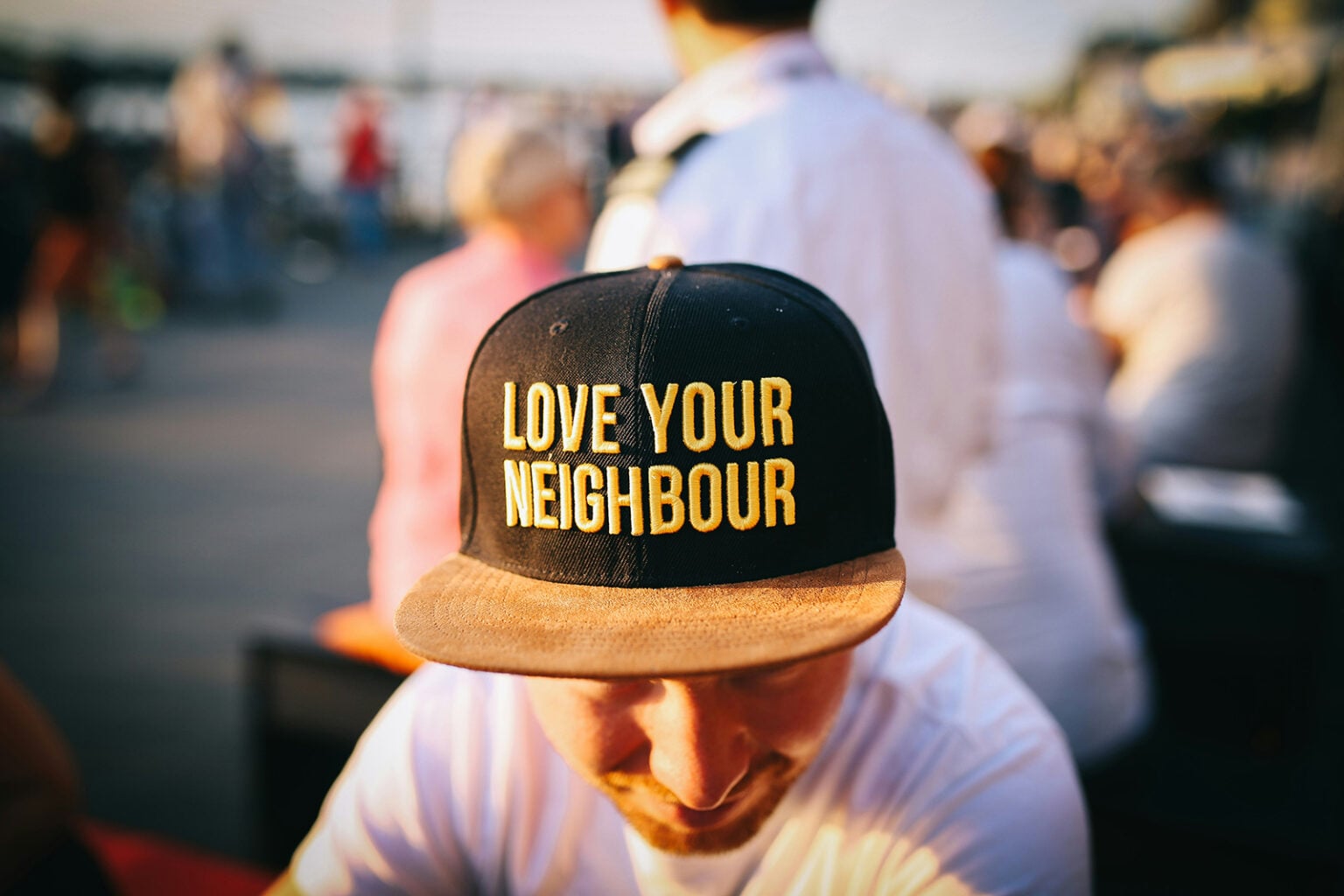
In many ways the United States has lived out this vision. We are the most religiously devout nation in the West, and the most religiously diverse country in the world, at a time of religious tension, conflict, and crisis. How do we affirm and extend the ethic that welcoming religiously diverse people, nurturing positive relations among them, and facilitating their contributions to the nation is part of the definition of America?