College campuses offer a special opportunity for pluralism to thrive. Many students are raised in particular environments, and it is during their college years that they first experience living and learning in a truly diverse community.
Amid the challenges of figuring out schedules, living with a roommate, and being away from home, students are often learning how to navigate differences in worldviews, beliefs, and identities. Co-curricular activities like clubs, sports teams, and community service opportunities offer students ways to share common spaces, learn to be leaders, and engage across difference.
Chaplains and other student-facing professionals involved in these activities carry the responsibility of helping students feel welcomed, included, and supported on campus. While it is important for educators to model pluralism, they are also continually learning and growing themselves. The students they serve continually shape their work, and it is through these daily interactions that educators come to better understand and practice pluralism in meaningful ways.
As the former University Chaplain and a former undergraduate student at Queens University of Charlotte, we experienced firsthand how co-curricular activities enriched the campus experience for the university staff running these programs and the students who get involved in in them. Although both of our paths to Queens could not have been more different, they prepared us to embrace pluralism in meaningful ways. One of us grew up in rural West Virginia with few opportunities to engage people from different backgrounds before becoming an Alliance of Baptist minister and University Chaplain where interfaith engagement had become central.
Through our work at the chaplain’s office, we did not just talk about respecting one another, we practiced it. We listened as each person shared their background, how they were raised, the challenges they had faced, and the ways their faith traditions had shaped their lives. Through these conversations, we moved beyond simple understanding to build a genuine relationship rooted in mutual respect, curiosity, and appreciation for one another’s experiences. Our connection did not stop with dialogue. Together, we put our shared values into action by serving our community.
During the winter months, we hosted “Room in the Inn,” a program that provides shelter and meals for unhoused neighbors in the chapel. We made sandwiches for local shelters and partnered on a variety of volunteer projects, demonstrating that cooperation is most meaningful when it turns shared values into tangible acts of care and service.

The most beautiful aspects of some of these [on-campus] programs is hearing and trying to understand our differences … in fact, when we do get to share our differences, it does challenge us personally in a positive way to think a little more deeply.
— Joey Haynes, in the storycorps conversation
Another experience that stood out for us was Presbyterian and Pluralism Week. We worked side by side to prepare for a week dedicated to celebrating faith, dialogue, and community. With collaborations across campus, we crafted and coordinated programs, welcomed participants, and ensured that students and community members from different religious and cultural backgrounds felt and knew that they belonged in the space. Watching people with different beliefs gather, learn from one another, and celebrate together reinforced what we had come to believe: pluralism is more than just sharing a campus; it is intentionally creating opportunities for genuine encounters.
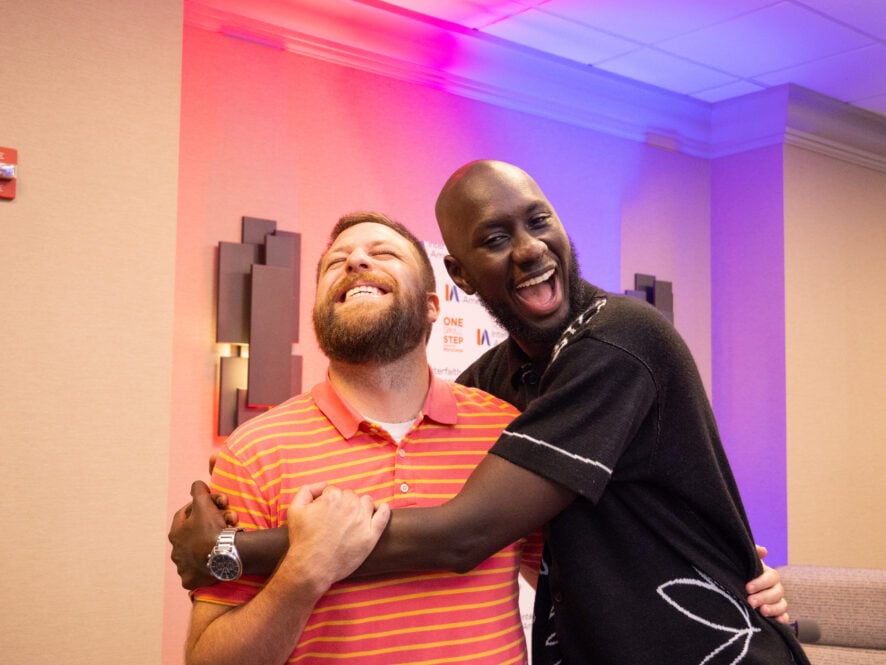
Looking back, both of us recognize how much we learned from one another. As a chaplain, one of us saw firsthand how relationships across difference can transform a campus community. As a student, the other experienced how being welcomed and valued can create the confidence to engage with others in meaningful ways.
These shared experiences showed us what is possible when we use our faith as a bridge rather than a barrier. We learned that pluralism is not simply an idea to discuss but a practice that transforms both individuals and communities.
If we are truly bridgebuilders, then we should be comfortable being in spaces that make us uncomfortable.
— Seedy Njie, in the storycorps conversation
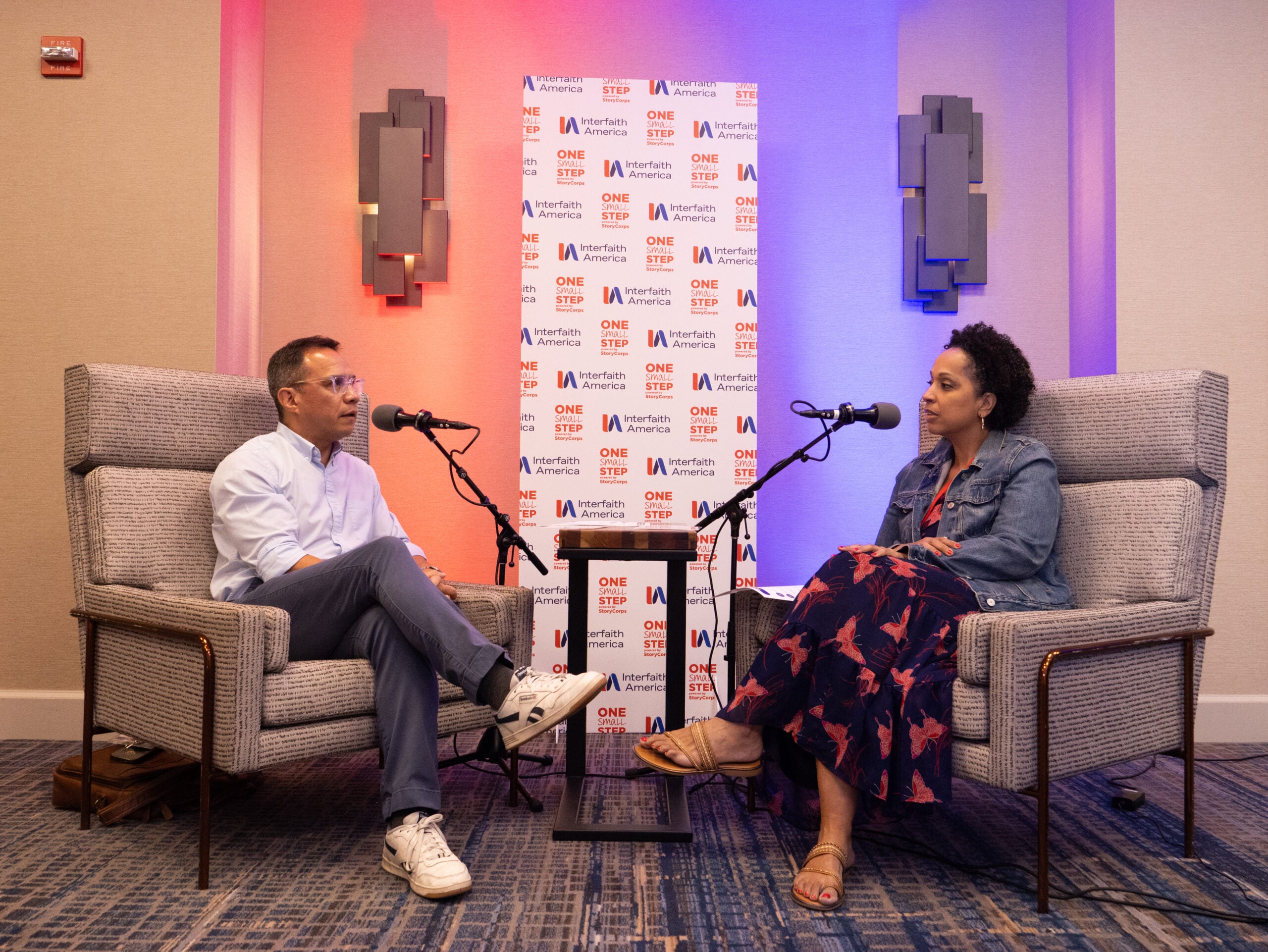
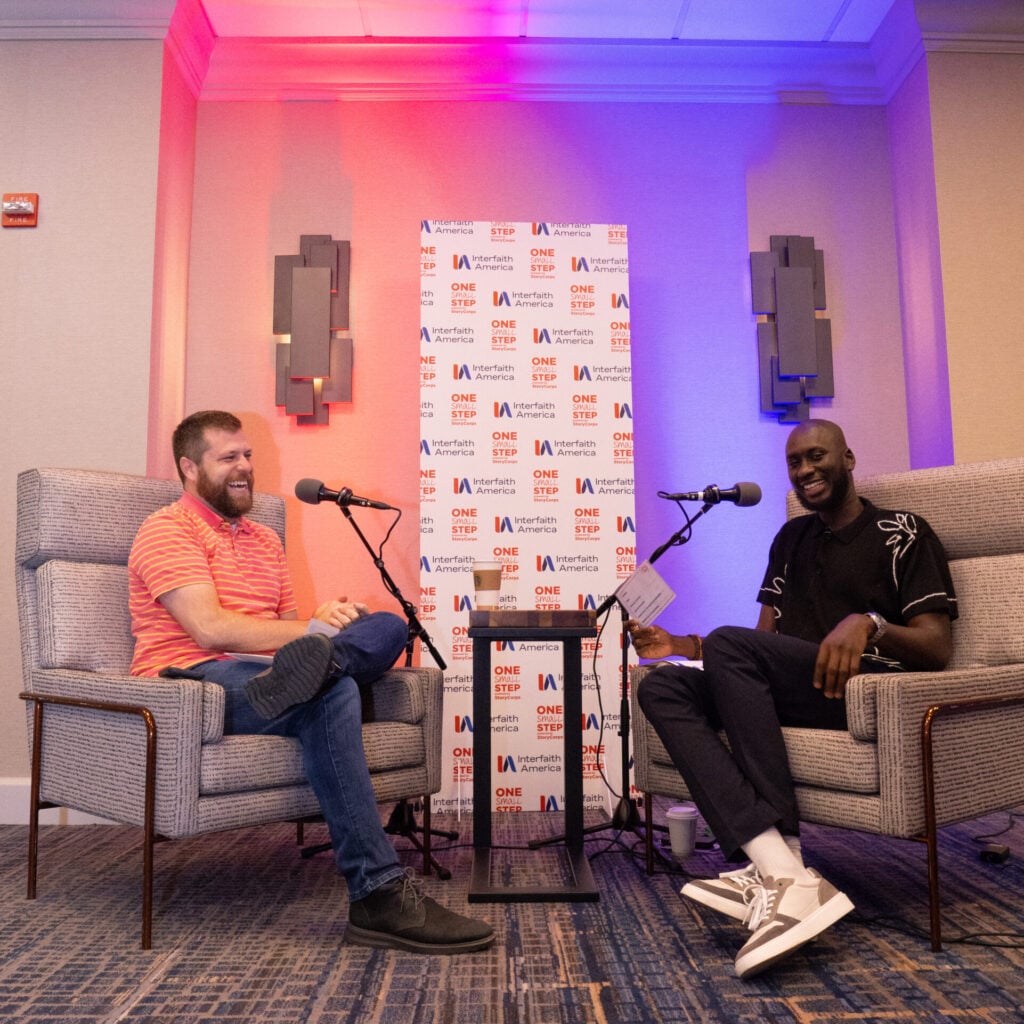
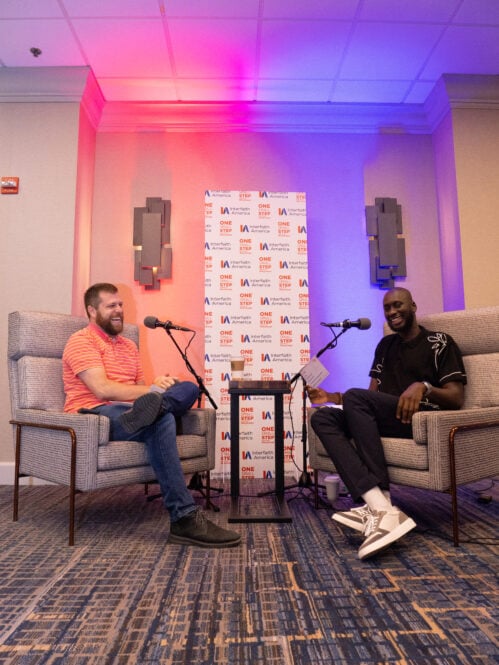
IA network members joined StoryCorps One Small Step for 30-minute, one-on-one conversations across lines of difference. These kinds of conversations happen every day among students, co-workers, and family members in America, and the Interfaith Leadership Summit is a space where participants can learn to seek them out with the purpose of respecting diverse identities, fostering meaningful relationships, and cooperating for the common good.
Listen to the recording for more of our conversation on our faith backgrounds, our time as colleagues at Queens University of Charlotte, and what bridgebuilding means to us.
Joey Haynes is the Assistant Director of the Interfaith Leadership Summit and former university chaplain at Queens University of Charlotte.
Seedy Njie is a program manager at Avant Pharmacy and Wellness, a fellow in the Abrahamic House in Washington D.C., and former graduate assistant at Queens University of Charlotte.