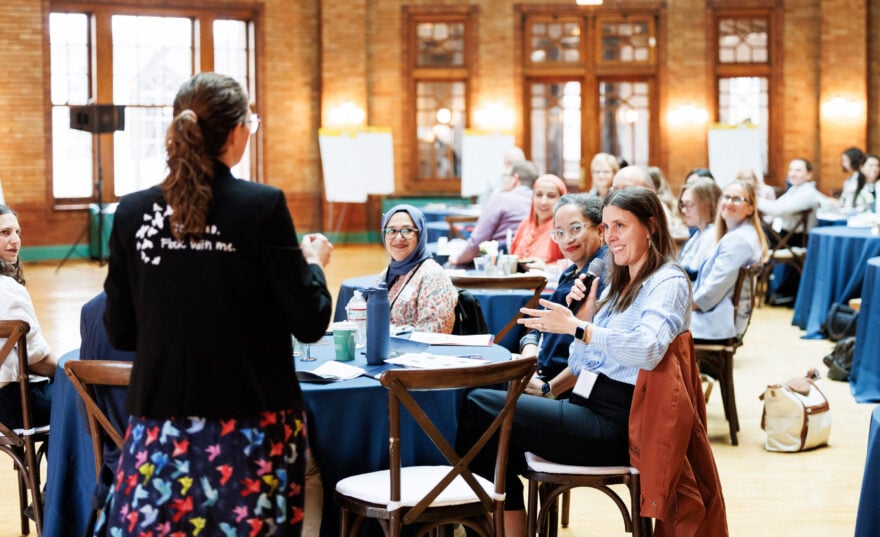
For Justin Vaughn, Ph.D., the most severe impacts of polarization in politics are not felt in Washington, D.C. — they are experienced on America’s campuses.
“I have students that have never lived in a non-polarized era — or even a non-extremely polarized era — and they don’t know how to talk to people different than them,” said Vaughn, Director of the Center for Applied Civic Leadership and Professor of Political Science at Coastal Carolina University in Conway, S.C. “We’ve really lost some of those skills that we know are necessary to get past this era when we’re not so ideologically separated.”
Higher education leaders like Vaughn see this as a critical skill gap that challenges higher education today. They also see pluralism as a strategy to help campuses overcome this challenge.
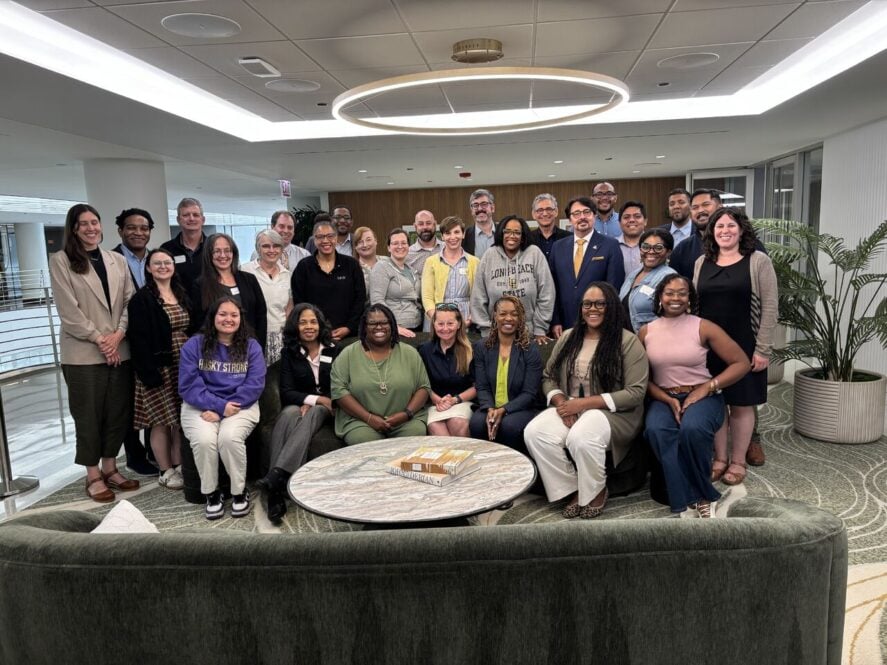
A diverse group of these leaders can be found in the Advancing Campus Pluralism Cohort, co-convened by Interfaith America (IA) and the American Association of State Colleges and Universities (AASCU). The cohort supports regional public universities seeking to make pluralism a core part of campus life. The 10 institutions in the cohort (four of whom are represented in this story) are building sustainable strategic plans for institutional change — moving pluralism beyond an abstract ideal toward an everyday skill.
Each cohort campus formed a core team that included at least one cabinet-level executive to lead the work of writing and implementing a plan for integrating best practices for campus pluralism. Guiding the work of the teams are four key pluralism practices:
- Institutional leadership
- Capacity building
- Curriculum and scholarship
- Co-curricular engagement
As outlined in IA’s Pluralism Playbook for Senior Leaders, the practices are flexible and adaptable to a variety of campus contexts and can be scaled or modified to meet the unique needs of each institution.
A Vocal Minority
The reality is that most Americans are not polarized, Vaughn said. But the small minority leading the conversations — elected officials, activists, and party elites — are extremely polarized, and this is who Americans see constantly in the media. The result: distorted perceptions. Fear powered by those distortions creates anxiety, even around routine conversations, Vaughn said. It is important for faculty and staff to help shape how students interact with one another now so they can engage with people who think differently far into the future.
“If you get people to learn how to have conversations with people who don’t agree with them when they’re 18 or 20, they’re going to be able to do it the rest of their lives,” he said. “They’ll be more comfortable, more confident, and less anxious about doing so.”
To help build these skills, the Center for Applied Civic Leadership at Coastal Carolina has developed programs help students, faculty, and staff practice and facilitate civic dialogue across difference — their “Democracy on Draft” program is a series of informal conversations for faculty and staff on civic matters in a casual location and their “Civic Strides” series provides opportunities for participants to talk about civic matters while also enjoying a refreshing walk outside.
A Value and a Skill
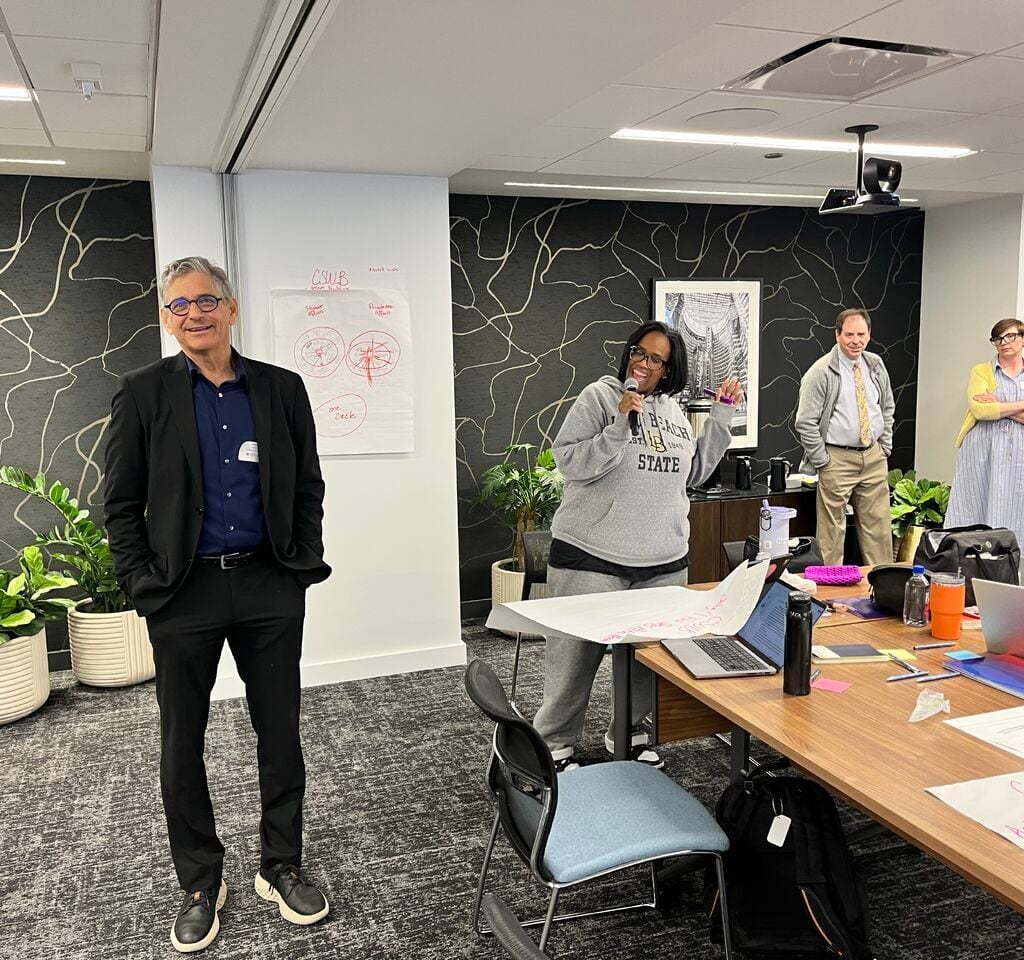
For the University of Maryland, Baltimore County (UMBC), the biggest area of growth is in capacity building and revealing the ways civic pluralism principles are embedded in UMBC’s practice of inclusive excellence. Matt Hoffman, Director of the UMBC Center for Religion, Spirituality, and Pluralism, said the university integrated pluralism into institutional frameworks to support students, faculty, and staff who want to talk about and across difference — and what practices, approaches, and skills exist across our campus communities. This resulted in a Dialogue Symposium, led by Dr. Jasmine A. Lee and the UMBC Division of Institutional Equity, that brought together the 14 campuses in the University of Maryland system.
Other capacity building efforts include expanding the work of UMBC’s Center for Religion, Spirituality and Pluralism and Center for Social Justice Dialogue. One of the centers’ collaborations is a program called Bridge Builders, which invites students into dialogical skill building over the course of a semester.
Hoffman also sees the importance of chaplaincy in this work. He said that while many American universities were founded as religious institutions, student bodies today are becoming more religiously diverse. Chaplaincy’s role can provide moral and ethical guidance to those diverse communities as well as speak to tough questions faced by many on campus.
“I think there’s an interesting role that chaplains can play—should play—in university settings,” he said. “And I feel really lucky to get to do this work at a public institution because public institutions have historically not done this type of work. And I think one of the emerging trends is actually that this work is growing in public schools.”
Pluralism is also embedded in the campus culture at James Madison University in Harrisonburg, Va. Developing as a citizen means developing pluralism skills, said Kara Dillard, Ph.D., Executive Director of the James Madison Center for Civic Engagement and Assistant Professor of Communication Studies. All first-year and new transfer students take part in extensive deliberative dialogue instruction.
The importance of having a deliberative dialogue infrastructure in place was evident in the wake of the shooting of right-wing political activist Charlie Kirk. After the shooting, tensions at the deliberative forums were evident. Students felt uncertain and uncomfortable, Dillard said. But the undergraduate Democracy Fellows who peer-facilitate the conversations agreed that the work to foster understanding and find common ground had to continue.
“This is the time when we need to do more of this relationship building. We need to do more of enabling and modeling for our students that they can talk across divides and come out in a really positive way with each other,” she said.
Part of that infrastructure at JMU is a campus cohort that showcases the university leadership’s willingness to build respectful relationships with students. The cohort of students meets regularly over dinner. Senior leaders, including the university president, are invited to join the students and engage them in challenging conversations.
“(JMU’s university leadership) is deeply leaning into what it means to build a campus culture around pluralism, around having difficult conversations across divides, but doing so within this ‘container’ of pluralism—this idea that we’re doing so for the common good and to build and maintain relationships that matter,” Dillard said.
Using IA’s Pluralism Framework
Similar campus-wide tension emerged at Hunter College in New York City in 2024. Nicole Bennett, Ph.D., Associate Provost and Assistant Vice President, Academic Affairs at Hunter, recalled early 2024 when the campus experienced the impact of global political unrest. Faculty and staff needed to help students have difficult conversations and reach out across barriers.
“And I think that the Interfaith America Respect-Relate-Cooperate framework is really what I was looking for,” she said. “And actually, as we operationalize it, I think of it more and more as a way to help us to have people work together.”
The Hunter College motto is Mihi Cura Futuri, which means “The care of the future is mine.” Bennett said this drives capacity building among faculty and staff so they, in turn, can help students develop critical thinking skills they need to analyze, evaluate, and critique.
“It’s not just how they share their perspective or tell their stories, but it’s how they listen to and receive the stories of others,” she said. “And, so, I see pluralism as being sort of a key in how we help them to develop from the day they enter our doors until the day they graduate and go out to care for the future.”
To complement academic learning with hands-on experience (the practice of co-curricular engagement), Hunter established a Bridge Builder Award. Students who either organized constructive dialogue events or taken courses in pluralism and diversity are invited to apply by talking about how they understand pluralism, how it impacts their lives, and how they will apply what they have learned.
“I think every administrator has the same idea,” Bennett said. “The work we do that students don’t see and don’t know about filters down to them in a way that is substantive, has impact on their learning, and can take them on their journey after they leave us.”
Randy Craig is the Director of Marketing & Communications at Interfaith America.