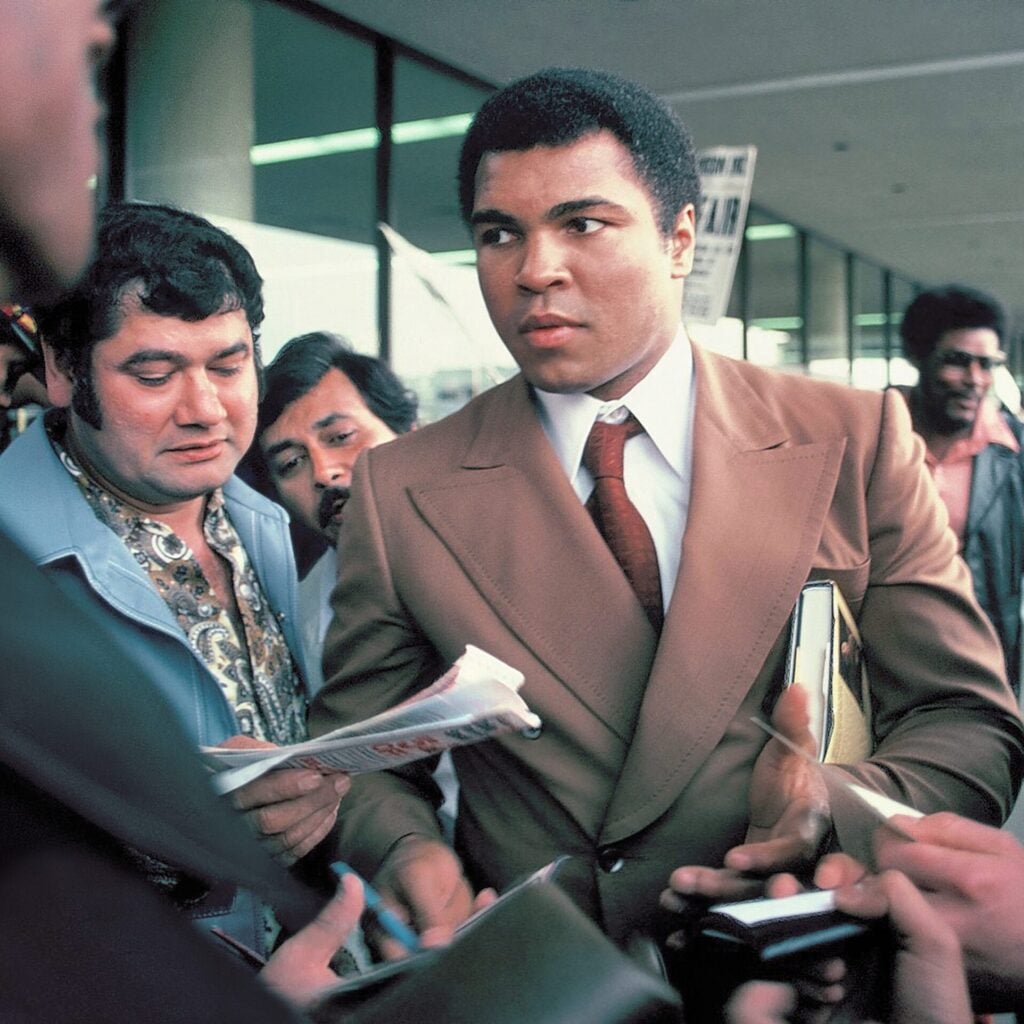
He earned the moniker “The Greatest” for defending his title of world heavyweight champion three times, but his standard of excellence ran deeper than athletic achievement.
A strong sense of purpose animated Muhammad Ali’s career and spiritual life. He was an award-winning boxer, but he was also a poet, an activist, a showman, and a committed Muslim.
Born to a Baptist family in Louisville, Ky., during the Jim Crow era, Ali became a prominent figure in the Civil Rights Movement and he built relationships with Malcom X and Elijah Muhammad, converting to the Nation of Islam in 1964.
“I believe in the religion of Islam. I believe in Allah and peace,” he said to the press after defeating Sonny Liston for the world’s heavyweight championship.
From early in his career, Ali demonstrated interfaith leadership in action. In 1966, he met with Dr. Martin Luther King Jr. during the Chicago Freedom Movement. The two discussed their shared opposition to the Vietnam War and goals to end systemic oppression.
“We are all victims of the same system of oppression, and even though we may have different religious beliefs, this does not at all bring about a difference in terms of our concerns,” Dr. King said of their meeting.
Ali’s conscientious objection to the Vietnam draft was rooted in his religious convictions. By refusing to enlist, he faced a prison sentence, sacrificing his title and years of his professional boxing career.
“This country was set up on the basic concept of religious freedom and freedom of expression,” one Vietnam serviceman said, when asked about Ali. “I don’t believe that he should be persecuted or ridiculed because of his beliefs.”
Like any public figure, Ali had his flaws and struggles, but his faith and commitment to growth carried him through the trials of a career in professional boxing and a life of advocacy.
Ali was known for being outspoken, charismatic, and as quick on his feet in media interviews as he was in the boxing ring. But today, his legacy is defined by his courage in championing religious freedom and his generosity in humanitarian and peacebuilding efforts.
His spirit of determination and devotion to service are an inspiration to interfaith leaders, and he called on people of faith to recognize their shared humanity.
“Rivers, lakes, ponds, streams, oceans all have different names, but they all contain water,” he wrote. “So do religions have different names, and they all contain truth, expressed in different ways forms and times.”
Rachel Crowe
Rachel Crowe, Staff Writer for IA Today, tells compelling stories about interfaith cooperation across diverse communities and supports our narrative programming. She is a graduate of Gettysburg College where she earned a BA in English with a Writing Concentration and a German Studies minor.