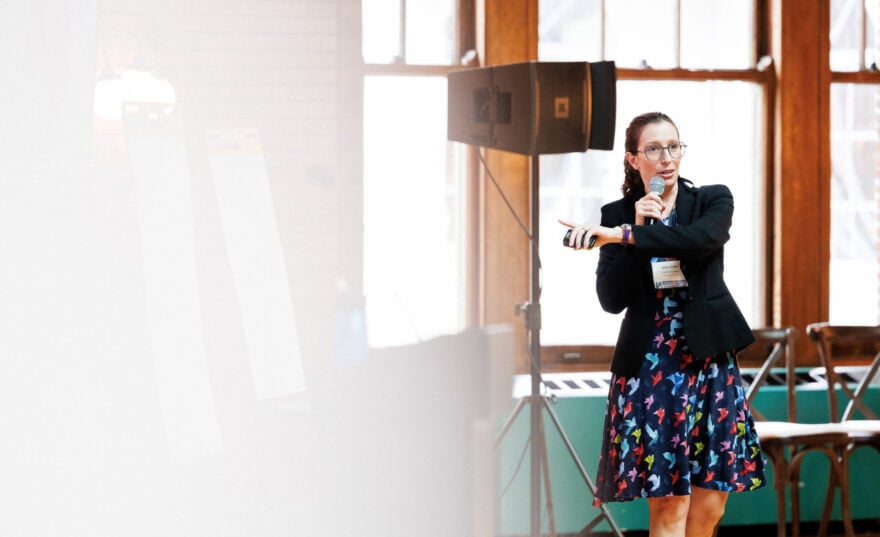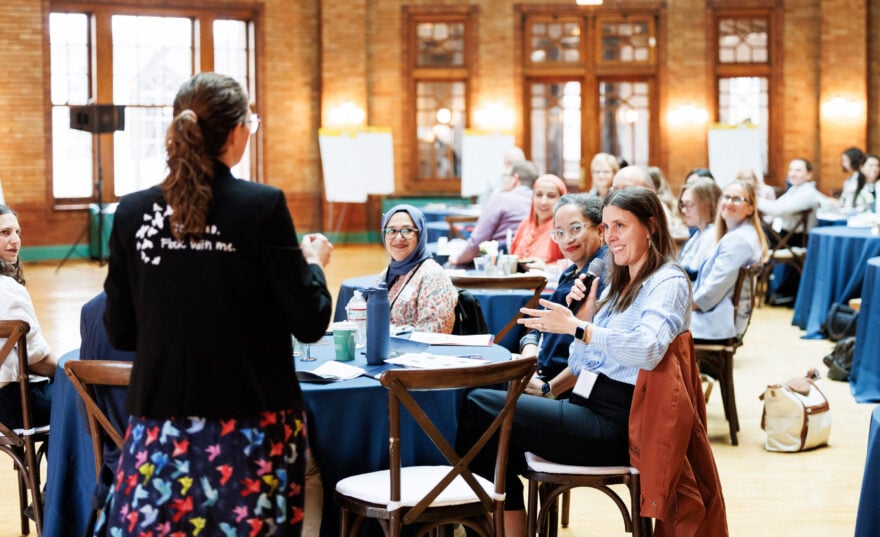
On average, Catholics and members of the Church of Jesus Christ of the Latter-Day Saints approach the death and resurrection of Jesus in different ways. Earlier this year, I saw the ways that art can help build a bridge of understanding — and strengthen each of our own interpretations.
As a Catholic, I often lament the way that my faith tradition tends to focus so heavily on “giving up” something for Lent and spending those 40+ days fasting and preparing for Easter, focusing on the crucifixion, only to forget about the Easter season after brunch on that first Sunday morning. In contrast, LDS friends of mine have talked about the tendency for members of their faith to want to speed forward to the resurrected Christ, at the expense of reflection on the cross.
This difference is depicted in each of our traditions’ main images of Jesus. For the LDS Christus statue, Jesus has his arms lowered at his side, slightly gesturing forward. This is the image of a resurrected, powerful Jesus. For Catholics, the most widespread image of Christ is the crucifix — Jesus’s body nailed to the cross on Good Friday.
BYU Art Museum Builds Bridges of Understanding
Earlier this year, I was invited to Brigham Young University to see a new Stations of the Cross exhibit that directly addressed this difference between our two faiths. I was surprised by how explicitly Catholic-focused the exhibit was. I guess it had never occurred to me that the Stations of the Cross meditation is distinctly Catholic. The walls of the exhibit included quotes from Saint Pope John Paul II, and the first room of the exhibit included a history of the stations, and multiple depictions of it from different eras.
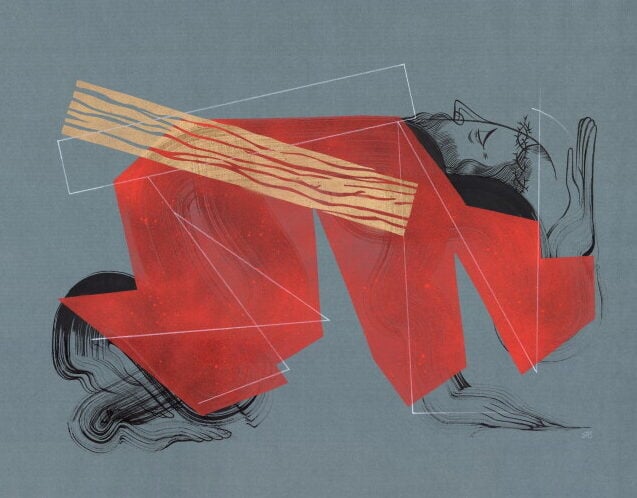
The main station’s exhibit itself featured art from LDS artist David Habben, in a unique style of mixed media on paper.
The staff at the museum went through painstaking efforts to create a meaningful Way of the Cross experience for those who visit. It sparked a fascinating conversation regarding what our faiths emphasize, and what elements of the Stations stood out most to us.
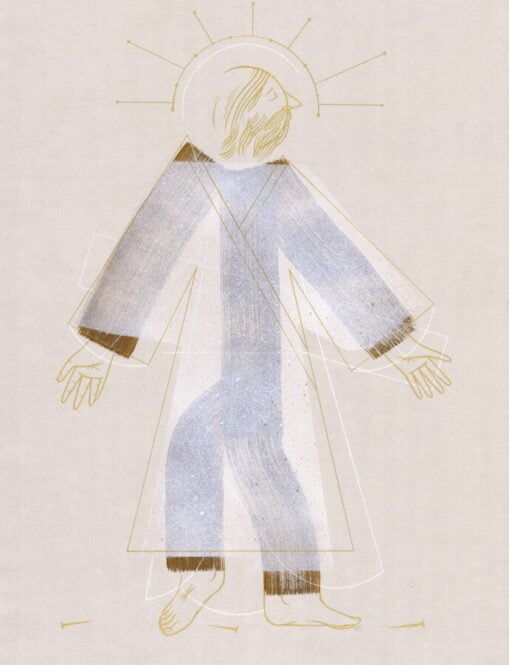
Whether intentional or not, the piece, “15th Station: Jesus Christ is Resurrected”, combined the two predominant images of our tradition. Here, Jesus is depicted in dazzling gold. His hands are in a posture similar to the Christus, but his hands and feet bare the wounds from the cross — and small nails are scattered on the ground beside him.
Why art matters
Art can serve as an interfaith bridge because it helps us to access a different part of our brain and to experience a depiction of a tradition rather than simply familiarize ourselves with its doctrines. This can be especially useful if we view works of art together with people who have different beliefs than our own.
For example, Interfaith Philadelphia conducts special tours of the Philadelphia Museum of Art that focus on different religious traditions — including Native American, Christian, and multiple South Asian works.
In an international context the CARAVAN exhibit boasted over 100,000 visitors to the interfaith exhibit focused on the different journeys of people of different faiths – with an emphasis on how they received one another and worked together.
Bridging religious differences through art has been a constant in Interfaith America’s fellowship programs, including the Sacred Journey Fellowship. Nikhil Mandalaparthy and Dr. Preethi Ramaprasad created an interfaith arts fellowship for South Asian artists in the San Francisco Bay Area to create works inspired by poems in the Voices of Bhakti collection — “a digital archive that showcases South Asian poetry and art on the themes of religion, caste, and gender.”
Art can provide a meaningful way for people to see religious traditions or sacred stories from a different perspective. In just a few minutes in a small group, each person on my tour of the Stations of the Cross exhibit found something in the artwork, the readings, the music, or the conversation that helped them to think in a different way about a scene that is central to each of our spiritual lives.
For my own part, I know that every Holy Week moving forward, I will remember the hospitality and care of my LDS neighbors at the Brigham Young University art museum. I’ll also think of them as I try to extend my Easter celebration beyond one day in late March or early April and do my best to continue to rest in the joy of the Resurrection all year round.
Chris Crawford is the Senior Director of Civic Strategies at Interfaith America.