
Dr. Lutforahman Saeed wasn’t sure what to expect when he started as a fellow at Brigham Young University’s J. Reuben Clark Law School in March of 2022.
Soon after he arrived in Utah, Saeed, a scholar of Islamic law and human rights, recognized that he was the only Muslim faculty member in the International Center for Law and Religion Studies at BYU Law School, the flagship university of the Church of Jesus Christ of Latter-Day Saints (LDS).
As a Muslim, performing Salah — the five daily prayers that occur at specific times based on the sun’s position — is an important part of Saeed’s spiritual life. He wasn’t anticipating the support his BYU colleague offered by securing a space for him to pray and affirming his faith commitments by acting on her own.
Saeed studied at a larger public university, where colleagues advised him not to perform prayers in the law school building. When he asked, “So where should I pray?” the suggestion was the center for Muslim students located on the other side of campus and requiring a long walk, often in inclement weather.
During his first fall semester at BYU, especially as the days grew shorter and his schedule necessitated remaining on campus until late in the afternoon, Saeed faced the challenge of finding a space to say his Zhuhur (early afternoon) and Asr (late afternoon) prayers once again.
He asked his colleague and Deputy Director at BYU’s Law Library, Professor Iantha Haight, who had recently helped him license some readings for his class, about a prayer space.
“Space is definitely a premium in the building,” Haight told Interfaith America, noting that the law school’s growth over recent years had made finding space more difficult, but as a member of the LDS Church, she understood the importance of Saeed’s request.
“Prayer is a priority for us as religious believers, so it wasn’t hard to empathize with that,” she said.
At BYU, prayer plays an integral role in campus culture. No classes are scheduled on Tuesdays at 11 a.m. when weekly devotionals are held, many classes and meetings open with prayer, and the law school offers several devotionals each semester.
Haight worked with her boss to secure a study room where Saeed could perform his prayers. She marked the space with a sign, reserving it for him daily during afternoon prayer hours.
The room was not only located within the law center but was a quiet space with minimal windows and close to a bathroom. This allowed him to perform Wudu, the ablution necessary before prayer.
For Saeed, this accommodation was surprising, especially given his previous experiences in university settings, but he was very grateful for it, and found it aligned with his own belief and study.
“There is consensus among Sunni Muslim jurists in all schools of thought, that if a Muslim goes to a non-Muslim state and there is no mosque where he or she should go for prayer, the Muslim must go to a church for prayer or to a synagogue,” he said, emphasizing BYU’s status as a church-owned university.
As a scholar of Islamic law, Saeed’s recognizes the value of cooperating across differences for the common good. It’s shaped by his own faith and his journey immigrating to the U.S. with his wife and daughters.
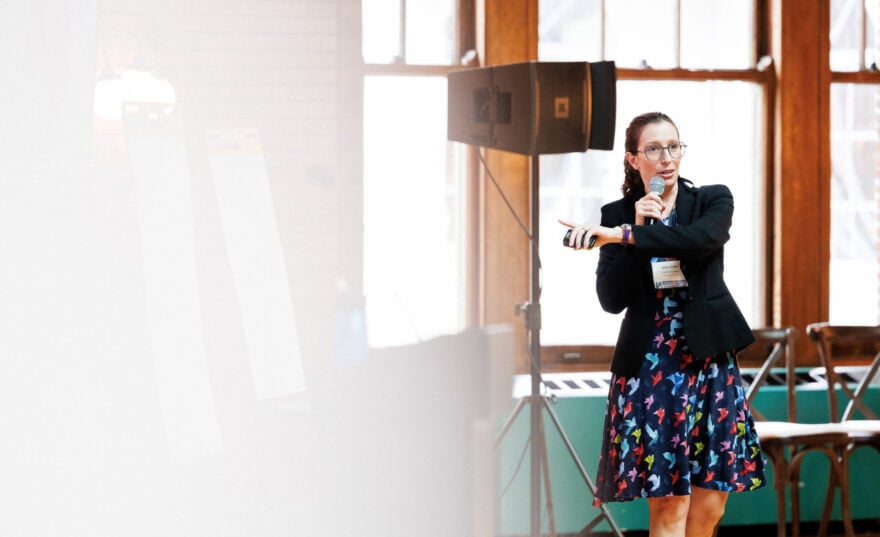
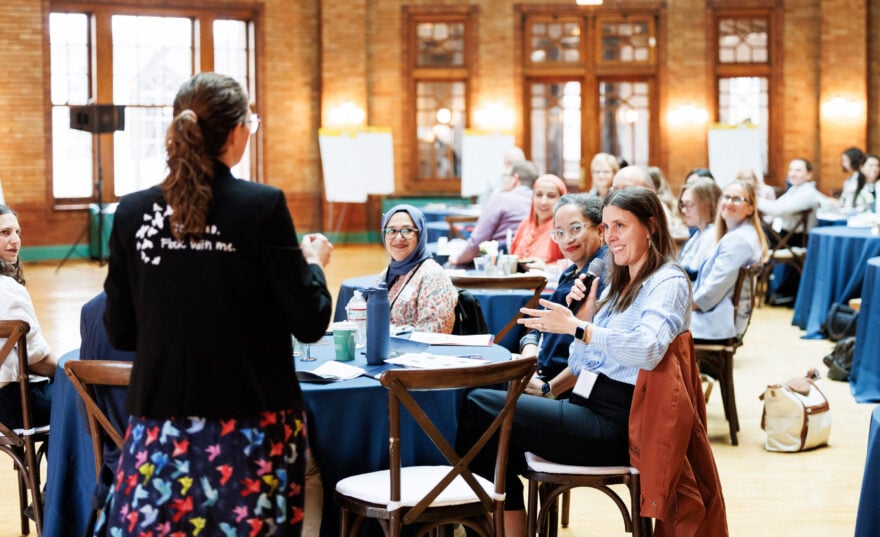
At a 2025 Interfaith America-hosted roundtable, which convened thought leaders and scholars to discuss the role of religious liberty and pluralism in combatting toxic polarization, Saeed emphasized the importance of “respecting the beliefs of others as [an] essential foundation for peaceful coexistence” in his life and work.
He views how he was welcomed by his law school colleagues in Utah as “one of the perfect examples of pluralism.”
Dr. Saeed was a participant in an Interfaith America Religious Liberty and Pluralism Roundtable. Learn how America’s civic landscape is shaped by religious diversity, and how you can play a role in advancing pluralism for the common good.