
I work as the Development Manager at Hillel at Davis and Sacramento, which is the center for Jewish life at UC Davis and Sacramento State. I’ve been involved with Interfaith America, formerly the Interfaith Youth Core (IFYC), even before I started working full-time in the Jewish non-profit sector. My previous experiences with interfaith student leadership led me to my current job and exposed me to the importance of promoting interfaith partnership with the college students at Hillel.
I first heard about Interfaith America when I was about to start college at Trinity College in Hartford, Connecticut. I was given a summer reading assignment, which happened to be the founder of Interfaith America’s book, Acts of Faith. Eboo Patel, the author, discusses his upbringing in Illinois and coping with the challenges of being both a racial and religious minority.
After falling away from his Muslim roots, he began to reconnect with this side of his heritage and, through many other experiences, founded the Interfaith Youth Core. He was a featured speaker at my first-year orientation event. Before reading his book, I didn’t have too much exposure to interfaith work. However, I too shared the experience of falling away from your faith tradition. Although I did have a bar mitzvah at age thirteen, I stopped attending synagogue afterwards. I didn’t even finish the remaining classes of religious school the year of my bar mitzvah.
It was right before I enrolled in college that I resolved to reconnect with the Jewish community. I was fortunate that a thriving Hillel chapter existed at Trinity where I got involved from the start of my freshman year along with the Charleston House for Interfaith Cooperation. Interfaith America hosted its annual conference in Atlanta that year (2013), which I attended with a group of friends.

Right before I got a job with Hillel in 2019, I received a call from a former employee who oversaw the young alumni network for IFYC, as it was known at the time, telling me about all the support and grant opportunities available to young adults continuing in this line of work.
The year that the pandemic started was when Hillel received the first of many generous grant awards for our interfaith events. Now, we are grateful for this grant award for the sixth year in a row that supports our Interfaith Shabbat and Interfaith Moveable Feast annually. When I first started in 2019, I was hired as the Program Director. One of the first meetings that I had on my first day was with my coworkers at the Interfaith Campus Council (ICC), which is a body of various faith groups that organize interfaith programs on campus.
I still attend those monthly meetings, but I am now the one who convenes and leads them.
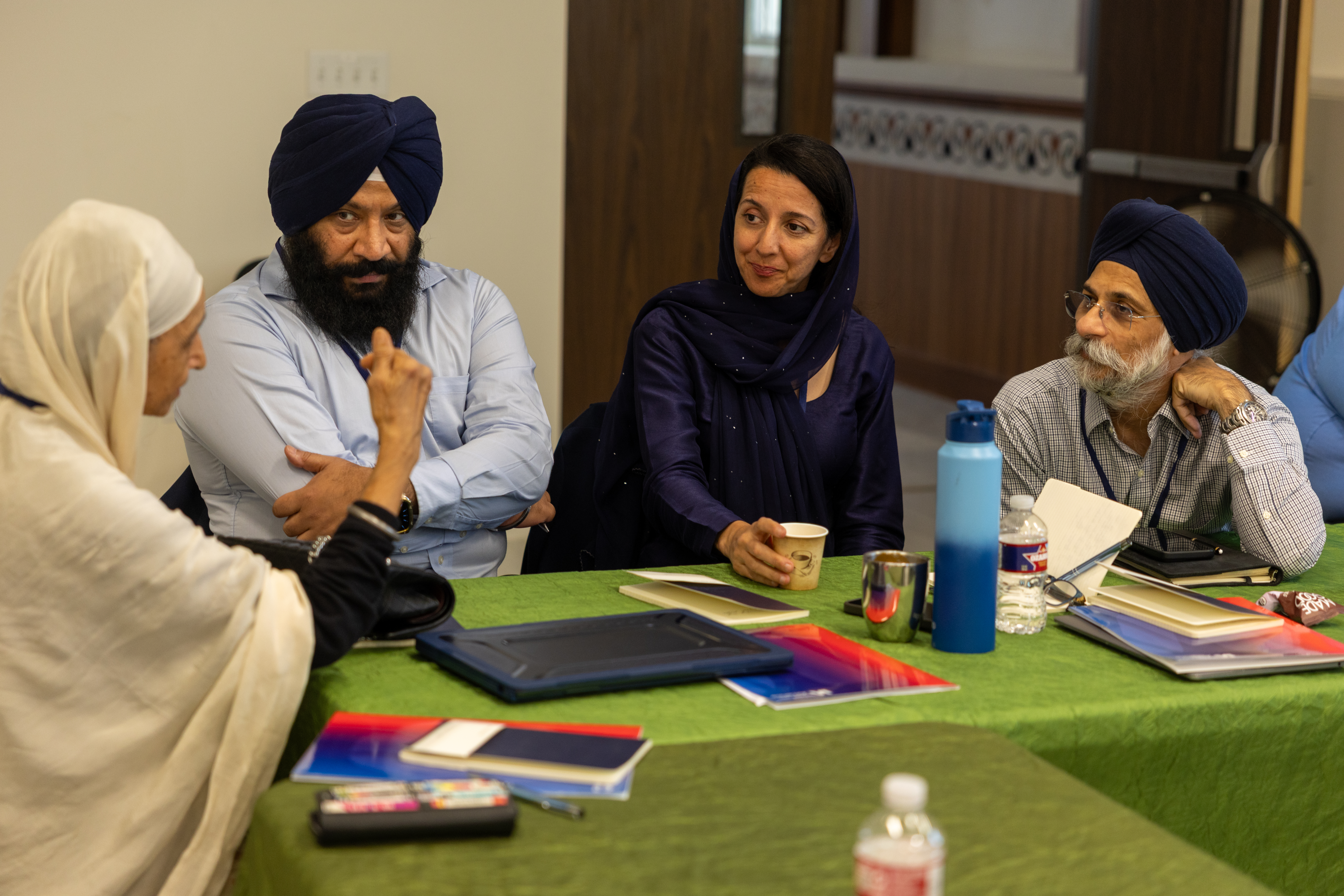
The Interfaith Moveable Feast brings together the constituent organizations of the ICC and the students involved for a multi-course meal. We move from place to place enjoying one course of a meal at a different site and learn about our respective traditions. The staff at Hillel typically open our ark to display our Torah scroll and give a brief explanation of what it is. Interfaith Shabbat is once a year. We opened up the house for an evening with fellow students and staff in the interfaith community in February 2025. It goes without saying that Interfaith America and our parent organization Hillel International, which both support our interfaith programs, deserve a warm thank you for making these events possible. Now, the most important thing to address is why this work is even worth all the effort.

My philosophy is simple: appreciate the facts. The fact is that the world is a big place with people of different views. That’s not going to change soon, nor should it. Interfaith work teaches us that differences exist, but we can harness it rather than ignore or fear it.
Success in interfaith work does not always or necessarily mean convincing people that your side, view, or religion is right; sometimes, inviting people to share is all that it takes to achieve success. There are not too many other lines of work where that is the case.
One thing that makes me appreciate Interfaith America is seeing how divided college campuses are currently. At least on campus, the biggest fault line is politics. The common attitude among many, but not all, college students is that taking the most extreme stance and immediately dismissing anyone who disagrees with you is the most effective form of activism. I’m glad that Hillel, and thanks to the organizations that support us, does not succumb to that hostile tendency.

Inviting people in ––of different worldviews–– needs to be done more often, and college is a crucial time to learn how to see the good in others while people are still young and going out into the world.
The work that we do makes me feel like my individual actions are making a direct impact. I was involved with Hillel and the Charleston House when I was student. Now, I have the privilege of passing it on, giving back, and guiding the group of students coming up behind me. I’ve grown personally as a leader from that first day on the job attending the ICC meeting to now running the meetings and providing overall direction. Big things can start in small places.
Seth Browner
Seth Browner (he/him) is the Development Manager at Hillel at Davis and Sacramento. Originally from Thousand Oaks, California, Seth graduated from Trinity College in Hartford, Connecticut in 2017. When Seth was hired in 2019, he started off as the Engagement Associate and then was promoted to the Program Director after one year. He majored in History and French and was an active member of Hillel at Trinity. After making his triumphant return to the west coast, he worked at Temple Etz Chaim in his hometown where he managed the synagogue’s social media forums and assisted with community outreach.