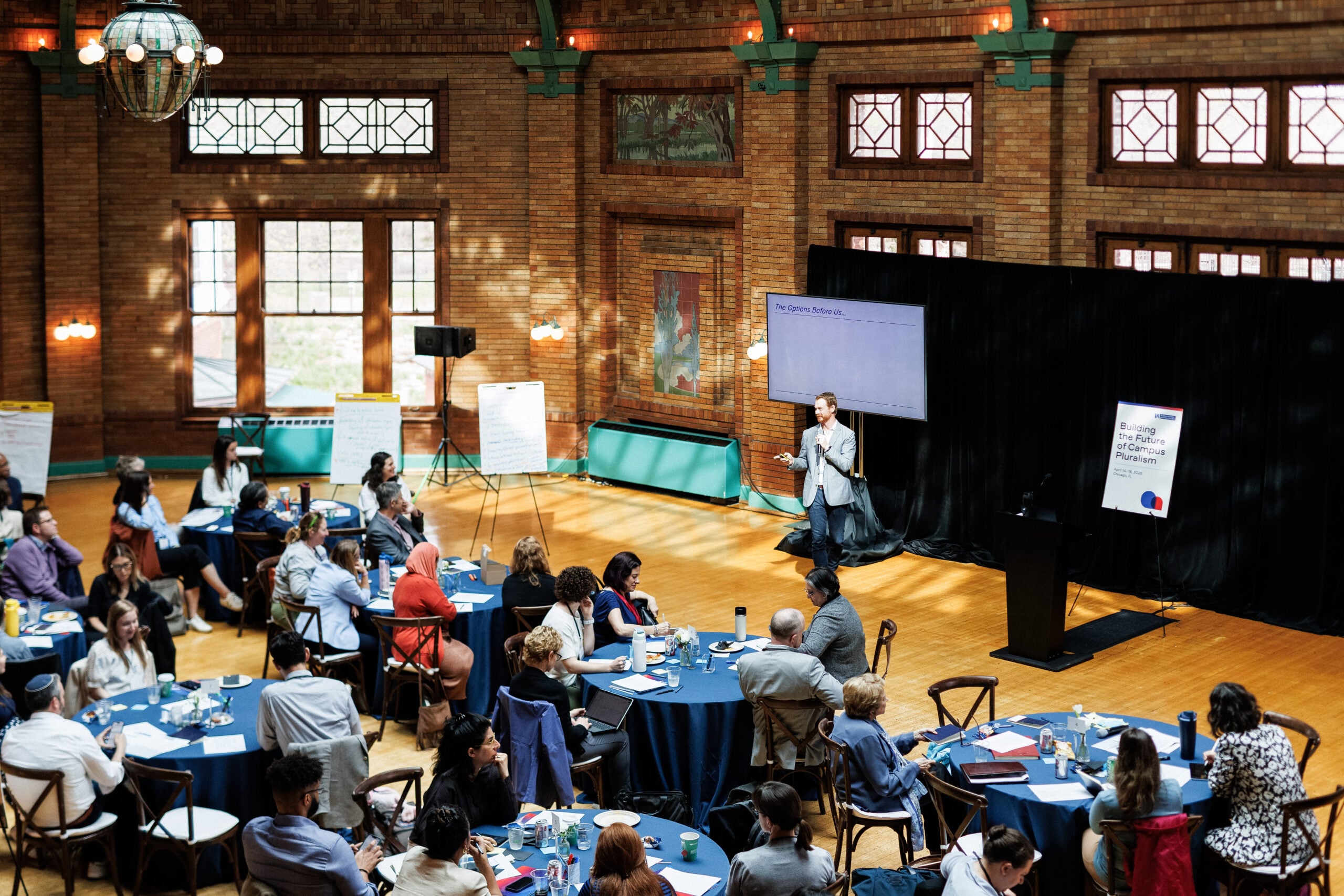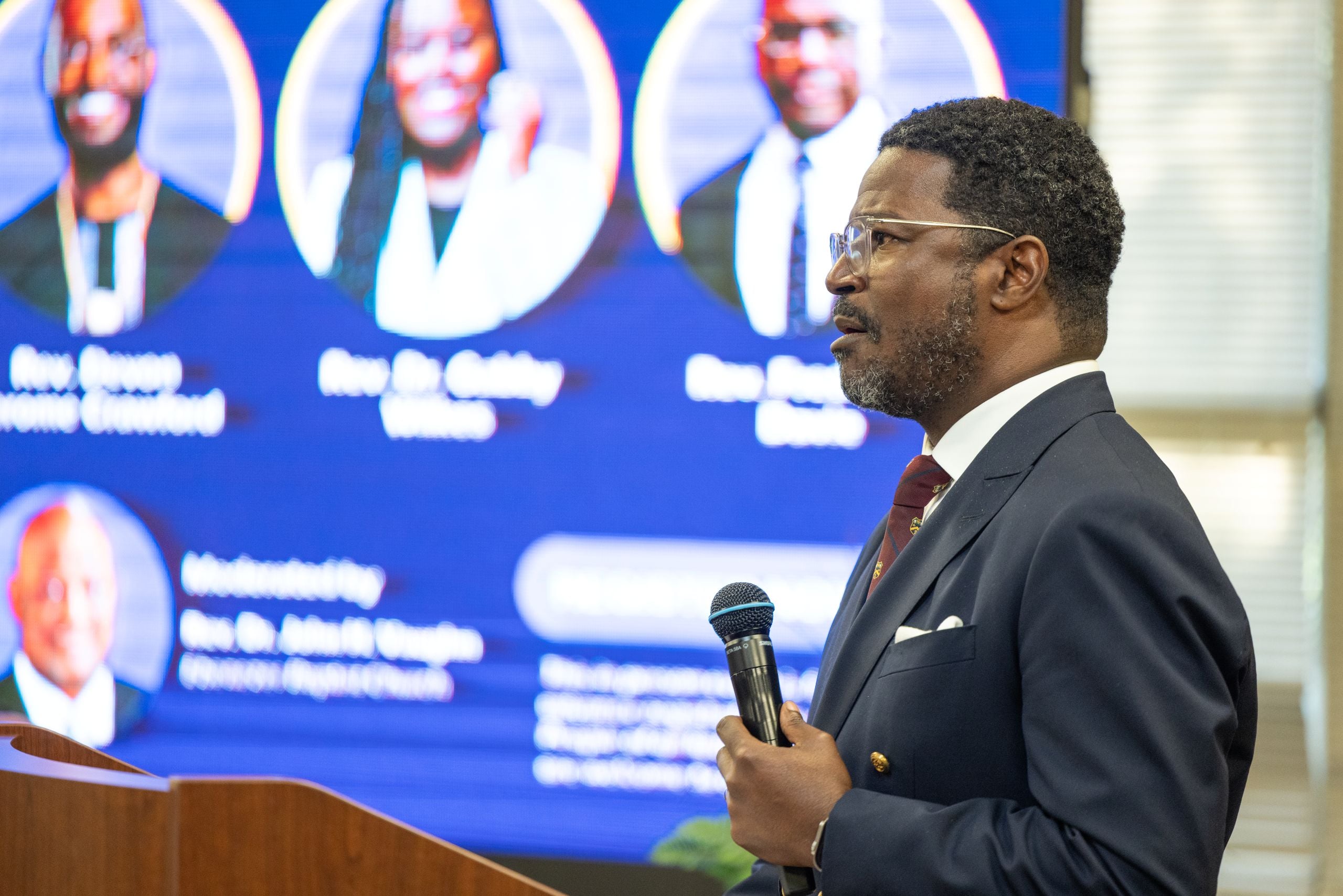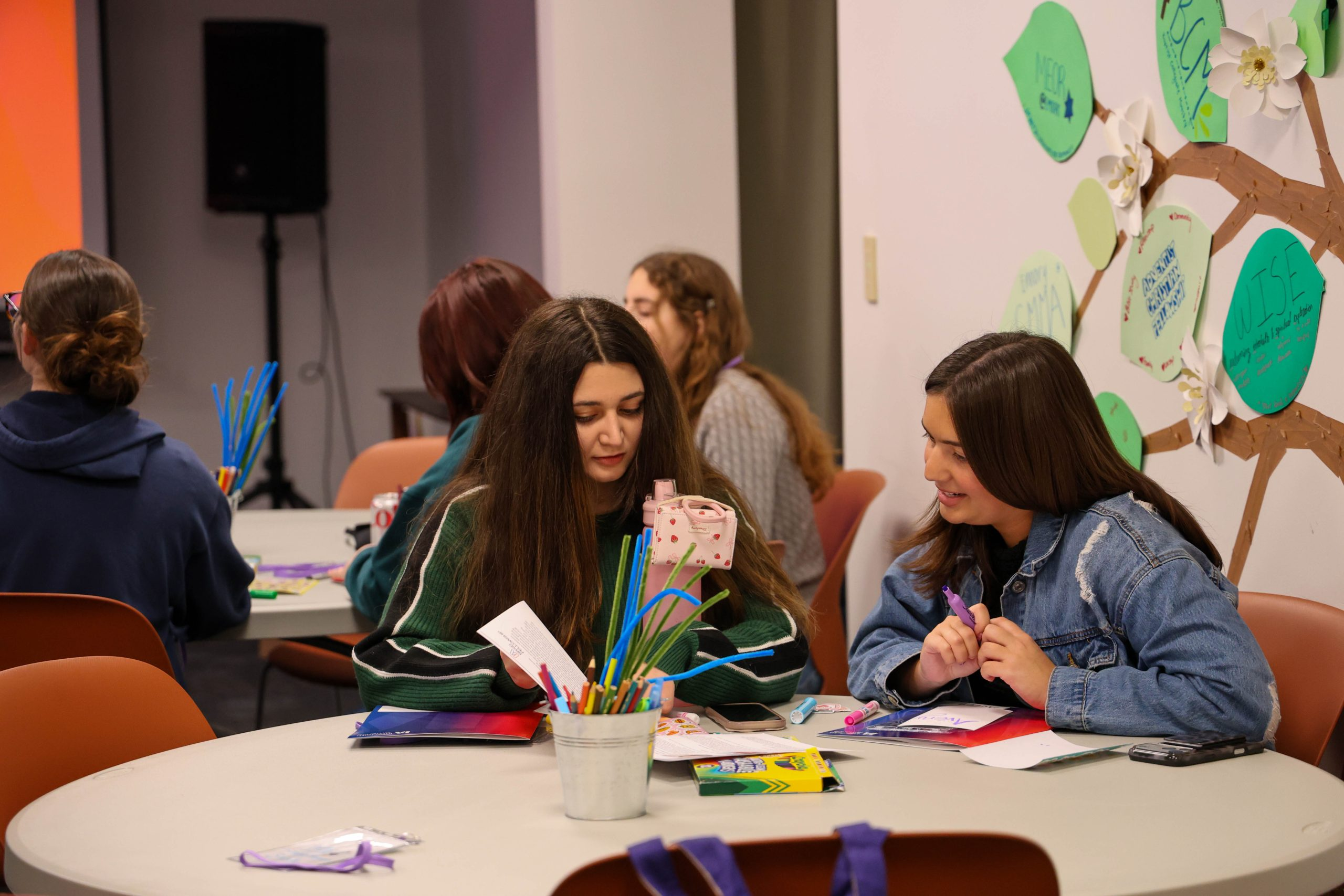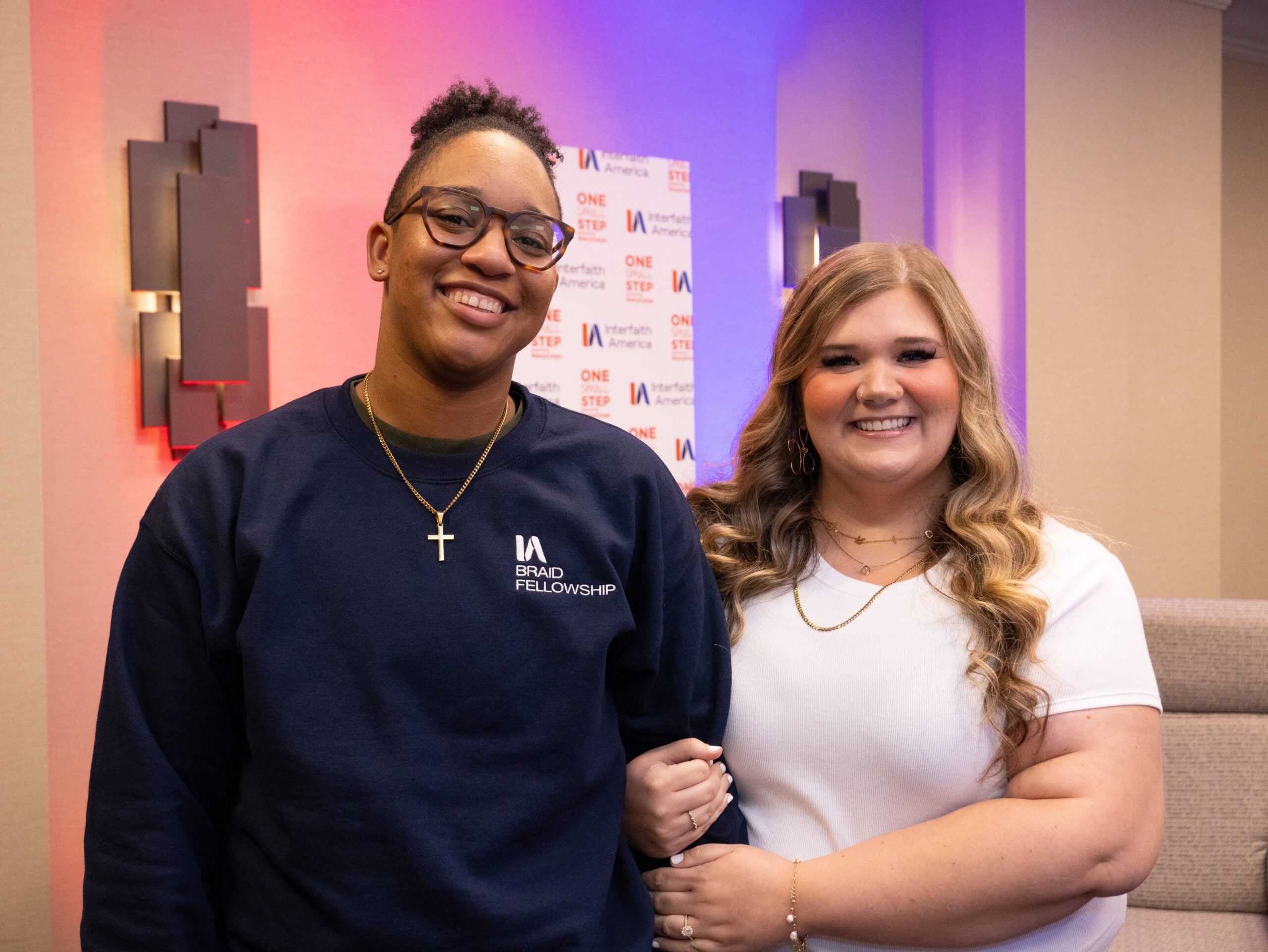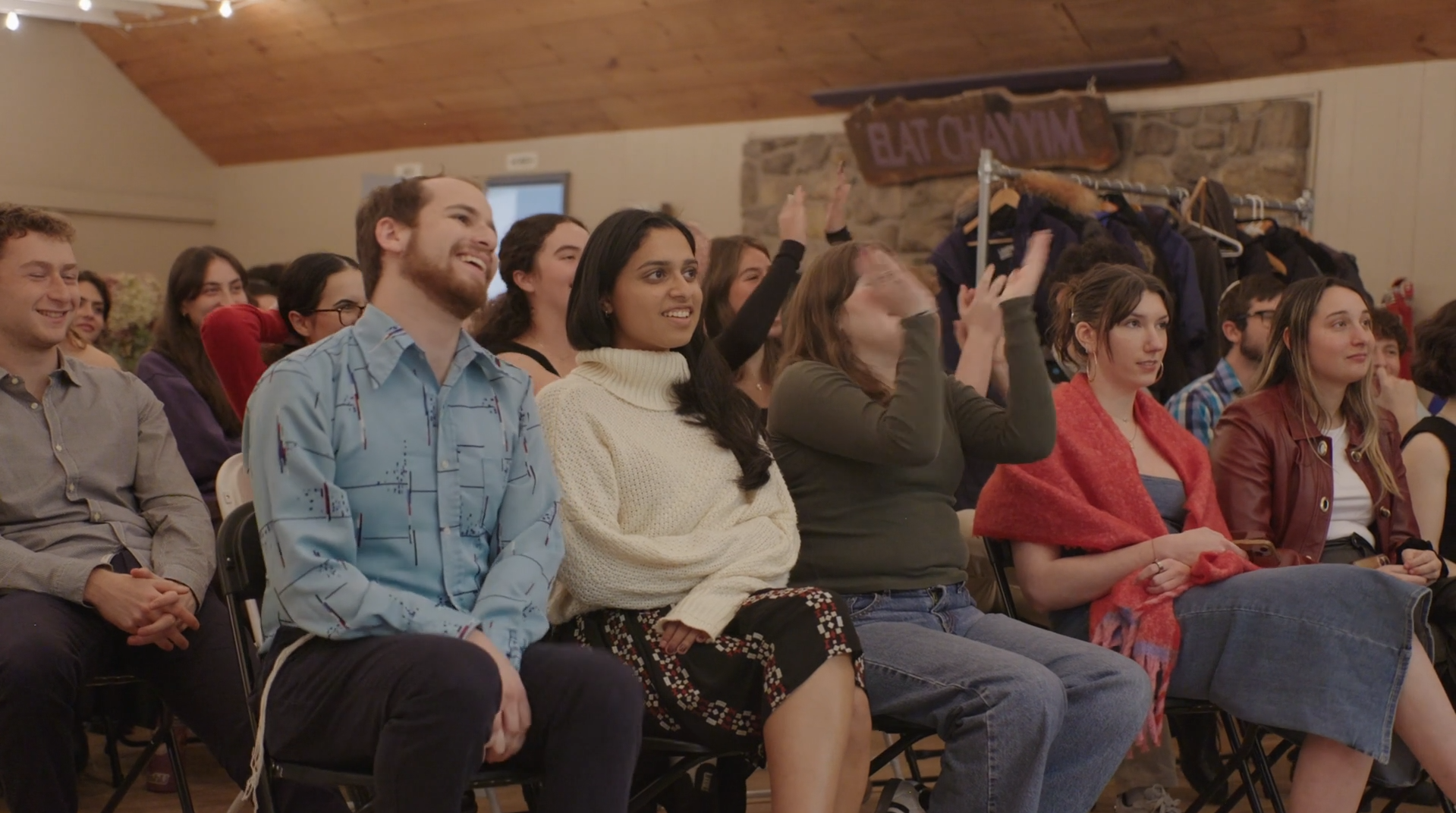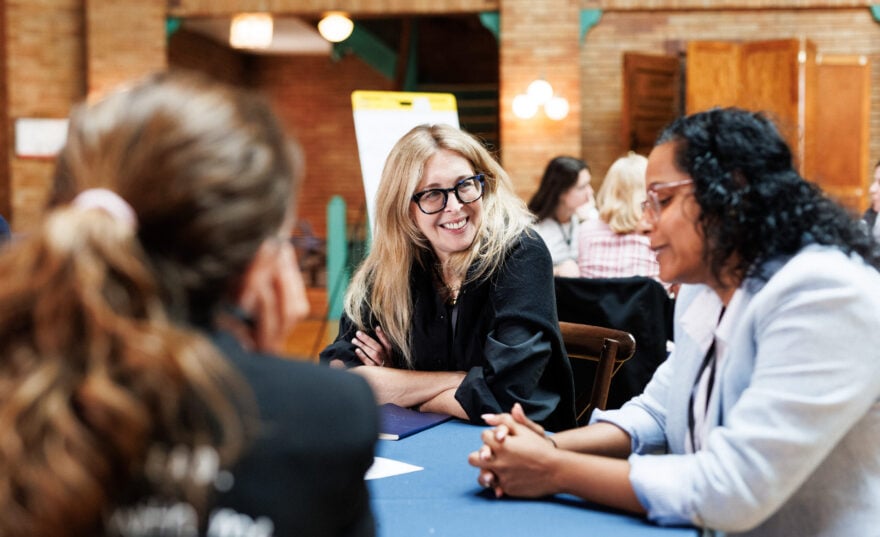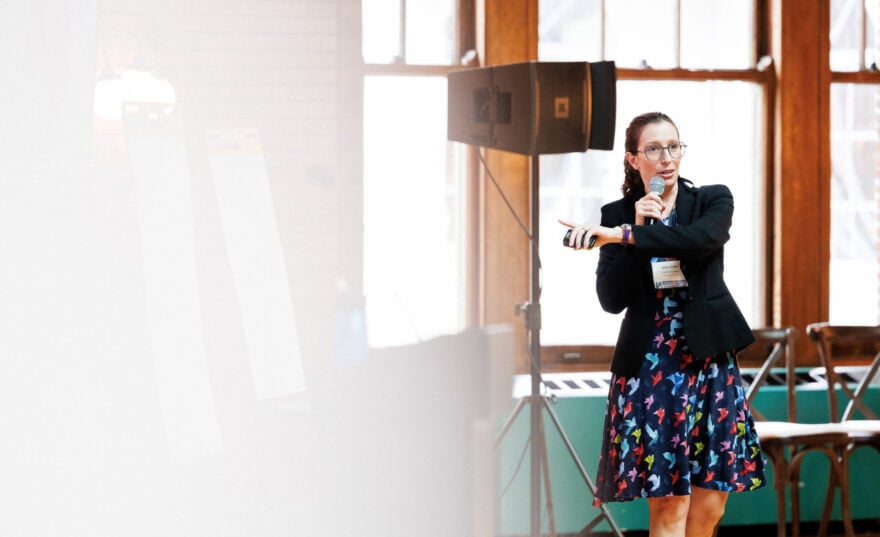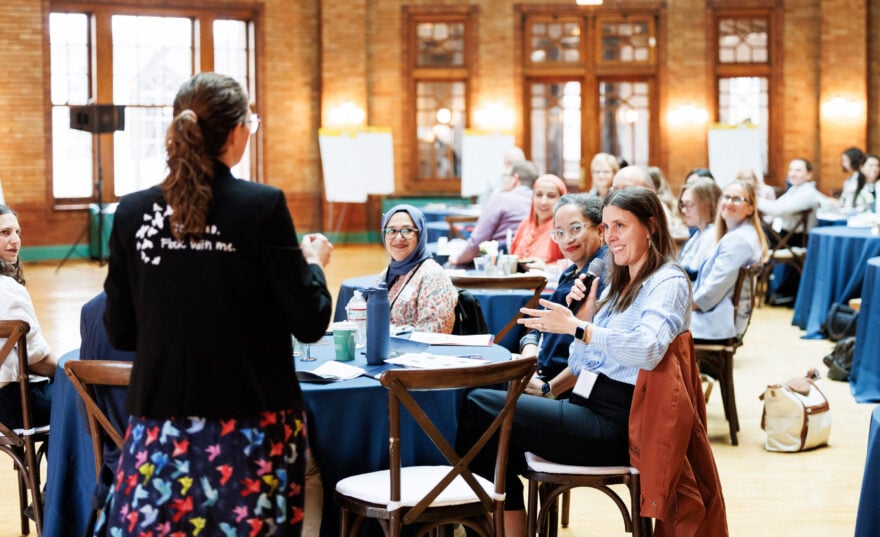

At the 2025 Interfaith Leadership Summit, IA network members joined StoryCorps One Small Step for 30-minute, one-on-one conversations across lines of difference. These kinds of conversations happen every day among students, co-workers, and family members in America, and the Summit is a space where participants can learn to seek them out with the purpose of respecting diverse identities, fostering meaningful relationships, and cooperating for the common good.
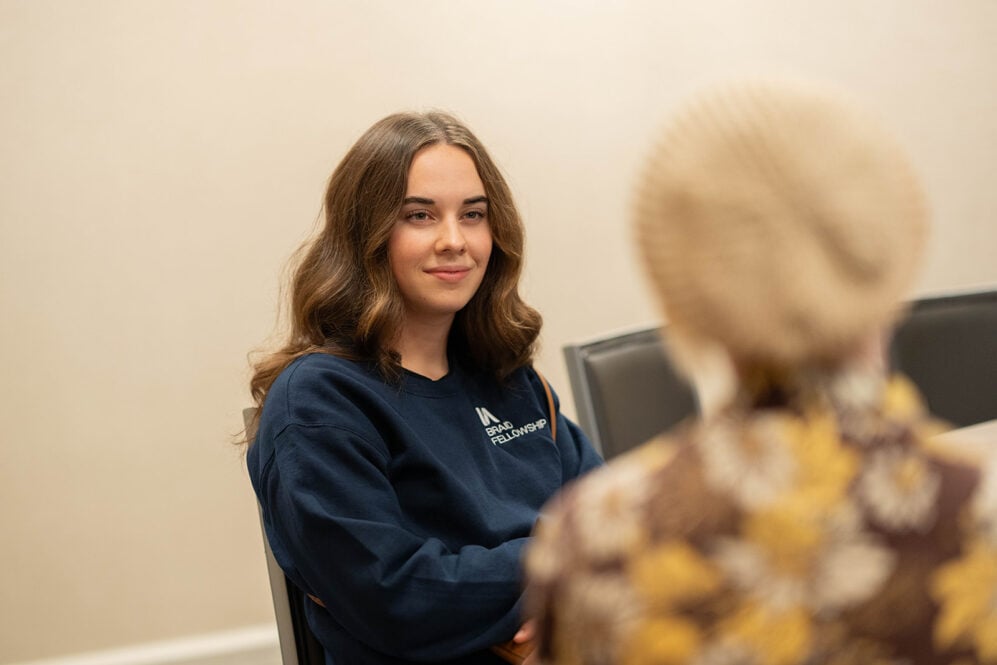
Listen to the full conversation to hear students Sabeen Safi and Eliza Rhodes (née Stewart) discuss how they’ve grown in their faith identities, their experiences bridgebuilding in their youth, and the importance of curiosity in building mutual understanding across difference.
Register for the 2026 Interfaith Leadership Summit, where Sabeen will speak on the closing plenary panel.
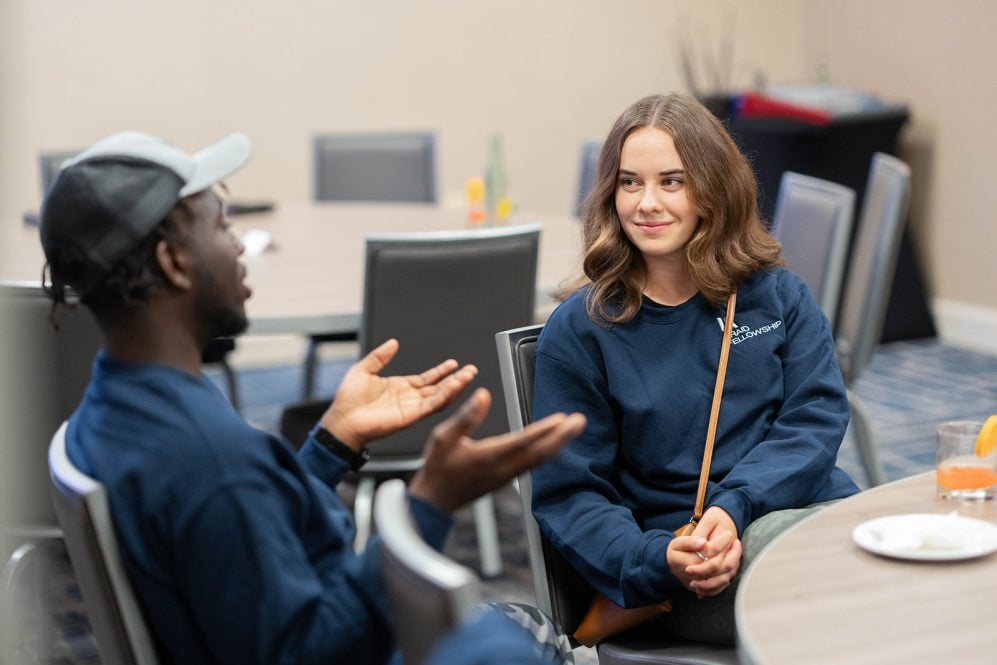
For Sabeen Safi and Eliza Rhodes, college was a time when they learned about other faith traditions while growing in their own.
Both 2026 graduates and members of the inaugural cohort of Interfaith America’s BRAID Fellowship, Safi and Rhodes each see interfaith engagement as a chance to ask deeper questions about what they believe and religious diversity as a strength rather than a threat.
“There is a beauty in being able to collaborate with people who are different, and in my faith journey that’s been huge [in] helping me recognize and understand who I am and what I believe and why I believe what I do,” said Rhodes, a member of the Church of Jesus Christ of Latter-day Saints.

Safi, a Muslim, reflects on the experience of self-discovery in her own faith journey as she’s encountered religious diversity. “I’m almost relearning everything I learned as a kid, but just in a different, mature way,” she said. “It’s definitely evolved, it’s still changing, every day I’m still learning new things about my faith or how other people see it.”
They both began connecting across difference from an early age, even if they didn’t recognize in the moment that their childhood experiences were examples of bridgebuilding in action.
Safi grew up attending a Catholic school, where she regularly went to Mass and gave presentations on Muslim traditions in religion classes.
“Because I started so young, it almost didn’t make me think twice [about getting involved in interfaith work] when I was older,” she said, recognizing how the kind of curiosity and relationship-building that are central to meaningful dialogue feel second nature to kids.
Rhodes has a similar story.
“My first interfaith dialogue was when I was five years old with my cousin, who’s Catholic,” she said. “I think kids are a huge example to us, because it is easier, right? You aren’t as worried about what you’re going to say or how you’re going to come across, because at the end of the day the discussion ends and you both know you’re still going to love each other.”
Even in navigating misconceptions about their faiths — for Safi in conversations with non-Muslims and Muslims alike about her minority Muslim background and for Rhodes during her mission to Melbourne, Australia where many people didn’t understand her LDS faith — the two agree that pluralism matters.
“I find [bridgebuilding] so applicable to so many different parts of life, not even faith, but your personal relationships, or listening to others, or being a leader, all these things. It’s helped me become a well-rounded person,” said Safi, who plans to continue using these skills as she pursues a career in dentistry.
She emphasized that everyone has the potential to be a bridgebuilder, and it can be as easy as asking a question, having a one-on-one conversation, or attending a new event.
“Everybody has something to give,” said Rhodes. “The second I start talking to somebody a little bit more and try to get to know them, I realize very quickly that our goals are the same, […] and our difference[s] in worldviews and perspectives and beliefs or political affiliations — honestly — I think [those] oftentimes can be our superpower.”