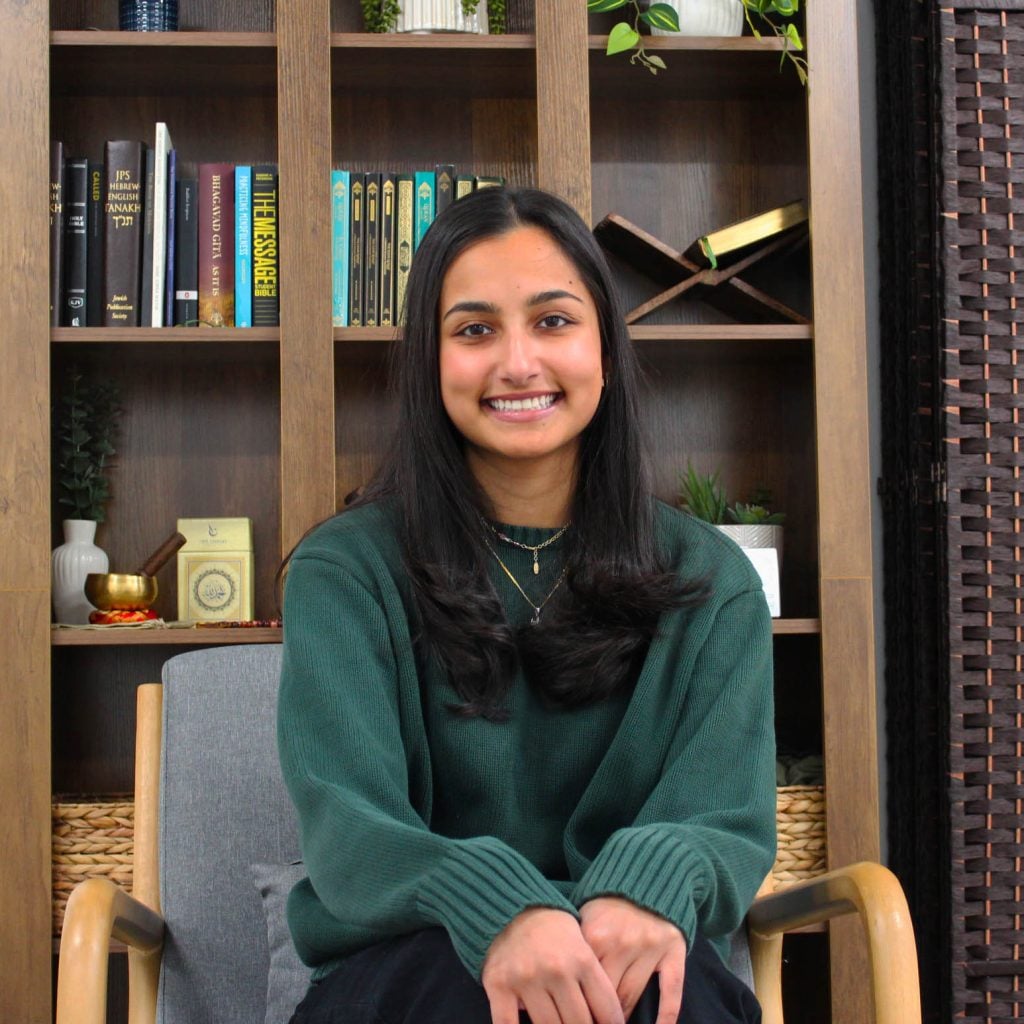
Sabeen Safi recognizes that interfaith work is not easy, and it’s grown especially challenging over the past few years.
“The world itself is just a lot more polarized than it was,” she said. “I think with things like social media, and even the people we surround ourselves with, it’s very easy to get insulated.”
Safi, a senior at Muhlenberg College and the institution’s study body president, is doing her part to combat polarization by creating space for authentic connection across religious and worldview differences.
With funding and mentorship from IA’s Building Relationships Across Interfaith Differences (BRAID) Fellowship, she advocated for her campus to build an interfaith space as part of Muhlenberg’s 35,000-square-foot Seegers Union Building expansion.

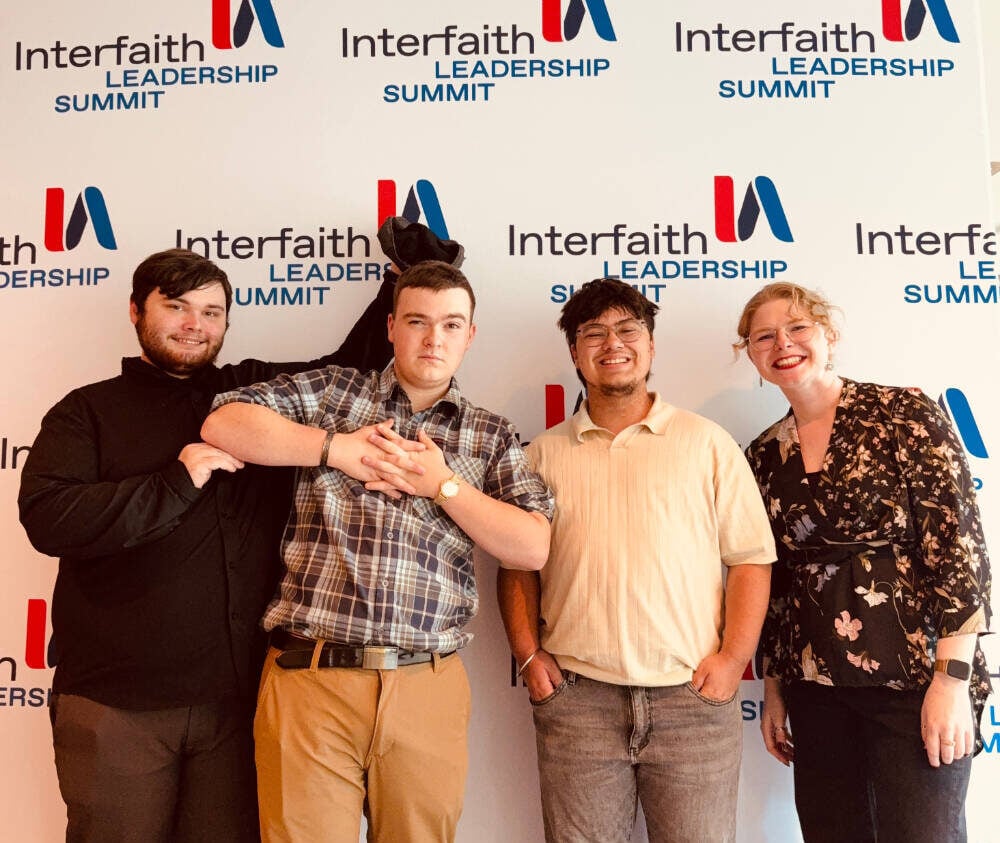
Safi was drawn to interfaith work for the same reason she was drawn to Muhlenberg: the community. Introduced to interfaith initiatives on her campus through friends, she attended an Interfaith Leadership Summit as a sophomore in Muhlenberg’s Interfaith Learning and Leadership Fellowship. Seeking another opportunity to pursue bridgebuilding in a structured setting, she participated in IA’s BRAID fellowship last year.
Interfaith events at Muhlenberg are common, Safi noted, but she also emphasized wanting to use resources from her BRAID fellowship to pursue a project that felt accessible for all students — religious or not.
“There was potential to create a space that was kind of a passive way for people to interact with [others of varying] traditions, she said. “So many times when it’s an event, it can feel too forced, or people are shy and they’re not really comfortable having those conversations.”
As student body president, Safi is accustomed to balancing competing needs and priorities of peers and institutional leadership. She takes initiative to involve underrepresented groups on campus when she can, and credits her practice of bridgebuilding and interfaith work at IA and beyond for providing a vocabulary to navigate difficult decisions as a leader
“I’ve definitely become more understanding, and I’m trying to help other people see that it’s not really ‘us vs. them.’”

Inspired by other campuses with interfaith spaces and under the leadership of Muhlenberg’s chaplain, the Rev. Janelle Neubauer, Safi worked with Muhlenberg’s administration to create such a space amid their union building renovations.
Securing the room required persistent email and in-person follow-up and collaboration with Muhlenberg’s president and the construction team.
Once they had the space itself, Safi and Neubauer also faced the challenge of designing a room that was welcoming for all, with particular attention to religious and non-religious students who don’t have designated space on campus for prayer and reflection.
The multi-faith space fills a need for Muslim students, like Safi, to have prayers — and for Hindu, agnostic, and atheist students, as it features prayer rugs and mats, dividers for privacy, comfy furniture, and interfaith and sacred literature from a wide array of faith traditions.
For those who are curious to learn about other faith traditions, there are explanations of the significance of these sacred materials.

The space is located behind two double doors in a bustling area of the Union building’s basement, but it is cozy, softly lit, and welcoming to all. “It’s a little escape, away from the busyness,” Safi said.
As she finishes her senior year at Muhlenberg and looks ahead to dental school, Safi is inspired by the faculty, staff, and friends who encourage and energize her when interfaith work gets hard.
“At the end of the day, our goal is just to leave Muhlenberg better than when we got here,” she said. “The relationships and connections I’ve made [here] give me hope.”