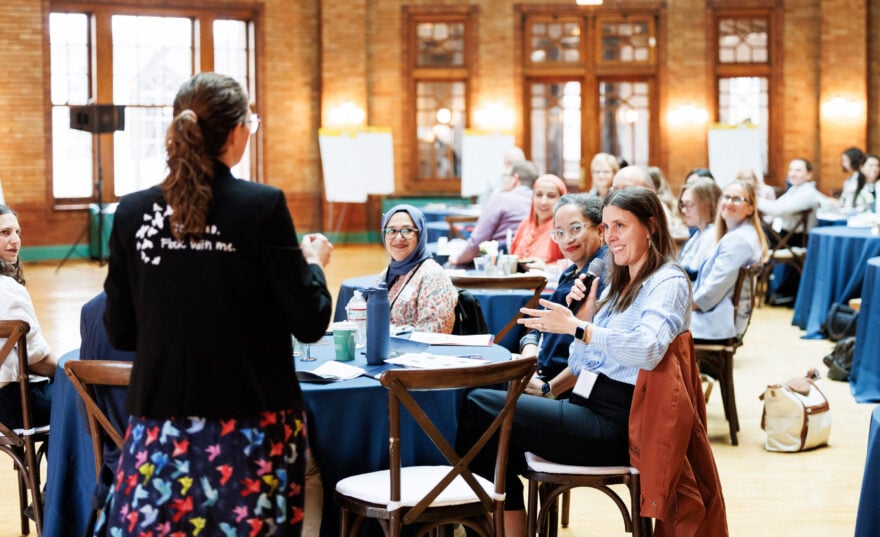

Interfaith America’s work is grounded in pluralism: a vision to respect diverse identities, build mutually inspiring relationships, and cooperate across difference for the common good.
According to Diana Eck at the Pluralism Project, pluralism “is not diversity alone, but the energetic engagement with diversity.”
“Where diversity is a fact,” IA president and founder Eboo Patel writes, “pluralism is an achievement.”
The concept of pluralism, which can sometimes feel abstract, is demonstrated in the actions of faith organizers, thought leaders, and students in Interfaith America’s network who are working to build bridges in their own circles of influence.
Throughout 2025, IA Magazine interviewed and covered the work of countless interfaith leaders spanning our diverse campus, workplace, and civic sectors. They spoke about how they understand pluralism and what it looks like in their communities:
Adam Nicholas Phillips
Chief Executive Officer, Interfaith America
“Pluralism is not passive. It’s not just tolerance. It’s real hard work. It’s spiritual and civic labor. It’s powerful.”
Phillips, who started as IA’s first CEO in March, stated this in his remarks at the 2025 Interfaith Leadership Summit.
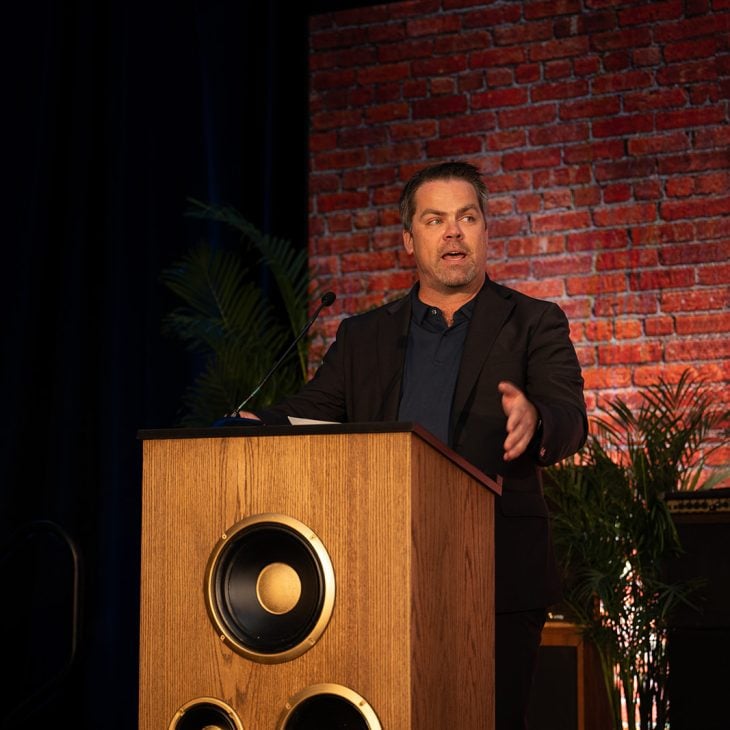

Damita Davis
Chief Diversity Officer, SUNY Brockport
“Really simply, [pluralism is] making space for everyone, regardless of who they are or where they come from. That whatever environment someone’s in, they see themselves represented, they feel welcomed, they can bring their points of view to any discussion or venue and know that what they bring to the table is value added and not a disadvantage or a problem to fix, so to speak.”
IA Magazine staff spoke with Davis, an attendee, at the 2025 Interfaith Leadership Summit. Read highlights from the August event in “Weekend Rewind: What Happened at the 2025 Interfaith Leadership Summit.”
Rachel Tingley
Program Manager, Academic Initiatives, Interfaith America
“Pluralism means the ability of all to contribute to the conversation without being forced to align with anyone else’s view. Everyone can contribute to the cultural stew.”
Tingley is a member of Interfaith America’s Higher Education Team. Read more about programming supporting educators to create and teach innovative pluralism curriculum.
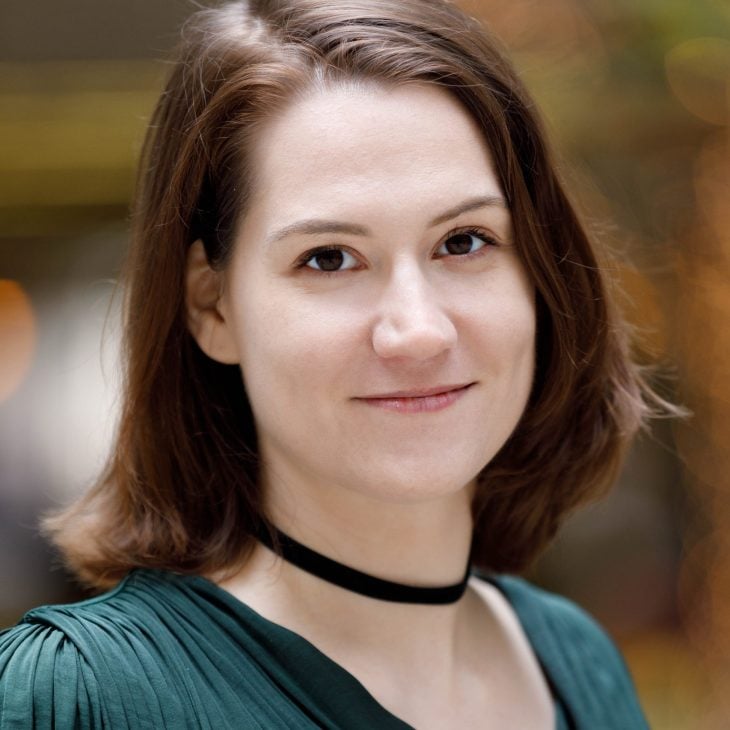

Daniel Darling
Director of the Land Center, Southwestern Baptist Seminary
“A true, robust way of thinking about [pluralism] is that we don’t want people to leave their beliefs behind but bring them to the table and have conversations with other people who disagree with us.”
Interfaith America’s Chris Crawford spoke with Darling earlier this year. The two discussed patriotism, dignity-centered politics, and America’s 250th anniversary in “Daniel Darling’s Case for Evangelical Patriotism.”
Melanie Trexler
Associate Professor and Director of the Center for Civic and Religious Pluralism, Roanoke College
“[At Roanoke College] we think that pluralism is more than diversity. Pluralism is where people are coming together across deep difference and learning to live with each other, and mutual engagement toward a positive end.”
Roanoke College is a grant recipient of Interfaith America and the Council of Independent Colleges in Virigina’s partnership to advance campus pluralism. The Center for Civic and Religious Pluralism at Roanoke aims to equip students, staff, faculty, and the community with skills to engage with one another across differences.


Sumreen Ahmad
Director of Talent & Human Potential, Accenture
“Pluralism is not about erasing difference. It’s about navigating it — with respect, dignity, and grace.”
IA Board Member Ahmad spoke to the necessity of faith inclusion in the workplace in her talk at the Religious Freedom & Business Foundation’s Dare to Overcome conference. Learn more about Interfaith America’s programs for corporate leaders.
Rabbi Rachel Weiss
Rabbi, Jewish Reconstructionist Congregation, Evanston, Ill.
“Pluralism means that everybody’s got their voice and their voice is strong, and their voice is respected, and their voice plays well with others.”
IA Magazine interviewed Rabbi Weiss about her involvement in Evanston’s Interfaith Family Pride festival. Read more about the festival in “Faith and Pride: Interfaith Imagination in Evanston.”

Sabeen Safi
Student, Muhlenberg College
“You can’t really give care if you don’t understand a person. People want to be seen as more than just their name or as your coworker. It’s nice to be known. Sometimes it is in discomfort that you grow the most. It’s helped me understand why people think a certain way or believe certain things.”
Safi, an aspiring healthcare professional and 2024-25 Interfaith America BRAID fellow, reflected on the work of pluralism in conversation with colleague Eliza Stewart during a StoryCorps session at the 2025 Interfaith Leadership Summit.
Scott Rasmussen
Director of Democracy Initiatives, Interfaith America
“To me, pluralism is a mindset that helps me see conflict and difference as invitations to relationship and cooperation, not as something to be conquered or defeated.”
Rasmussen leads Interfaith America’s civic programming.

Share what pluralism means to you by submitting your own story in our My Interfaith Story series.