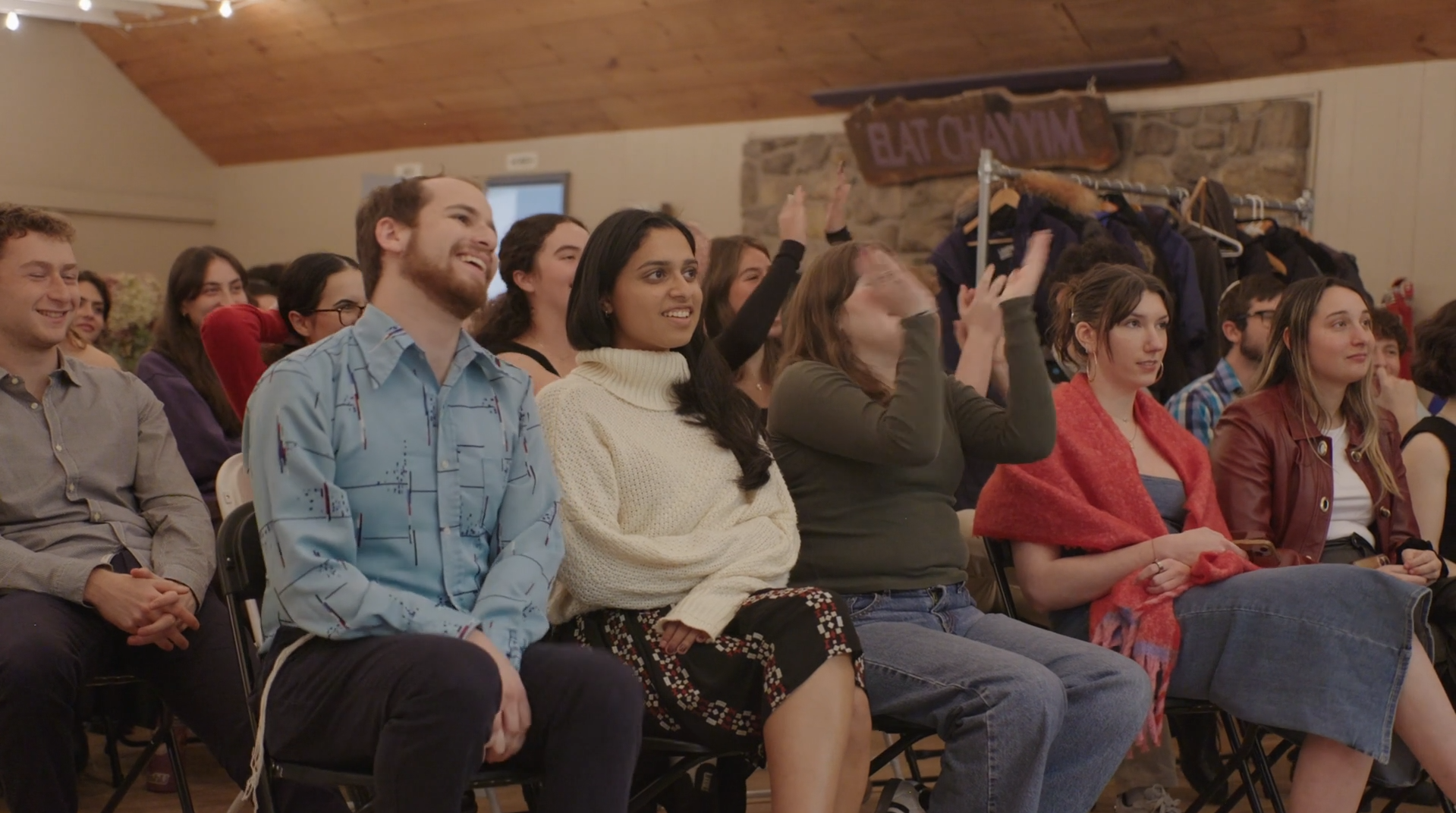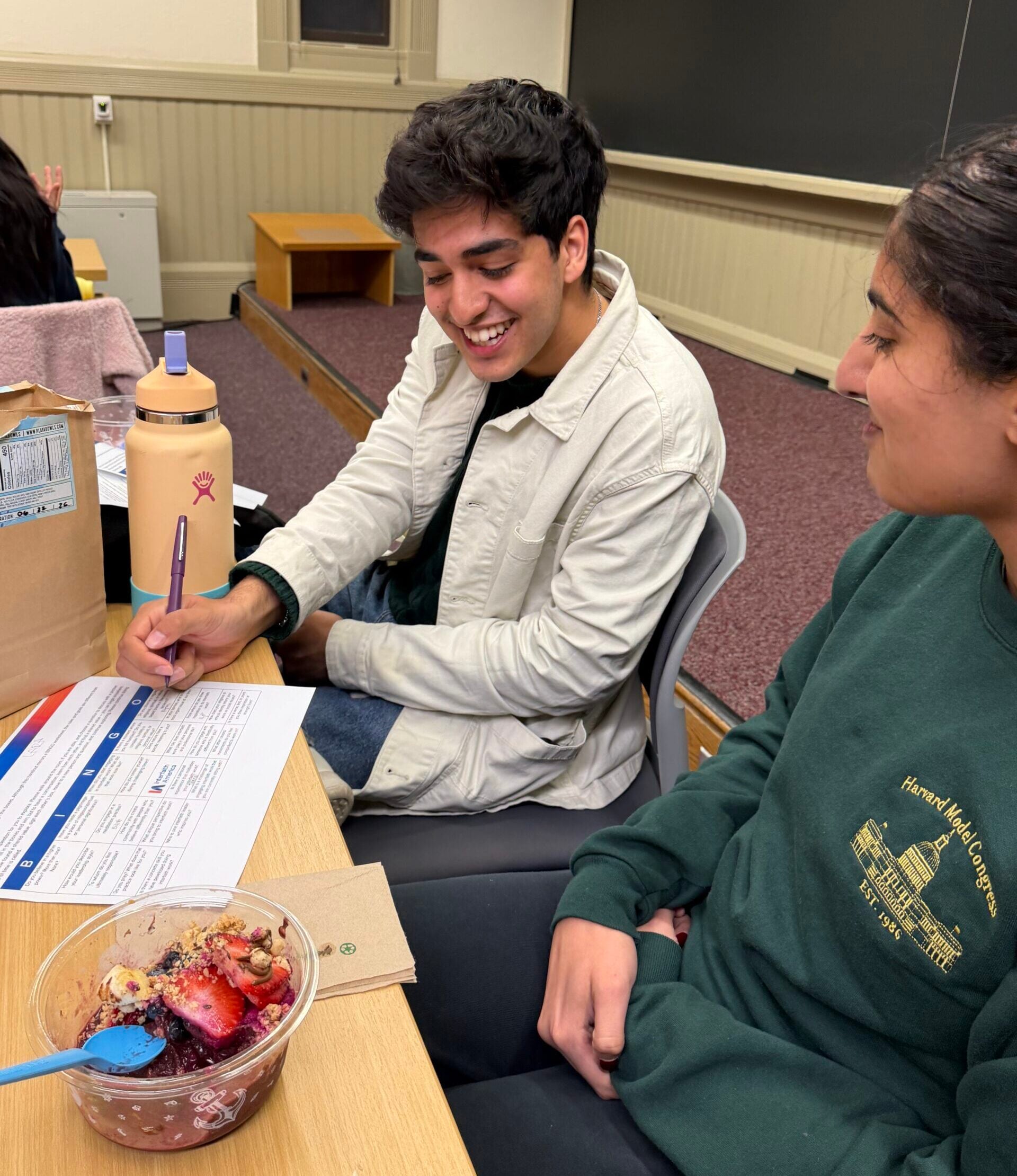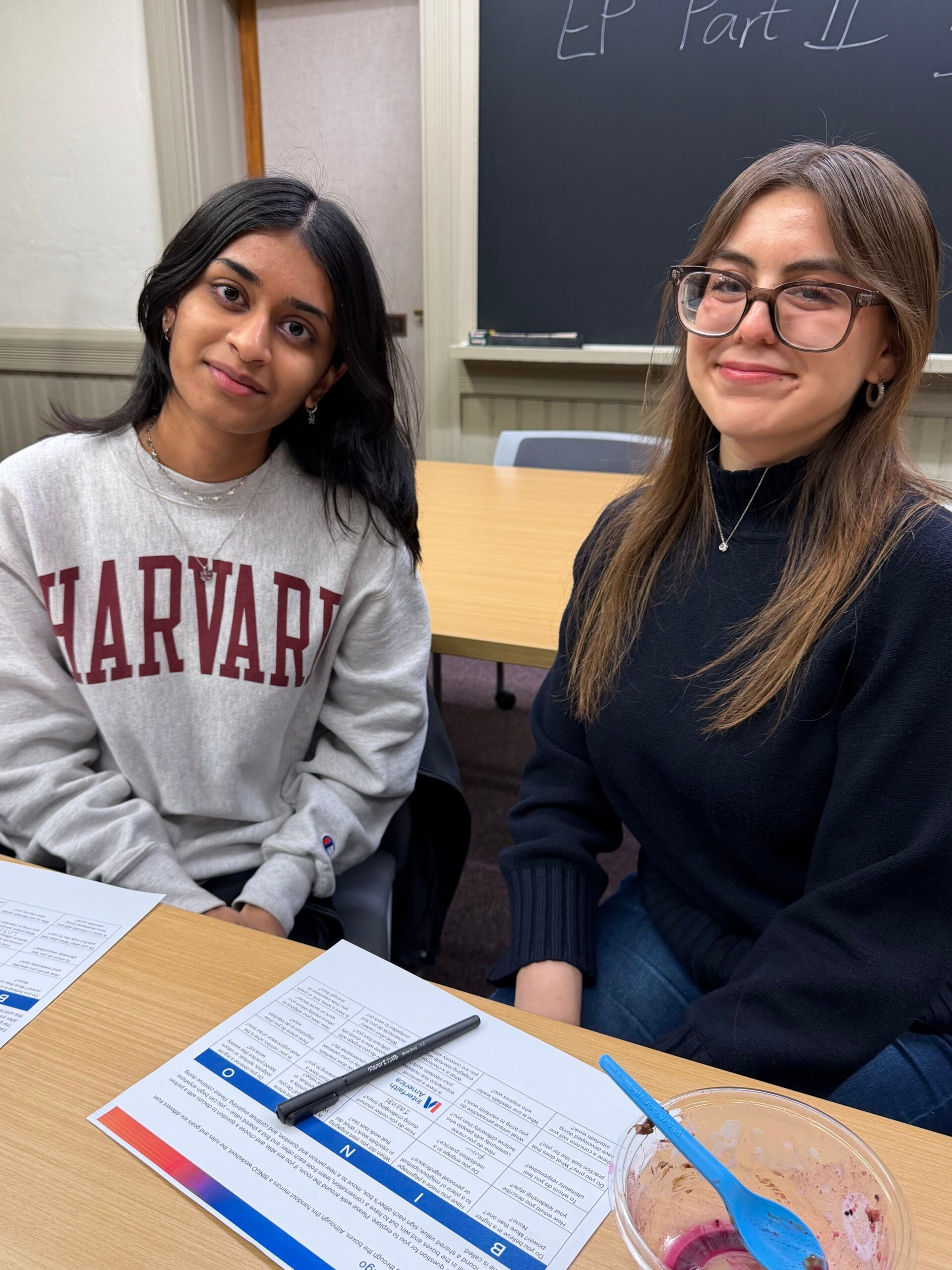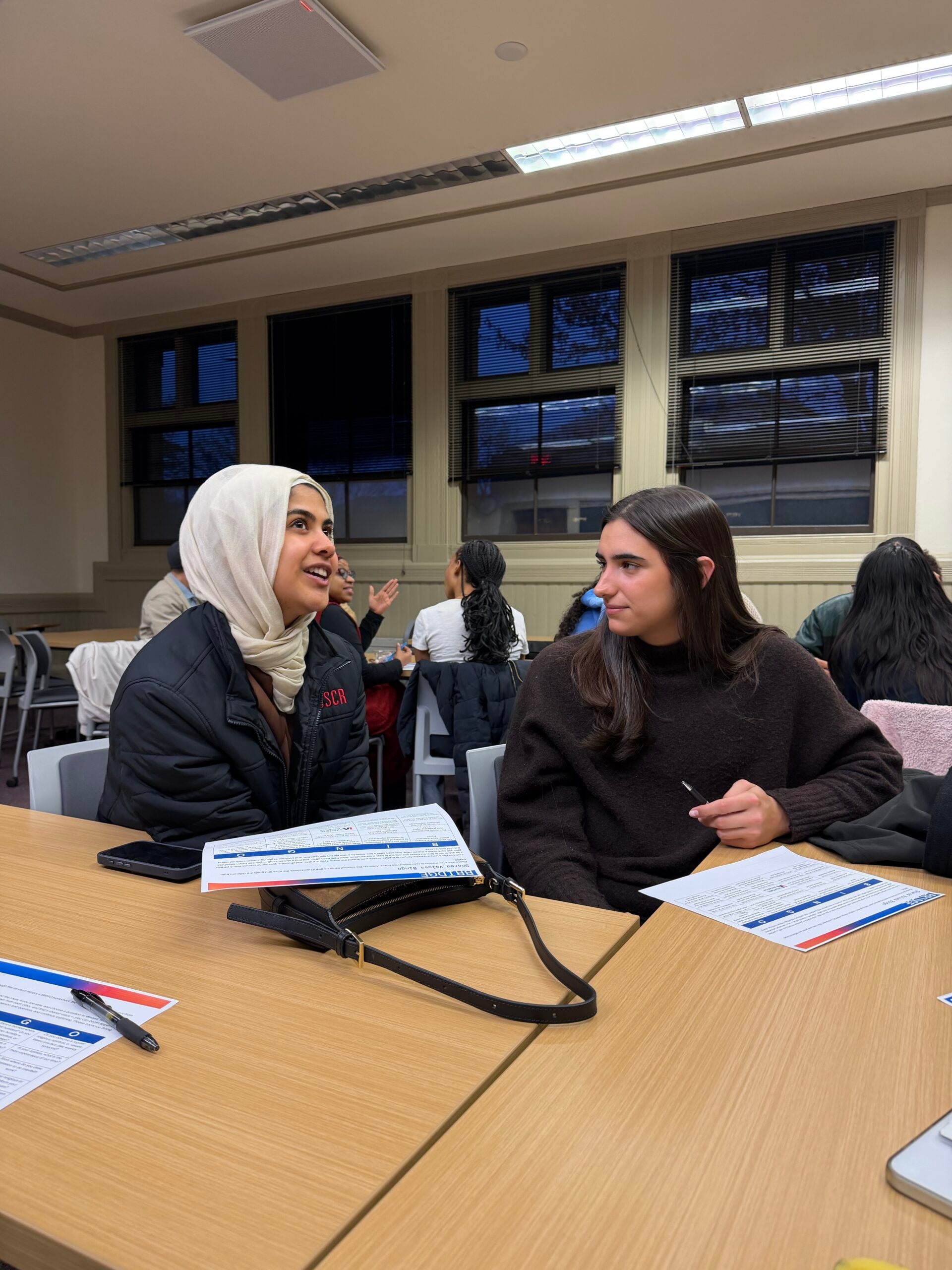
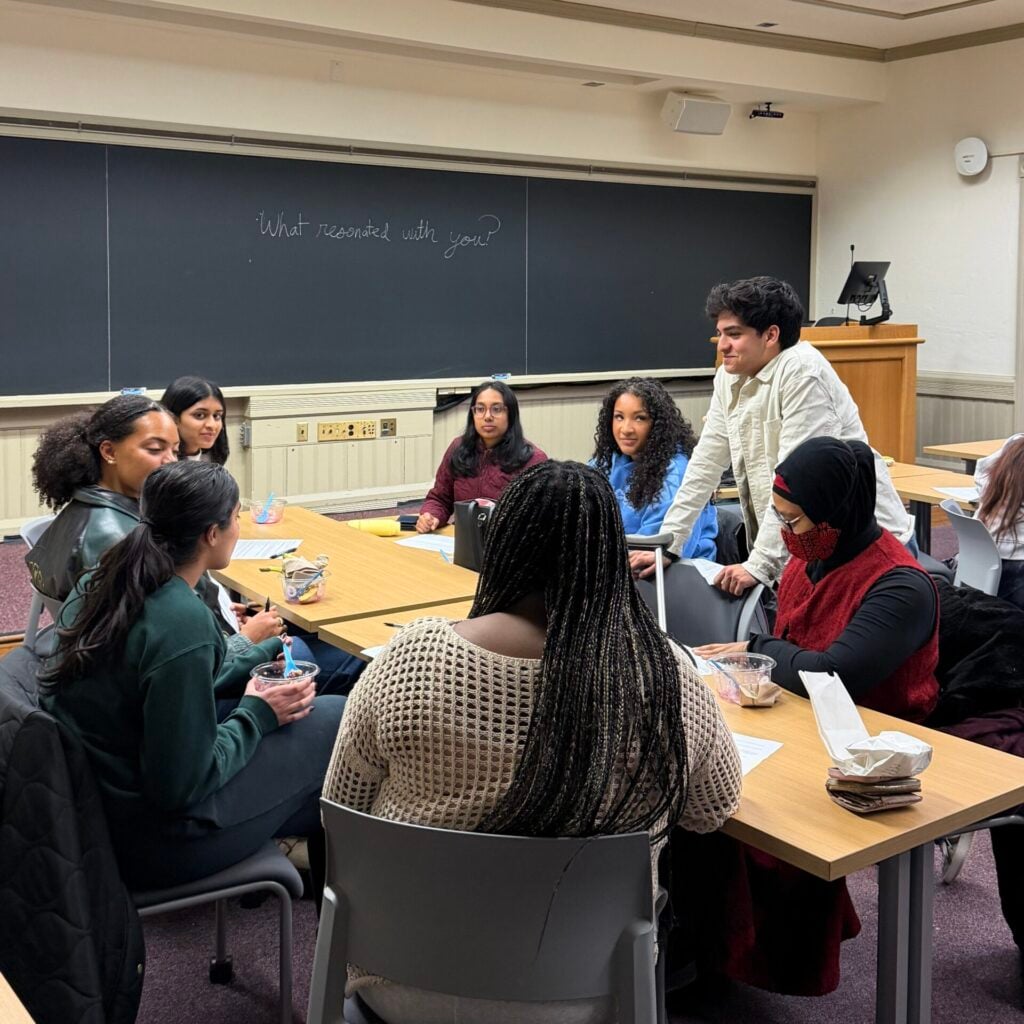
On a late spring evening, in a classroom right on Harvard Yard, about 20 students huddled around long tables, each immersed in smaller conversations of two or three people. Every few minutes, a student would get up in front of the classroom and share a few words about what to talk about next. The suggestions were straightforward: religion, your core beliefs, how you’re different but also similar to others.
You know, the easy stuff.
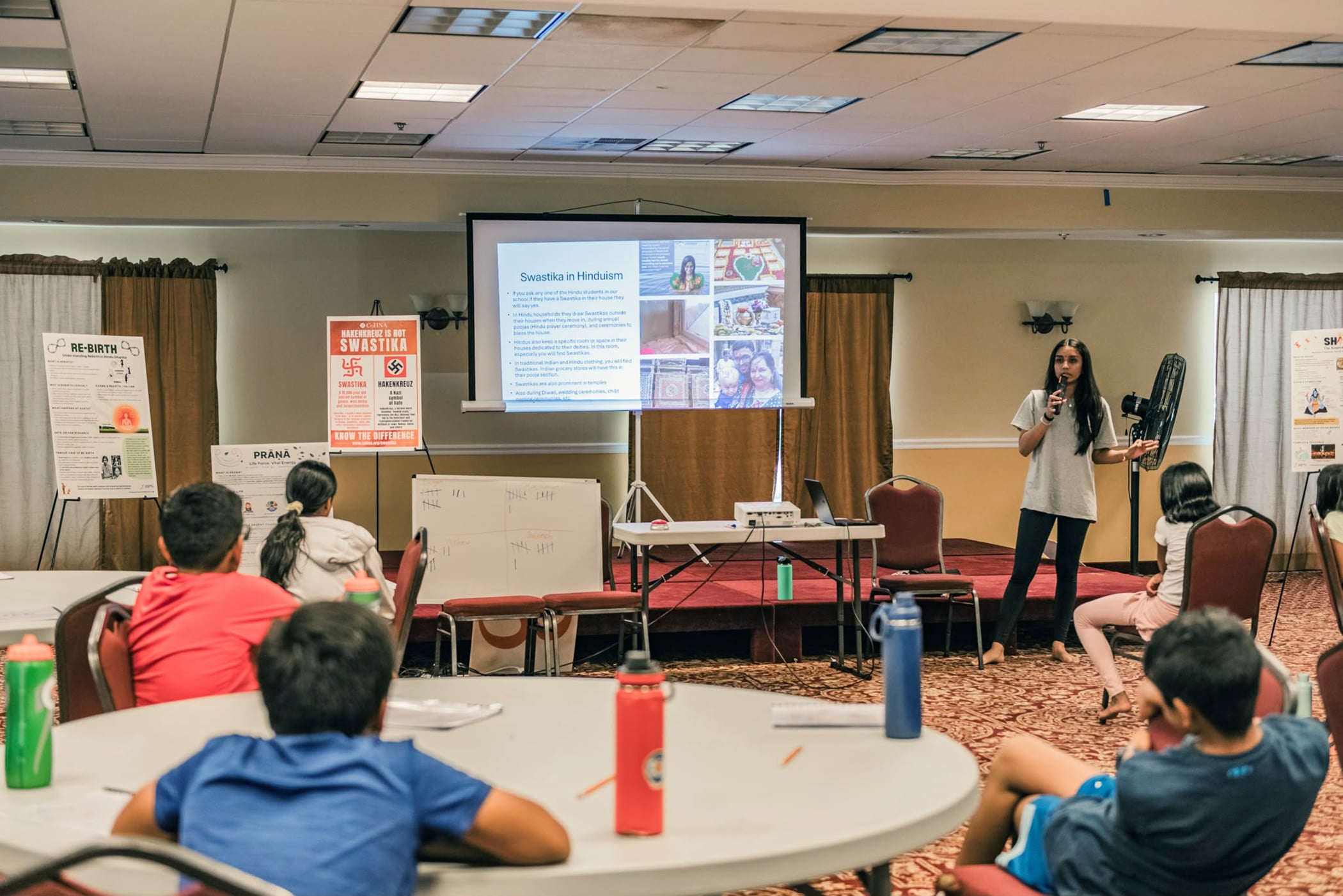
The event, officially titled “Listening Across Lines,” was led by Zain Memon, who is concentrating (Harvard’s term for a major) in health sciences at the College. Zain, a 2025-2026 Interfaith America BRAID fellow, was leading his fellow students through a conversational exercise intended to find areas where they can respect, find relationship, and actively work together with others who come from different backgrounds and belief systems from them.
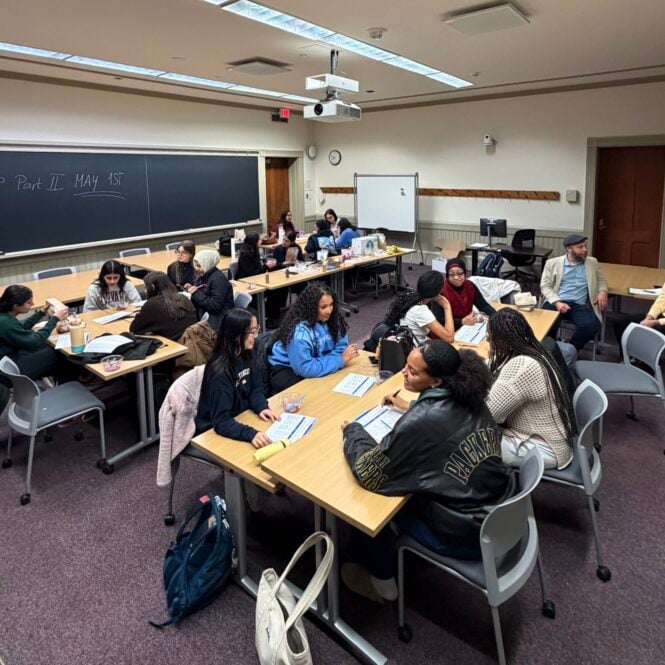
After the session, we sat down with Zain to learn more about what led him to be an Interfaith Leader during his college tenure. Zain grew up in the United States as a Muslim, but every summer, he would visit family in India. It was there that they “as a Muslim family, would stay in a Hindu neighborhood on a street named after a synagogue.” For Zain, engagement with others wasn’t a choice; it was practically geographic destiny. Similar stories of encountering religious diversity, although perhaps not as street-level as Zain’s, seemed to be what motivated other students to be in that particular classroom that night.
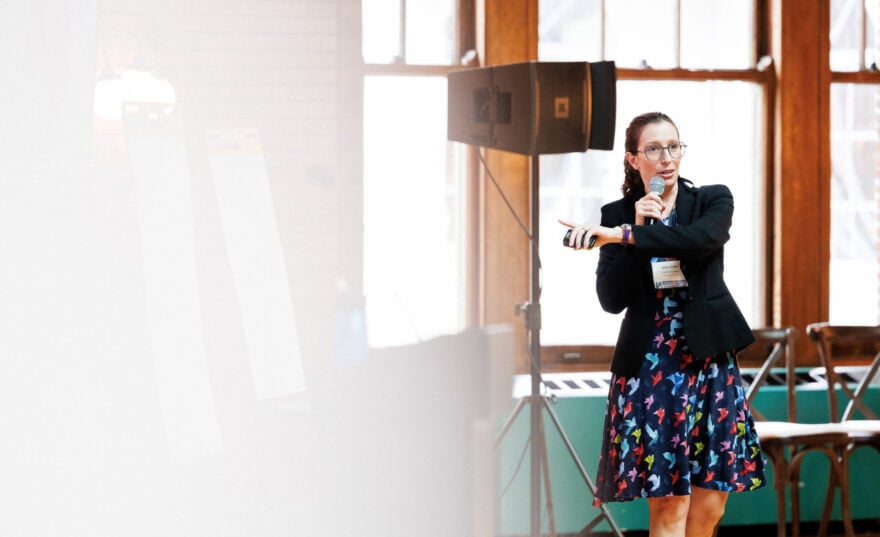
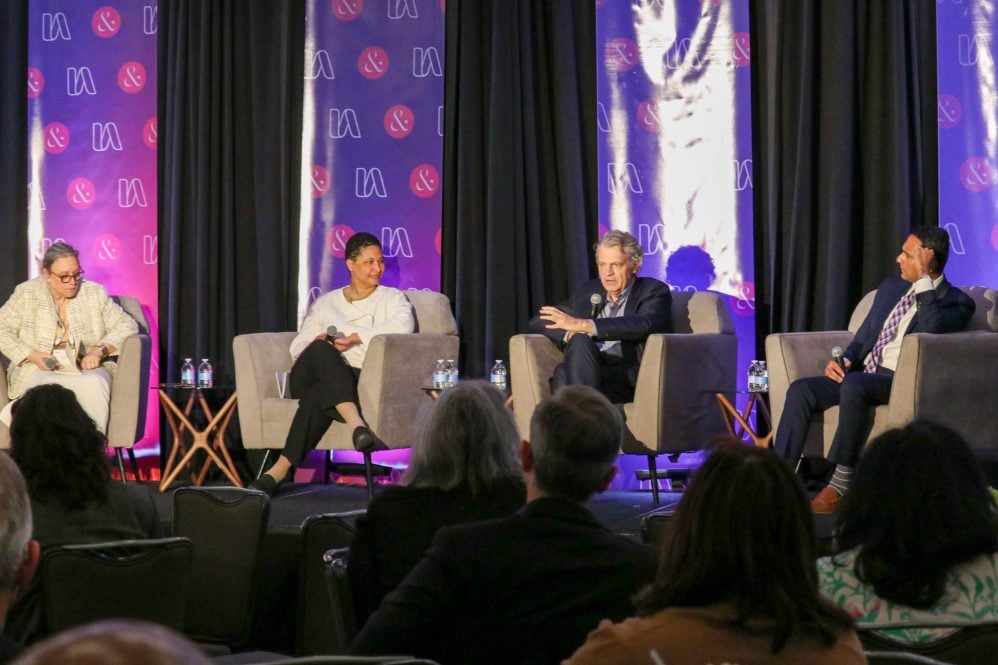
“Listening Across Lines” was one of the final events in the university’s “Interfaith Across Harvard Week,” a series of collected activities, speakers, and programs dedicated to interfaith work on the campus. The series was received with such enthusiasm that programming ended up spanning multiple weeks, rather than just seven days. Curated events were offered, ranging from an Interfaith Shabbat Dinner hosted by Harvard’s Hillel, interfaith community-building trainings, and even a “lunch & learn” session hosted by renowned scholar of religion and Harvard professor, Diana Eck.
Organized by the Presidential Initiative on Interfaith Engagement at Harvard, the week represents Harvard’s commitment to interfaith understanding and leadership, particularly among its undergraduate students within Harvard College. Indeed, at this much needed moment, Harvard is offering a fresh model for what undergraduate student interfaith leadership can look like during this tumultuous time on American campuses.
“What constantly surprises and inspires me is how hungry our students are for relational depth and lived experience.”
Just two years ago, Harvard, like many colleges and universities, was struggling with intense conflict on campus around issues of religion, identity, and polarization in the aftermath of the October 7 attacks and the campus protests that followed. Students from across religious and identity spectrums felt targeted for their beliefs and, for many, any sense of common ground seemed almost unachievable.
In July 2025, the Harvard President’s Office started the Interfaith Engagement (IE) Initiative. Focused on its undergraduate students, the Initiative’s goal was to foster intentional and meaningful interfaith understanding on campus. Through a series of programs and trainings, the hope was that students would use difference not as an excuse to avoid (or even shut down) engagement with one another, but as inspiration and a starting point to foster deeper understanding amongst them. That, in turn, could then lead to building more meaningful relationships on campus. These relationships wouldn’t be void of disagreement or tension, but they would be nurtured by having shared values and respect as their foundation.
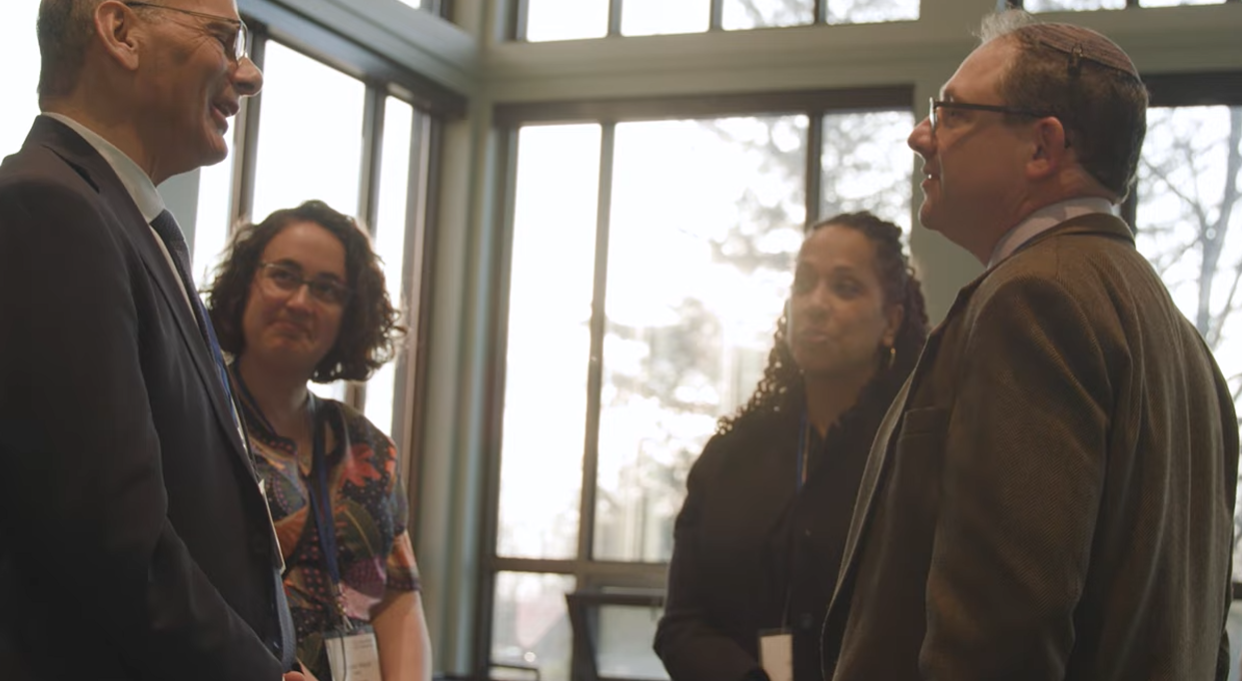
Rabbi Getzel Davis was hired as Director of the Presidential Initiative on Interfaith Engagement to lead the interfaith efforts on campus. “I was acutely aware [when taking the position] of how fractured our communal trust had become. I felt nervous about the sheer scale of pain students were carrying and the challenge of breaking through entrenched defensive postures,” he told us. But he saw a vital opportunity. “My excitement vastly outweighed my trepidation. … What constantly surprises and inspires me is how hungry our students are for relational depth and lived experience.”
The Initiative immediately got to work and quickly decided to focus on first-year students at the University. The hope was that by investing in students early in their college career, the initiative could make a longer-term impact on them and, through the student projects, the student body as a whole.
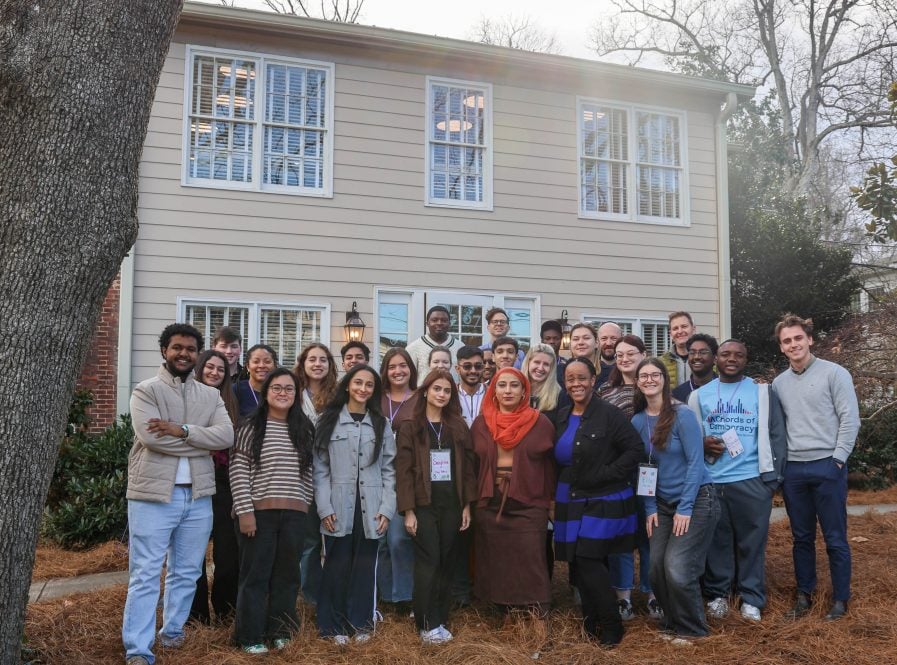
One of the initial major projects was the First Year Religious, Spiritual, and Ethical Life Fellowship; this program offered a series of trainings to students on bridgebuilding and interfaith leadership skills, along with funding for the students to run their own interfaith projects on campus. Interfaith America also partnered with the initiative to support this project through grant funding related to the Supporting Student Leadership grant, Bridging the Gap, and curricular tools. Davis and his team set an aspirational goal of admitting 15 fellows into the fellowship. In the end, over 30 fellowships were awarded.
Many of these students offered programming at the super-sized Interfaith Week or service events earlier in the semester. Over the past two years, two Harvard students have also been BRAID fellows at Interfaith America, further deepening their interfaith skill set.
“Our goal is to weave interfaith engagement and mutual responsibility into the everyday academic and social fabric of the university.”
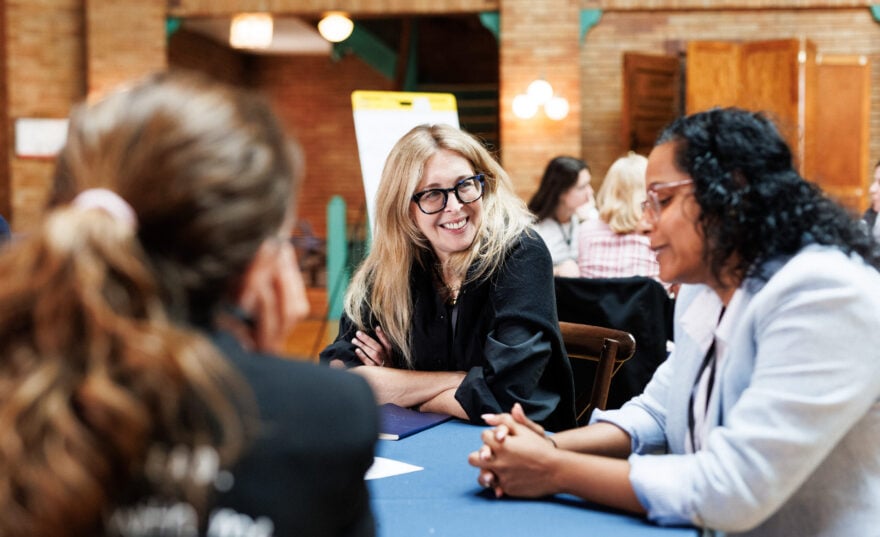
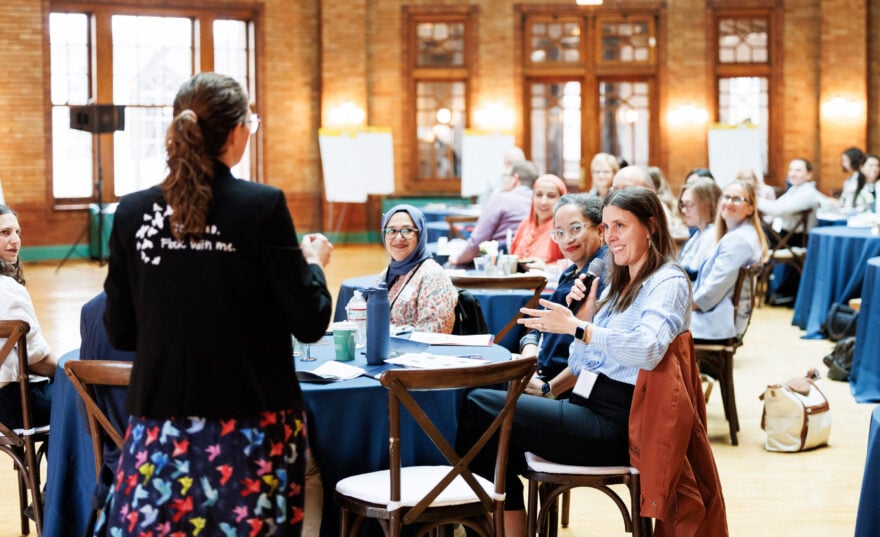
The impact of all of this work is starting to be felt on campus. Almost 200 Harvard students, faculty, and faculty attended an “Across This Table” dinner focused on cultivating conversations around faith, belief (or lack of), identity, and how they connect us to each other. Prompting questions were provided at each table, and participants were encouraged to share their own stories. Those questions about “religious upbringing, how their faith or lack of faith changed over time, and how they incorporate their faith into their lives and work” help connect people’s personal journey with belief with the larger, very diverse, community at Harvard. Even Harvard President Alan Garber, took a moment to share his own interfaith story and encouraged all Harvard students to embrace difference with generosity and curiosity.
The Interfaith Initiative is already looking towards this coming school year and building on the success of this past year. “Going forward,” Davis shared, “our goal is to weave interfaith engagement and mutual responsibility into the everyday academic and social fabric of the university.” Next year, they plan to expand their trainings and activities to Harvard’s graduate schools. Their outreach is also expanding to students not yet on campus by sending speakers to admitted student events to share about the work they are doing. And, with lots of feedback from this year’s program, the office plans to refine and continue their fellowship program, “pluralism passports” activity, and other events for Harvard undergraduates.
For Harvard, creating spaces, programming and initiatives where students can find partners in difference through celebration, literacy-building, storytelling, and service has benefitted not only the students, but the institution. As Rabbi Davis summed it up, “Ultimately, the hope is to help make Harvard a place where any student, regardless of their religious, spiritual, or ethical life background, can truly thrive in their distinctiveness.”
Carr Harkrader is a Senior Program Specialist and Melissa Carter is the Director of Student Life and Partnerships at Interfaith America.