“Are you a Jewish-American or an American-Jew?”
Sometime during my freshman year in high school in the late ‘90s in the north shore suburbs of Boston, I recall being asked this question during a discussion in our American Government class. In a mixed classroom of peers, most of whom were not Jewish, I gravitated towards an answer that prioritized my Americanness. Just as my Italian-American peers put Italian as the modifier and American as the subject, so too, did I place Jewish as the modifier, proudly stating that I was a Jewish-American.
Now more than 30 years later, I found myself revisiting this question and what assumptions about Judaism, America, and pluralism were baked into my response then and now. What I have come to understand is that it’s impossible for me to choose where to place the hyphen between these two identities. I am both an American-Jew and a Jewish-American; these identities shape me and my values. These identities also shape my understanding of what it means to be an American and what it means to be Jewish. For me, this is the gift of American pluralism.
An American commitment to pluralism that allows for a robust multi-ethnic, multicultural, and multi-religious civil society is the backdrop to my personal story. Pluralism is the reason Jews can survive and thrive in any society — without it, we are at risk. In today’s political climate, a waning commitment to pluralism puts not only our democracy at risk, but also the future of my and my children’s distinct identities as Jews in America.
Pluralism is the reason Jews can survive and thrive in any society — without it, we are at risk.
This Fourth of July, on the 250th celebration of America’s independence, I took my three children to hear a public reading of the Declaration of Independence, just as it would have been read out loud in the 13 colonies so many years ago. Equality, liberty, choice — these powerful ideals, the bedrocks of our democracy— are also visible in the manifestations of Judaism that have blossomed in America since its founding. Jewish communities in America are shaped by the values of America writ large. Without the American feminist movement, I am certain that the decision to ordain women rabbis, especially in parts of the Orthodox movement, would not have occurred in my lifetime. The dynamic and creative synagogue that my family belongs to — where congregants insist that prayer and ritual offer contemporary relevance and meaning — is a function of the American tradition of choice and the pursuit of happiness.
As an undergraduate at Barnard College, I was lucky enough to find a favorite professor. Dr. Peggy Ellsberg was a committed Catholic who taught the best seminar I ever took on American-Jewish literature. We read great American Jewish authors from the middle of the 20th century like Bernard Malamud, Philip Roth, and Tillie Olson. Dr. Ellsberg’s course showed me how American-Jewish writers helped America to tell its stories. Today, so many American fiction writers easily weave their rich cultural, ethnic, and religious heritage into their works including people like Jhumpa Lahiri and Junot Diaz.
I take immense pride in just how Jewish our America is.
American-Jews are trailblazers of commingling particularism and universalism in America, creating a pathway for our entire immigrant nation to tell our own stories. I take immense pride in just how Jewish our America is.
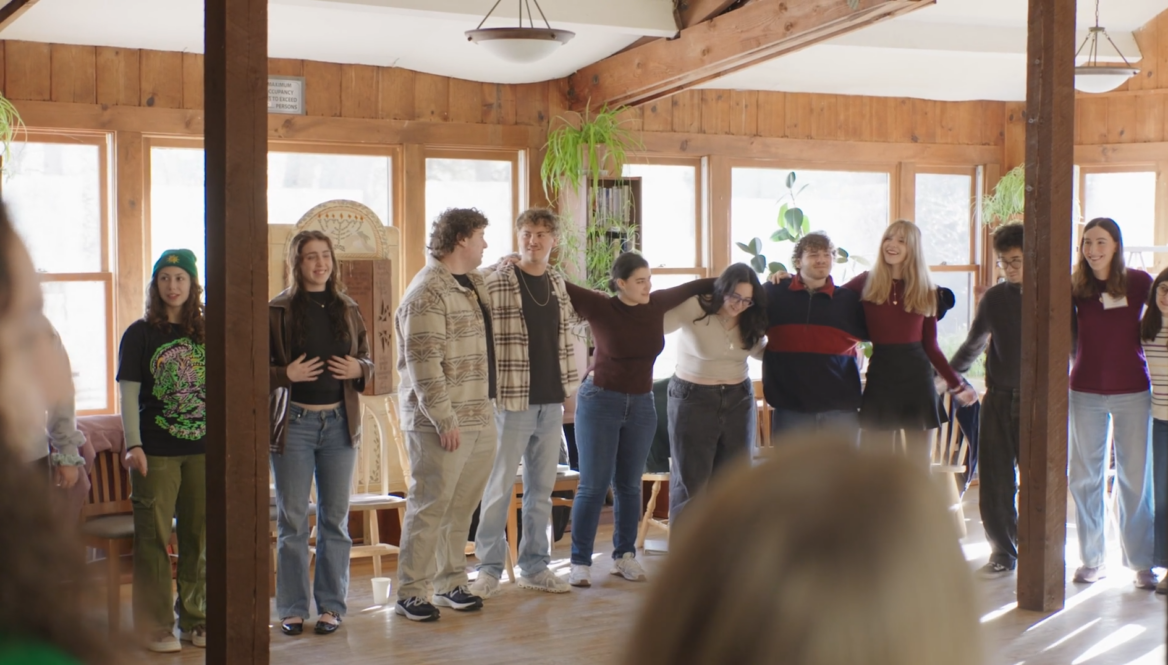
And so, I am deeply troubled by the way that my students — Jewish high school and college students across a wide spectrum of backgrounds — talk with anxiety about being publicly Jewish today. In the last three years, I have heard far too many stories of Jewish students hesitant to disclose their Jewishness in new social or academic settings for fear of ostracism. This was not something I had to worry about when I was growing up.
The documented rise in antisemitism is surely part of this phenomenon, but less frequently acknowledged is the decline of pluralism in America that makes it much harder for religious and ethnic communities across America to participate as full equals in the American project today.
The weakening and delegitimization of pluralism puts minority communities at risk of dropping the hyphen altogether. Sometimes it feels that there are only two choices presented to my students: become more insular within the Jewish community or become more assimilated and distance themselves from that community. Jewish young adults need to know there’s another way forward that doesn’t ask them to bifurcate their identities.
When my organization started Campus Commons, a program for Jewish college students to cultivate the skills and commitment to be bridgebuilders today, we imagined that the program’s primary benefit would be through strengthening interfaith and intercultural relationships on campuses. Now I understand that the greatest benefit of teaching Jewish college students about pluralism is that it empowers these incredible students to hold onto their own metaphorical “bridge”: their Judaism can positively impact America, and America can positively impact their Judaism. The hyphenated identity is an incredible American invention, and it’s essential to preserve and champion it.
Becky Voorwinde
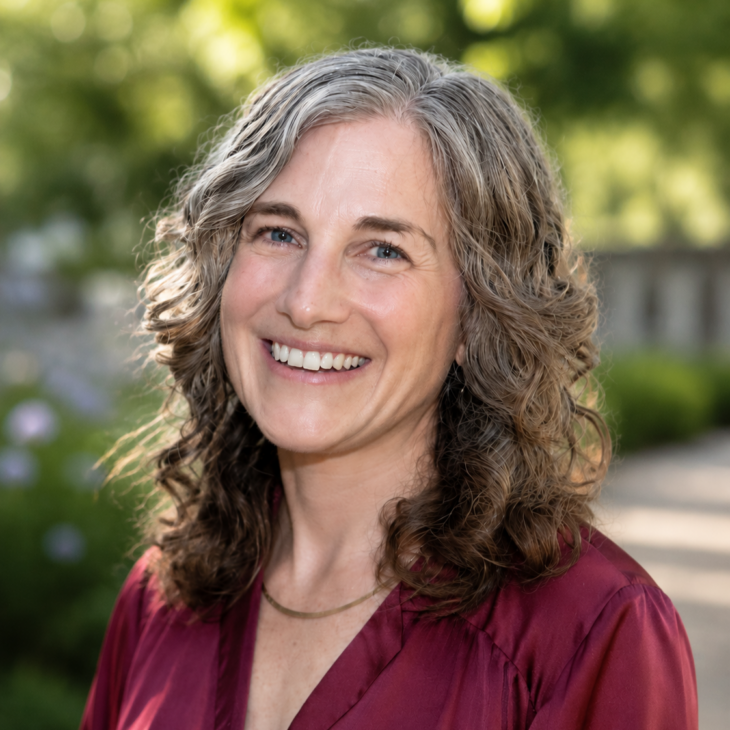
Rebecca Voorwinde is CEO of The Bronfman Fellowship.
In the United States’ 250th year, Interfaith America’s Faith-Specific Convenings bring together particular communities of faith and conscience in intra-faith dialogue to discuss the history and future of religious liberty and pluralism in their traditions.