As a mom of three children, ages 14, 12, and 10, I spend a lot of time thinking about their daily needs. Who needs their violin today? Who forgot their lunch? Do we seriously need groceries again?
But somewhere between the school pickups, gymnastics practices, and towering piles of laundry, I find myself thinking about something else: What future are we creating for our children? What kind of country will they inherit?
Like most parents, I want my kids to grow up in an America where differences are not viewed as threats, but as opportunities to learn from each other.
Like most parents, I want my kids to grow up in an America where differences are not viewed as threats, but as opportunities to learn from each other. I want them to see examples of mutual respect, peaceful engagement, and civic responsibility. With the midterm elections just weeks away, now is the time to model those values in our homes and neighborhoods.
Election seasons often bring out the best in our democracy. We proudly wear our “I Voted” stickers and are reminded that ordinary citizens have a voice in shaping our communities and our country. But elections can also expose real risks: disinformation campaigns, deep divisions, declining trust in elections, and the threat of political violence.
These challenges extend far beyond any single election. They test the democratic norms and civic trust that have sustained our nation for generations.
At times, it can feel as though our political differences are widening while our ability to talk across them is shrinking. Too often, Americans are encouraged to view one another with suspicion rather than assuming the best intentions of each other.
In truth, democracy has never depended on agreement. In fact, disagreement is baked in, and what matters is our willingness to engage despite our differences.
In moments of uncertainty, faith communities can model what that looks like. They can demonstrate that disagreement is not the same as disrespect; people with different beliefs can work together; and values like dignity, humility, and compassion transcend political labels.
That mission is at the heart of our work at Interfaith America. We activate leaders to respect, relate, and cooperate across differences for the common good.
At a time when division often dominates our headlines and social media feeds, we help people develop the skills and relationships needed to strengthen our civic life.
If you’re a member of a faith community, check out our Faith in Elections Playbook, which offers practical guidance for faith leaders, congregations, and community members seeking to support peaceful civic engagement. The playbook includes tools for encouraging respectful dialogue, responding to misinformation, and helping communities navigate election season with integrity and care.
The need for this work has never been greater. Democracy is not self-sustaining. It relies on citizens who are willing to invest in relationships, uphold democratic norms, and resist the easy temptation to demonize those with whom they disagree. Faith communities are uniquely positioned to model those habits.
Join us for the next Praying for America gathering on November 1, where people of many faith traditions will come together in a spirit of humility, hope, and shared concern for our nation.
The goal is… a commitment to the common good, peaceful participation in our democracy, and treating one another with dignity during a consequential election season.
The goal is not political agreement. It is something deeper: a commitment to the common good, peaceful participation in our democracy, and treating one another with dignity during a consequential election season.
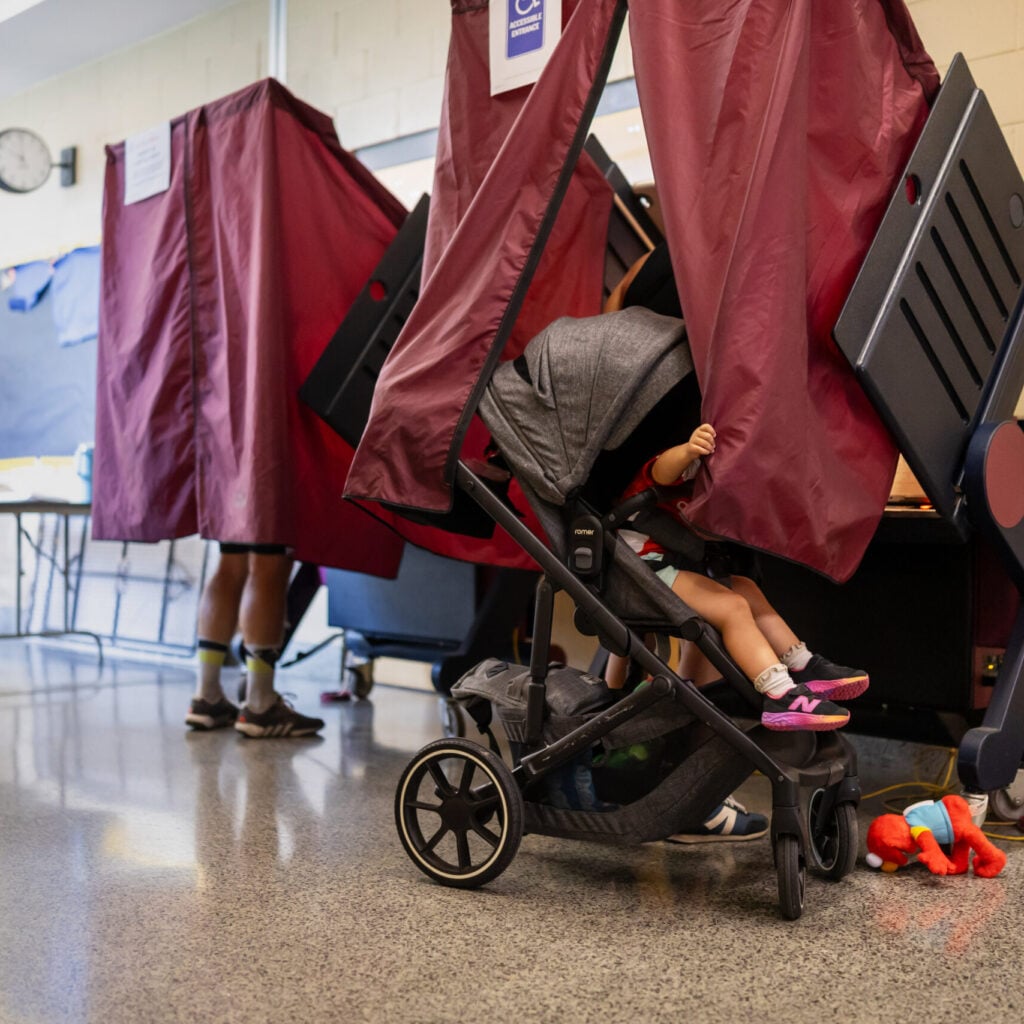
As Election Day approaches, I hope my children see more than the campaign texts constantly lighting up my phone. When I take them to the polls, I hope they see neighbors treating one another with respect. I hope they see people standing together in support of a healthier civic culture.
Our children are watching. Let’s give them an example worth following.
Emily DiFrisco
Emily DiFrisco is the Senior Director of Strategic Communications at Interfaith America.
- Religion News Service