Just after the 2017 inauguration, two friends sat down to lunch. Before they took a bite, they unpacked their worst fears about the political climate and the often harsh language that was bubbling up about immigrants and people of color.
“We asked, ‘What are a minister and a professor of sociology supposed to do at this moment?’” recalled Roman Williams, the sociologist, who was teaching at Duke Divinity School alongside the Rev. Michael Bos.
“We emptied the lint out of our pockets,” Williams said. “We were not famous people or rich people, but we wanted to bring what we had to bear on this problem.”
Before lunch was over, they had a plan — to use the photos most of us carry in our smartphones to build relationships and understanding between people who might not otherwise talk to each other.
They called their idea “Interfaith Photovoice,” a nod to Photovoice, the sociological research method developed in the 1990s that asks participants to share personal photos in the hope of giving them a voice in their communities. Interfaith Photovoice does the same, but puts it in play between people of different faiths and cultural backgrounds.
“It’s the idea that contact across differences can create positive impacts on people,” Williams said. “It changes them. They begin to ask questions of genuine curiosity; to see through the lens of other people and imaging ways their community might need to change so everyone can flourish, everyone can experience belonging.”
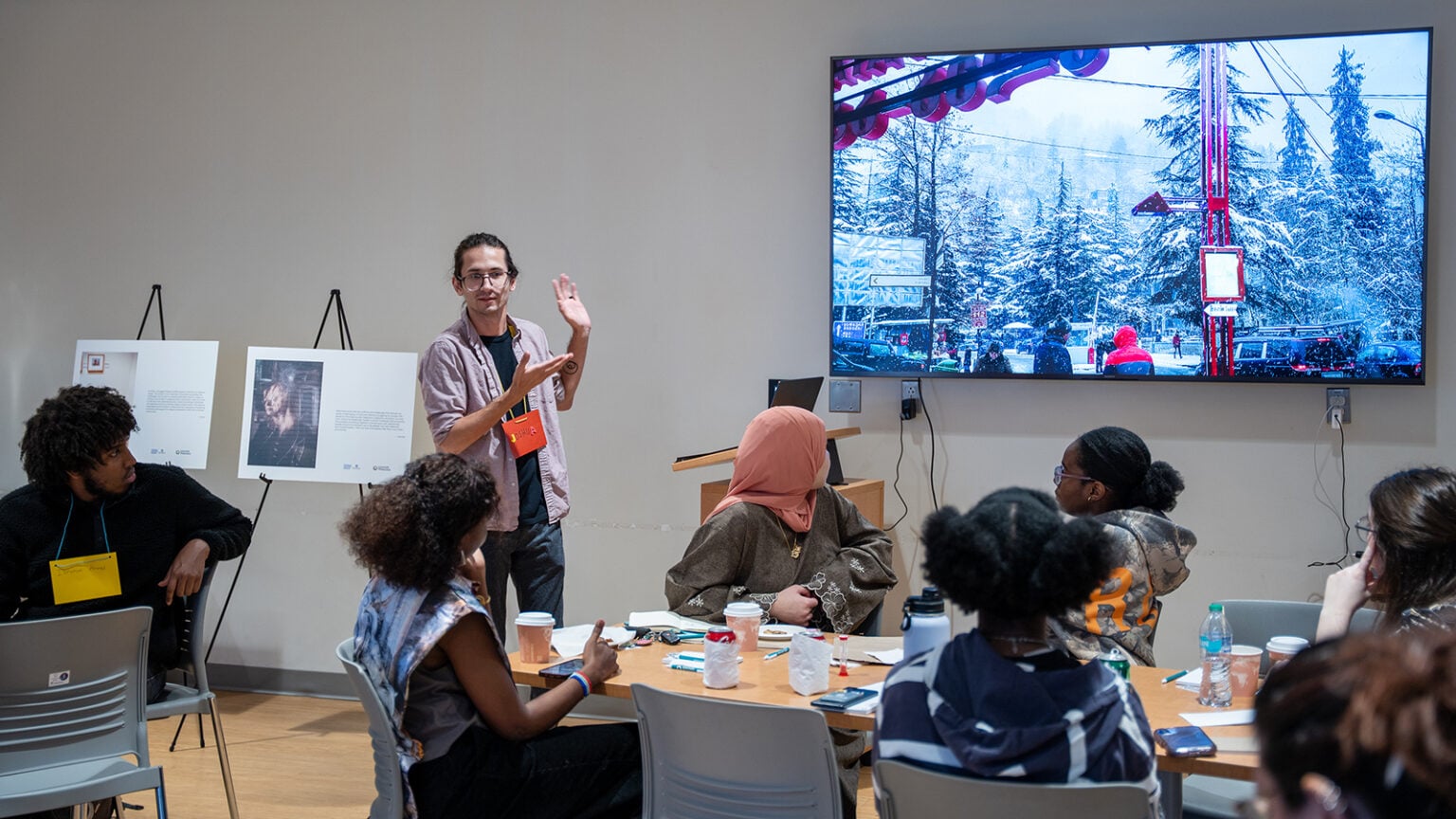
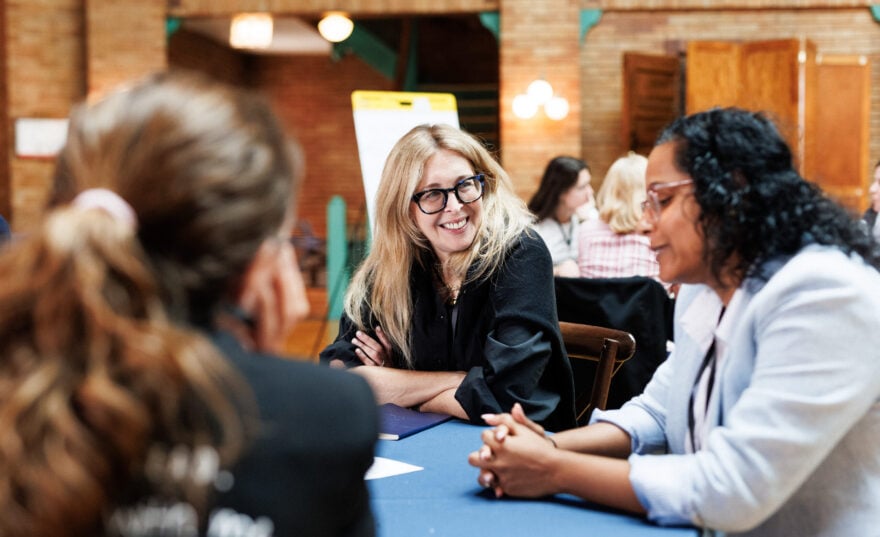
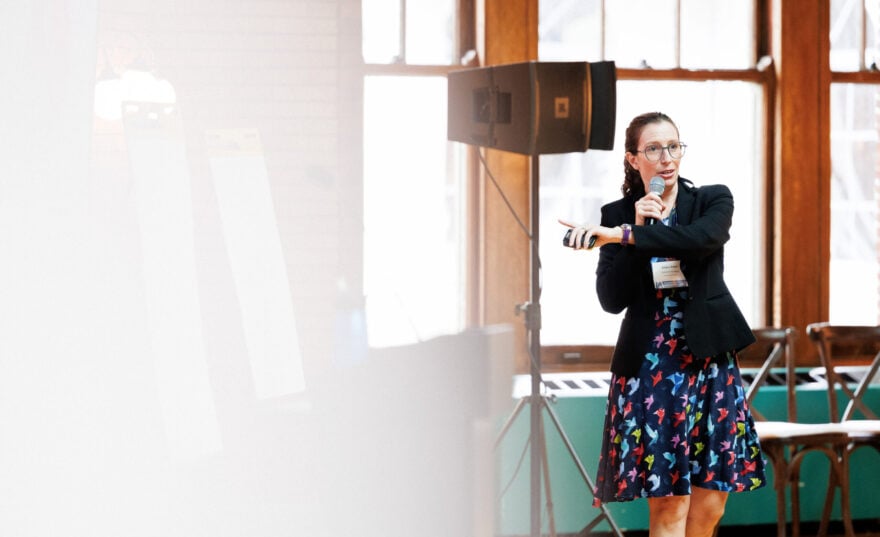
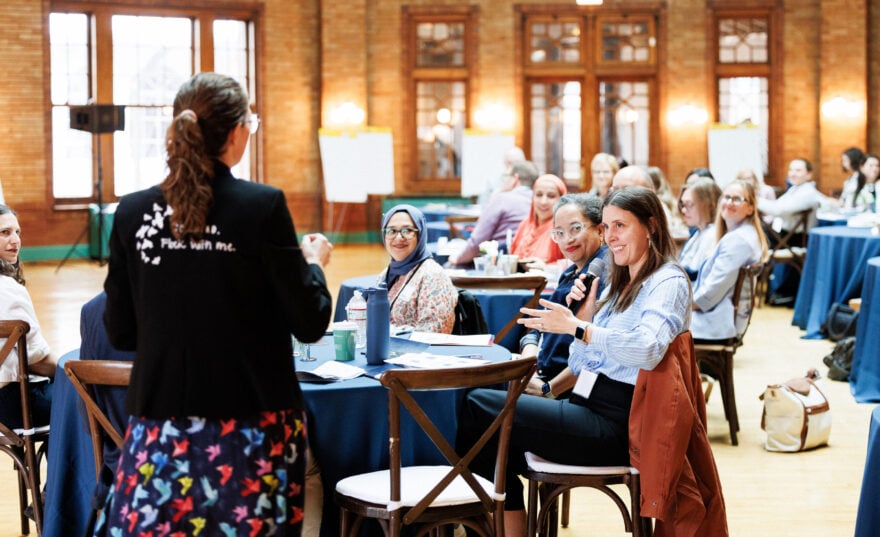
Williams gave a recent demonstration of Interfaith Photovoice to student leaders and student affairs professionals from U.S. colleges and universities gathered in Chicago for Interfaith America’s Interfaith Leadership Summit. Williams asked each person to share a personal photo that exemplified their idea of hope. They showed the photo to their table mates and described what the photo meant to them; after everyone had a turn, people were free to ask questions about the photos and explore the personal stories behind them.

“A sense of unity”
Cameron Town, a 19-year-old Christian from the University of Northwestern, St. Paul, shared a snap of himself and his best friend jumping onto Lake Superior on a day better suited for polar bears.
“I chose this photo because all five friends I was with that day are some of my longest, most cherished friends, and yet many of us disagree on many levels about really important issues,” Town told the two women students he was paired with. “At the end of the day — none of it changes the fact of our love and kinship for one another.”
After the session, Town said he felt “a surprising sense of unity” with the two women, who were from different faiths. “That sense of togetherness — despite being strangers — really left an impact on me.”
Since 2018, Interfaith Photovoice sessions have been held across the United States and as far away as Oman. The first sessions, fueled by a grant, were between Muslims and Christians in Richmond, Va., New Brunswick, Nova Scotia, and Grand Rapids, Mich., where Williams was then a professor at Calvin College. “We learned a ton about the method, a ton about the experience,” Williams said. “By 2019, we realized we were on to something.”
Then the pandemic hit and everything moved online. Williams used the time to expand Interfaith Photovoice’s reach beyond Christians and Muslims to people of different faiths and backgrounds. Today, Interfaith Photovoice facilitates workshops, retreats and team-building exercises at colleges and universities, companies and non-profits, mostly in the U.S. and Canada.
The photos participants share run the gamut from goofy to glorious — some college bros hanging with a Ninja Turtle; a sparkling sunset over a vast forest; a family meal; a lop-eared dog. At the Chicago demonstration, there were a dozen different takes on a shot Williams shared of an Amazon truck parked before a house.
“How does this show hope to you?” he asked. One person saw the happy anticipation of a gift they wished for; another was reassured by the truck’s “green vehicle” sticker; and someone else pointed out a pretty reflection of light in the truck’s metal bumper. Darker issues were not avoided — more than one person worried about the driver’s working conditions and the plight of low-wage employees.
This is Interfaith Photovoice’s secret sauce — the ubiquity of personal photos and the desire to give them meaning.
“An invitation to wonder”
“Interfaith Photovoice is an invitation to wonder,” said Kyle Kooyers, director of the Kaufman Interfaith Institute in Grand Rapids, Mich. “It brings us into a place of inquisitiveness about the person across from us and that really does bring us into a profound place of human connections.”
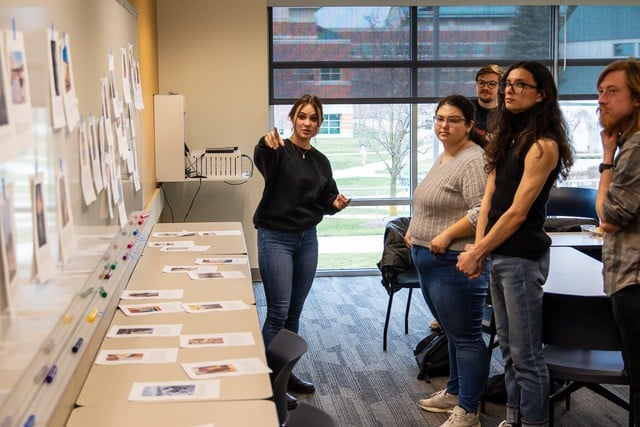
In 2024, a Kaufman Institute grant helped bring a semester-long Interfaith Photovoice workshop to Grand Valley State University, a public school with two Grand Rapids-area campuses. Nine students from Christian, Muslim, Hindu, Jewish and secular backgrounds in one exercise took pictures that expressed what it like to live out their spiritual lives on the GVSU campus.
“We got into questions of where they were experiencing barriers to expressing their faith or feeling like they belonged on campus or in their communities,” said Liz English, campus program manager of the school’s interfaith center. “Those were some wonderful sessions.”
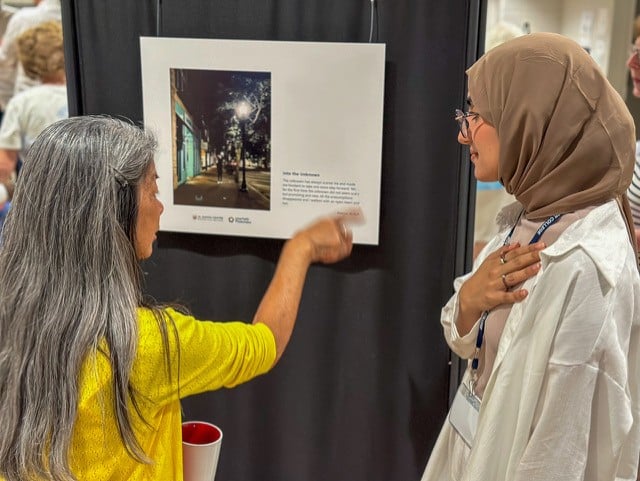
A similar, semester-long Interfaith Photovoice program is currently up and running at the University of Maryland, Baltimore County. Like other Interfaith Photovoice workshops, it will end with public photography exhibits where students directly interact with viewers about their photos and personal stories.
The hope, Williams said, is those exhibits will further pluralism on college campuses in ways lectures, books and even the adage about “walking a mile in another’s shoes” cannot.
“These days we need to learn to walk a mile in one another’s views so we can be prepared to live together in community called university life,” he said. “That visual dimension opens a different side of us, and it allows us to think creatively and compassionately about ourselves and others so we aren’t just sitting in a circle a singing ‘Kumbaya.’”
Kimberly Winston
Kimberly Winston is a freelance religion reporter whose work has appeared in the Washington Post, USA Today, and the Chicago Tribune. She is the 2026 recipient of the William A. Reed Lifetime Achievement Award from the Religion News Association.