I’m on social media, and I see what my family, neighbors and fellow church members post about politics. Some I agree with, some I don’t.
In 2020, I came home from church on Sunday and responded to a fellow congregant’s Facebook post about the upcoming presidential election. I took the bait and weighed in with a different perspective. We spent the next hour posting replies back and forth — other church attendees liking either my or his responses.
It became a real-time chance to choose sides. A chance to divide. Finally, I’d had enough. This isn’t who I wanted to be.
We don’t grow connectedness by cutting off ties.
This man’s family had watched our son when we went out of town. I’d spent countless hours serving alongside his wife when we worked with the youth at church. I had a decision to make. Did I want our relationship defined by who we intended to vote for? Did I want my political identity to be the primary lens through which to view them?
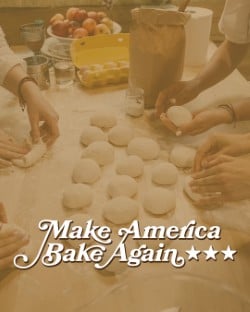
I told my husband to pack up the family in the minivan and I wrapped up some freshly baked chocolate chip banana bread to deliver. I made a sign with a simple spontaneous phrase: “Make America Bake Again.” This church friend was surprised when he answered the door to find our family on his front steps.
My message to him was simple: “You are my friend. We have so much more in common than that Facebook exchange suggests. I don’t want to forget that.”
I wish I could say I always respond thoughtfully to politically divisive situations; I don’t. But I sincerely want to, especially as we decide within families, cities and our state who we want to be in the midst of a divisive civic culture. I want to push back on the currency of division and invest in the power of pluralism.
The concern raised in Robert Putnam’s book, “Bowling Alone,” has never been more relevant: “The decline of social capital is one of the most pressing problems facing our society.” Social capital doesn’t grow when we buy into the norms of polarization. It decreases when we opt out of social, neighborhood, and family gatherings because political differences feel like a bridge too far. We don’t grow connectedness by cutting off ties. Encountering disagreements is an opportunity to listen, grow, and connect, not a reason to walk away.
And that’s why I’m getting back into the kitchen.

We need more shared experiences.
Next week I am hosting my first annual Make America Bake Again Voter Prep Party. I am casting a wide net and inviting anyone to come join me for a night of baked goods and ballot discussions. I want to provide a fun, nonpartisan, informative, and delicious way to prepare to cast our votes. I’m encouraging all participants to bring baked goods to share. We’re starting with cookie recipes from First Ladies and a centuries-old recipe for Election Cake. I’ll be making Pat Nixon’s Lemon Sugar Cookies.
“Food is our common ground,” famed chef James Beard wrote, “a universal experience.” We need more shared experiences. And maybe we need more opportunities with low-stakes, high-calorie interactions. Sharing a cookie or a meal just might be a catalyst to creating community and allowing people with different lived experiences or perspectives to come together.
Here in Arizona, I lead the Civic Engagement Impact Team for a local nonprofit, Valley Leadership, and part of my role is to organize our Dinners & Dialogues Program. After sitting down for a meal together, participants engage in moderated, small-group dinner conversations around topics important to Arizonans — from education to trust in our civic institutions. The experience lays the groundwork for a shared experience focused on shared solutions.
Imagine the possibilities if you dust off your recipe book. Bring some of your mom’s chewy gingersnaps to someone on the other side and ask how their kids are doing. Thank election officials with a batch of Abigail Adam’s Molasses Raisin Cookies. Or gather your neighbors to dine and discuss how to create a stronger sense of community. Your deliberate efforts to connect can have lasting impacts.
Difference doesn’t need to divide, and conflict need not lead to contention. As “American Covenant” author Yuval Levin stated, “Unity doesn’t mean thinking alike. Unity means acting together.”
And maybe unity even means eating together. Let’s Make America Bake Again!
Jane Andersen
Jane Andersen is the Arizona State Director for Mormon Women for Ethical Government and an Interfaith America Vote is Sacred Fellow. She and her husband, Jon, are parents to four children.