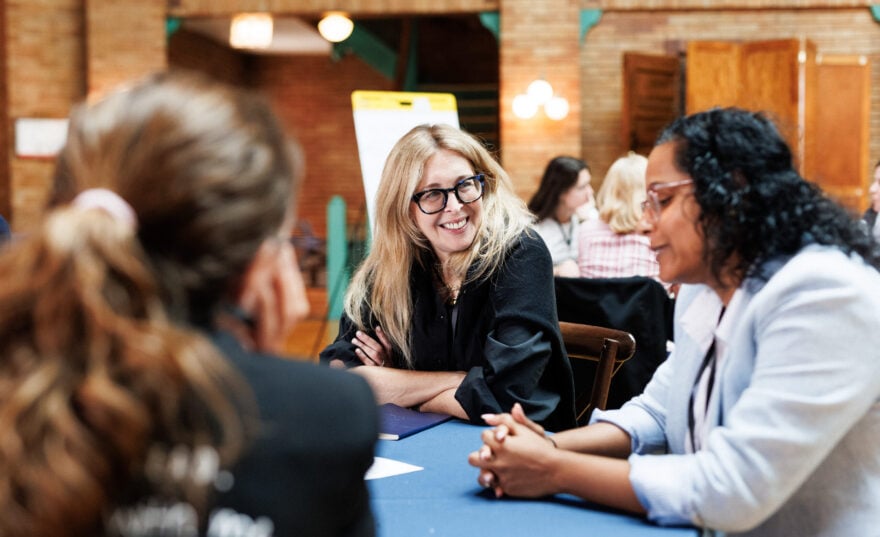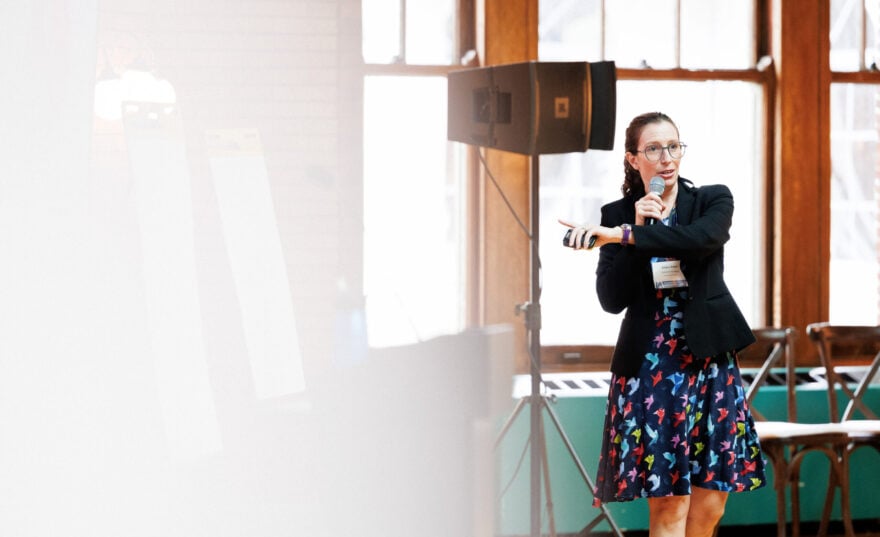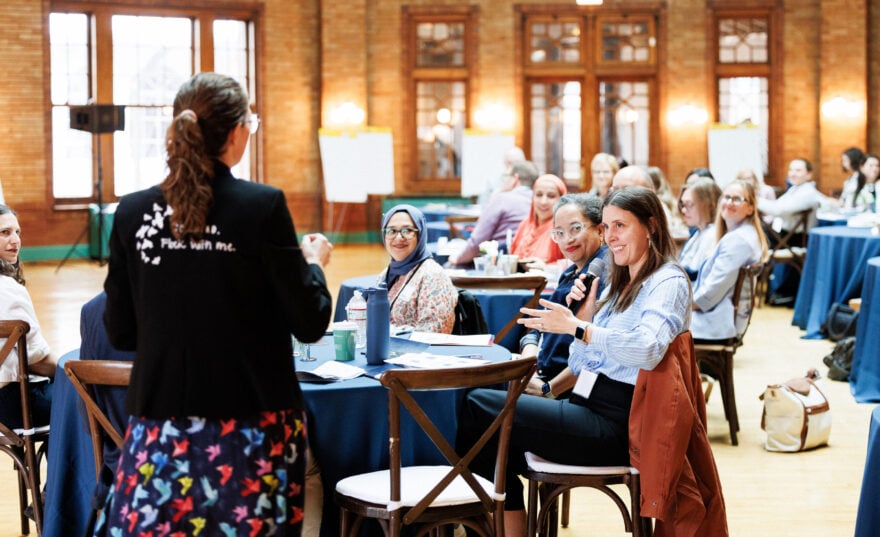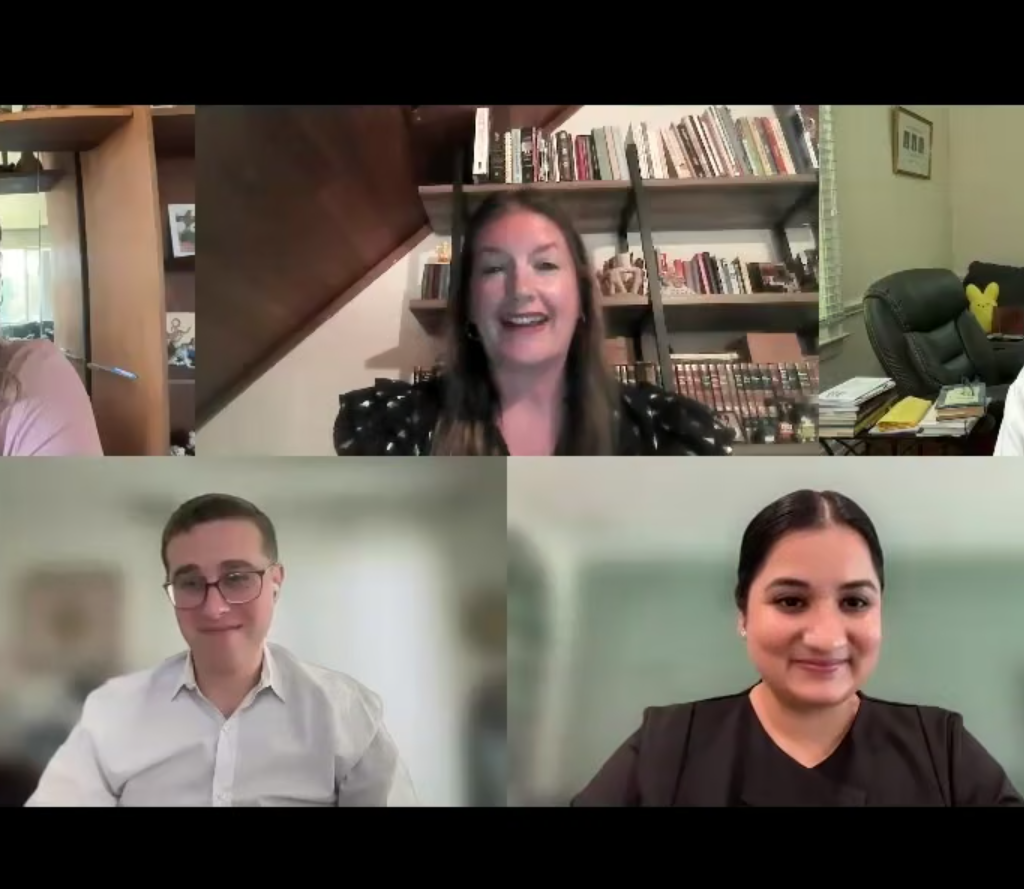
In preparation for the 2026 Midterm election, four of Interfaith America’s 2026 Vote is Sacred Fellows — a group of faith and civic leaders committed to free, fair, and peaceful elections — gathered virtually for a Living Room Conversation, a conversation format to “empower everyday citizens to discuss important issues with friends of differing backgrounds and political affiliations.”
Faith in Elections
Moderated by Director of Empowerment for Mormon Women for Ethical Government, Becca Kearl, this discussion prompted leaders to reflect on the role of faith in elections and the challenges and opportunities to build trust in the democratic process.
Fellows shared how their faith shapes their work around election protection.
“I lean on the Sikh principle that there is nothing higher than truthful living,” said Aasees Kaur, Community Development Director at the Sikh Coalition. “The work that we do to share accurate information, make sure everyone knows their rights at the polls, empower each and every human being, [and] honor their inherent dignity as they show up to cast their vote” is rooted in this principle.
For Jeremy Bannett, Vice President of Programs and Partnerships at A More Perfect Union, the effort to ensure free, fair, safe, and accessible elections is motivated by his Jewish identity.
“American democracy has really enabled the Jewish community here to flourish in a way that is pretty remarkable across the scope of world history,” he said. “We know that the rights and the freedoms and the opportunities that democracy provides only work if they’re available equally to everybody.”
Building Trust in Democracy
In their conversation, participants also offered practical ways to build trust in elections.
“Trust just doesn’t happen. You invest in it through connection, asking hard questions, trying to understand another person better, appreciate our differences, and finding common ground,” said Kearn.
Jennifer Daniels, President of the Faith Citizenship Institute, emphasized how our elections are localized.
“I think that’s a really beautiful part of our democracy,” she said. “While we may be voting about controversial and polarizing issues that are happening far away from us, we’re actually doing it together as a community right in our own backyard […] so personal relationships and even understanding the process can give a sense of positivity and hope.”
Despite the many challenges of the upcoming election, participants reflected on this hope they share. For the Rev. Carlos Malave, founder of the Latino Christian National Network, that hope is in the common values we share.
“What is giving me hope right now is the resiliency of our sense of commonality […] The bottom line is that I do trust the common good. I do trust the heart of people. And if we continue to work together towards educating people and coming out of goodwill, people will see that,” he said.
Rachel Crowe
Rachel Crowe, Staff Writer for IA Today, tells compelling stories about interfaith cooperation across diverse communities and supports our narrative programming. She is a graduate of Gettysburg College where she earned a BA in English with a Writing Concentration and a German Studies minor.