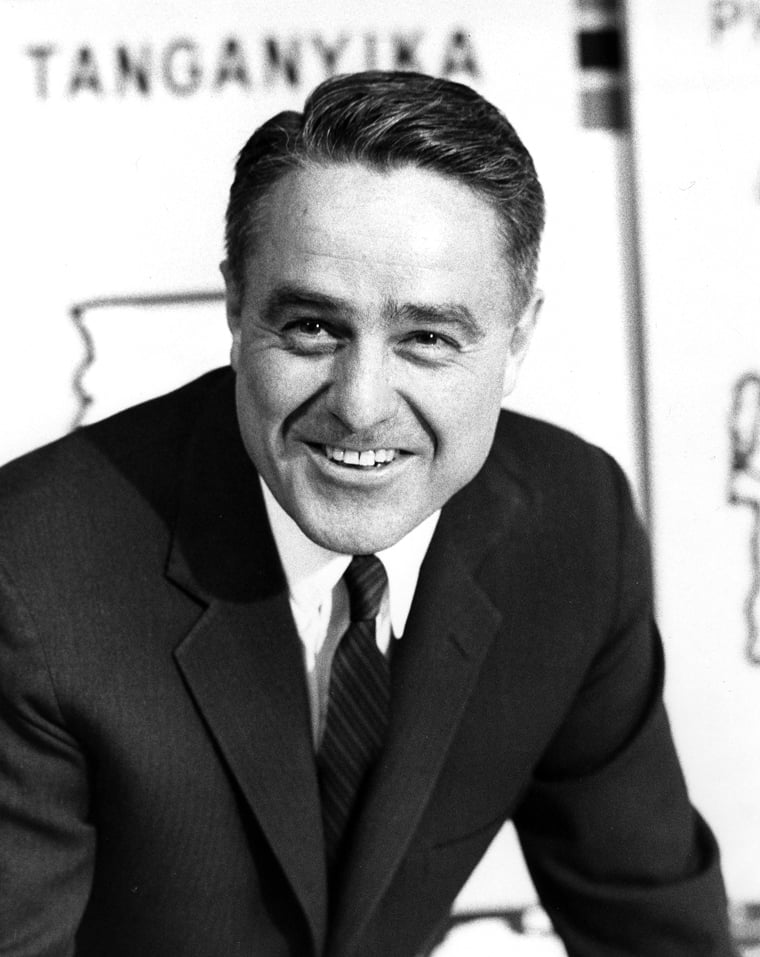
In a speech at Yale, Sargent Shriver, the founding director of the Peace Corps, architect of Lyndon Johnson’s War on Poverty, and the 1972 vice presidential running mate of George McGovern, told the young people in attendance: “Break your mirrors! … In our society that is so self-absorbed, begin to look less at yourself and more at each other. Learn more about the face of your neighbor and less about your own.”
Shriver’s worldview was deeply rooted in his Catholic faith. He attended Mass each morning and this grounded his identity, sense of purpose, and treatment of others. It was not merely an inward-looking faith, focused on the self, but a faith that sent him out to build community, advance justice, and lift up the vulnerable.
In Catholic social teaching, the principle of participation holds that all people — by virtue of their equal, inherent dignity and worth — have the right and responsibility to participate socially, economically, culturally, and politically in their society. Pluralism facilitates this full participation.
Shriver believed in a society where every voice counts, where participation is widespread, where our diversity is a source of strength.
Shriver believed in a society where every voice counts, where participation is widespread, where our diversity is a source of strength. This is a politics of hope and mutual flourishing, rather than one of fear and selfishness.
We can see Shriver’s commitment to pluralism throughout his career. In Chicago in the 1950s, as the head of the Chicago School Board and the Catholic Interracial Council, he successfully led efforts to integrate the city’s public and Catholic schools. In 1960, after Martin Luther King Jr. was arrested in Georgia, Shriver convinced presidential candidate John F. Kennedy to call Coretta Scott King to offer his support and express his concern, sidestepping advisors who feared alienating white Southern voters.
As head of the War on Poverty, he worked to build participatory processes so that people living in poverty were not simply objects of assistance, but protagonists in the story of their own lives, helping to shape the efforts and institutions designed to advance economic dignity and mobility. As the founding director of the Peace Corps, he also favored authentic participation over top-down bureaucracy. The entire project was rooted in the belief that regular people from entirely different backgrounds could build peace and justice through dialogue and cooperation. Not only could a pluralistic society promote flourishing at home — this belief in pluralism could build global connections and bring nations together.
Later in life, Shriver joined another pluralism hero’s efforts to create a more inclusive, participatory society. Eunice Kennedy Shriver created the Special Olympics at a time of exclusion and isolation for many people with disabilities, allowing the athletes to participate, compete, and build relationships. In the 1980s, Sarge joined his wife Eunice in helping to expand the Special Olympics, demonstrating to more people that people with disabilities deserve full participation and inclusion.
Shriver showed a consistent belief that every person matters, that we are all equal, and that we can work together without sacrificing who we are to build a pluralistic society where we can all flourish.
Throughout his life, Sargent Shriver showed a consistent belief that every person matters, that we are all equal, and that we can work together without sacrificing who we are to build a pluralistic society where we can all flourish.
Let’s break our mirrors and continue this work.
Robert Christian
Robert Christian is Director of Strategy at the Franciscan Action Network.