Did you know that Philadelphia is not only known as the birthplace of American democracy, but it is also the birthplace of American religious freedom?
Founded by the Quaker William Penn (1644-1718), Pennsylvania offered greater religious freedom than most other colonial locales. Penn’s founding charter promised that all residents who confess and acknowledge God and live peaceably with others would not be prejudiced for their religious persuasion or be required to attend religious worship. As a result, Pennsylvania attracted residents with a wide range of religious commitments. Although religious freedom was experienced unevenly, Penn’s “holy experiment,” as he called it, emerged as a living example to the nation’s founders and framers that people with diverse faith commitments could forge a common civic identity.
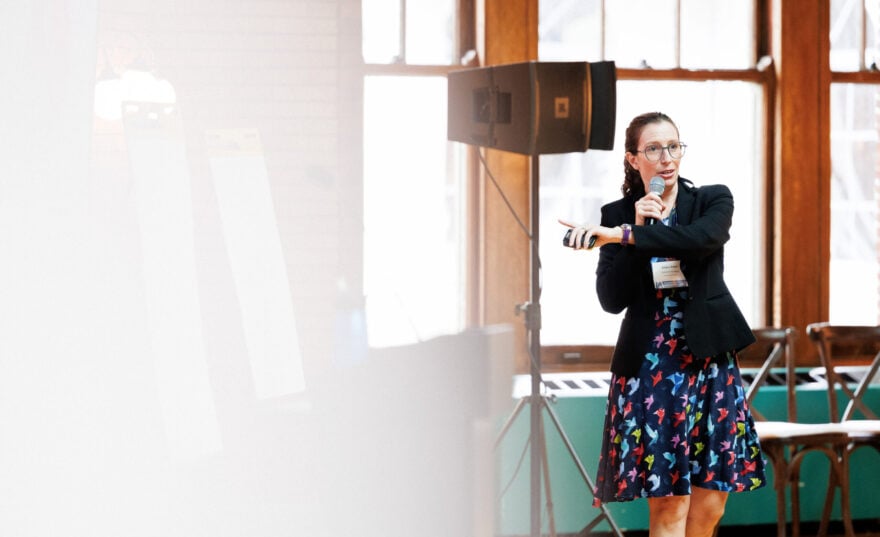
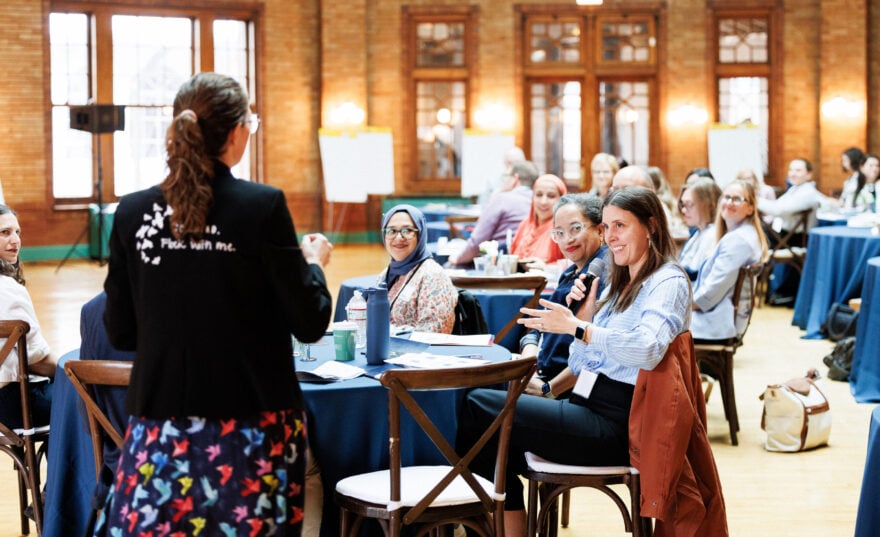
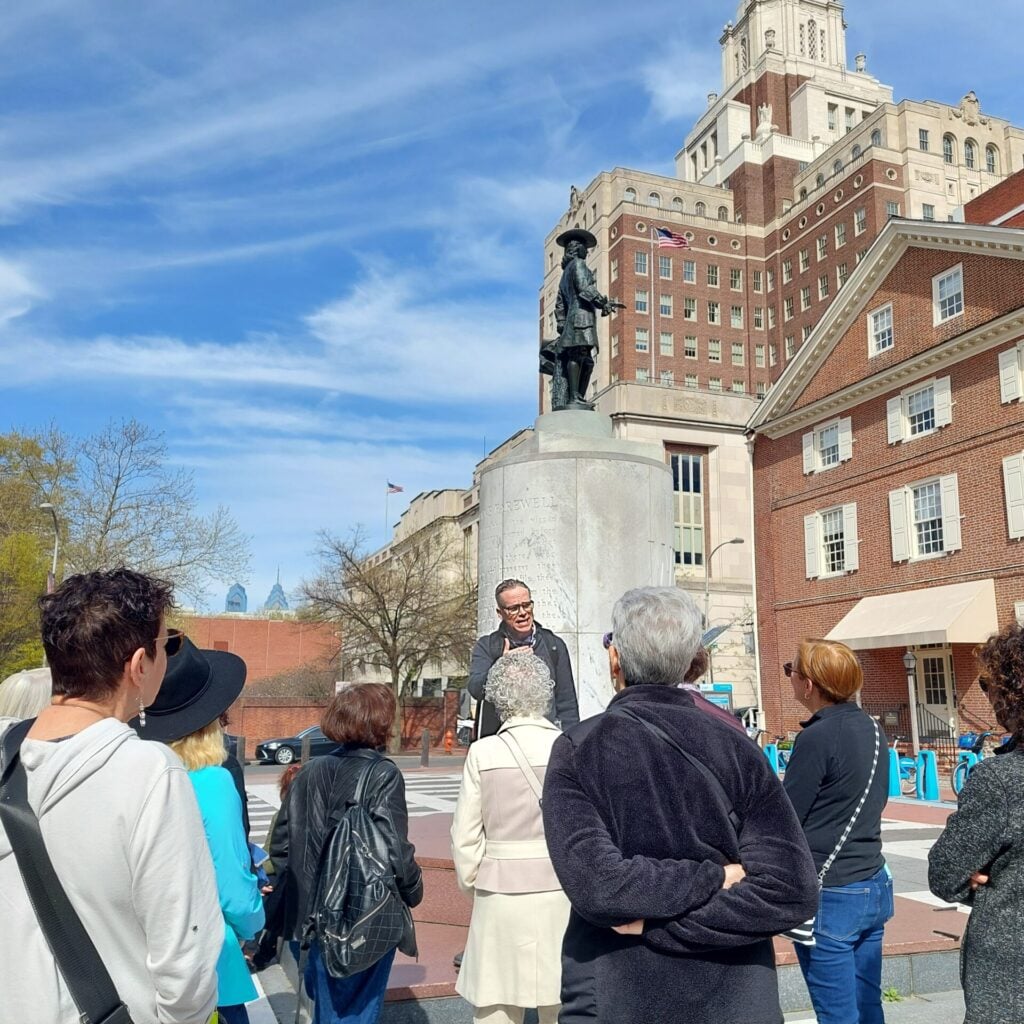
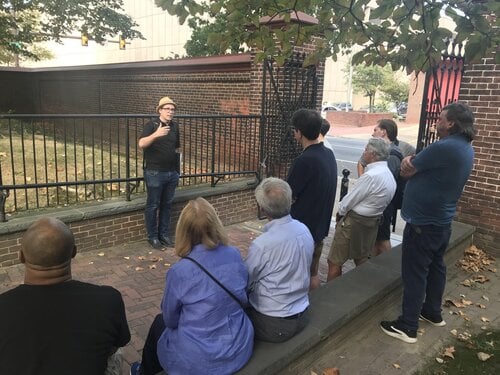
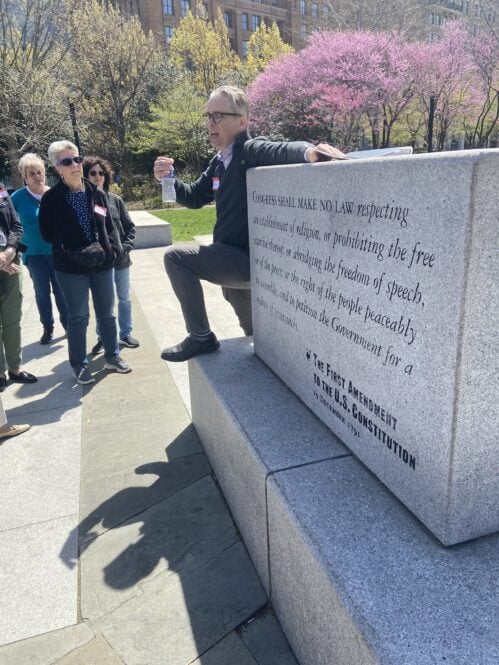
One way to experience a city’s religious and civic history and learn from its example is to take a walking tour, like the ones offered by the Dialogue Institute. Starting in the early founding period, these six sites showcase the complex stories that illuminate pluralism in action throughout Philadelphia’s history. More can be learned about these sites on the Religious Freedom Trails app.
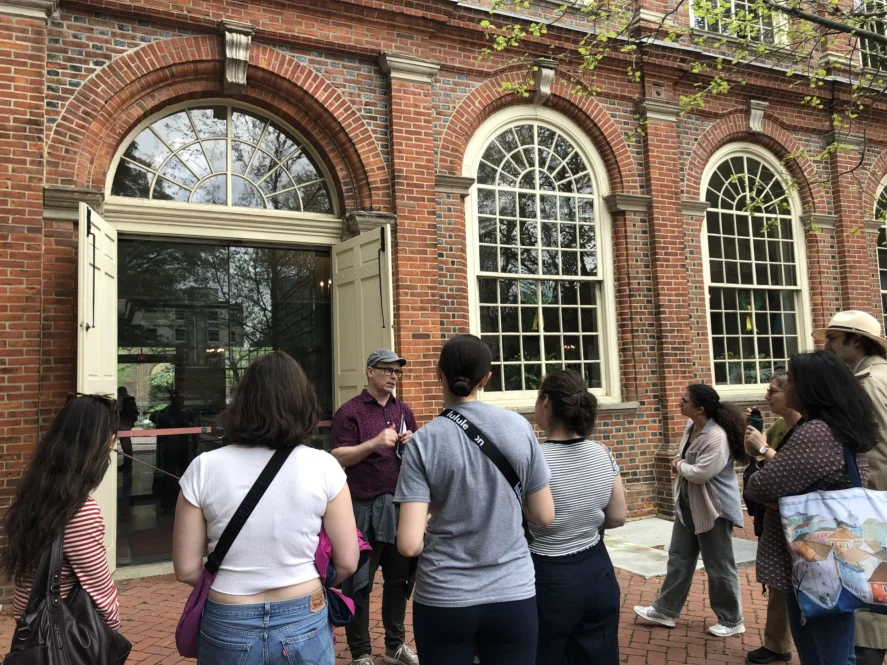
Arch Street Friends Meeting House
320 Arch Street, Philadelphia, PA 19106
William Penn was raised in the Anglican church, but he converted to the Society of Friends, also known as the Quakers, as a young adult. Quakers questioned many of the beliefs and practices of the established Anglican church by rejecting social hierarchies, allowing women to preach, and believing that everyone had the light of God within them. William Penn and other Quakers often faced imprisonment for promoting their beliefs, and Penn searched for an opportunity to found a colony with other religious dissenters. After Penn’s father’s death, King Charles II owed the family a significant debt. Rather than pay a large sum to a problematic religious leader, the king granted Penn a charter of land in North America. In 1682, Penn landed on the shores of the Delaware River, negotiated a treaty with the Lenape residents, and founded a colony without imposing a religious establishment.
Benjamin Franklin Museum
317 Chestnut St, Philadelphia, PA 19106
Philadelphia’s most famous resident was not born there. Benjamin Franklin (1706-1790) grew up in Boston, situated in a colony where the Congregational Church was the established church. His parents had wanted him to become a minister, but due to financial constraints and his growing skepticism of religion, he began working with his older brother in the printing business.
At age 17, he decided to strike out on his own and move to Philadelphia, a larger and more culturally and religiously diverse city with more opportunities. Franklin built a successful printing business and organized a society of business leaders known as the Junto, which met regularly to exchange ideas and consider solutions to civic problems.
Out of Franklin’s efforts emerged the nation’s first public hospital, the first non-sectarian university, the first lending library, and the American Philosophical Society. Franklin had the ability to mobilize people across religious and cultural differences to find common ground, address social problems, and build institutions to do so.
Christ Church
20 N American St, Philadelphia, PA 19106
The Anglican Church was the established church of the British Empire, and Anglican ministers swore allegiance to the crown, even in Philadelphia, where no faith was dominant. When the Declaration of Independence was signed, Christ Church leaders chose to align with the revolutionaries. One of the first acts was to cross out language from the Book of Common Prayer that referenced the king. This was a precursor to the founding of a separate Episcopal Church denomination. Christ Church was also the church attended by the nation’s first presidents.
Just around the corner is a historical marker at the site of a boarding house where the author of the Constitution’s preamble, Gouverneur Morris, stayed during the 1787 convention. It is notable that Morris crafted the words “We the People” in the largest and most religiously and culturally diverse city in the young nation.
St. Augustine’s Catholic Church
243 N Lawrence St, Philadelphia, PA 19106
In the 1730s, Philadelphia was the only place in the British colonies where it was legal for Catholics to hold Mass. The city’s Protestant leaders complained when Catholics began to meet for worship, due to concerns about their possible allegiance to competing Catholic colonial powers such as Spain and France. Yet the fledgling community was allowed to continue due to the religious-freedom commitments in Penn’s founding charter. Despite the legal protections extended to Catholics, they were frequently targeted with suspicion. In 1844, the members of the “Native American” party burned down immigrant Catholic churches, including St. Augustine’s. Catholics would go on to rebuild their churches and establish education institutions that continue to thrive today.
Mother Bethel AME Church
419 S 6th St, Philadelphia, PA 19147
Slavery was a part of William Penn’s colony from the beginning. The Penn family fortunes were built on slavery, and Penn himself was an enslaver. Yet, Pennsylvania was among the first to seek the abolition of slavery, and the city emerged as a center of free Black life and mutual aid in the late eighteenth century.
Richard Allen was born into slavery but purchased his freedom. Having converted to the Methodist faith at a young age, he was called to serve as a preacher at St. George’s Methodist Episcopal church. Allen’s preaching drew in so many new Black attendees that the white leadership imposed a policy of segregated seating. Confronted with the change, Allen led a walkout of most Black members to found a separate congregation in a former blacksmith shop, called Bethel Church. Despite opposition from white leadership, Allen’s congregation got approval from a state court in 1816 to formally separate and establish the first Black denomination, the African Methodist Episcopal Church.
Kahal Kadosh Mikveh Israel
121 N Independence Mall E, Street 44 N 4th, Philadelphia, PA 19106
The oldest continually operating synagogue in the U.S. was founded in 1740 in Philadelphia. Mikveh Israel is also known as the Synagogue of the Revolution because of its members’ support of the Patriot cause. Although Jews had the freedom to practice their religion in Penn’s colony, there were restrictions on their ability to run for political office. In Pennsylvania, one had to take a religious oath stating that both the Old and New Testaments of the Bible were the revealed Word of God. This posed a problem for Jews, Deists and many others. In 1787, synagogue member Jonas Philips sent a letter to the Constitutional Convention asking that they refrain from including a religious test for holding public office. Phillips argued that Jews had given their lives in the revolution and were entitled to participate in the leadership of the new nation. The framers were persuaded by such arguments, and Article VI of the Constitution states, “no religious test shall ever be required as a qualification to any office or public trust under the United States.”
David Krueger is the executive director of the Dialogue Institute at Temple University, co-editor of the Journal of Ecumenical Studies, and director of the Religious Freedom Trails project. He is a scholar, author, and educator who is passionate about public history, religious literacy, and civic dialogue.