
America’s upcoming 250th birthday has inspired powerful historical reflection, commemorative activity, and no small amount of interrogation on the strength of our republic as we recognize this significant event.
At a such a milestone, it’s natural — and appropriate — that we look back on the John Hancocks, the Benjamin Franklins and other Founders who signed their names to the Declaration of Independence on July 4, 1776, and their daring promise to “mutually pledge to each other our Lives, our Fortunes and our sacred Honor” to this democratic experiment we call America.
I also find myself thinking of other founders, the people across generations who picked up the mantle of e pluribus unum and forged a nation out of many that became one. I walk in the footsteps of Thomas Jefferson and Harriet Tubman, of James Madison and Jane Addams and Fannie Lou Hamer. I also carry the legacy of my Unitarian Universalist tradition’s contributions to our nation — the Rev. James Reeb and Viola Liuzzo, both of whom lost their lives fighting for freedom for all.
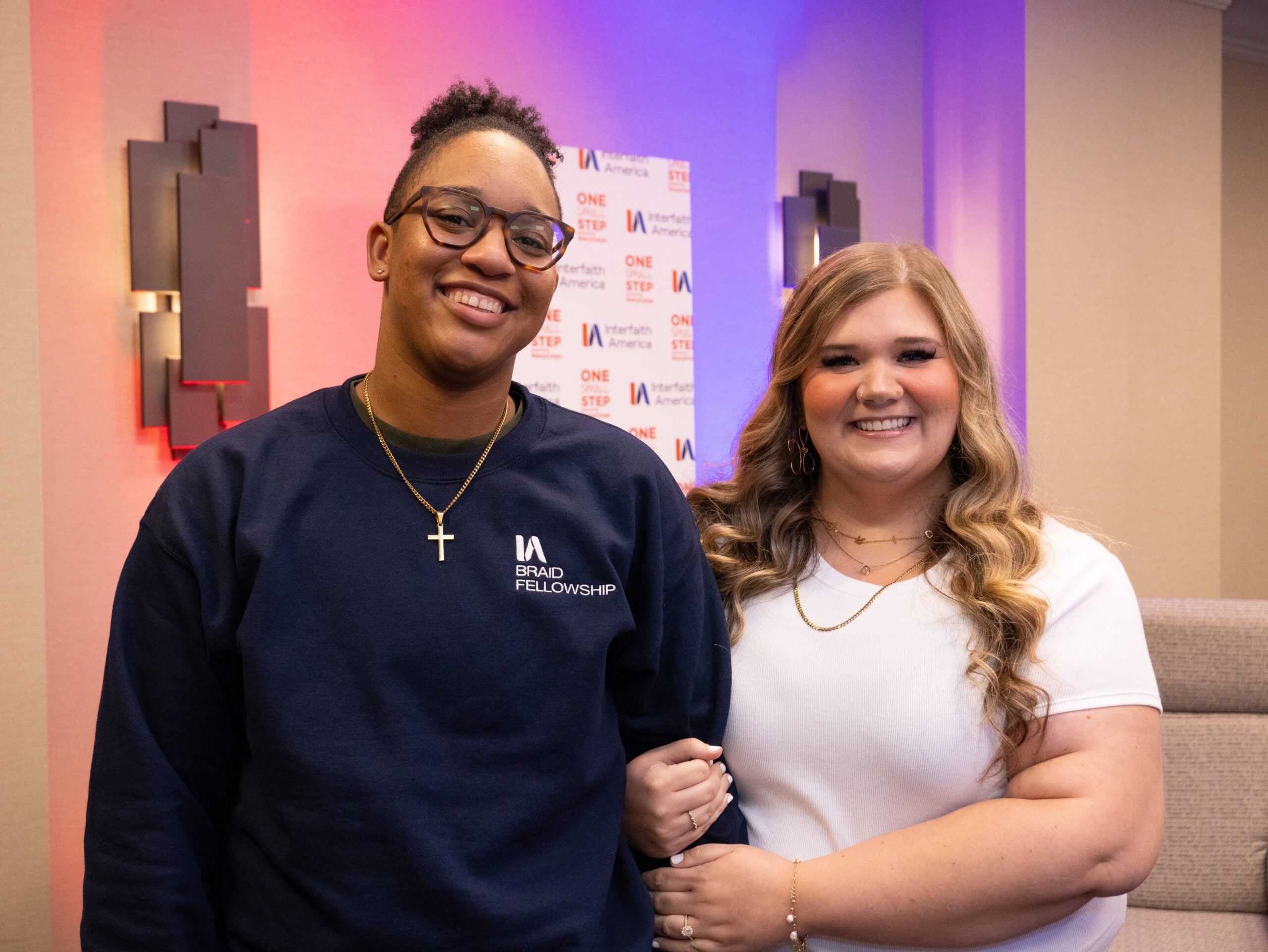
I find inspiration and meaning in American founders from other communities – civil rights icon Bayard Rustin; Muslim convert Muhammad Alexander Russell Webb; Secretary of State Condoleezza Rice; Justice Louis Brandeis; civic activist Bhagat Singh Thind. I live the inheritance of my feminist ancestors who signed the Declaration of Sentiments, Lavinia and Hannah Latham. I work alongside bridgebuilders of today, leaders in local communities who exhibit the Best of America and BRAID together communities on campus.
From all walks of life, Americans have taken up the Founders’ mutual pledge and did the challenging work of creating and perfecting this sacred union. As Joy Kinard from the National Museum of American History recently reflected, “In the first 250 years, we have realized who the people are in we the people. In the next 250 years, we are going to figure out how to work together.”
Our history and our present remind us that these ideas are continuously tested. We have seen how time and time again, leaders in this nation have walked, written, organized, collaborated, lived and died to remind America who is included in We The People. Our nation’s lofty, inspiring commitments are at once a source of great pride, powerful motivation, and a failed promissory note.
Our honest recognition of that history can supply us with even deeper sources of meaning and renewed commitment to the promises of the Founding. Achieving the vision of the Founding — the possibility of living together in equal dignity and mutual loyalty — requires a positive engagement across difference and a renewal to American ideals in each generation and across communities. Achieving the vision of the Founding invites all of us to be American founders.

In celebration of the 250th anniversary and the many, many of our nation’s Founders, Interfaith America is proud to launch PluribUS 250, a multimedia campaign which aims to celebrate pluralism milestones in America’s history and offer a vision of a pluralistic American future. PluribUS 250 is committed to the idea that our history is a source of strength and one of the many tools we need to leverage our faiths as a bridge to build a better, stronger America.
Yes, we are looking back, but more importantly, we are looking forward to our next 250. Each of us — We The People — are the founders of the nation we hope to build.