
In today’s globalized world, understanding and respecting religious diversity is essential not only for cultural competency but also for business success. Americans encounter more religious diversity at work than anywhere else, yet Tanenbaum finds that companies with greater religious diversity experience more conflict. The question is how to help companies engage with a wide range of beliefs — religious, secular, spiritual, and everything in between — in a way that benefits both employees and employers.
In Harvard Business Review, Megan Johnson, Senior Director of Interfaith America’s Workplace sector, and her co-authors argued that an organization-wide strategy, with inclusive holiday policies and diversity trainings informed by the guidance from U.S. Equal Employment Opportunity Commission (EEOC) on religious discrimination and accommodation is essential.
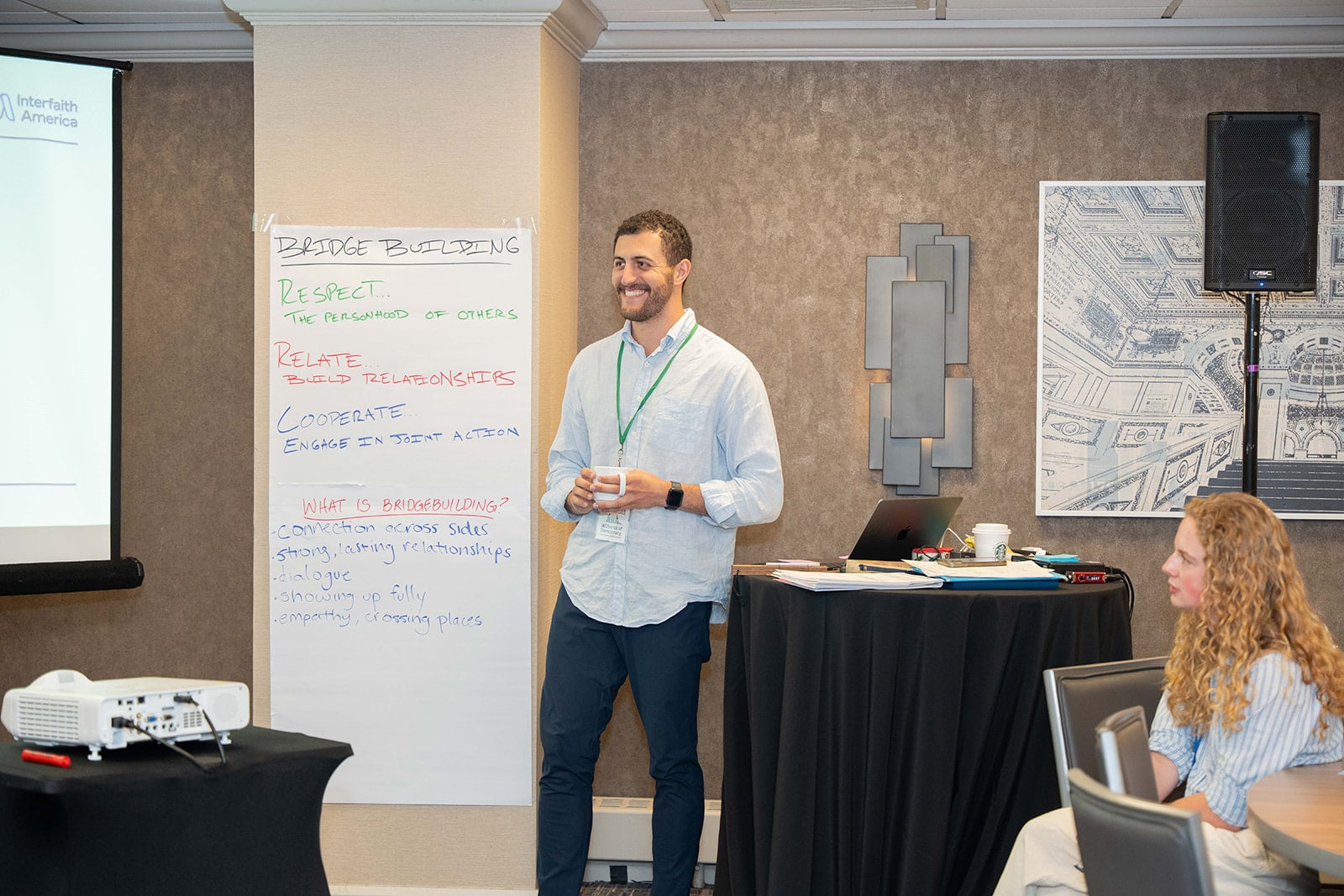
Interfaith leadership skills development is another crucial part of the solution that is often missed. By helping employees learn to navigate religious diversity with empathy, companies can create religiously inclusive cultures that respect diverse identities, build inspiring relationships, and collaborate on shared goals despite differences in belief.
The Case for Interfaith Leadership at Work
Interfaith America (IA) helps companies navigate religious differences constructively, and trains employees in interfaith leadership and cooperation, so they can positively engage colleagues who have different beliefs than they do. This approach affirms religious diversity — including all religious, spiritual, and secular beliefs from Atheism to Zoroastrianism — as a strength and as a bridge for cooperation despite deep differences, enabling companies to forge more inclusive, resilient workplaces. Doing so helps companies diversify recruitment, raise retention and revenues, and increase inclusion and innovation.
IA’s approach has been honed over two decades, partnering with 573 U.S. colleges and universities to train thousands of students and educators as interfaith leaders. Some of them are probably your colleagues, eager to help your organization benefit from its religious, secular, and spiritual diversity.
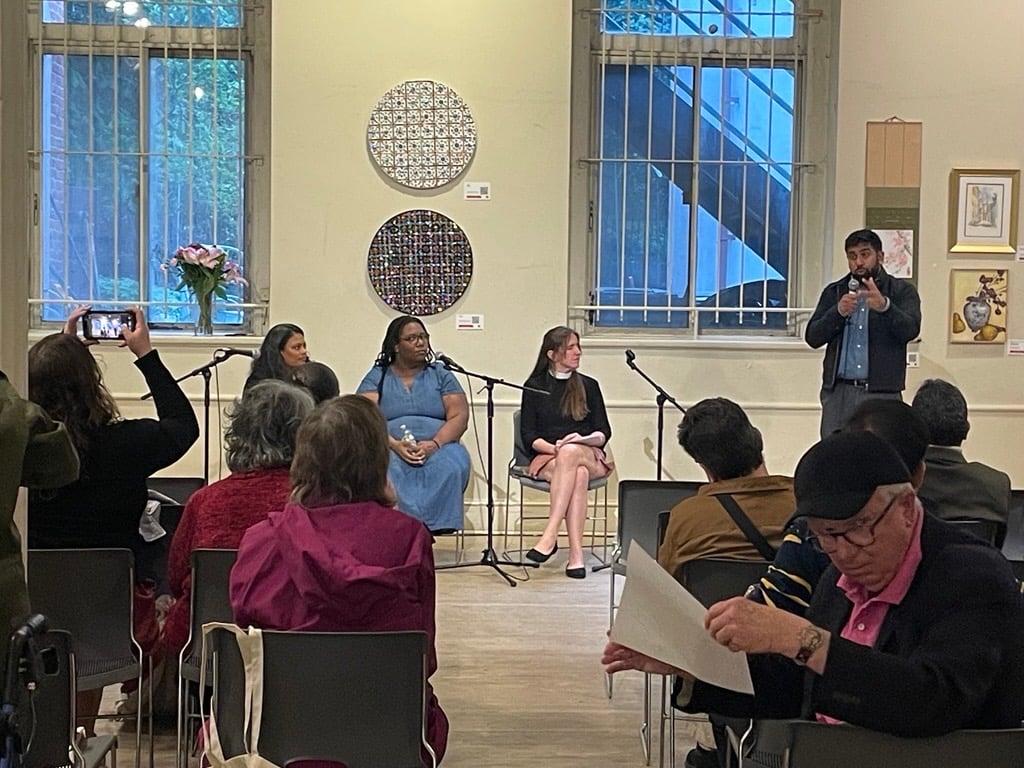
Johnson asked a panel of experts the following: In a world rife with conflict, from Middle Eastern violence to polarized U.S. politics, why is engaging with religious diversity in the workplace more crucial now than ever? How can interfaith leadership skills, traditionally developed in academia, be applied in professional settings?
Here’s what they said.

Bridging Divides in Colleges vs. Companies
Paul Lambert, Religion Initiative Director at Brigham Young University’s (BYU) Wheatley Institute, highlighted the different roles that colleges and companies play in navigating religious and other differences. On college campuses, students are permitted to challenge ideas publicly, a practice that Lambert notes could potentially have negative consequences in a corporate setting.
“In the workplace, companies invest in their employees and expect full engagement and commitment in return. But if employees feel excluded due to their religious beliefs or any other aspect of their identity, they simply can’t give their best,” Lambert explained. A workplace that respects and accommodates religious diversity doesn’t just foster authenticity; it maximizes performance and productivity. This is not just beneficial for individuals — it’s crucial for business success.
The workplace, Lambert argued, is a powerful environment for engaging with differences in meaningful ways, all while working toward shared goals. “Despite our differences, we have to find ways to empower each other while still delivering on what we were hired to do. While translating this into broader society might be challenging, we can certainly start by making our workplaces more inclusive.”
“A Tremendous Asset”
Cecilia Persson-Ramos, Diversity, Equity, and Inclusion Senior Manager at Intuit, echoed these sentiments, saying, “We can’t leave faith and religion at the door,” she said. “We need to consider them as part of all the diversities we respect, nurture, and bring forth.”
Intuit has put this philosophy into practice through its three faith-based Employee Resource Groups (ERGs), which foster a sense of community among employees of the same faith while building bridges across diverse groups. These ERGs have supported corporate goals such as company citizenship, volunteering, and fundraising, and have raised awareness through employee education — like guidelines for respectful interactions during religious observances such as Ramadan. They’ve supported workplace accommodations, enhanced communications on internal channels like Slack and email, and provided feedback on how to keep our workplace supportive by identifying conversations best handled elsewhere.
Persson-Ramos said existing interfaith connections among colleagues have helped Intuit navigate crises more effectively. “When the conflict in the Middle East escalated last year, our faith-based groups were already in place, so they were better equipped to handle some of those tensions. They provided valuable insights to the company on employee experiences, needs, how the company could support employees in meaningful ways during that difficult time.”
She concluded that “strong interpersonal interfaith skills can be a tremendous asset in the workplace.” Equipped with these skills, Persson-Ramos and her team led Intuit to be in the top 10 most religiously inclusive companies among the Fortune 500, according to the 2024 REDI Index published by Religious Freedom and Business Foundation.

Leading Diverse, Global Teams Inclusively
Sumreen Ahmad, Managing Director, Global Change Management Lead at Accenture, has dedicated 20 years championing interfaith initiatives, helping Accenture achieve the top spot for religiously inclusivity among Fortune 500 companies, tied with American Airlines, for three consecutive years.
Ahmad asserts that the interfaith community is uniquely positioned to bridge divides and create space for all beliefs, without compromising one’s own. With six generations — from Gen Alpha to senior Boomers — working together, each brings its own worldview, shaping expectations around religious expression at work. While older generations may consider discussing faith at work taboo, younger employees often see it as an essential part of their identity that should not be “covered” at work.
“The idea that ‘race, religion, and politics have no place in the workforce’ is absolutely a myth,” Ahmad emphasized. “Humans have a right to be seen and lean into who the best versions of themselves are. When we do the work in the faith space, we’re not just doing better for ourselves — we’re improving the entire work environment.”
Encouraging employees to bring their authentic selves to work is important, but it also comes with the responsibility to create space for others to do the same. Interfaith leadership, Ahmad explained, is about thinking beyond oneself to ensure the health and harmony of the entire team.
She points out that globalization adds another layer of complexity. “As an emerging leader, you need to be aware of the context you’re living and working in. Managing global, diverse teams requires understanding their cultural and religious backgrounds,” she said.
For instance, if you’re leading a team in India during Diwali, a festival that essentially shuts down the entire country for days, not being aware of this could lead to unrealistic commitments and business setbacks. Religious and cultural awareness is not just a nicety; it’s a necessity for managing global teams effectively.
Engaging religious differences respectfully is “a responsibility, not a privilege. It is crucial now more than ever, as the world and your organizations need these solutions,” Ahmad maintains.
Raising Religious Inclusion at Work
In today’s divided world, integrating interfaith leadership at work not only supports culturally responsive practices and enriches organizational culture but also helps build a more inclusive future. By welcoming employees to bring their religious, secular, and/or spiritual identities to work, companies can unlock the full potential of their workforce. And, in doing so, they’ll not only boost their bottom line but also contribute to a more understanding and cohesive world.