Many Americans view the final days of October as the culmination of the month-long cultural celebration leading up to Halloween, dubbed “spooky season” in Internet culture, and evidenced by an annual reemergence of skeleton and tombstone decorations in front yards across the country.
With roots in the Celtic festival Samhain and later influenced by the Christian All Hallows’ Eve, Halloween runs concurrently or is closely followed by other cultural, religious, and spiritual holidays that are recognized between Oct. 31 and Nov. 2 in the Gregorian calendar and are celebrated by people of faith today.
These sacred days and seasons share themes and practices of commemorative altar-decorating, remembrance of the dead, the supernatural, and the changing of seasons.
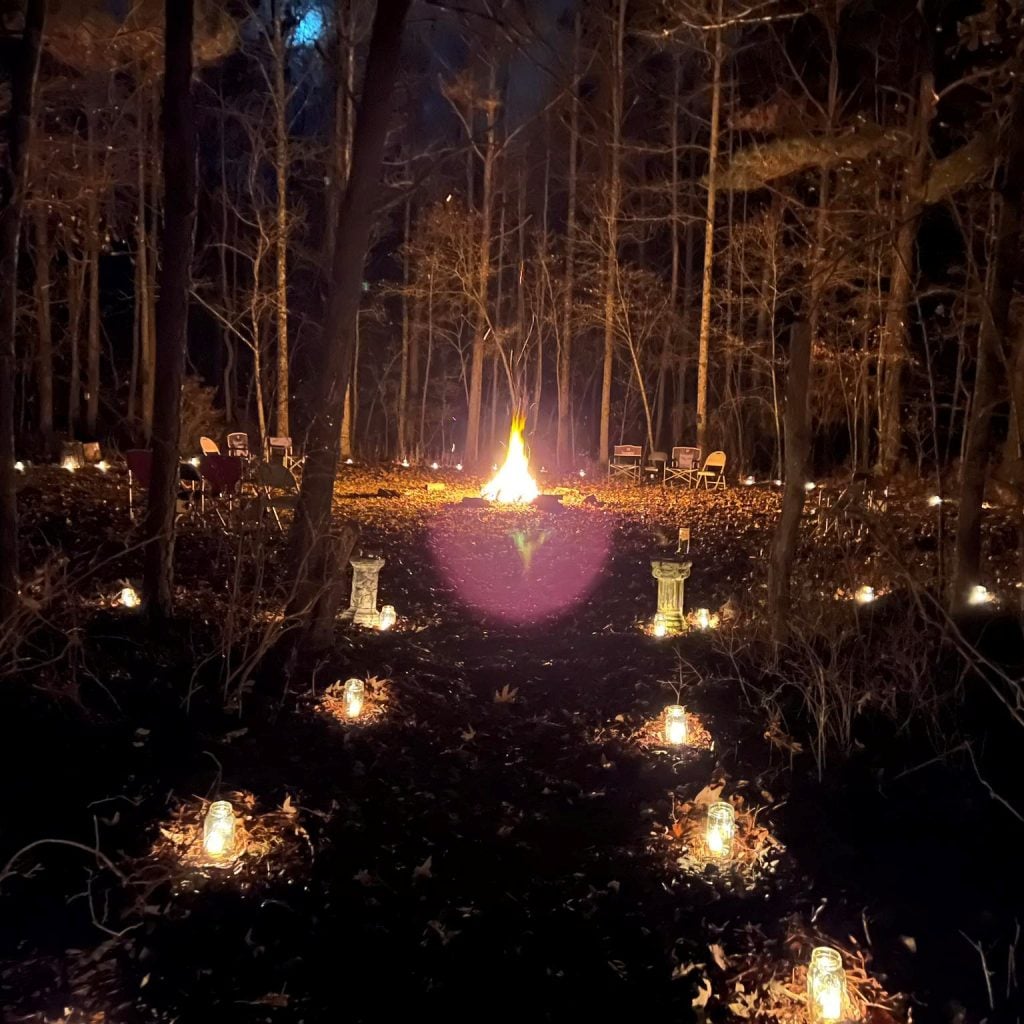
Pagans and Wiccan communities celebrate Samhain — the ancient Celtic period denoting “summer’s end” and the transition to winter, “when the veil between this world and the next is said to grow thin.”
November 1 marks All Saints’ Day, a solemn holy day which honors Catholic saints.
Día de los Muertos (Day of the Dead) — a holiday honoring the dead and ancestors through combinations of ancient Indigenous and Catholic rituals — follows on Nov. 2, as does the Catholic feast day commemorating the faithful departed, All Souls’ Day.
As these holidays approach, Interfaith America connected with three leaders who each shared how they observe holidays in their traditions and reflected on themes these commemorations share.
Editor’s note: The following conversations have been edited for clarity and length.
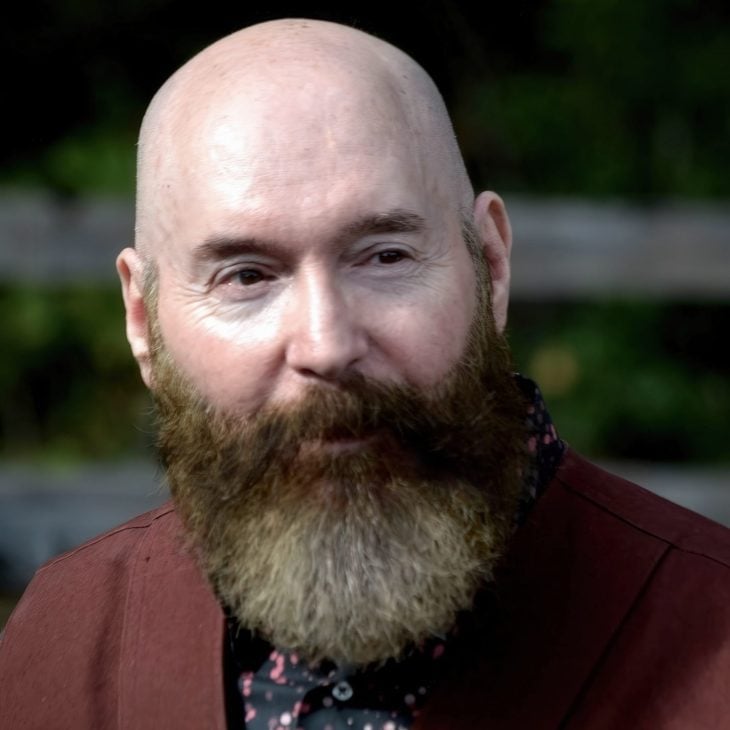
Ivo Dominguez Jr.
Author, Astrologer, Ritualist, Wiccan Elder
Interfaith America: Can you share about your tradition?
Ivo Dominguez Jr.: Astrology is a sacred science that can be applied to small practical uses, personal development, or the loftiest of spiritual questions. For me it is one of the strongest proofs of an underlying order in the universe. The creation and enactment of rituals is one of the most effective ways to encourage a direct experience of the mysteries and numinous reality. As a Wiccan elder, I teach, advise, challenge and encourage the members of my community to reach for their best and highest self. Personally, I think that my biggest task as an Elder is to be the glue that helps to mend and build the community and tradition.
IA: How do you commemorate Samhain in your practice?
ID: Samhain is not a day, it is a season of observances. It begins with noticing the change in the air that is partly about the weather and partly about the feeling that the separation between the seen and the unseen is lessened. It progresses with harvest decorations, a freshening of ancestor altars, and listening for messages. It culminates with rituals to celebrate and commune with those that have passed on. It is also the symbolic death of the year and is our New Year’s Eve.
IA: There are several religious and cultural holidays celebrated around this time. What are your thoughts on the intersection of these sacred days and celebrations?
ID: Many holidays derive most of their meaning from the commemoration of historical events or events believed to be part of the story of a tradition. Though they repeat every year, they are anchored in a timeline. There are other holidays that are rooted in mythic cycles and the circle of seasonal changes. These derive their meaning from nature and a sense of the eternal rather than historical anchors. One of the reasons for an intersection of these holidays is that they are a response to a deep call to our spirits that reverberates through the world at that time.
IA: What is a piece of wisdom from your tradition that you carry with you through this season?
ID: Life and death are dear friends and partners in creation. All things live and die and are reborn. There is no end, nor beginning, there is only change. One of the great gifts of this season is the opportunity to remember and appreciate what has been and what we hope will be.
Elaine Krebs
Interfaith America Emerging Leader

Interfaith America: Can you share about your worldview and faith background?
Elaine Krebs: I am a Roman Catholic Christian.
IA: What is the significance of both All Saints’ Day and All Souls’ Day in your tradition? What are some key themes and ideas that resonate with you on these feast days?
EK: All Saints’ Day and All Souls’ Day celebrate those who have gone before us in life. All Saints’ Day focuses on those individuals that the Catholic Church has designated as saints because they showed good examples for a life of faith on Earth and revealed to us that they are with God in Heaven through confirmed miracles. All Souls’ Day remembers the wider community who has gone before us, with focus on our own family and friends.
IA: How do you commemorate All Saints’ Day and All Souls’ Day in your community?
EK: I like to go to mass on All Saints’ Day. We sing “Litany of the Saints” which is a beautiful song asking all the saints to pray for us here on Earth. It makes me tear up every time. As children, we used to dress up as saints and recite a phrase about their life in front of an all-school assembly. That was always a highlight, and I remember it fondly. For All Souls’ Day, there is usually a book at my parish where you can write the names of your loved ones to be prayed for at mass.
IA: There are several religious and cultural holidays celebrated around this time. What are your thoughts on the intersection of these sacred days and celebrations?
EK: I think it’s beautiful to see different spiritual and cultural celebrations celebrating similar themes at the same time of year. I don’t think it’s coincidental — these traditions have built off each other and it’s cool to see them blend. For example, I have seen ofrendas inside of Catholic Churches, and I’ve seen non-religious friends put up memorials in their homes.
IA: What is a piece of wisdom from your tradition that you carry with you through this season?
EK: I think reflecting on death is something we don’t want to do as part of human nature. It’s sad and sometimes taboo. But I think it’s an important reminder that life is temporary, so we have to do the best we can with whatever time we have. We are reflecting on all the people who have touched and changed our lives, so I reflect on the mark I want to leave on the world. If I died tomorrow, what would that legacy be? I also believe in an afterlife, so it is a good and hopeful urgency to not take time for granted.
Wendy Mata
Bruja and Spiritual Teacher
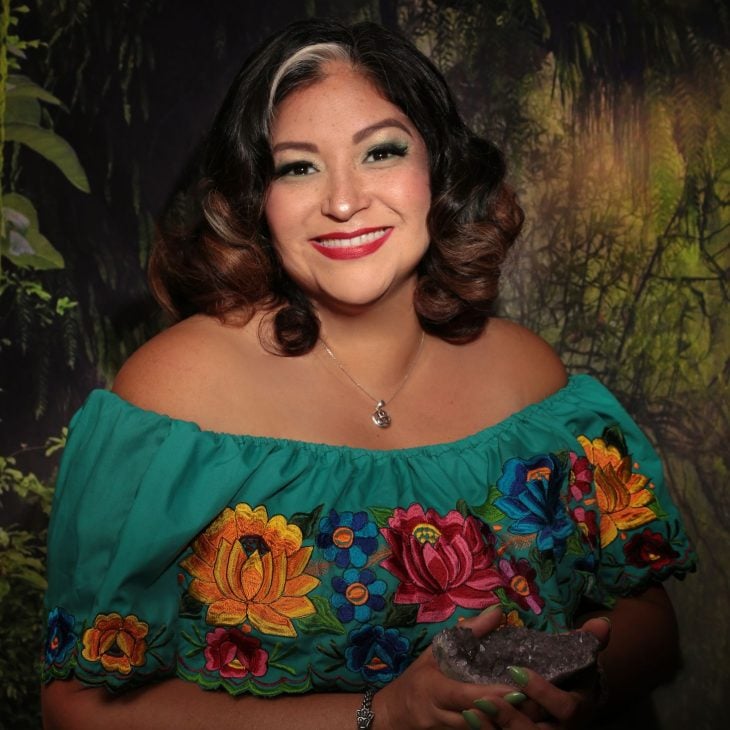
Wendy Mata, Bruja and Spiritual Teacher
Interfaith America: Can you share about your work as a Bruja and Spiritual Teacher? What calls you to this work?
Wendy Mata: My work is to help people remember their magic and reconnect ancestors, and inner light.
My path opened after years in corporate life, when I realized I was living disconnected from my spirit. Brujería and Suranderismo brought me back to myself, and I’ve been teaching others to do the same ever since. I show my students how to work with energy, protection, and ritual in ways that are practical and rooted in everyday life. What calls me to this work is knowing that our ancestors fought hard for us to have these tools, and I want people to use them with confidence.
IA: What is the significance of Día de los Muertos in your tradition? What are some key themes and ideas that resonate with you at this time of year?
WM: Día de los Muertos is about remembering and celebrating those who came before us. In my family, it’s not a sad day, it’s a time to laugh, cook, and share stories. We believe our loved ones visit, and it’s our job to welcome them.
For me, this season is about gratitude and connection. It reminds me that death is part of life, and that we are never truly alone, that our ancestors are always there for us.
IA: How do you commemorate Día de los Muertos in your practice?
WM: I build an altar for my ancestors with photos, candles, marigolds, and food they loved. My dad gets his beer and tools — he was a carpenter; my abuela gets pan dulce, cigarettes and music.
I talk to them, tell them what’s happening in my life, and thank them for their guidance.
Sometimes I cry, sometimes I laugh, sometimes both. I cook family recipes and share them with my daughter so she grows up knowing where she comes from.
It’s a simple, loving ritual that keeps my family’s memory alive and makes me feel supported by those who walked before me.
IA: There are several religious and cultural holidays celebrated around this time. What are your thoughts on the intersection of these sacred days and celebrations?
WM: I see all of these celebrations as different ways of honoring the same truth: life and death are connected. Different cultures have different names, but the heart of it is the same. We pause, we remember, and we open space for our ancestors.
I think it’s beautiful that across the world, people feel that pull to light candles, cook food, and honor their dead. It shows how human it is to love and remember.
I don’t focus on the labels — what matters for me is the connection and the respect behind the practice.
IA: What is a piece of wisdom from your tradition that you carry with you through this season?
WM: The wisdom I carry is that our dead don’t disappear, they become part of our daily life. My family taught me that you keep your loved ones close by talking to them, feeding them, and remembering them.
That’s why I always have candles and ofrendas ready. When I feel lost, I ask my ancestors for guidance, and somehow the answer always comes. This time of year reminds me to slow down, to honor those who made my life possible, and to keep living in a way that would make them proud.