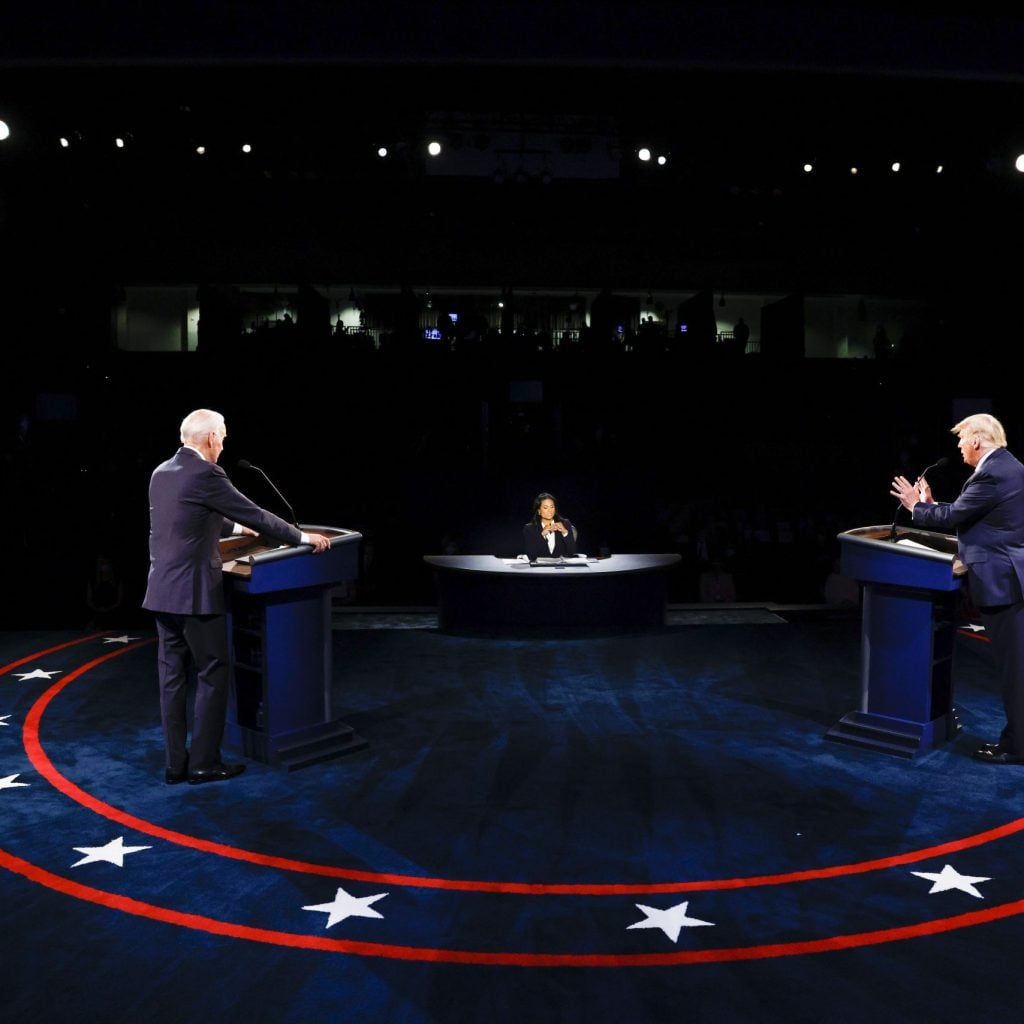
Just months ago, many doubted a debate between the two major party presidential candidates would happen this election cycle. With confirmed dates on June 27 and September 10, America braces for the clash of two of the world’s most influential leaders on stage.
The new rules debuting for the CNN debate on June 27, like no studio audience and muted mics during opponents’ turns, aim to tame chaos in what is designed as a policy-based dialogue. Yet, amid these changes, a central question lingers: Will anything on stage impact the election?
Most Americans have formed opinions after experiencing each candidate’s administration for four years. But for the elusive undecided voters, will the debate’s substance — however much of it there is — sway them into one camp or another? Time will tell.
Regardless of its impact on the election, the debate serves as a proxy for America’s bitter political and cultural divisions and another moment of dissatisfaction or exhaustion. At Interfaith America, we pursue the principles of civic pluralism as the answer to our nation’s divisions in the hope of co-creating a more perfect union.
resource
Faith in Elections Playbook
The Faith in Elections Playbook supports faith-based, civic and campus communities with accessible, actionable resources to support the 2024 election.
Being a civic pluralist is not about abandoning political convictions or involvement; it’s about embracing our values and beliefs without compromising them. It’s about actively engaging across differences to strengthen democracy. Whether supporting Biden, Trump, another candidate, or none of the current choices, pluralism remains achievable. It demands a deliberate mindset that fosters unity and resilience beyond election cycles. This approach ensures that regardless of who wins, democracy survives the day after the election, the inauguration, and beyond.
On June 27, Biden and Trump will spar on a range of issues – the economy, foreign policy, abortion, immigration, and other divisive subjects. Despite the flurry of dodging, deflecting, and pandering – all standard debate fare, there is an opportunity. It’s an opportunity to watch and evaluate the 90 minutes of debate through a lens of civic pluralism.
Here are five pluralist themes to look out for and questions to consider:
1. Identity – Is identity discussed as a source of pride or exploitation?
During the debate, consider whether candidates genuinely acknowledge and celebrate the diversity of identities in America or exploit identities as political tools. A pluralist approach emphasizes the importance of respecting and valuing our identities – whether based on race, religion, sexual orientation, or other factors – without resorting to manipulation or stereotypes, even when done with good intentions.
2. Faith – Is faith referred to as a bridge or a divide?
Pay attention to how candidates discuss religious traditions and their impact on public life. Evaluate whether references to faith are employed to unify diverse communities or to sow divisions based on religious differences. A civic pluralist would acknowledge the significant role of faith communities in fostering social cohesion and promoting shared values that enhance the common good. Assess how candidates either downplay the role of religion in American society or exploit it for political advantage.
3. Institutions – Are our nation’s institutions built up or demeaned?
Consider how candidates discuss the strength and integrity of democratic institutions such as the judiciary, Congress, and the electoral process. Pluralism as a framework emphasizes the importance of robust institutions that uphold the rule of law and protect the rights of all citizens, including minority groups. Evaluate whether their sentiments aim to enhance the effectiveness, transparency, and inclusivity of our democratic processes or undermine public trust in these institutions.
4. Cooperation – Is cooperation emphasized over division?
Observe whether candidates promote cooperation and collaboration across partisan lines and diverse communities. A civic pluralist encourages dialogue and compromise as essential to effective governance. Look for ways the candidates prioritize finding common ground on contentious issues, fostering a spirit of unity and inclusivity rather than exacerbating divisions for political gain.
5. Diversity – Is diversity described as a treasure or a threat?
Examine how candidates discuss the societal benefits of diversity in terms of culture, perspectives, and contributions. A civic pluralist perspective views diversity as a source of strength and innovation that enriches society and promotes understanding among different groups. Pay attention to how each candidate portrays the changing demographics in the country and what opportunities it brings.
If these guiding questions for the debate inspire you to seek a comprehensive framework for engaging in the election in nonpartisan ways that uphold democracy and ensure fair elections, explore the Faith in Elections Playbook. This comprehensive online toolkit, created in partnership by Interfaith America and Protect Democracy, was crafted specifically for people of all faiths to serve their communities this election cycle and uphold pluralism.