(RNS) — At 3 a.m., my daughter shook me awake. She had a nightmare and needed snuggles and reassurances she was safe. I held her until the dark no longer seemed so scary.
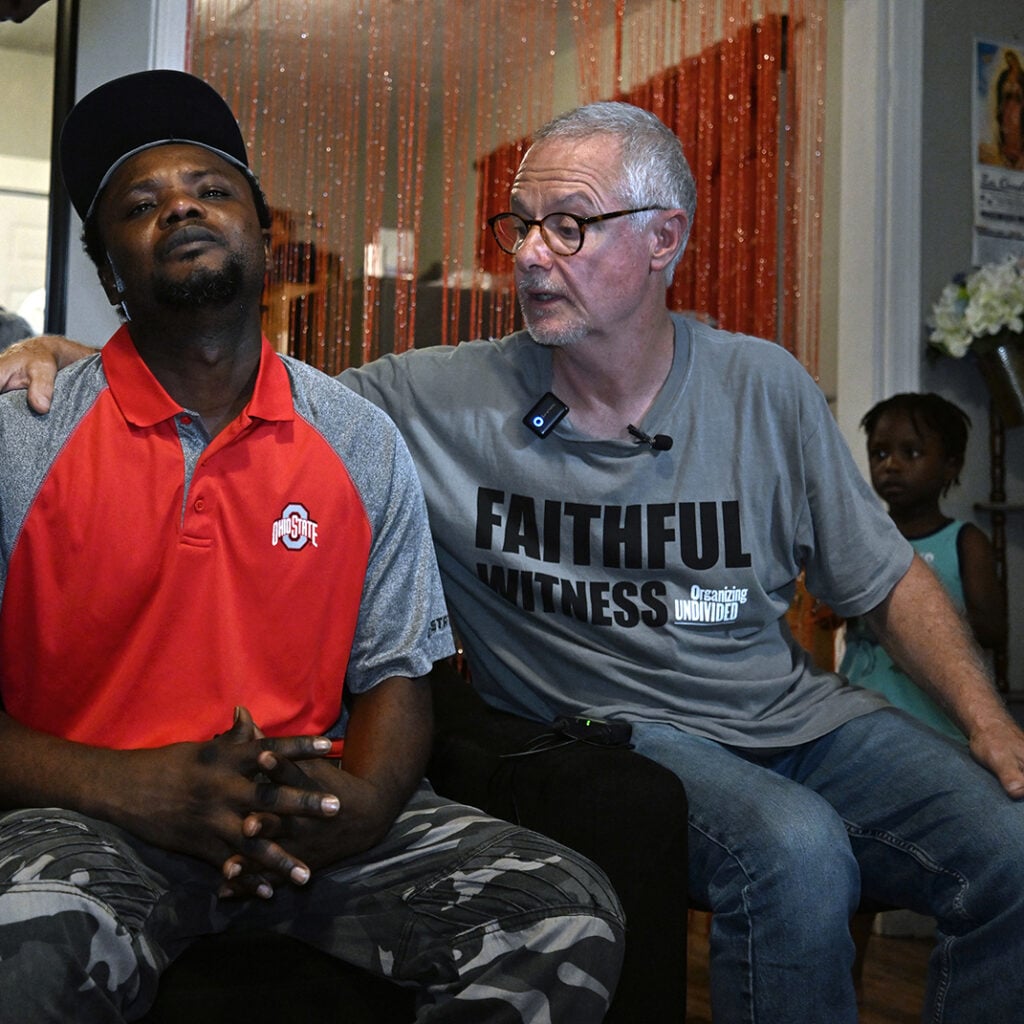
Hundreds of miles away, in Springfield, Ohio, Pastor Carl Ruby was holding someone too — not a frightened child, but a grieving father. Pierre Ronal Bel’s son, Pierre Damas Bel, a 20-year-old neuroscience student, had walked into traffic and died on Aug. 31. His family believes it was a suicide and says Pierre Damas Bel grew increasingly despondent after ICE fitted him with an ankle monitor. “Everything was fine with him before this happened,” his father told “The New York Times.”
This is not the only tragedy impacting the Haitian immigrant communities in Ohio. Since the U.S. government removed temporary protected status for Haitians a few weeks ago, ICE has stepped up enforcement. Local advocates have raised concerns about potential family separations for over 1,200 U.S.-born children in Springfield who have Haitian parents.
My organization’s work is bringing people together across religious divides — and in the face of a humanitarian crisis like this, it’s fair to ask whether cooperation across difference actually is even possible.
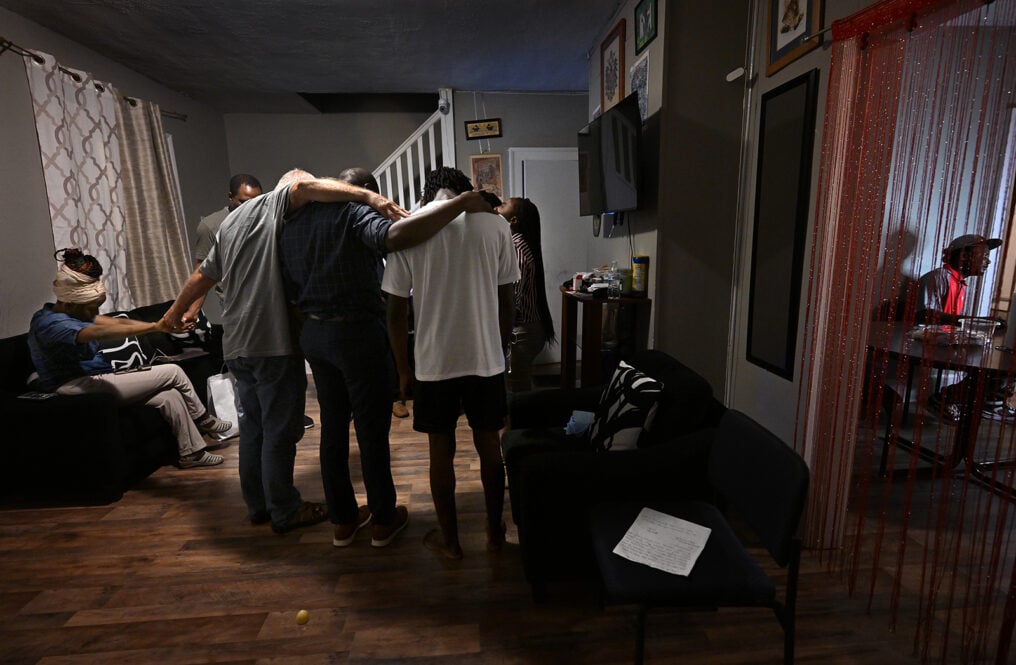
In Springfield, Ohio, hundreds of volunteers are showing that it is. Recently, hundreds of volunteers from a range of faith communities —Baptists, Unitarian Universalists, Mennonites, Quakers and others — packed meals for Haitian residents too afraid to leave their homes. They also lobbied political leaders to call for the release of two Haitian pastors who had been detained by ICE, and they stood outside Haitian houses of worship to protect their right to worship without fear.
For anyone who looks, there are signs that pluralism — the simple and quintessentially American idea that we can cooperate across difference for the common good — is alive in communities across the nation. Neighbors show up for one another, providing comfort and food and working to protect basic human rights and dignities.
Pluralism allows for respectful disagreement without letting that disagreement define the relationships. You and I can disagree on immigration policy while agreeing that Pierre Damas Bel’s death is a tragedy and feeling compassion for Pierre’s family’s suffering. We can disagree on temporary protected status decisions yet still understand the fears that immigrant communities across the country are navigating. If we put an increased focus on what we agree upon — re-anchor ourselves in shared humanity, rather than disagreement — we might, over time, find it easier to resolve our disagreements.
I understand if disagreements over the current immigration crisis seems like “long bridges,” insurmountable differences to cross. But even on these hard issues, I believe pluralism can be a solution. Pluralism is the simple invitation to widen the welcome and focus on common ground with an expanding range of potential partners. I see pluralism at work in community responses to the immigration crisis with churches, mosques and synagogues forging new relationships to live out their deeply held religious values, despite the other issues that may deeply divide them.
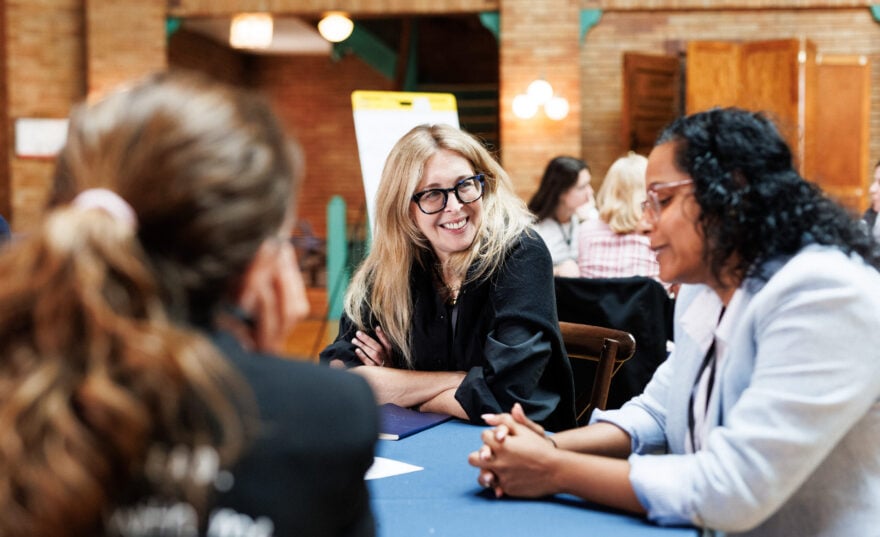
My own congregation in Maryland, in partnership with other religious and community groups, is hosting a set of legal clinics for local immigrant communities. The focus is not on particular policy outcomes but on the idea that the inherent worth and dignity of every person means everyone deserves excellent legal advice contextualized for their particular needs. These clinics have brought together Maryland residents who have never previously met but share that value and feel called to live it out with their neighbors.
As a parent, my heart aches for Pierre’s family and the pain so many other immigrant families are experiencing. We have seen the moral disasters that dehumanization leads to throughout history. The tradition of pluralism gives us a pathway to humanize one another, living up to the shared value of human dignity emphasized across diverse religious traditions. It is also an invitation to live into our national aspiration of “e pluribus unum”: out of many, one.
Mary Ellen Giess
Mary Ellen Giess is the Managing Director of Interfaith America.