
Tool
Setting the Space for Pluralism
This resource gives you a starting point for establishing a shared set of norms at the start of any interaction where you want to promote relationship building across differences.

Setting the Space for Pluralism
Building respect, relationships, and cooperation across difference doesn’t happen automatically. Instead, leaders take intentional steps to create the conditions for surfacing both shared values and the meaningful ways in which people see the world differently. This Setting the Space for Pluralism resource gives you a starting point for establishing a shared set of norms at the start of any interaction where you want to promote relationship building across differences.
Why Set the Space?
When people come together, they want to know: What’s happening here? How are we meant to interact? What’s the goal of our time together? These questions are even more important for people when the context or objective feels unfamiliar or challenging.
For leaders creating spaces where people will build relationships and work together across differences, it’s important to recognize these natural curiosities (which can show up as anxieties) and proactively answer these questions, so that people can settle into the space. Interfaith America has found the following Agreements and Guidelines to be particularly effective for setting expectations when the objective is for participants to build meaningful relationships and cooperate across differences.
Our Agreements
These are the agreements that we at IA ask everyone to try to embody during our programs. They invite the room to embark on curious conversations while releasing the pressure of perfection.
We release:
- Viewing identity as simple or monolithic
- Striving for agreement on all things
- Requiring shared ideology, viewpoints, or analysis
- Perfection
We embrace:
- Identity as a source of pride and complexity
- Difference (even deep difference) as normal and expected
- Curiosity
- Relationship building
- Shared values and concerns
Additional Framing Language
We release:
- Viewing identity as simple or monolithic: No one fits neatly into a single story or category. We do ourselves and others a disservice when we assume anyone’s identity can be summed up by one word or that there is one universal experience that all members of a group inherently share.
- Striving for agreement on all things: We can disagree (even deeply!) and still stay in conversation, learn, and build relationships. We release the idea that in order to work on some things together we must agree on all things.
- Requiring shared ideology, viewpoints, or analysis: Building mutual respect, relationships, and cooperation can happen across different viewpoints and beliefs. What matters is how we engage, not that we all enter the space with the same ideas.
- Perfection: We all are imperfect humans. We have good days and harder days when we miss the mark. We’re sometimes supportive and sometimes in need of support. We learn and grow and change and need different things from moment to moment. All of this is ok.
We embrace:
- Identity as a source of pride and complexity: We take seriously the different types of identities people hold, and the ways they inspire our work in the world. Each of us carries many layers of identity that we’ve developed over time, and we want to honor that complexity rather than reduce people to one dimension.
- Difference—even deep difference—as normal and expected: In our view, disagreement isn’t a problem to solve; it’s an expected part of life in a diverse community. Disagreeing with one another does not have to be a problem.
- Curiosity: Instead of assuming we understand someone’s experience or perspective, we ask questions and strive to be open to learning something new.
- Relationship building: Relationships are the foundation of building healthy teams and communities. So, we take seriously the opportunity to genuinely connect with one another and gain greater trust and understanding.
- Shared values and concerns: Even when we differ on big things, we often share core values or concerns. A vegetarian and a rancher who values self-sufficiency will likely never agree on beef consumption… And they’re both in the same conservation group because their different value systems lead them both to care deeply about the environment. Our work not only expects, but actively seeks out shared values, a reality that can make cooperation possible.
Our Communication Guidelines
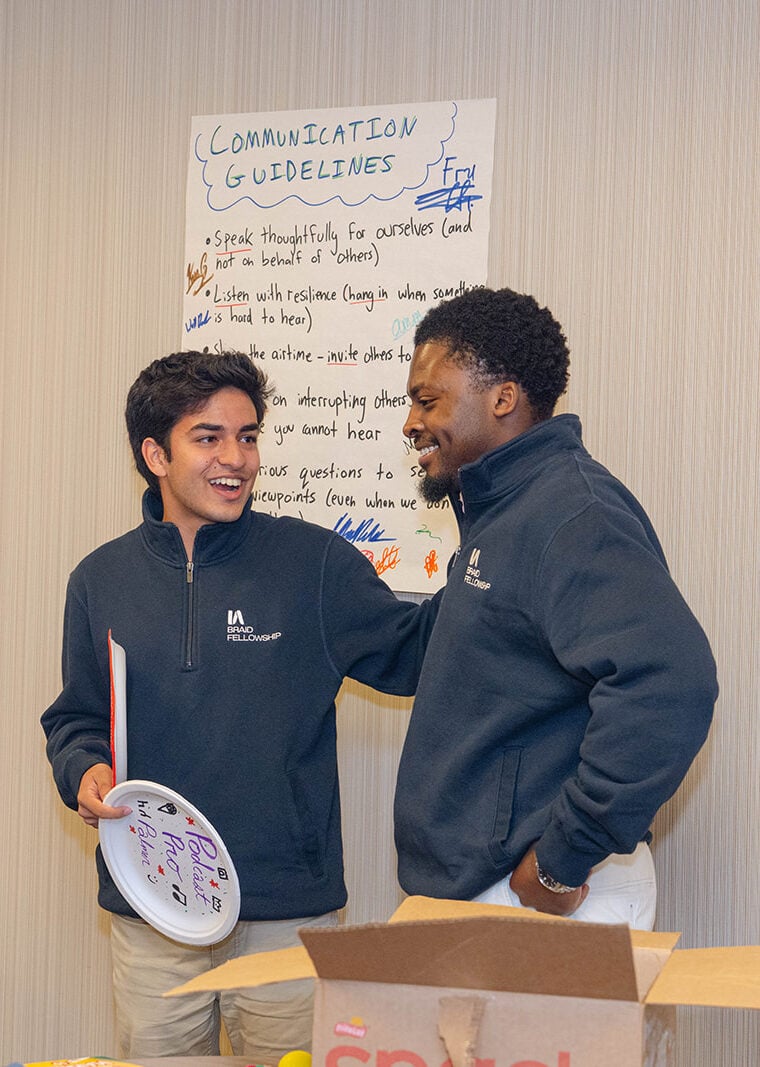
These guidelines provide standards of observable behavior that everyone in the room agrees to attempt to embody. They prioritize balanced conversations in which each contributor is treated respectfully by their peers. Introduce them purposefully, clearly, and invitationally. Participants need to know what behaviors can support everyone as a learner.
To support everyone as a contributor, let’s:
- Speak thoughtfully for ourselves (and not for or on behalf of others) We do not expect anyone to speak on behalf of an identity group to which they belong. Conversely, we also ask that you take ownership for your contributions.
- Listen with resilience (hang in there when something is hard to hear) Try your best to listen to those with whom you disagree as you would want them to listen to you.
- Share the airtime—invite others to contribute If you’ve had the opportunity to share, ask others for their thoughts.
- Hold off on interrupting others, except to indicate you cannot hear
- Ask curious questions to seek multiple viewpoints (even when we don’t agree with them) Trust that you will be enriched by others’ contributions.
Best Practices for Using Agreements and Guidelines
A key part of making these guidelines and agreements successful is sharing them at the beginning of your session or conversation. They are meant to be the foundation of the shared discussion you are about to have. For both the Agreements and the Guidelines, you can read out the items, or have participants volunteer to read one item or line. Feel free to add further context or explanation around any of the points.
As the person establishing these shared expectations, your main goal is to make sure people feel heard. You can acknowledge and empathize with people’s questions and/or concerns. Building relationships and cooperation across difference can be hard, and we each have our own tension points. You do not need to respond to or answer every single question. At this point in the conversation, acknowledgement is achievable, but complete answers to everything are not required.
Depending on the size of your group and the time you have together, you can promote further engagement with these guidelines by:
With More Time or Smaller Groups
Ask:
- “Take a moment to silently reflect on these guidelines. Focus on the one that you think will be most important for you to pay attention to today.
Seek Buy In:
- In pairs or small groups, ask participants to discuss their thoughts and concrete things they can do to “hang in there” when they hear something challenging or different than their view.
- And/or, what are concrete ways they can support others in the group to contribute?
With Less Time or Larger Groups
Ask:
- “Take a moment to silently reflect on which of these statements you’d especially like to hold onto today. Nobody is perfect, but which would you like to try and embody?”
Seek Buy In:
- Ask participants to tell their neighbor which statement they’d most like to focus on
- Ask participants to nod or give a thumbs up to commit to trying their best to embody these principles
To conclude the establishment of these Agreements & Guidelines, remind people that all of these behaviors are aspirational—people will miss the mark now and again, and that’s ok. These shared norms are meant to help our work together flourish.
As your conversations move forward, use these Agreements & Guidelines as an ongoing tool by: keeping them visible for all participants, revisiting them intentionally at natural transition points, and leaning on them when you respond to tension that might come up in the room.
Related Resources
Whether you’re a learner, an educator, or a practitioner, Interfaith America offers a suite of educational resources to help you realize your goals. Use our Learning & Action Bridge to find opportunities based on your role.
