NEW YORK, NY - JANUARY 26: Muslims pray following a protest to the mark the one year anniversary of the Trump administration's executive order banning travel into the United States from several Muslim majority countries, in Washington Square Park, January 26, 2018 in New York City. After numerous legal challenges, the travel ban is now in its third iteration. The Supreme Court is scheduled to hear the 'Trump v Hawaii' case concerning the travel ban this spring. (Photo by Drew Angerer/Getty Images)
Twenty-five years ago, Muslims in America woke up to find that they had become Public Enemy No. 1. In the days and weeks after the 9/11 terrorist attacks, mosques were vandalized, Muslim men were rounded up for questioning without charges, and a Sikh gas station owner in Mesa, Ariz. — mistaken for a Muslim — became one of the first deadly casualties of a backlash aimed at an entire faith community.
Muslims in America have witnessed some improvement in the last 25 years – reduced surveillance, electoral success, greater representation in public life and pop culture. But the threat of Islamophobia has not vanished. It has simply adapted into new forms and metastasized into a cancerous presence that has taken root in our mainstream political culture.
DETROIT, MICHIGAN - JUNE 26, 2018: Congressional candidate Rashida Tlaib speaks in protest against the supreme court's ruling on the Muslim ban. (Stephanie Kenner/Shutterstock)
The reduction in post-9/11 surveillance programs signals some change for the better. The most sweeping surveillance provisions of the USA Patriot Act expired in 2020. NSEERS, the registry that forced men from Muslim-majority countries to report to the government like criminals, ended in 2016. The NYPD Demographics unit that profiled and spied on Muslims across several states dissolved in 2014.
Muslims once treated as a security threat now sit in Congress —Reps. Andre Carson, Rashida Tlaib, Ilhan Omar among them — and Muslims have served as federal judges, ambassadors, and mayors of a handful of American cities. A New York Muslim, Zohran Mamdani, now leads our nation’s largest city.
In mass media and pop culture, Muslims have slowly but steadily entered the spotlight in positive ways. Mahershala Ali made history as the first Muslim actor to win an Academy Award almost a decade ago. The journalist Leila Fadel co-hosts NPR’s flagship program “Morning Edition”; a prominent Muslim journalist hosting such a program would have been unimaginable twenty-five years ago. Television shows such as “Ms. Marvel” and “Ramy” treat Muslim characters as fully human rather than as stereotypical terrorist threats.
But progress is not the same as safety, and visibility is not the same as belonging.
Twenty-five years later, Muslims in America are more visible than ever. But progress is not the same as safety, and visibility is not the same as belonging.
SAN DIEGO, CALIFORNIA - MAY 21: People attend the funeral service for Amin Abdullah, Mansour Kaziha, and Nadir Awad, at La Vista Memorial Park in National City on May 21, 2026 in San Diego, California. The services honor the three men who were killed trying to stop two teenage gunmen from entering the Islamic Center of San Diego’s mosque and school. (Photo by Sandy Huffaker/Getty Images)
Anti-Muslim hate crimes spiked significantly in 2001, then again in the lead-up to the 2016 and 2024 elections. For the years in between, they consistently remained well above pre-9/11 levels. The execution-style murders in 2015 of three young Muslim adults in Chapel Hill, N.C., and the more recent attack killing three people in the Islamic Center of San Diego, have contributed to constant feelings of vulnerability in Muslim communities.
Anti-Muslim political discourse has become more brazen. In the days after 9/11, President Bush stood in a mosque and proclaimed that “Islam is peace.” This vocabulary is practically unthinkable in today’s Republican leadership, as seen in Donald Trump’s call for a “total and complete shutdown” of Muslim immigration, his claim “Islam hates us,” and his insistence that Muslim members of Congress “go back” to the countries they came from.
NEW YORK, NEW YORK - NOVEMBER 12: New York City Mayor-elect Zohran Mamdani joins other politicians for the ribbon-cutting ceremony at the National Urban League's new headquarters in Harlem on November 12, 2025, in New York City. In a recent interview, Mamdani stated that he plans to call President Donald Trump before taking office in an effort to diffuse tensions between the two politicians. (Photo by Spencer Platt/Getty Images)
As Mamdani stepped into the mayor’s office earlier this year, Alabama Sen. Tommy Tuberville declared “the enemy is inside the gates” and suggested Mamdani belonged in Guantanamo Bay. Sen. Tim Sheehy of Montana accused Mamdani of supporting Hamas and terrorism.
When Abdul El Sayed won Michigan’s Democratic Senate primary this summer, Trump lumped him in with a slate of “jihadists,” while Tuberville called him a cheerleader for the 9/11 attacks. Rep. Nancy Mace of South Carolina insisted that every Muslim in public office is a “trojan horse, a threat to both national security and our republic.”
This isn’t fringe commentary. It’s coming from the White House and sitting members of Congress.
NEW YORK, NEW YORK - JUNE 22: Palestinian activist Mahmoud Khalil, who was released from ICE detention, stands with his wife Noor Abdalla as they speak and participate in a rally on the steps of the Cathedral of St. John the Divine in Manhattan on June 22, 2025 in New York City. Khalil was released Friday evening from an Immigration and Customs Enforcement (ICE) facility in Jena, Louisiana, after U.S. District Judge Michael Farbiarz issued an order granting his release on bail. (Photo by Spencer Platt/Getty Images)
From Oklahoma to Texas to New Mexico, mosques are still fighting for the right to exist amidst efforts to block their construction or expansion – an eerie echo of the manufactured outrage surrounding efforts to build the so-called “Ground Zero Mosque” in lower Manhattan 16 years ago.
Travel bans targeting Muslim-majority countries have been enacted in two different Trump administrations. Muslim university students have been targeted for detention and deportation by ICE for voicing political opinions at odds with the Trump administration’s own views.
Sharia fearmongering, which led to a proliferation of anti-sharia legislation at the state level starting in 2010, has found its second wind in the recently formed “Sharia-Free Caucus” in Congress. The caucus includes the likes of Tennessee Rep. Andy Ogles, who claims “Muslims don’t belong in American society,” and Florida Rep. Randy Fine, who argues “[w]e need more Islamophobia, not less.”
What connects all of this, then and now, is securitization — the habit of viewing Muslims not as neighbors and citizens but as national security threats…
What connects all of this, then and now, is securitization — the habit of viewing Muslims not as neighbors and citizens but as national security threats that need to be watched, managed, and deployed as a symbol of the enemy abroad, particularly in times of war. It’s this same logic that put Japanese Americans in internment camps during World War II. When the country is at war overseas, communities that share a presumed racial, religious, or cultural identity with the “enemy” become suspects at home.
FLORENCE, AZ - JULY 30: A guard escorts immigrants from (L-R) Afghanistan, Somalia and Yemen ahead of a Friday Muslim prayer service at the U.S. Immigration and Customs Enforcement (ICE) detention facility on July 30, 2010 in Florence, Arizona. (Photo by John Moore/Getty Images)
Since 9/11, the United States has never stopped fighting wars and therefore has never stopped securitizing Muslims. The War on Terror in Iraq and Afghanistan gave way to the U.S. war in Iran and U.S. support for Israel’s war in Gaza, each one supplying fresh fuel for the claims that Muslim lives abroad are expendable and Muslims at home are suspect and dangerous.
We must learn to see Islam and all religions not as a problem to solve but as a bridge toward greater cooperation and collaboration.
America at its core is a pluralistic nation. Our Founders recognized that religious pluralism is a civic good, not an existential threat. If we are serious about holding to their vision and to one of America’s greatest promises to people of diverse faiths, we must learn to see Islam and all religions not as a problem to solve but as a bridge toward greater cooperation and collaboration.
That starts with a mind shift, replacing suspicion with curiosity. It grows through an intentional effort to improve our religious literacy and to create more space for Muslims in America to define their own faith instead allowing political opportunists to do so. And it thrives when we can see and celebrate the gifts and contributions that Muslims bring to civic life – not in spite of their faith but because of it.
Twenty-five years is long enough to know that Islamophobia will not simply age out of American life. It must be confronted as the unfinished business it is. The alternative is a country that keeps mistaking its Muslim citizens and residents for its enemies and that keeps confusing this mistake with patriotism and progress.
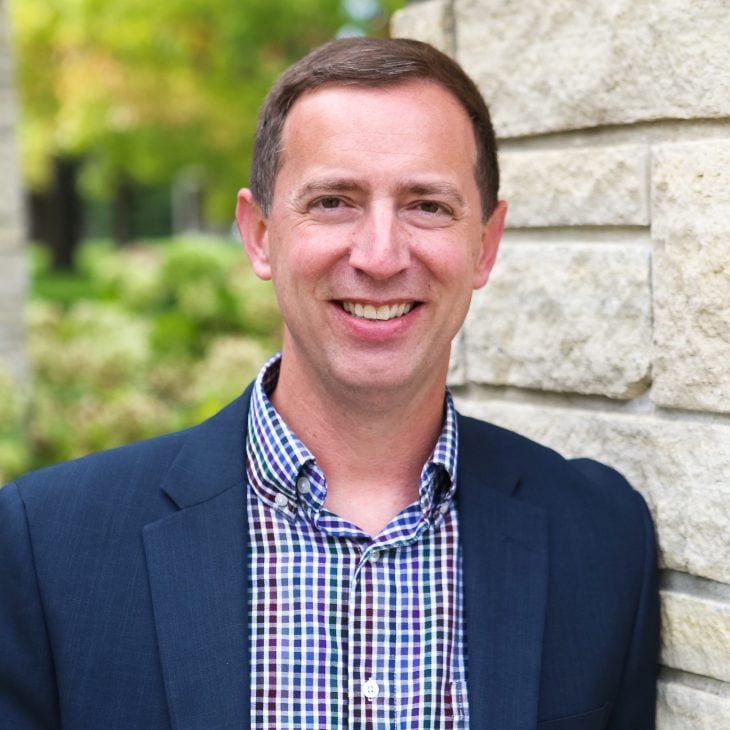
Todd Green
Todd Green is Senior Director of Campus Partnerships at Interfaith America. A former religious studies professor at Luther College, he is the author of “The Fear of Islam: An Introduction to Islamophobia in the West.”
Interfaith America seeks contributions that present a wide range of experiences and perspectives from a diverse set of worldviews on the opportunities and challenges of American pluralism. The opinions expressed herein do not necessarily reflect those of Interfaith America, its board of directors, or its employees.
In honor of the Semiquincentennial, Interfaith America is excited to share a positive vision of our nation's future — out of many, we can become a new whole.
Subscribe to customizable email newsletters with articles, podcasts, events, resources, and grants from Interfaith America. We equip leaders to cooperate across differences for the common good on campuses, in communities, and in workplaces.