As the 2026 midterms approach, leaders at organizations across the country are committed to protecting free and fair elections by respecting, relating, and cooperating across differences in their communities.
Ahead of the midterms, Interfaith America connected with three Vote is Sacred (VIS) fellows who shared about the unique challenges of this election, how they’re working to safeguard democracy at the state and local levels, and their advice for how people of faith can support their communities.
Meeting the Challenges of the Midterm Season
This election season, Americans are grappling with uncertainty and fear. Though election concerns look different from community to community, an important part of the work of pluralism and fostering trust — both in the electoral process and in each other — is acknowledging these challenges openly.
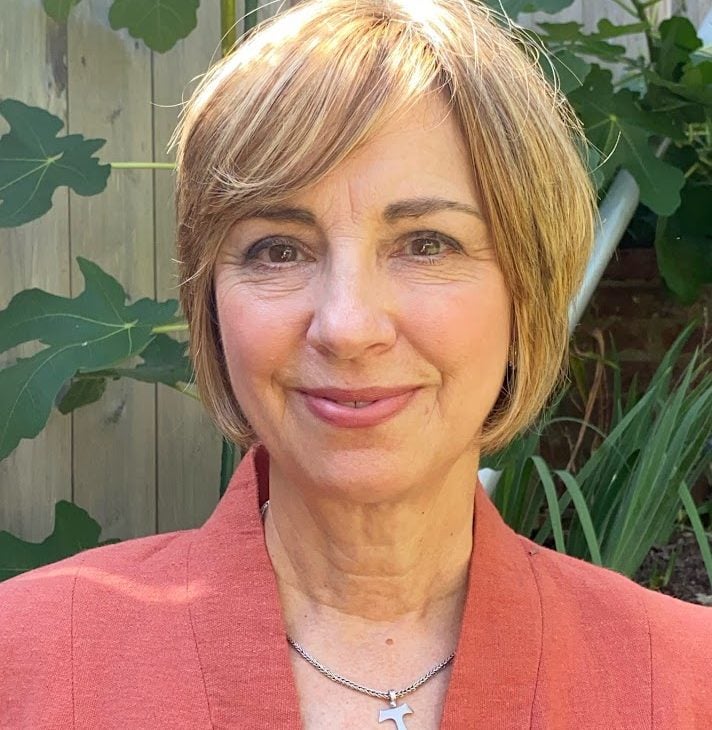
Michele Dunne, Executive Director at Franciscan Action Network, is quick to point out that issues this midterm season — from threats of electoral sabotage to voter suppression — vary at the local level.
“One thing I think that will be a concern everywhere is getting proper information, getting correct information,” she said.
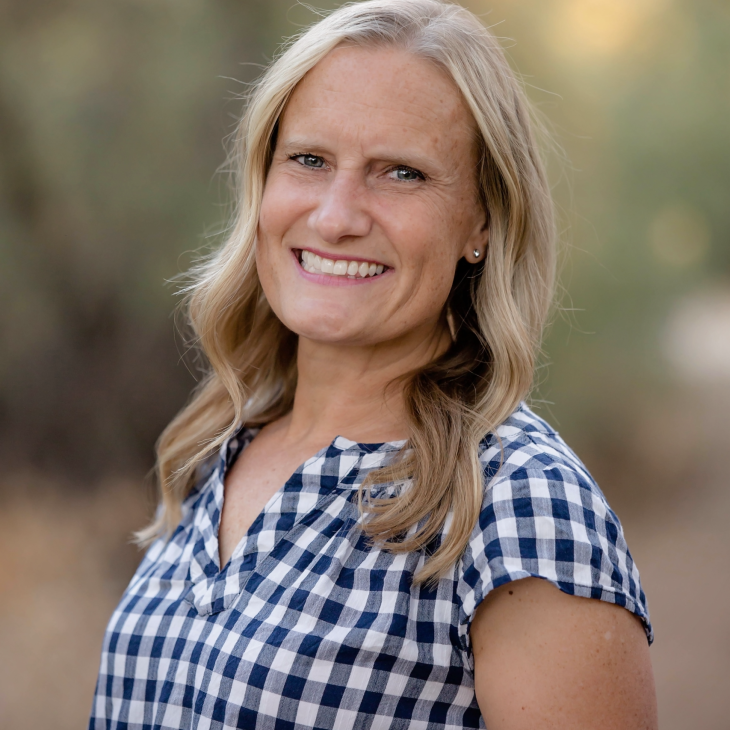
For Jane Andersen, the Arizona Director at Mormon Women for Ethical Government (MWEG), voter apathy is a concern.
“I think our general everyday voters are completely overwhelmed by the quantity of news and quasi news that comes their way,” she said. “People are becoming less and less willing to buck the trend of what politics looks like and dive into it. That’s what worries me the most, because as a citizen, we really do hold so much power.”
In some communities, there is growing fear surrounding engaging with the democratic process.
“There are concerns about the possibility of law enforcement, whether ICE or others, deployed on election day out and about, and possibly near polling places, and how that could create an intimidating effect,” said Dunne.

Ria Chakrabarty, a Senior Policy Director at Hindus for Human Rights (HfHR), identifies hate towards South Asian communities, Islamophobia, and anti-immigrant sentiment as significant issues this midterm season.
“[It] makes people really afraid to even want to participate in democracy,” she said, referencing recent vitriol against South Asian Americans and rhetoric targeting Haitian immigrants. “At that point, you just want to keep your head down and not really engage with anything. You just want to survive. That’s a huge problem.”
Different Communities, Shared Democratic Commitments
In response to the myriad challenges of democracy work, VIS fellows are committed to mobilizing their communities in support of free and fair elections. Just as local communities and diverse constituencies face a variety of challenges, so do approaches to election work differ from organization to organization.
“We’re a diverse group in terms of our composition, even on the political spectrum.” Andersen said of the fellowship, “But it was so encouraging to see the work they’re doing and the creativity that they’re using to reach their audiences.”
For Andersen, this work includes demystifying the electoral process. MWEG’s efforts in the months leading up to the midterms have focused on familiarizing the women in its constituency with the process of running an election, illuminated by scheduled visits with elected officials, shared media literacy content, and hosted trips to the Maricopa County Tabulation Office and Election Center, as well as voter preparation parties.
The Franciscan Action Network is committed to the nonpartisan work of upholding a free and fair election process. This includes the recruitment of poll chaplains — people “organized in a team with other people of faith to be outside polling places … to help voters out in any way that they need, and to help create a peaceful and positive atmosphere, possibly to de-escalate conflict,” Dunne explained.
At Hindus for Human Rights, the work of election protection involves identifying and tracking how threats to democracy and authoritarianism in the United States and India are linked and creating what Chakrabarty calls a “landing place,” for those whose commitment to democracy work compels them to act, even in spite of the fear of retaliation or deportation.
She pointed to the importance of encouraging constituents to stay engaged beyond election season as her organization builds a chapter and cultivates community in Georgia.
“After the elections, they’re able to continue talking about the issues that they care about, and then once the people that they’ve elected are in office, making sure that the elected officials in Georgia are hearing from HfHR in the Atlanta metro area throughout the next two years,” she said.
Advice for Showing Up as People of Faith
“It’s important for each organization or faith tradition to spend a little time discerning what is this spiritual grounding that they’re bringing to this work,” Dunne said. “For us as Franciscans, we’re a completely nonpartisan organization,” guided by “a commitment to nonviolence and to democracy as the system we have in the United States for resolving political differences.”
As a member of the Church of Jesus Christ of Latter-Day Saints, Andersen invoked LDS President, Dallin H. Oaks’ call to “be agents of peacemaking in our culture” as a motivation for her work in the civic sphere with MWEG.
“We want to empower people to recognize that, as people of faith, our principles are going to guide how we create specific impact, and it really separates us from people who are solely politically motivated. Approaching politics from a viewpoint of faith really provides a new and needed perspective,” she said.
For Chakrabarty, a first step to democracy work, especially when welcoming in those are hesitant to make their voice heard, is “just showing up, listening and talking to people, and giving people the tools that they can use to feel in control.” Providing materials and resources for concrete ways to get involved helps empower constituents to take action. “Democracies are just as strong as the people who are involved in them,” she told IA.
Looking ahead, Dunne is hopeful. “People are stepping forward,” she said, “And they’re saying, ‘I believe so much in the need for a peaceful and properly functioning democracy in this country, and I want to be there. I want to play a role.’”
For accessible, actionable resources for constructive engagement with elections, explore Interfaith America’s Faith in Elections Playbook.
Rachel Crowe
Rachel Crowe, Staff Writer for IA Today, tells compelling stories about interfaith cooperation across diverse communities and supports our narrative programming. She is a graduate of Gettysburg College where she earned a BA in English with a Writing Concentration and a German Studies minor.