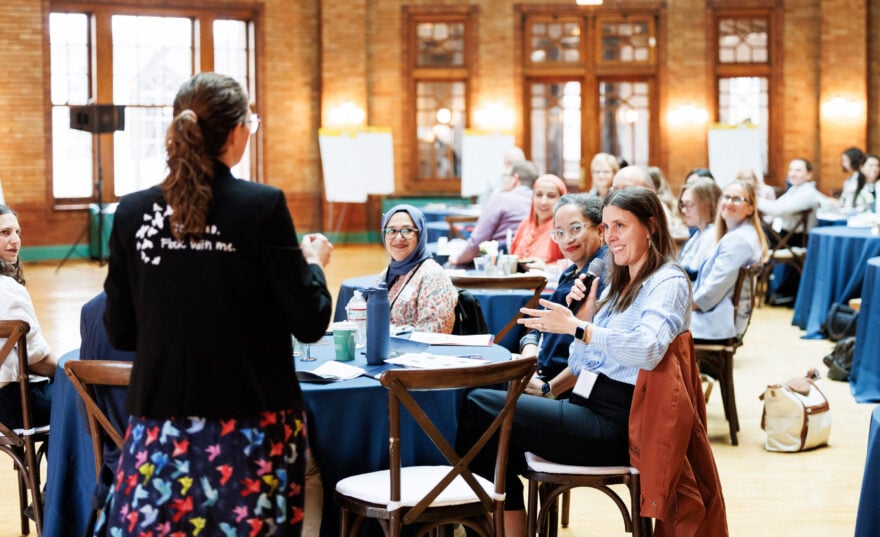

Earlier this month, Interfaith America’s academic initiatives team hosted a webinar exploring how faculty can drive campus-wide pluralism beyond the classroom.
The conversation proposed concrete ideas for cultivating campus environments that model cooperation across difference, featuring insights from Grant Cornwell, President, Emeritus at Rollins College; Marjorie Hass, President of the Council of Independent Colleges; Sarah Igo, the Andrew Jackson Chair in American History at Vanderbilt University; and Laurie Patton, President of the American Academy of Arts and Sciences.
IA president and founder Eboo Patel moderated the panel and offered opening remarks on the role of institutions of higher education in fostering the rich intellectual tradition of pluralism.
Subsequently, the four panelists offered concrete recommendations for campus leaders and faculty to advance pluralism:
Grant Cornwell
“Cultivating the skills, values, and content knowledge [of intercultural competency in students] calls for a coordinated effort between student affairs programming and the academic curriculum … this work is very important and very difficult, and we need all-in commitment to it, which means it has to be anchored in the academic program, and it has to be owned and operated and conceptualized by the faculty.”

Marjorie Hass
“We [faculty] often let bullying or silence be the way we work out differences. That is not going to be helpful if we’re going to be leading work on creating a pluralistic experience for students in the classroom or in the curriculum.”

Sarah Igo
“[F]aculty can and must be the stewards of campus intellectual life beyond their own research and classrooms … Pluralism as a way of thinking draws us to think about not simply the elements of a polity or of a university, but of the whole — the fabric of the whole.”

Laurie Patton
“Students in particular, but others too, are less afraid once they know they have the tools to manage a difficult conversation … They can turn to thinking about exploring options rather than taking positions.”
To hear the panelists’ full theses and the discussion that followed, watch the recorded event: