
In today’s polarized world, the need for open conversations across differences is critical, especially in our higher education institutions that have become the epicenter of deep divides, according to an article in the Washington Post.
Disagreements often escalate into conflict instead of opportunities for growth. At the Harvard Kennedy School (HKS), the Candid and Constructive Conversations (CCC) initiative is stepping up to provide spaces for greater understanding and connection.
We, Pratyush and Armughan, are part of this initiative, working to foster dialogue at HKS. We hope to give you a glimpse into how an Indian and a Pakistani are working together within CCC to address polarization, and how this initiative can inspire students, educators, and future leaders to chart a new way forward.
The Purpose Behind CCC
Led by Professor Erica Chenoweth along with a team of HKS faculty, staff, and students, the CCC initiative aims to create spaces for candid, respectful conversations that promote growth and insight.
In an environment where divisive discourse often dominates, our goal is to make HKS a place where students feel empowered to explore opposing viewpoints, challenge assumptions, and build bridges across ideological and personal differences.

HKS is home to students from diverse backgrounds — geographically, culturally, politically, and professionally. This diversity brings incredible opportunities for learning but also unique challenges. There’s often discomfort or fear of saying the “wrong thing,” or even apprehension in approaching those with different values. CCC steps in to turn these moments of discomfort into opportunities for profound learning and empathetic public leadership.
Both of us, Pratyush and Armughan, are drawn to this work because of our personal histories. Pratyush grew up listening to stories of his grandparents, who were forced to migrate during the partition of India in 1947. Those stories sparked his curiosity about why polarization and hatred exist.
For Armughan, the birth of his daughter, with both Jewish and Muslim heritage, prompted him to reflect on the kind of world she would grow up in — a world where dialogue between different perspectives is crucial but also scant. Our friendship, formed at HKS despite our countries’ historical conflicts, shows the power of connection through conversation.
A Glimpse into Our Work
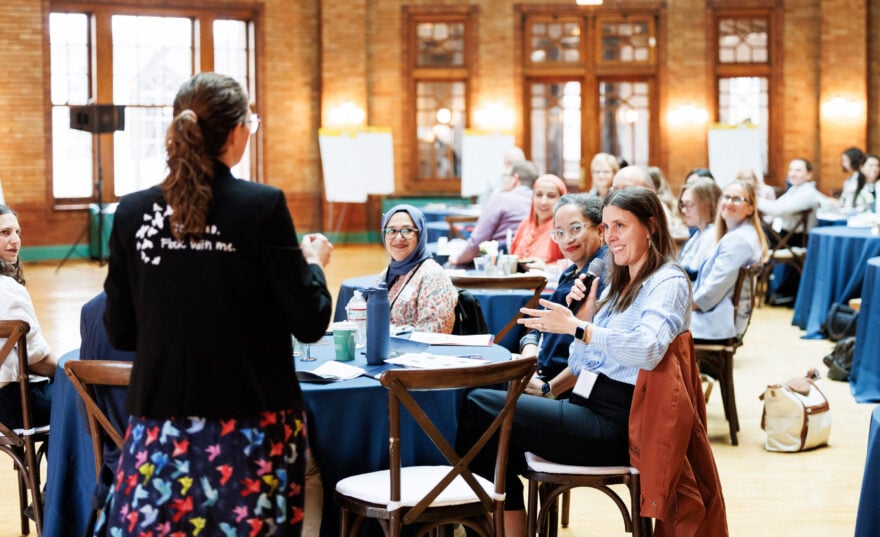
As student leaders running the Engaging Across Differences Caucus at HKS earlier this year, we experimented with different workshop and clinic formats with the goal of creating spaces for constructive dialogue. Through the CCC, we have been able to build on our work by focusing on two formats that have been particularly successful: “Agree to Eat” and “Dialogue Circles.”
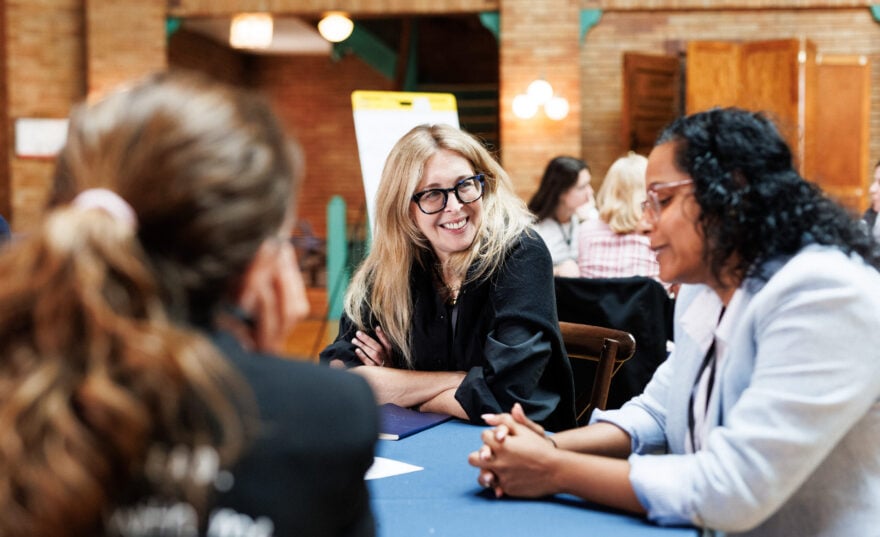
“Agree to Eat” is a two-hour facilitated HKS-wide meal that invites 50-60 participants (including students, administrative staff and faculty). We begin by setting norms for our shared space and engaging our participants on how they can best model active listening in this space. We then split our participants into pairs, with a prompt to gaze across the room and walk towards someone who draws in their curiosity (this often happens with people smiling at each other!).
Through a three-course conversation meal (appetizer, main course and dessert), we lead our participants through deeper and deeper questions that invite (we hope!) deeper sharing and understanding. We pause the action between each course and do pulse checks to gauge if participants are feeling heard (in our experience everyone raises their hand every time!).
“Dialogue Circles” are closed-door group discussion events focused on a particularly contentious issue (and buttressed by shared norms of engagement). Each circle consists of a maximum of 15 participants, including one or two facilitators. The group follows a structured conversation guide that includes introductions, discussion, conclusion, and reflection. The goal is to deeply explore a polarizing issue and engage constructively with those having different viewpoints (oftentimes informed by vivid lived experiences) on that topic.

For Fall 2024, we planned three Dialogue Circles with the themes: Religion and Me, Wars and Me, and Elections and Me.
One memorable moment of note came from our Dialogue Circles during a discussion on religion. One of the participants, a fiercely atheist individual, expressed that atheism was the only common-sense view and that religion was for the foolish. He shared that, as a gay man, religion had no place for him and therefore he had completely rejected it. However, as the circle progressed, he listened to other participants and a professor speak about how religion had played a positive role in their lives.
We sensed a shift in stance as the circle progressed.
During the reflection, he admitted that his absolutism in favor of atheism could have been wrong, especially given that he himself had been a victim of absolutism in religion. Witnessing this softening of views and the emergence of a more nuanced perspective brought us immense joy.
Moving Beyond Comfort Zones
At the core of our work is a challenge: to move beyond echo chambers and step into spaces that invite curiosity and reflection. We ask participants to commit to curiosity over judgement, embrace discomfort, practice active listening, and remember that our shared humanity is more important than the issues that divide us. Often, stepping into these spaces can feel risky; especially when discussing deeply personal or polarizing topics like religion, identity, or politics. However, it is precisely this discomfort that leads to growth and transformation.
So far, this model of dialogue has been effective. We collect feedback after each event, and participants consistently report feeling about 40 percent more heard in our spaces than in other settings at HKS. These conversations are often just the beginning, sparking greater curiosity and further exploration.

How You Can Get Involved
We are learning that our work is only the beginning, and we envision sharing it with more communities, especially in higher education. If our work aligns with your community’s goals, we would love to connect.
Reach out to Pratyush or Armughan. We look forward to hearing from you!

Pratyush Rawal
Pratyush Rawal holds a master’s in public administration from Harvard Kennedy School and currently works as a facilitator with the Candid and Constructive Conversations (CCC) Initiative, while also leading Sadbhavna.in, an organization he founded in India to counter hate and polarization through dialogue.

Armughan Syed
Armughan Syed is a Pakistan-Swiss American who has worked across the works in building community and creating spaces of shared healing throughout his professional career. When he is immersed in the work of the Candid and Constructive Conversations (CCC) Initiative, he is a proud father of a three-year-old daughter and three pups.