
After Sigmund Freud’s death, Auden wrote: “to us he is no more a person / now but a whole climate of opinion / under whom we conduct our different lives.” I was drawn quietly back to these words after my friend Derrick Dawson died two summers ago.
Auden’s words helped me to grieve a figure who had become monumental in my life, altering its very atmosphere. I came to know Derrick, a veteran, journalist, and longtime leader in racial justice work in his hometown of Chicago, through our shared workplace and connection to the same area faith community. Alongside our friend Joy Bailey, Derrick was instrumental in creating the original version of what would become the “Race and Place” Walking Tours of the Hyde Park/Kenwood neighborhoods that I have led since 2018.
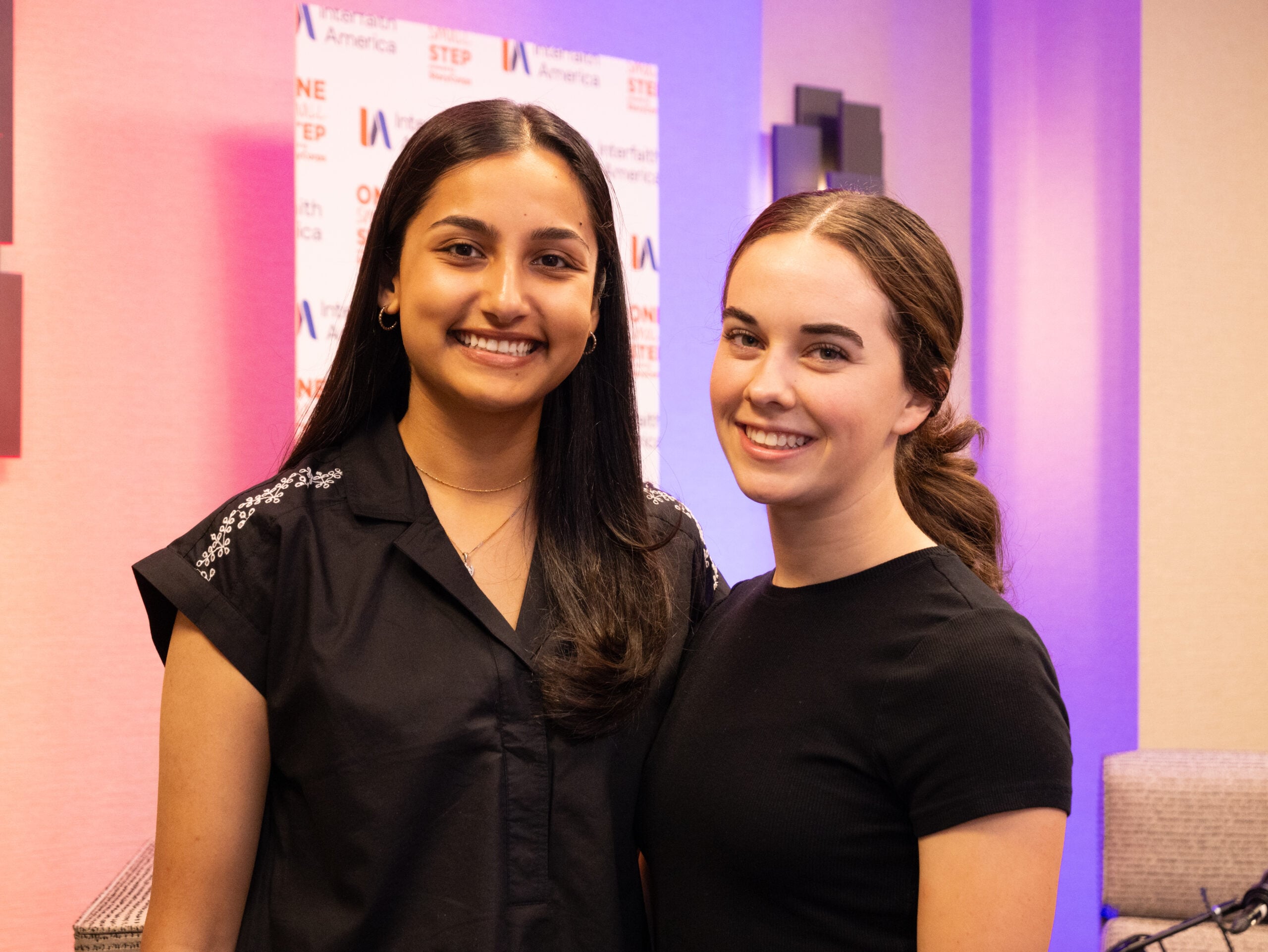
On these tours, participants visit sites of sacred meaning that are linked to historic struggles for racial justice in Chicago. Thanks to a grant from Interfaith America and the Sacred Journey Fellowship, the tours have now begun to build on longstanding neighborhood partnerships to take a special eye to religious communities, considering the roles of interfaith cooperation for advancing local change.
What can legacies of interfaith collaboration and strife in one particular neighborhood suggest about the possibility for resolving longstanding civic tensions? What might Jewish theological notions of tikkun olam (the repairing of all things), for instance, have to do with the historical memory work of Black churches, or of eucharistic notions of “re-membering”?
On these unorthodox walking tours, we turn our attention not to the marvels of physical architecture but to the racial and religious landscapes undergirding two prominent neighborhoods on Chicago’s South side.
We learn about the indigenous uses of these lands prior to European invasion and recount the cool waters and burning fires of Chicago’s Red Summer of 1919. We explore Malcolm X and Muhammad Ali’s time with the Nation of Islam, visiting the latter’s home and sighting the mosque he helped to found, just blocks from the hub of the oldest Jewish faith community in Illinois.
We engage Japanese American incarceration history, stopping outside a glittering mansion that was used as a prison during the second world war. And we contemporize our discussions by considering the roles of both policing and public health, taking as case studies the shooting of a student by local university police and an interfaith vaccine project coordinated by Christian and Jewish neighbors.
These are not always pleasant stories to surface, as they come to us so painfully and partially. Yet participants tend to leave the tours more, rather than less, confident in their ability to engage in difficult conversations – about gentrification and the nascent Obama Center, about Midwestern anti-Blackness and anti-Semitism, even about issues international in scope such as the legitimacy of Zionism. Groups rarely depart with total concord but are more keenly aware of the wider context under which “we conduct our different lives.”

Auden’s elegiac poem hints at the possibility for redemption embedded within such introspection:
“as they lie in the grass of our neglect,
so many long-forgotten objects
revealed by his undiscouraged shining
are returned to us and made precious again.”
Clearing away the grass of our neglect becomes an even more urgent task for those living in settler societies – there is not an inch of soil in the garden, that is Turtle Island, that is disconnected from the stories of those who came before.
Every block is a haunted house, every neighborhood the potential staging ground for a walking tour detailing human hope and despair. On our tour, we stop outside one house where the writer James Baldwin once had dinner and tell the story of his meal there. We remember Baldwin’s exhortation that “not everything that is faced can be changed, but nothing can be changed until it is faced.” (Freud would have agreed with this as well.)
One of Freud’s central insights is that when people spend enough focused time together in real proximity, they will come to experience every possible emotion: rage, desire, joy, grief, envy, despair, hope, relief. This is as true in the consulting room as it is in our families, faith communities, and neighborhoods. Over the years, these tours have fostered not only sober assessment or grim reflection but also sparks of joy, life, and mirth.
I remember braving ten-degree weather with university students, reminding me of a line from a poem that one Japanese American refugee to Chicago wrote: “the wind hit us from the Lake and stopped our breath.” The 95-year-old tour member speedwalking in 95-degree heat. Marching during the wildfires of another red summer, smoke thickening, imperiling our lungs with every stride, wearing masks and imagining Chicago fire/s. Middle schoolers from a Presbyterian church in California falling asleep and being gently roused along the way (how does one fall asleep on a walking tour, one might ask). The bus driver who got out of his vehicle to stand with us on the sidewalk, who let us know that he never learned these stories, wasn’t going to miss out on them now.
The realtor who spoke tearfully about how meaningful it was for her to see these buildings through a different set of eyes, appraising their fuller histories and not only their financial value.
I will forever hold these memories close to my heart.
Mao had it that “political power grows out of the barrel of a gun.” It is undeniably true that our world has often made cataclysmic changes at the point of a bayonet. But power can be nurtured by other means as well. Our work on these tours may seem small in scope – hyper-local, even – but by focusing attention on one specific place, I hope to invite participants to widen their gaze to their own communities of origin and to the often-invisible forces that have shaped our common life.
What historical memory projects, interfaith dialogues, or advocacy opportunities are slumbering in your neighborhoods, waiting to awaken?
We will continue to lead these tours and to tell these stories in these neighborhoods, rain or shine, wind or smoke, walking in circles, making our little revolutions, spinning, spinning, spinning.