
The end of the calendar year is a season rich in religious, cultural, and spiritual holidays and observances.
Americans across traditions mark this stretch of the year by coming together with family and community, reflecting on the significant moments of the year behind, and looking ahead with resilience and hope.
To close out 2025, Interfaith America Magazine spoke with six interfaith leaders in our network. They each reflected on the traditions, rituals, and memories that help them make meaning in this winter season:
Tamice Spencer-Helm
Can you share a bit about your cultural, religious, or spiritual worldview?
I often describe myself as post-Christian. I can’t help but be culturally Christian — like many Americans — but my worldview has been shaped most deeply by the liberation theologies of Black Christians and mystics, as well as queer liberation theologies from people within and beyond the Christian tradition. I practice a radical, ethical spirituality tethered to the lineage of Black Christianity, especially the tradition of the Hush Harbor —those hidden spaces where enslaved Africans gathered to dream, resist, and imagine freedom before there was an institutional Black church. That lineage of embodied hope, communal care, and spiritual imagination is the ground I stand on.
Do you observe any religious or cultural holidays near the end of the calendar year? Do you have a favorite winter tradition or practice?
My family celebrates Kwanzaa as a way of taking seriously our cultural place in the world and the responsibility we have to shine what the “light of Christ-consciousness” through our lives. As a queer, mixed-race family, a lot of our tradition-keeping also comes from what we’ve intentionally created together.
We’re big on Christmas in our own way: Christmas Eve charcuterie while watching “Elf,” then “Jingle Jangle” with popcorn and hot chocolate. My spouse makes a homemade breakfast pizza every year. We open stockings on Christmas Eve and presents on Christmas morning. One of our most cherished traditions is putting up the tree the Saturday after Thanksgiving and decorate it in ornaments collected each year that represent the stories, joys, and milestones of the year behind us.
What is a piece of wisdom from your tradition or community that you carry with you through this season?
The wisdom I carry is the call to remember. The communities that shaped me — Black, queer, spiritual, and fiercely imaginative — understood that remembering is a sacred practice. Each ornament on our tree, each tradition we repeat, is an invitation to pause and remember who we are, what we’ve survived, and what we hope for.

Scott Rasmussen
Director of Democracy Initiatives
Can you share a bit about your cultural, religious, or spiritual worldview?
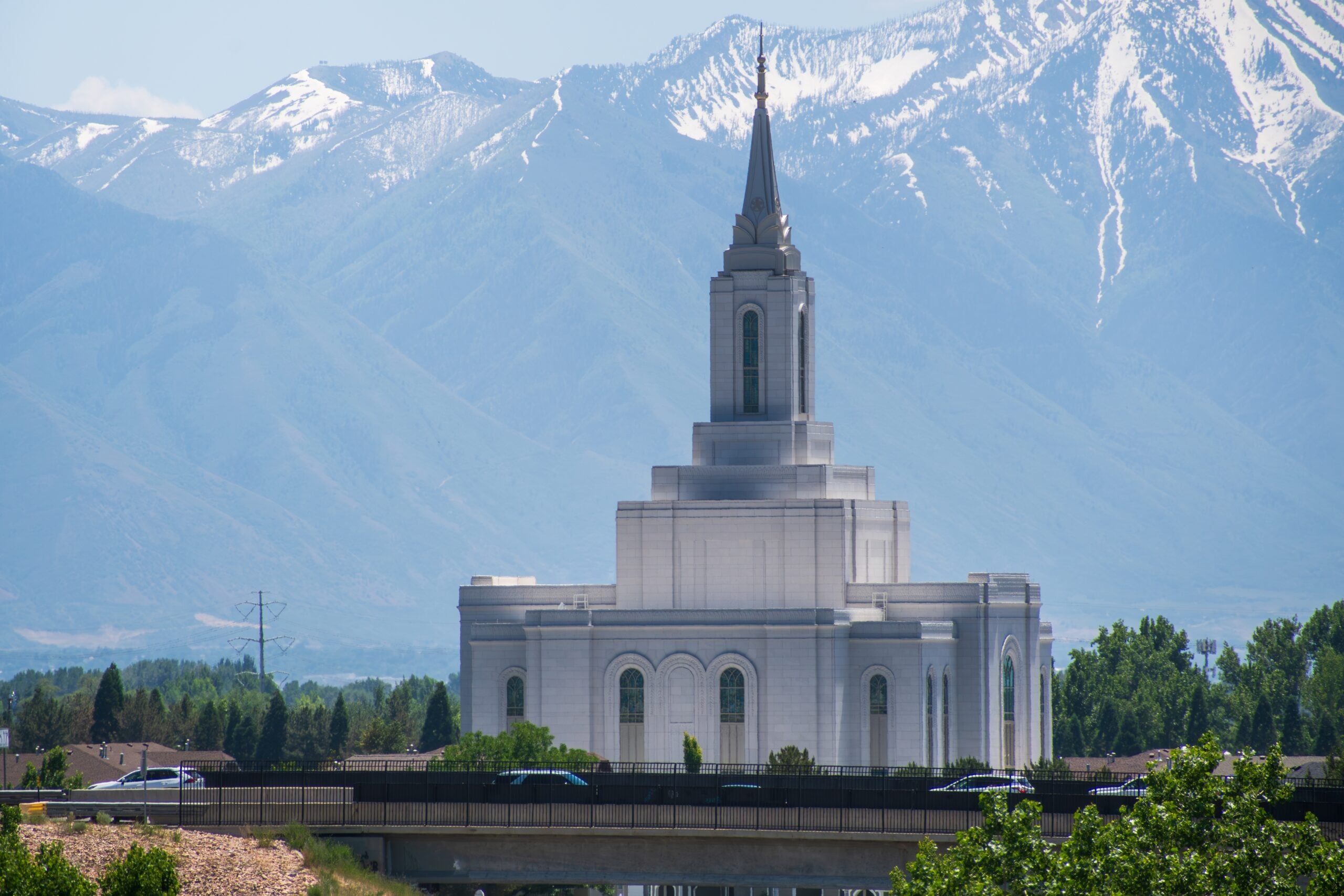
I am a 5th generation member of the Church of Jesus Christ of Latter-day Saints on both my dad’s and mom’s sides. My ancestors immigrated to the United States, primarily from Denmark, seeking the opportunity to worship without persecution and to live in a community with other members of their faith.
Do you observe any religious or cultural holidays near the end of the calendar year? Do you have a favorite winter tradition or practice?
As members of the LDS Church, we mark Christmas on December 25, celebrating the birth of Jesus Christ. For our family, the Christmas season is about being together as a family to mark the spiritual significance of the day and also the joy of giving and receiving gifts. Since I was a young child Christmas Eve has been the center of the spiritual celebration; we would gather with our cousins at my grandparents’ house for dinner and then dress up in costumes to act out the Nativity as our Grandpa and Grandma read the Christmas story from Luke 2. We continue this tradition today with our own children.
My favorite Christmas tradition also started in my childhood — my mom would lead my five siblings and I in making homemade candy including a family fudge recipe that came from my grandmother’s family in Germany. We would put the candy on a table near the front door to our house and visitors throughout the season were invited to take a plate home from the “Candy Table.” I think my siblings and I ended up eating most of it as we went back and forth through the house! My children are learning now how to make the fudge and we share with friends throughout the season.
What is a piece of wisdom from your tradition or community that you carry with you through this season?
Every year we pull out our binder with our Christmas candy recipes. My wife started the binder the second year we were married and included this Christmas encouragement from Howard W. Hunter, one of the leaders in our Church: “This Christmas, mend a quarrel. Seek out a forgotten friend. Dismiss suspicion and replace it with trust. Write a letter. Give a soft answer. Encourage youth. Manifest your loyalty in word and deed. Keep a promise. Forgo a grudge. Forgive and enemy. Apologize. Try to understand. Examine your demands on others. Think first of someone else. Be kind. Be gentle. Laugh a little more. Express your gratitude. Welcome a stranger. Gladden the heart of a child. Take pleasure in the beauty and wonder of the earth. Speak your love and then speak it again.” These are of course things we can do all year long, but I appreciate the focused season to recommit to living this way.
Parth Bhansali
Can you share a bit about your cultural, religious, or spiritual worldview?
I am Hindu by tradition, and I also identify deeply with a global interfaith worldview shaped by family, immigration, and my work with Interfaith America. Hindu philosophy teaches that the divine lives in every person, and that spiritual growth happens through our ordinary interactions with others. That belief guides how I try to show up for people, how I lead, and how I make meaning of my life.
Growing up as an Indian American, and later working in interfaith spaces, I have learned that every tradition holds sacred wisdom. I personally see God most clearly when people care for one another across differences. That is where faith feels real for me.
Do you observe any religious or cultural holidays near the end of the calendar year? Do you have a favorite winter tradition or practice?
As an American Hindu family with my parents immigrating to the United States, they, along with my brother and I, gradually incorporated Thanksgiving and Christmas into our lives not only as cultural observances, but as meaningful touchpoints in our American experience. What began as a natural part of assimilation has evolved into traditions that hold real emotional and relational significance for us. Although we do not observe Christmas in a traditional Christian context where we attend church, we recognize its role as an important part of America’s cultural fabric, and we embrace it as a season of reflection, gratitude, and community.
Over the years, these holidays have grown beyond our immediate family and into the circle of people we consider chosen family. Friendsgiving and Friendsmas, in particular, have become cherished annual traditions that bring together loved ones from many different religious and cultural backgrounds. Those gatherings remind me that community is often built as much by choice as by kinship, and that belonging can be created across faiths in profoundly meaningful ways.
One of the practices I value most is that within our broader friend circle, we call or text one another during whatever holiday is significant to someone. Whether it is Diwali, Eid, Hanukkah, Christmas, or Lunar New Year, acknowledging one another’s sacred times has become a shared custom. It reinforces the belief that America’s diversity is not just something we live alongside, but something we actively celebrate together. For me, that collective honoring has become one of the most beautiful expressions of the American melting pot.
What is a piece of wisdom from your tradition or community that you carry with you through this season?
A teaching I return to often is the Sanskrit prayer, “Lokah Samastah Sukhino Bhavantu,” which translates to “May all beings everywhere be happy and free.” During winter, when the world feels quieter and more reflective, this prayer reminds me that our joy is connected to the well-being of others. It calls me to think not only about my personal year, but about the collective world we are all shaping together. For me, the winter season becomes a chance to reflect on how I can be more compassionate, more grounded, and more connected to the sacredness in every person.
Joey Haynes
Assistant Director of the Interfaith Leadership Summit
Can you share a bit about your cultural, religious, or spiritual worldview?
My worldview is heavily influenced by my life experiences, relationships, and encounters with those holding different beliefs than my own. However, I am rooted in a Protestant Christian tradition; was raised in the Pentecostal Holiness church in rural West Virginia, attended a Presbyterian USA Seminary in Charlotte, N.C., and ordained in the Alliance of Baptist denomination.
Do you observe any religious or cultural holidays near the end of the calendar year? Do you have a favorite winter tradition or practice?
The observance that I most look forward to at the end of the calendar year is the Advent season. Advent means “coming” and it is a time for waiting that begins the fourth Sunday before Christmas. As Christians, we wait for the coming of Christ and reflect on the themes of hope, peace, joy, and love. For me, it is an opportunity to slow down, focus on being present, reflect on the previous year and the year to come, and to keep myself grounded in the flurry of Christmas activities. Each year I follow an Advent devotional that I’ll read each day and this season’s is the Red Letter Christians’ publication “God with Us” written by Palestinian Christians.
The Advent season is also a reminder that despite the long nights and dark days, we can find light and life all around us!
What is a piece of wisdom from your tradition or community that you carry with you through this season?
Slow down, cozy up under a warm blanket, and read more! This isn’t necessarily wisdom from my tradition but wisdom I lean into every winter.

Rachel Tingley
Program Manager, Higher Ed Programs
Can you share a bit about your cultural, religious, or spiritual worldview?
My cultural and religious worldview is the same (as complicated as that answer is): Judaism.
Do you observe any religious or cultural holidays near the end of the calendar year? Do you have a favorite winter tradition or practice?
The holiday I observe at the end of the calendar year is Hanukkah. I love lighting the menorah with my family and singing the blessings. Hanukkah is also a holiday that traditionally involves eating fried food, often fried potatoes, which like, twist my arm, why don’t you? In recent years I have really perfected a latke recipe that I love to eat year-round, but that is especially special during Hanukkah times.
What is a piece of wisdom from your tradition or community that you carry with you through this season?
The Hanukkah miracle reminds me frequently that when things seem hopeless, there is often a silver lining or way to see the light at the end of the tunnel. During the holiday season, when the sun sets very early in the day, that is a very welcome reminder for me.

Harmeet Kaur Kamboj
Assistant Director of Workplace Strategy
Can you share a bit about your cultural, religious, or spiritual worldview?
I’m a practicing Sikh, as well as ethnically and culturally Punjabi. While Sikhs make up less than 2% of the U.S. population, we are the fifth largest religion in the world by population. Our tradition originated in the Punjab region of South Asia beginning with our first guru, Guru Nanak Dev ji, in the 15th century. Central to Sikhi is the equality of all people, regardless of any markers of identity, and Sikhs follow three principles (among others) as we navigate daily life: Naam Japna (remembering and reciting the name of the Creator); Kirat Karni (earning an honest living); and Vand Chakna (sharing and redistributing our wealth).
Do you observe any religious or cultural holidays near the end of the calendar year? Do you have a favorite winter tradition or practice?
The fall and winter months include a number of important dates for Sikhs, though our community does not have “holidays,” per se, as we believe every day is as sacred as the next. In the fall, we observe Bandi Chhor Divas, or the Day of Liberation from Bondage, during which we remember the importance of collective liberation embodied by our sixth guru, Guru Hargobind Sahib ji. We also celebrate the births of our first and tenth gurus, Guru Nanak Dev ji and Guru Gobind Singh ji, in the fall and winter months.
Sikhs make a true effort not only to celebrate life but also commemorate death by honoring the many martyrs who gave their lives to preserve human rights, including the right to religious freedom. In December and January, we mark the martyrdom of the Char Sahibzade, the four sons of Guru Gobind Singh ji, who were killed in battle while protecting the rights of their communities to live freely without the threat of forced conversion.
What is a piece of wisdom from your tradition or community that you carry with you through this season?
The fall and winter months embody the cycle of life, death, and rebirth, and the commemoration of birth and death for Sikhs during this time of year is an important reminder of that cycle. We cannot attend to what we might see as happy and life-giving without holding it with the complex grief and necessary resilience needed to wrestle with death. And just like the dark, damp winter makes way for the renewal of spring, the sacrifice of our martyrs makes way for the freedom of generations of Sikhs and non-Sikhs. The Sikh concept of Chardi Kala, or radical optimism in the face of hopeless odds, is rooted in this very idea, stemming from the reality of our marginalization and calling us to imagine the many ways we can redirect our suffering into opportunities for healing.