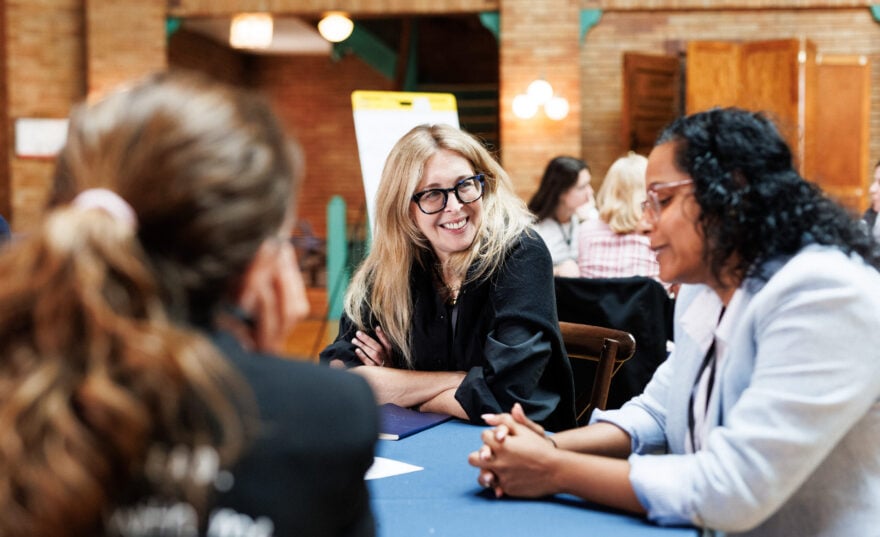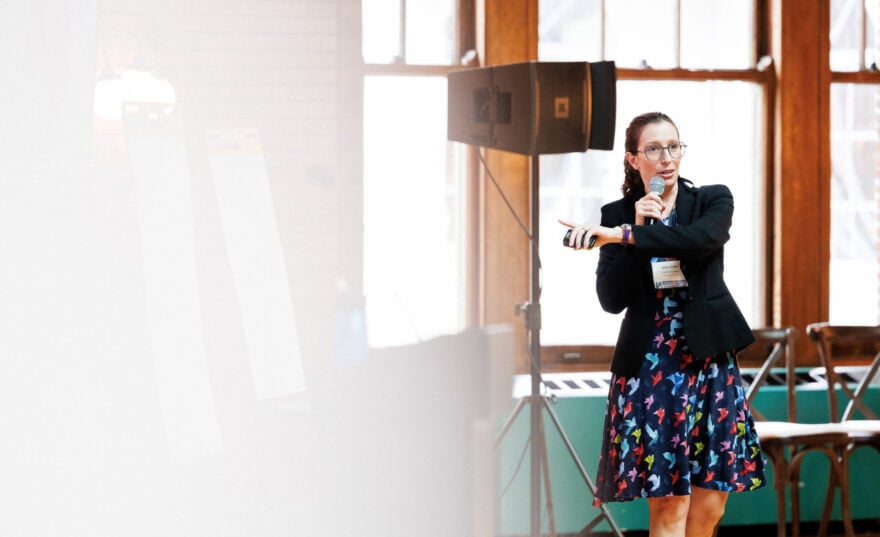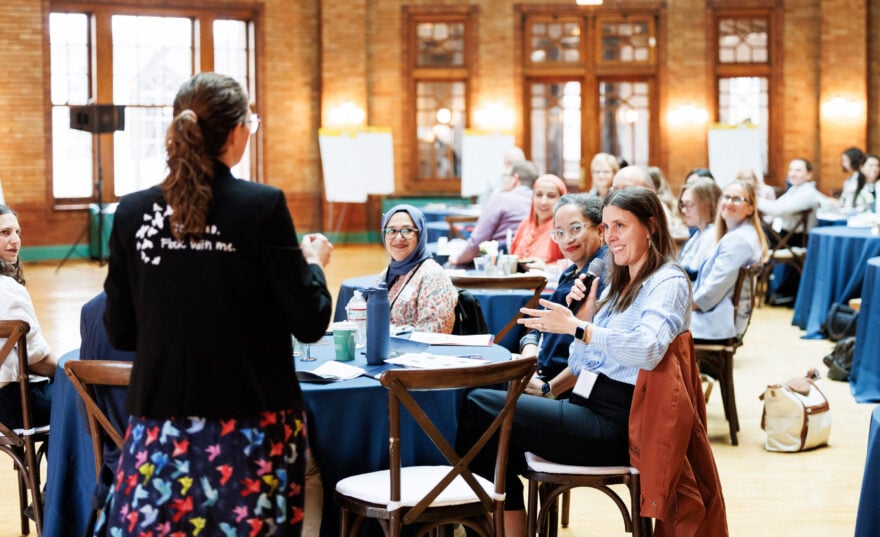
This summer, I had the opportunity to keynote the Points of Light annual conference in New Orleans, where a consistent message emerged from the stage: Don’t let the craziness emanating from the halls of power stop you from doing the good that you can do.
Points of Light is an organization named for a phrase made famous by President George H.W. Bush, who described America’s volunteer groups and civic organizations as “a thousand points of light,” spread like stars across the nation. The organization was launched to harness the spirit of generosity and continues today by mobilizing millions of volunteers worldwide.
Alexis de Tocqueville believed this civic spirit set America apart from nations such as France and England. He wrote, “In democratic societies, the science of association is the mother science; the progress of all the others depends on the progress of that one.”
A century and a half later, social scientist Robert Putnam translated this Tocquevillian insight into a modern social science concept: social capital — a measurable network of people, norms, and trust that make up the civic infrastructure of our nation.
This summer, I was struck by a fresh example of civic collaboration from my friend and colleague Rollie Olson. We’ve been working closely on my next book — provisionally titled The Promise of Pluralism — with Rollie deep in the research process. When he’s not in the office, Rollie spends time on the West Side of Chicago, putting the Tocquevillian ethic into action.
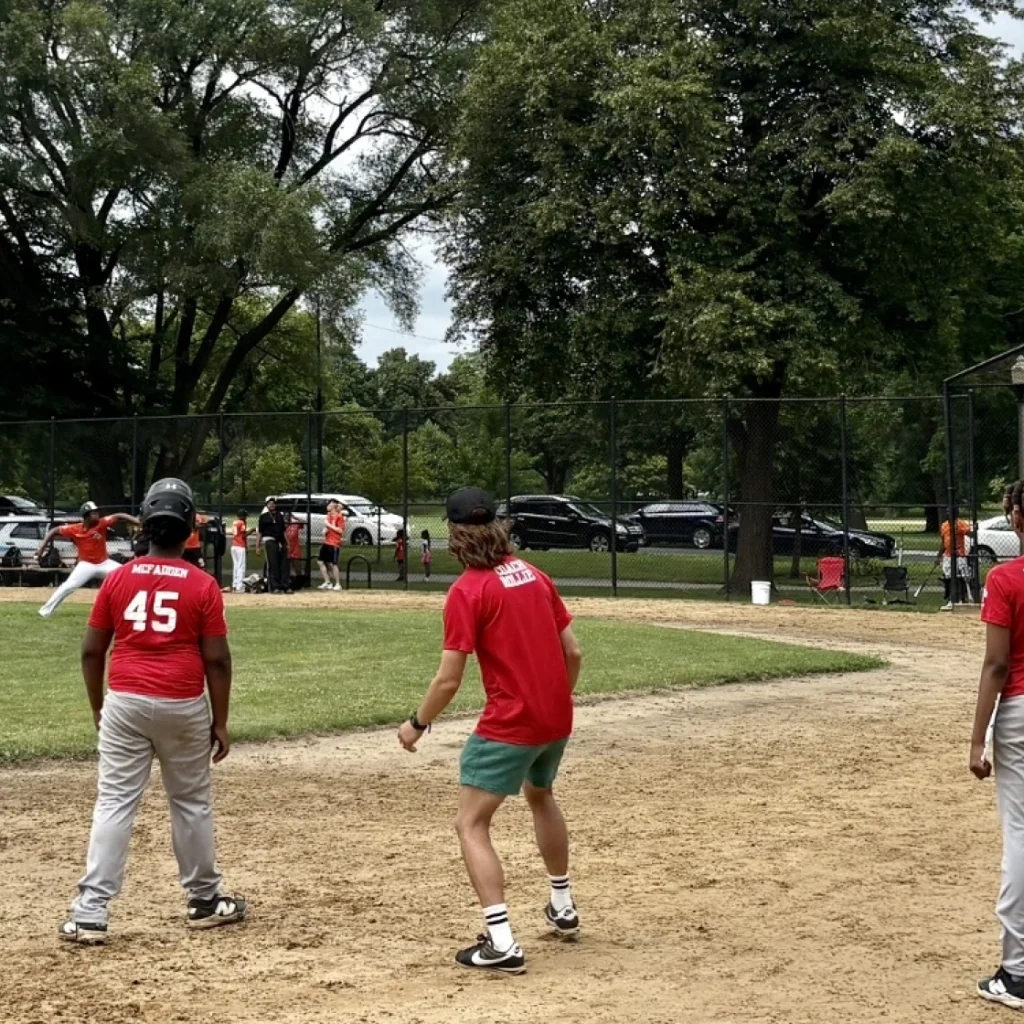
Three days a week, he volunteers as the coach of the Garfield Gladiators, a baseball team for 13- and 14-year-olds run by Chicago Westside Sports, a nonprofit powered by a local church, law enforcement, and community volunteers. The program offers safe, no-cost club baseball to young people in high-crime, underresourced neighborhoods, with an emphasis on creating structure, mentorship, and spiritual development.
Rollie’s quiet integrity and steady demeanor imbue his work at Interfaith America, and it’s easy to imagine him as a role model for the kids on his team. He’s also a skilled baseball player, having played shortstop at the college level. He brings that expertise, along with a Christian faith that grounds his coaching in compassion and principle, to a group of boys and girls who, in many cases, are sliding their hand into a baseball glove for the first time.
No Excuses
“I almost didn’t sign up,” Rollie tells me. One Sunday at church, the woman who runs the league spoke to the congregation and asked for coaches. “I had every excuse ready,” he said. “But I started thinking about that Frederick Buechner idea, that God calls you to where your deep gladness meets the world’s deep hunger. Baseball’s always been my gladness. And the kids in the program were hungry for coaches.”
Still, it wasn’t easy. “I don’t look like the kids. I wasn’t sure I’d know how to connect,” admitted Rollie, who is white while the teens he coaches are mostly Black. Additionally, baseball doesn’t lend itself to instant engagement and quick fun the way other activities might — video games, for example. It’s full of technical, tedious mechanics. The precision of the swing path, how to use your full body to add throwing velocity, the rules of force-outs, or holding runners on base as a pitcher. You need to learn the choreography before you can let loose and play.
Still, the coaches continued to show up, and so did the kids, even though the team kept losing on game days.
Then came the breakthrough. After a monthlong losing streak, the Gladiators found themselves tied in the bottom of the last inning with the bases loaded. One of their high-energy but easily distractable players knocked a ground ball that squeaked its way through the infield. Walk-off win. The dugout erupted.
“It was hearing the way they talked afterward, about how proud they were of themselves, of how well they played as a team, that made everything worth it.”
Rollie’s volunteer coaching is clearly bridging divides, in this case between a white, late 20-something, college-educated, middle-class professional and Black teenagers who live in largely poor and working-class communities. Mutual transformation is happening on the field between Rollie and his team. The kids are learning how to turn a double play, and Rollie is learning how a consistent, shared activity reveals a fuller picture of who these kids are.
In his book The Call of Service, Robert Coles wrote that service is “no hierarchy but a back-and-forth, a reciprocity in which the distinctions between teacher and pupil, giver and receiver, server and served constantly dissolve. The lives of all involved shift and change, often irrevocably.” That’s what Rollie is experiencing.
A Growing Movement
A movement seems to be emerging to expand volunteer opportunities to help bridge divides. For example, Wes Moore, the Democratic governor of Maryland, and Spencer Cox, the Republican governor of Utah, have both started state-level service programs oriented toward connecting people across differences.
Dame Louise Richardson, the president of the Carnegie Corporation, not only is a funder of that effort but is beginning to build a philanthropic agenda around it.
I’ve written before about how formative my own service experiences were — at the YMCA, at Catholic Worker Houses of Hospitality, in Habitat for Humanity building projects. Those moments shaped my civic imagination and led me to my life’s work.
The great Dorothy Day, co-founder of the Catholic Worker Movement, believed that society should create spaces that make it easier for people to be good. The nonprofit world needs to maintain a steadfast commitment to fostering opportunities where people can show up to serve and be served — and be mutually transformed in the process.
Every era ends, and that includes this particular moment of chaos and cruelty. We know diverse democracies depend on acts of service by diverse groups of people. Let’s do the good we can in the time we have, knowing our acts of decency lift people up today, and set the stage for a better tomorrow.
Originally published by The Chronicle of Philanthropy on August 6, 2025.