
Loneliness looms large in today’s digital age, where we are more connected online than ever. Loneliness has become a pervasive issue, impacting the health and well-being of individuals and communities alike.
Amidst this public health crisis, interfaith initiatives are emerging as powerful agents of change, fostering community and social connection across diverse worldviews.
In 2023, the U.S. Surgeon General released a report highlighting the loneliness and social isolation epidemic and detailing the healing effects of social connection and community. The report explains how the absence of social connection poses a significant risk to one’s health, with loneliness and social isolation correlating with increased risks of premature death and various health concerns such as heart disease, anxiety, depression, and dementia.
The report discusses several factors contributing to this epidemic, including the new technologies available.

Shivam Gosai, a licensed mental health counselor at the Psychotherapy & Spirituality Institute in New York, illuminates the complicated role of technology in the loneliness epidemic. He shares that while communication technologies like social media platforms provide an interconnected world, they also offer an “illusion of connection.” They fail to fulfill our innate need for genuine human connection, perpetuating a cycle of longing for more meaningful interactions.
Against this backdrop, Gallup surveys reveal a declining trend in community engagement, with fewer Americans reporting membership in religious institutions. In 2020, 47% of Americans shared that they belonged to a church, synagogue, or mosque, down from 70% in 1999.
However, Gosai offers hope, recounting his transformative experience with interfaith initiatives during college. He recalled interfaith dialogues as spaces where he could connect with people on a deeper level by discussing personal values, a key to combating loneliness.
“What we know from psychological research is if something is value-led, then we are more likely to be engaged in it,” Gosai shares. “If I have a strong passion for community, I will be pulled toward community service because it aligns with my values. If we are going to have a value-based community, I’m more likely to be engaged with that community on a deeper level than other social activities.”
One value-led example of an interfaith initiative is the Interfaith Healthcare Cohort (IHC), an initiative organized under Interfaith America.
Anastasia Young, a licensed nurse practitioner and co-founder of the IHC, started this cohort to provide a space for healthcare professionals with diverse worldviews to connect with one another.
Young recognized that loneliness isn’t just influenced by our personal lives; it can also be amplified by our professional ones.
“I have felt lonely within my places of work when I worked as a nurse and now as a nurse practitioner. Some of my closest friends whom I seek out in times of deep distress are from fellow healthcare professionals”, she shares.

From creating this interfaith space to help healthcare professionals address feelings of isolation, Young recounts stories from cohort members who had initially felt siloed in their work but now feel connected to a large community of value-led healthcare professionals who care about interfaith cooperation.
“Being part of the cohort provides me with a space to reflect and share why I do the work that I do, which is rooted in my Christian faith,” Young shares. “I have a vocational calling to my work as a healthcare professional, and I often leave time spent with this cohort feeling more connected and inspired.”
Considering the impact of value-led communities noted by Gosai, interfaith initiatives like the Interfaith Healthcare Cohort are well-positioned to address feelings of loneliness and isolation.
However, entering interfaith spaces may pose challenges for some individuals.
Past traumas and concerns about psychological safety can hinder participation in these spaces dedicated to deep conversation and willingness to express vulnerability. But Gosai notes that if people get “even a drop of connection [from interfaith spaces] and some of that armor can be shed for a moment, that’s where happiness comes from.”
In a polarized world, interfaith initiatives offer a beacon of hope. By fostering dialogue, collaboration, and understanding across diverse worldviews, they promise to combat feelings of loneliness and foster genuine human connection.
As we navigate the complexities of modern life, it’s essential to embrace the potential of interfaith cooperation to build bridges of connection and compassion in our communities and beyond.
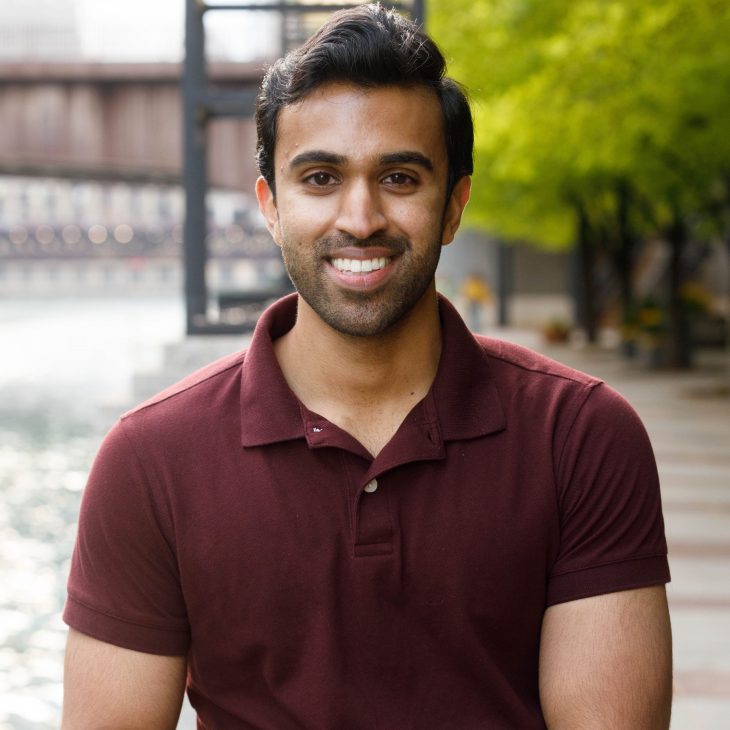
Suraj Arshanapally
Suraj Arshanapally, MPH, is an Indian American peace-builder, public health advocate, and storyteller. He started The Multicultural Man to celebrate cultural diversity and healthy masculinity through storytelling. He is also the Managing Editor for the CDC Yellow Book, an international travel medicine publication at the Centers for Disease Control and Prevention. Suraj received his MPH in Social and Behavioral Sciences from Yale University. He believes multiculturalism and interfaith cooperation are crucial to building a healthy and peaceful society.
Suraj Arshanapally wrote this article in his personal capacity. The opinions expressed in this article are the author’s own and do not reflect the view of the Centers for Disease Control and Prevention, the Department of Health and Human Services, Interfaith America, or the United States government.