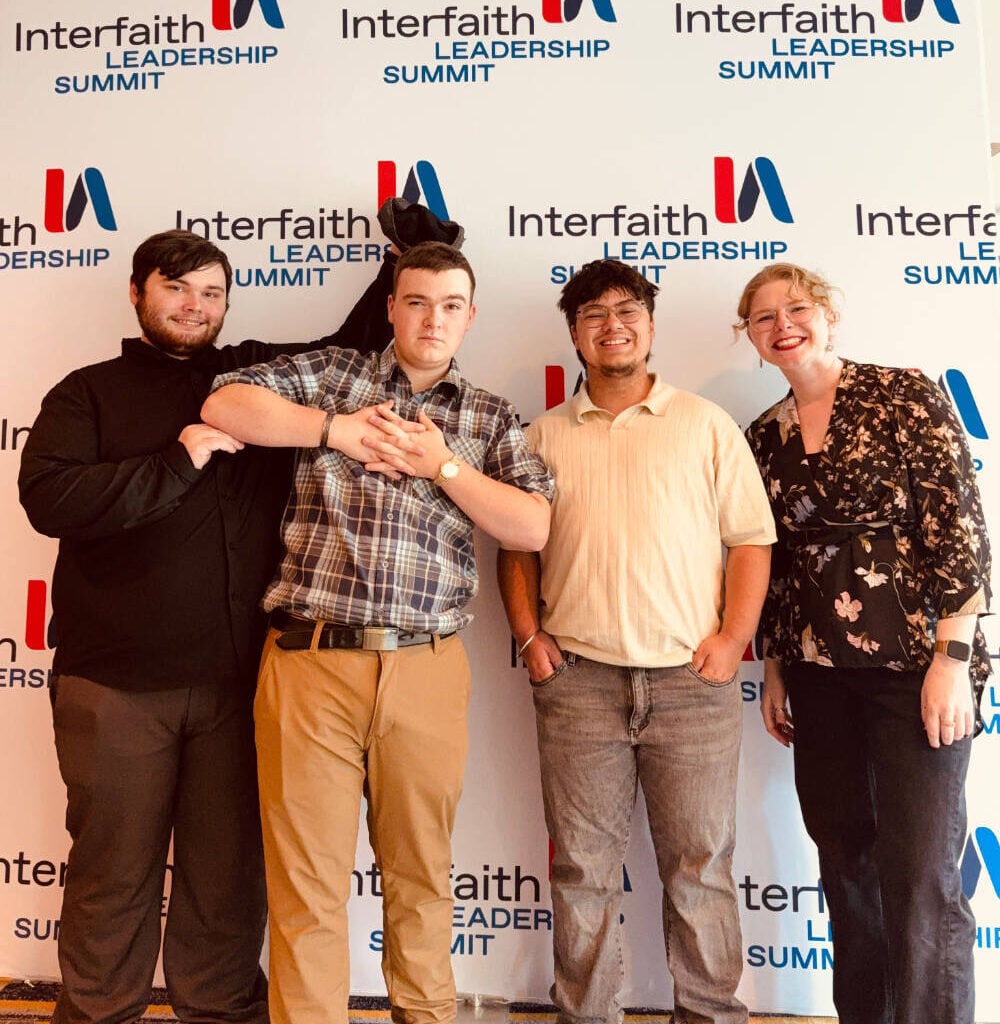
This year marked a first for me at Interfaith America’s annual Summit, although it was far from my first Summit. In 2024, I attended as a student. In 2025, I returned as a new educator. This year, I found myself in a different seat entirely: helping lead a group of students there myself.
The three students traveling with me were not new to interfaith work either. Each had participated in our Interfaith Leadership Cohort last year and will return this year as leaders within the cohort, helping shape the experience for a new group of students. In many ways, all four of us were arriving at the summit at interesting points in our own leadership journeys — still learning but also beginning to think more intentionally about how we bring what we learn back to others.
There was something wonderfully fitting about beginning a summit themed “A Road Forward” with an actual road trip.
Our car left Michigan filled with excitement, snacks, and the particular kind of energy that makes a few hours on the highway feel like part of the experience rather than just the commute. So, naturally, we turned the drive into an opportunity to keep the conversation going.
We talked about our favorite teachers and discovered that each of us had that teacher — the person who invested in us, believed in us, or shaped our academic journey in a way we still carry. We somehow discovered a shared appreciation for Johnny Cash. And, somewhat remarkably, everyone in the car had studied abroad in Europe. Between us were stories from London, Ireland, Germany, and Wales, each experience completely different from the next.
Before we had even arrived at the Summit, we were already doing some of the work we were traveling there to explore: telling stories, listening with curiosity, discovering unexpected connections, and learning how our different experiences shape the ways we understand the world.
Before we had even arrived at the Summit, we were already doing some of the work we were traveling there to explore: telling stories, listening with curiosity, discovering unexpected connections, and learning how our different experiences shape the ways we understand the world.
It made this year’s theme, “A Road Forward,” feel especially appropriate. Throughout the Summit, the road trip served as a metaphor for the work of pluralism. Roads offer opportunities to see, learn, and experience our surroundings, but they also come with bumps, potholes, missed turns, construction, and unexpected detours. Moving forward together does not mean the road will always be smooth or that everyone in the car will agree on the best route. It asks us to keep figuring out how to travel alongside one another.
That is part of what makes the Interfaith America Summit so meaningful. Students from across the United States come together alongside faculty, staff, administrators, educators, and practitioners and discover just how many people are committed to this work. For students especially, there is something powerful about realizing that the work happening on their own campus is connected to something much larger.
I have experienced that personally. At last year’s Summit, I almost instantly connected with a friend from Harvard University. We connected so well that we ended up visiting the Bahá’í House of Worship together before leaving Chicago. A year later, we found each other again at the Summit, excited to reconnect and hear about everything that had happened in our respective corners of interfaith work since we had last been together.
There is something deeply validating about being in the presence of people who care about this work as passionately as I do. There is also a certain relief in not having to begin by explaining what interfaith work is or why it matters. We can start somewhere further down the road. We can share what is working, wrestle together with what is difficult, and learn from people who are navigating many of the same questions on campuses and in communities across the country.
That feels especially important in the political and social climate in which we are doing this work.
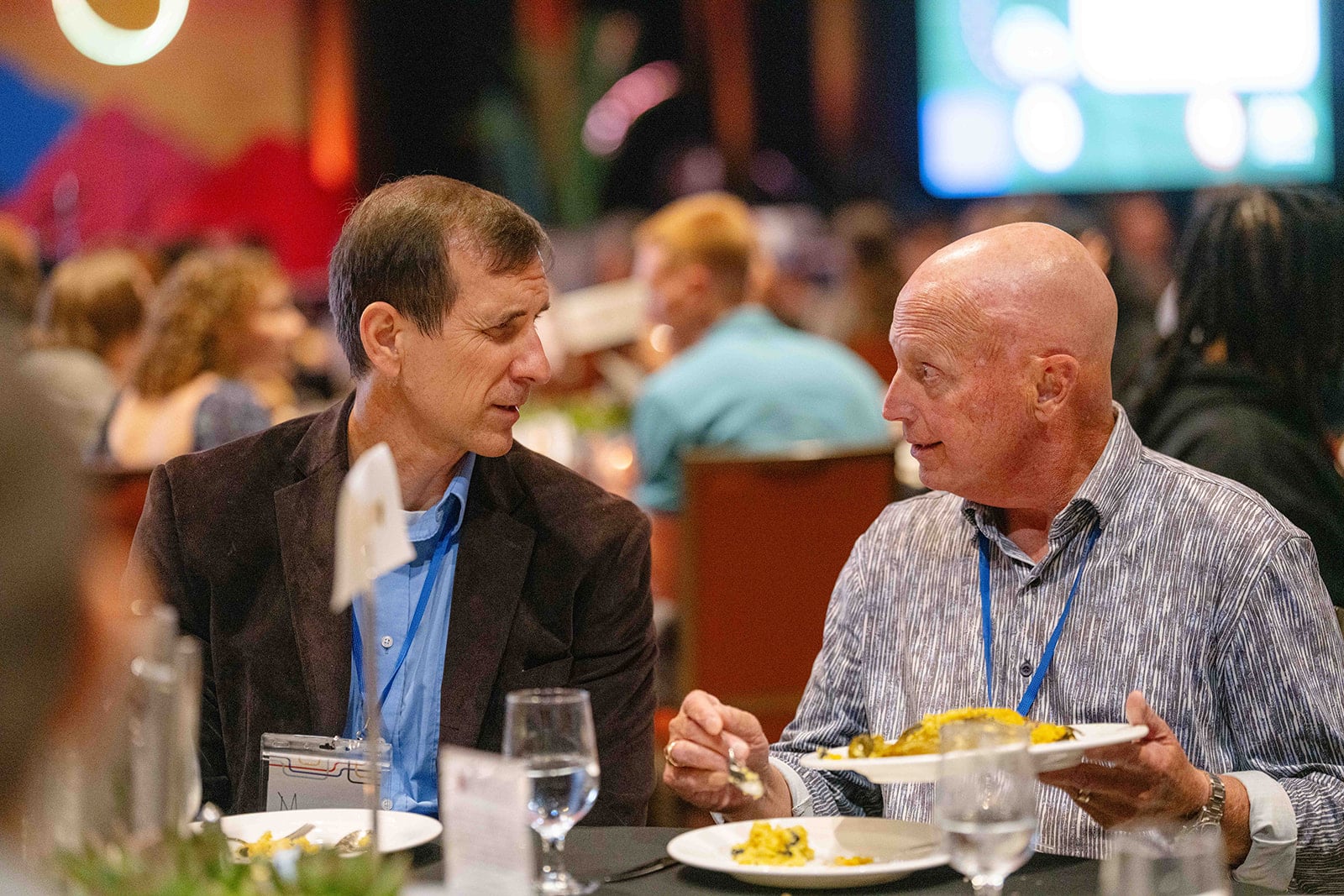
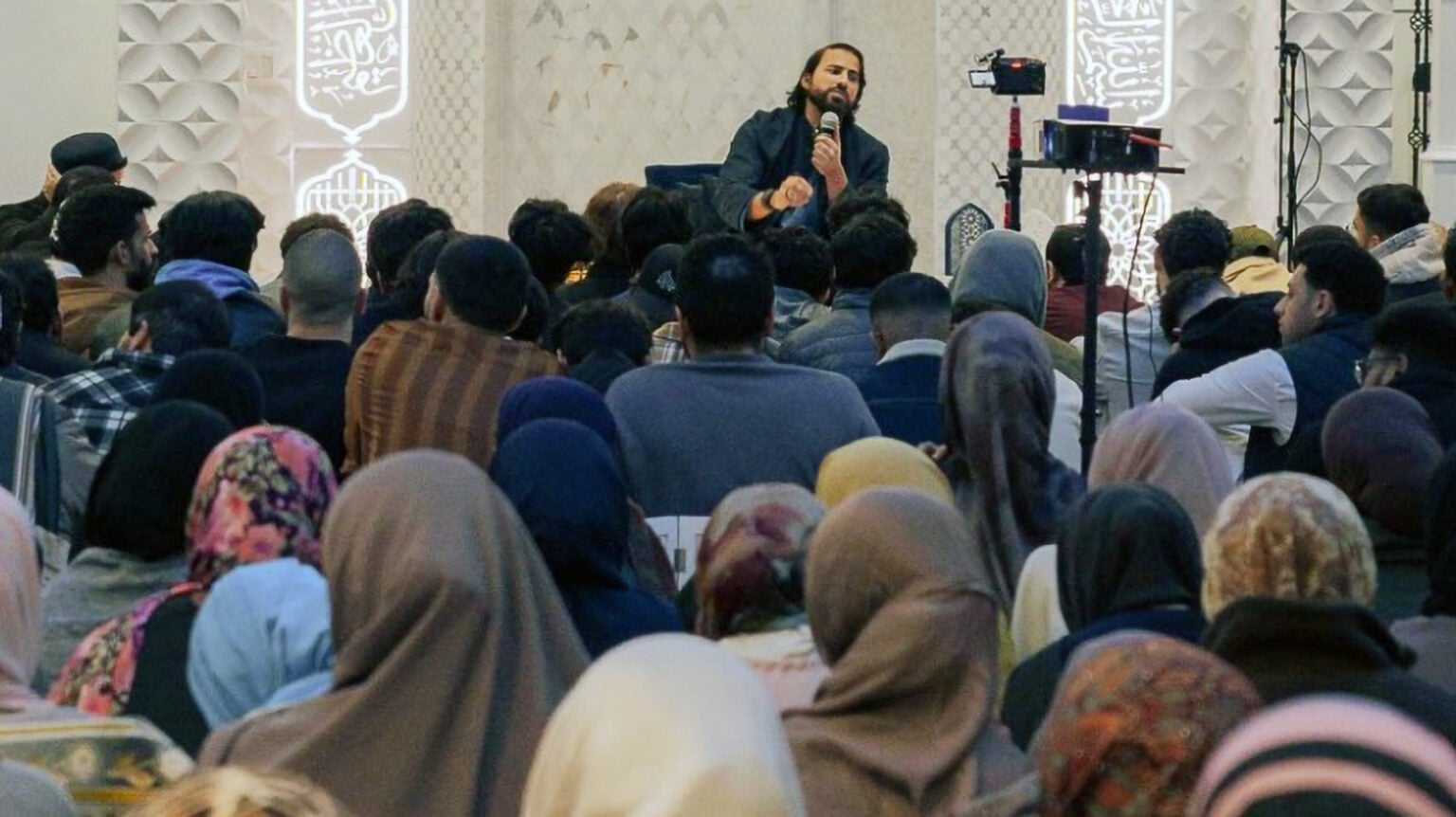
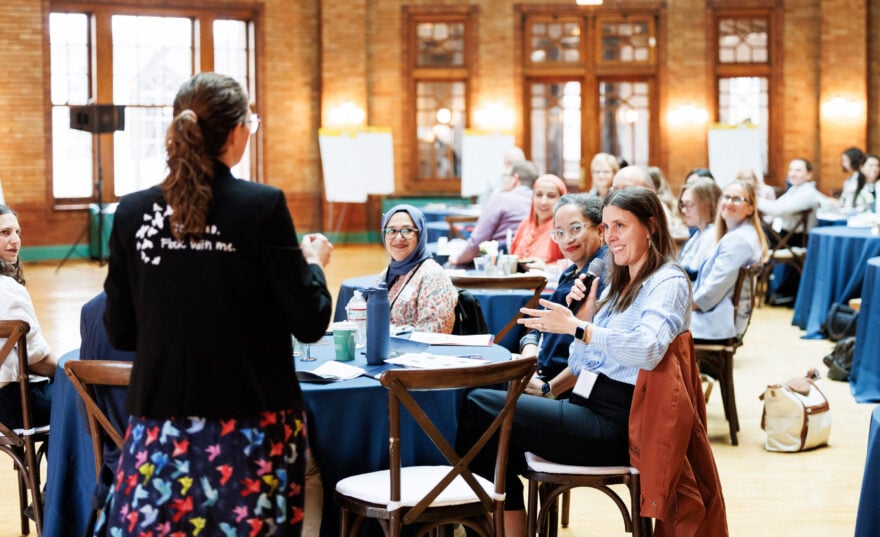
Every year, the Summit brings together interfaith leaders who lend years of experience through panels, conversations, and workshops.
Every year, the Summit brings together interfaith leaders who lend years of experience through panels, conversations, and workshops. These spaces give us opportunities to dig into the challenges of this work while learning how other practitioners are responding to them in their own communities.
One message that stayed with me this year was a reminder that we are often presented with false choices designed to pit us against one another and create a zero-sum framework. Yet most of us are perfectly capable of holding multiple thoughts at the same time, grappling with complexity and nuance, and remaining deeply committed to one another’s humanity and dignity. Breaking cycles of othering requires rejecting those false choices and recognizing how deeply intertwined the futures of our communities really are.
Activist and author Loretta Ross pushed this idea even further. Speaking about the forms of diversity we are often least prepared to navigate, she named experiential diversity: the reality that every human being has lived through something different. Those experiences shape how we enter a room, interpret the world, understand conflict, and encounter one another. Yet we often struggle to engage difference without perceiving it as danger, or to imagine greater inclusion without experiencing it as a loss to ourselves.
Loretta also shared a quotation from Reverend C.T. Vivian that has stayed with me: “When you ask people to give up hate, you have to be there for them when they do.”
I keep returning to that sentence because it complicates what relationship-building actually asks of us. It is easy to talk about bridging divides, changing minds, or calling people into something different. It is much harder to ask what happens afterward. If we want people to reconsider deeply held assumptions, move toward one another, or choose relationship over othering, then relationship cannot disappear at the moment someone takes that risk. There has to be somewhere—and someone—to move toward.
That is where Interfaith America’s framework of Respect, Relate, Cooperate this year feels useful and fitting.
Respect each other across differences. Build mutually inspiring relationships with people who are different from us. Cooperate on issues of shared concern.
Three words. None of them easy or simple.
Respect does not require pretending our differences are insignificant, nor does it mean accepting another person’s beliefs as true. Pluralism depends upon our ability to acknowledge that our differences are real and meaningful while still recognizing the dignity of the people who hold them. Relationship asks us to become genuinely curious about who another person is and what experiences have shaped them. Cooperation then asks what becomes possible once those relationships exist.
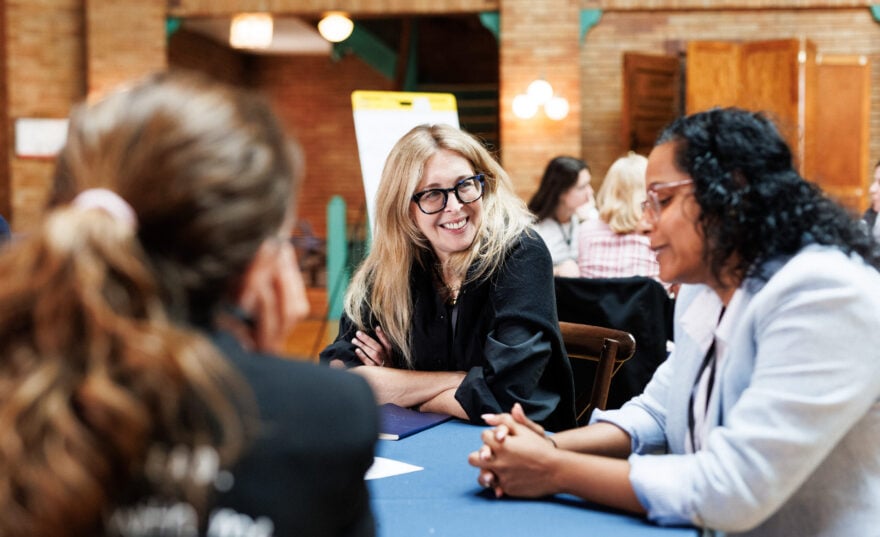
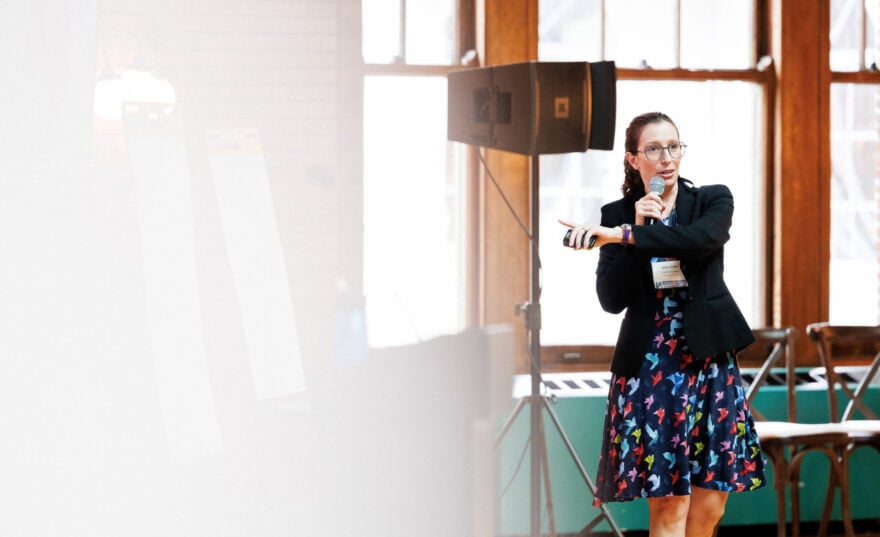
Throughout the Summit, we practiced some of the skills that make this possible. We explored storytelling as a tool for pluralism and interfaith cooperation, learning how stories can build relationships, communicate our identities and leadership, and invite others into shared work. We also worked through ways of designing engaging interfaith activities that bring together people from religious, spiritual, and secular traditions while creating opportunities to build relationships across broader ideological differences.
One theme underneath all of this was the importance of identity as both a source of pride and a source of complexity. None of us enters these spaces carrying only one identity, one experience, or one way of understanding the world. Interfaith engagement asks us to develop the capacity to remain in relationship while allowing those differences to remain meaningful.
And throughout all of this, I had the privilege of watching our students take it in.
Because they had already spent a year in our Interfaith Leadership Cohort, they were not encountering these ideas for the first time. I could see them beginning to listen from a different vantage point. The questions were no longer only, “What can I learn from this?” They were also becoming, “What can we bring home? How could we use this? What could this look like with our cohort?”
They left the Summit inspired, invigorated, and excited to carry what they had learned back into this year’s cohort experience. They returned with new activities, ideas, questions, and perspectives that they can now share with students beginning their own interfaith leadership journeys. As an educator, there is something incredibly rewarding about watching students move from participating in an experience to recognizing that they can help create meaningful experiences for others.
In 2024, I traveled to the Summit as a student trying to understand this work. In 2025, I returned as an educator beginning to imagine how I might help create these experiences for others. This year, I arrived with three students who were making a transition of their own, from cohort members to student leaders ready to help shape what comes next.
I am still learning alongside them. I hope I always am.
Somewhere between the conversations in the car, the reunion with an interfaith friend, the challenging words of speakers, the workshops, the laughter, the shared appreciation for Johnny Cash, and probably a few actual potholes between Michigan and Chicago, I realized that my place on this particular road trip has changed. And so has theirs.
Maybe that is one of the most hopeful things about the road ahead. Leadership in this work does not mean eventually reaching a point where we have all the answers. It means continuing to learn while creating opportunities for others to learn alongside us and eventually watching them become the people who help carry the work forward.
The road ahead is uncertain. There will undoubtedly be disagreement, detours, and moments when we have to reconsider the route. Pluralism does not require knowing exactly where the road leads. It gives us a compass: Are we building greater respect across difference? Are we forming genuine relationships? Are we finding ways to cooperate on the things that matter to our shared communities?
And perhaps most importantly: Who are we bringing along for the ride?
Rachel Robinson is a Program Assistant, Pamela Kidd M.D. Interfaith Ambassador, at GVSU’s Kaufman Interfaith Institute.
This article was originally posted by Grand Valley State University’s Kaufman Interfaith Institute and reposted with permission.