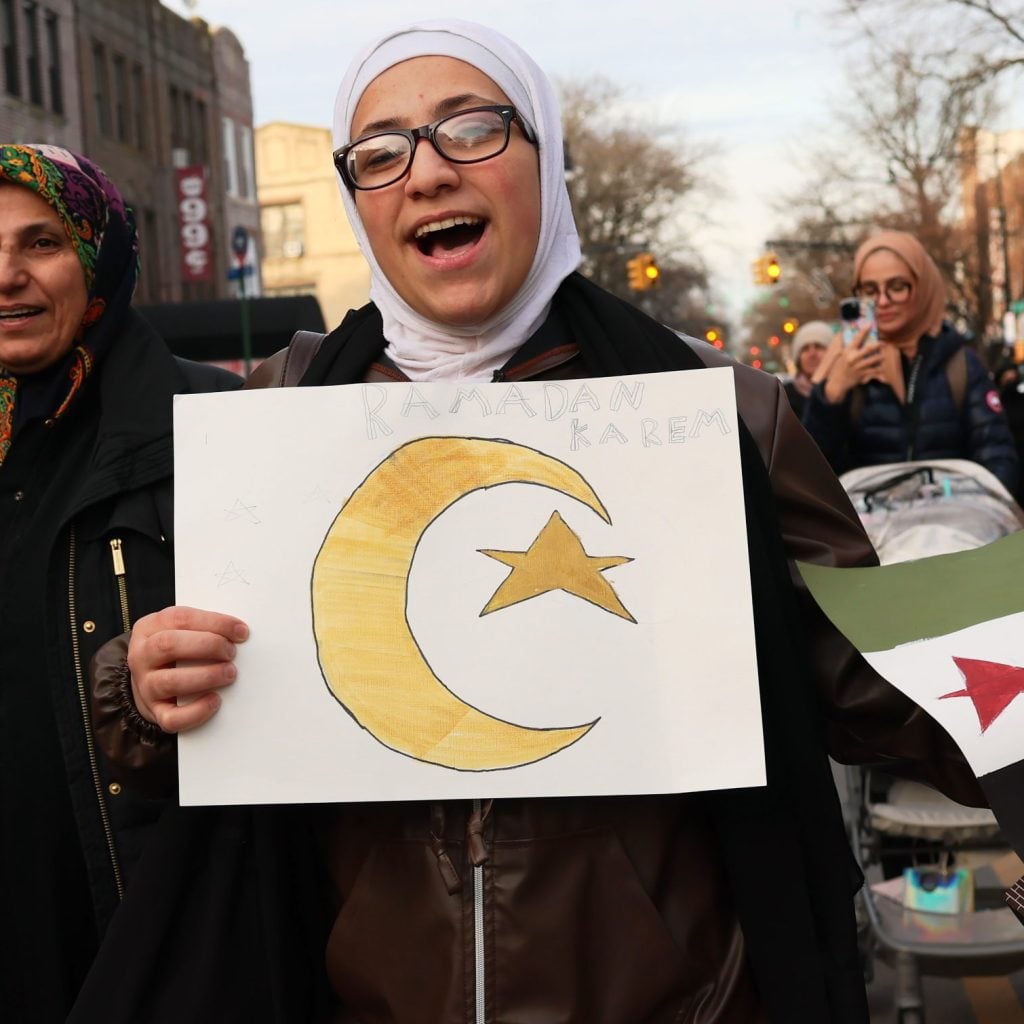
Ramadan is the ninth lunar month in the Islamic calendar. It is observed by over 1.5 billion Muslims yearly and is considered one of the most sacred months of the year.
Ramadan commemorates the first revelation of the Quran to Prophet Mohammed over 1,400 years ago.
“Ramadan is a month of deep and prayerful reflection,” shares Interfaith America Director of Workplace Strategy, Dr. Zahra Jamal. “It is about turning away from oneself and from one’s ego and towards God.”
During the 29-to-30-day period of Ramadan, Muslims fast, a practice known as sawm. This means abstaining from food, drink, and intimacy daily from sunrise to sunset.
Often preceded by a pre-dawn meal called suhoor, the practice of fasting is marked by a sunrise prayer called Fajr and ends with the sunset prayer, Maghrib. Many Muslims gather for a community meal, called an iftar, to break the fast after sunset.
Fasting During Ramadan
Fasting is a measure of discipline and self-reflection meant to draw one to greater God-consciousness, known in Arabic as taqwa.
“Fasting helps cultivate empathy, especially for the poor, and reminds us that gratitude and generosity should shape our everyday lives,” writes IA Emerging Leader Mohammed Jibriel. “One thing I love about Ramadan is how it challenges the idea that spirituality is only personal or private. In Islam, spirituality is lived; it shows up in how we eat, how we give, how we care for others.”
Throughout the month of Ramadan, there is an emphasis on daily prayer (salah), Quran study, and charity (zakat).
Daily fasts are broken with a festive meal called an iftar. Iftar traditions often include breaking the fast with dates and water and joining together with loved ones for this celebratory and restorative meal.
“Ramadan is a sacred time. It is also a communal and familial time. This month is about honing our individual spiritual practice while also fulfilling our commitments to the people in our lives,” Interfaith America’s Jenan Mohajir writes in ”Why Ramadan is a Time for Reflection and Gratitude.”
READ: How to Build Community and Honor Tradition with Ramadan Iftars
The Night of Power/Decree
On the 27th evening of Ramadan is Laylatul Qadr, or the night of power/decree, when the Quran was revealed to the Prophet Muhammed by the angel Gabriel.
Though it is held that this sacred night in the Islamic calendar occurs on the 27th evening of the holy lunar month, Muslims are encouraged to seek it throughout the final ten nights of Ramadan and recognize it by giving zakat and sadaqah (voluntary charity), praying Nafl prayers (voluntary prayers), and making du’a (supplication to Allah).
Eid al Fitr
The month of Ramadan ends with Eid-al-Fitr, which translates from Arabic to “the festival of the breaking of the fast.” Muslims gather to celebrate this day of gratitude to Allah by joining in community to say prayers, eat sweets, exchange gifts, and share dinners with friends and family.
When is Ramadan 2026?
In 2026, Ramadan will begin on the evening of Wednesday, Feb. 17 and end with Eid-al-Fitr, which begins on the evening of Thursday, March 19.
How you can get involved in your community this Ramadan:
Learn how to host an interfaith fast-a-thon.
Get inspired by interfaith Ramadan stories in workplaces, campuses, and civic spaces.
Take these steps to support your Muslim colleagues during the month of Ramadan.
Attend an interfaith iftar.
Test your knowledge of the holy month by taking Interfaith America’s Ramadan Quiz.