
The award-winning musical film Dreamgirls (2006) has a standout scene. In the scene, songwriter C.C. White (Keith Robinson) and Dreamgirls member, Michelle Morris (Sharon Leal) sit alongside each other on a piano bench while fellow Dreamgirls star Lorell Robinson (Anika Noni Rose) leans atop the closed lid, and popular soul artist James “Jimmy” Early (Eddie Murphy) looks on.
Knowing that Jimmy is searching for a different sound that departs from his normally hyperenergetic, charismatic – if not shallow – performance style, C.C. sings a new composition for him.
Just as a straight-faced Jimmy begins bobbing his head, the movie cuts to imagery of an arson-stricken downtown Detroit, Michigan, imagery reminiscent of the 1967 Detroit riots. Former Dreamgirl – and sister of C.C. White – Effie (Jennifer Hudson) gazes out on the solemn picture from her bus seat as police sirens sing a haunting descant above the song’s melody. Through the setting of a race war-stricken city, the song’s refrain rings out:
Patience, little sisters
Patience, little brothers
Patience, patience
Take each other by the hand
The sonic portrayal of patience in this song and scene, showcase the complicated reality of Black people’s engagement with the oft-discussed virtue.
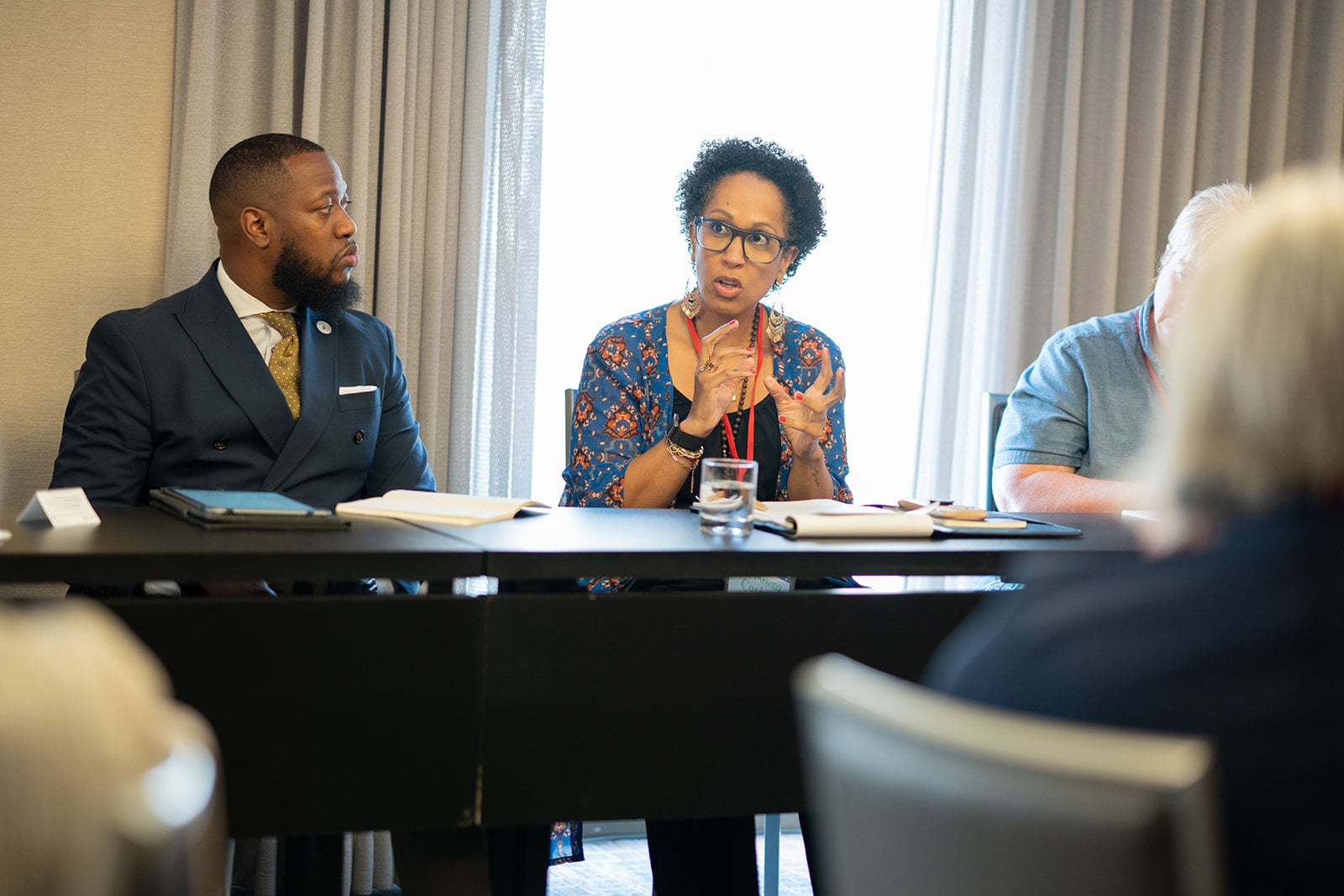
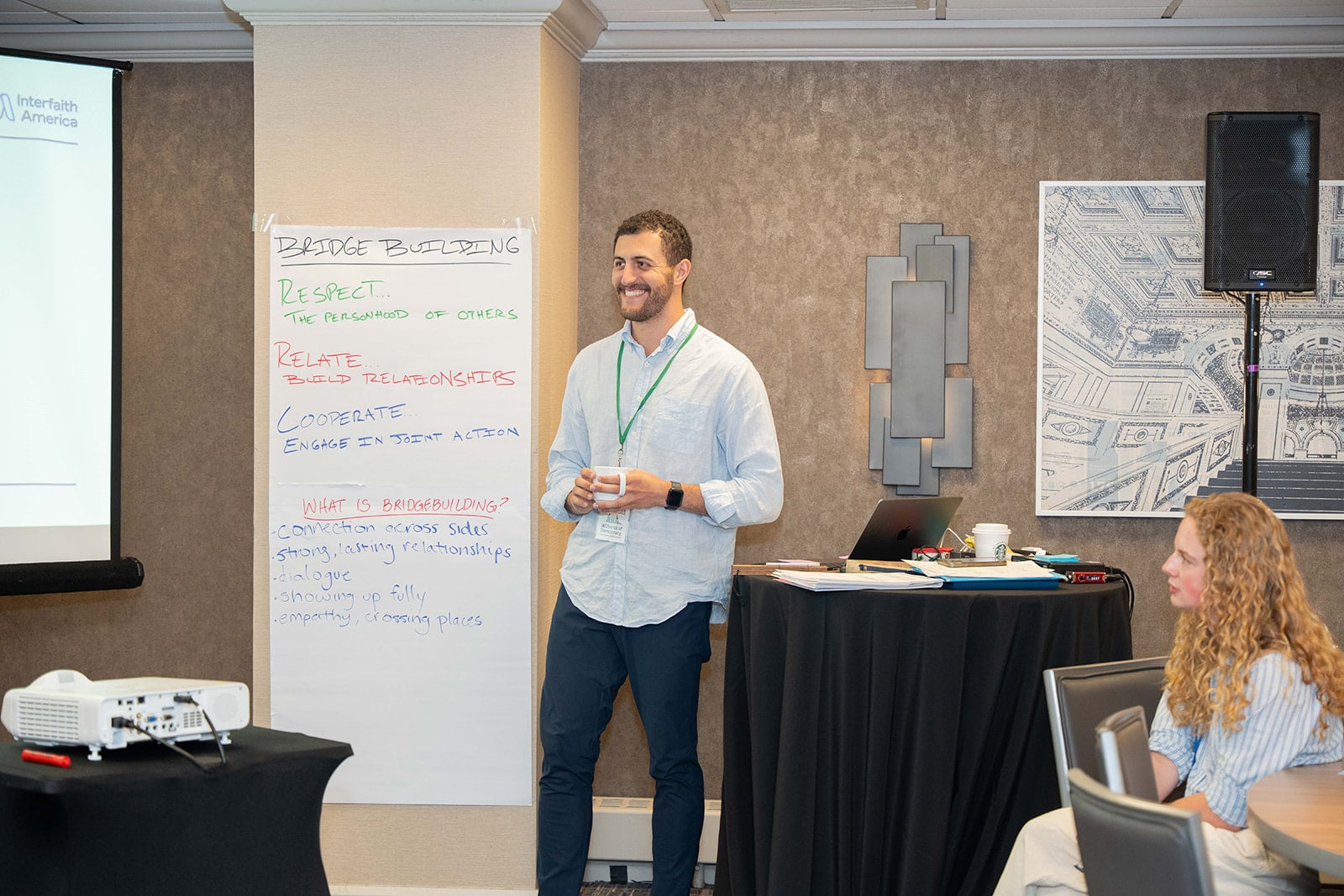
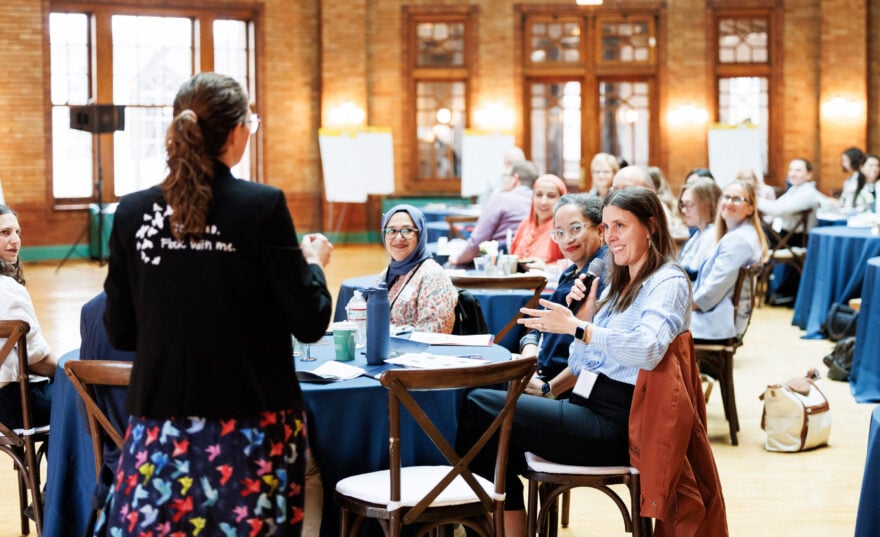
For the past year, a group of religion scholars and I dubbed the “Patience Scholars Collective” have met to discuss the implications of patience in our lives, society, philosophies, and studies. With support from Interfaith America and the Templeton Religious Trust (TRT), we read the work of scholars, philosophers, and activists on the subject.
Throughout our studies, one question consistently came up: is patience a virtue for Black people? The question led to robust conversation about the ways that virtues have historically operated within and been wielded against marginalized populations.
For Black people constantly wrestling with the quotidian realities of racism and anti-blackness, patience can be a double-edged sword.
Patient Performance
August of 1963 found Martin Luther King, Jr. furiously putting pen to paper in a Birmingham jail cell following his participation in a non-violent protest at which he was arrested for “parading without a permit.” While there, he composed the now famous “Letter from a Birmingham Jail” in which he rigorously critiqued the position of the White moderate who is “more devoted to order than justice” and continues to preach timeliness of Black people in the face of cruel conditions. In the letter King only promises patience in his explanations, elsewhere he asserts that impatience in coping with oppression is not only warranted, but necessary.
King’s letter is an example of the stakes and phenomena of external calls for patience from White people who are more concerned with avoiding ideological discomfort than the brutal realities of Black people living in the United States.
Author, Julius Fleming calls this “black patience.”
Black patience is explained by Fleming, as a tool of immobilization which seeks to freeze people into submission by offering civic rewards for “good behavior” that become eternal I-O-Us. For this reason, many organizers prefer the language of hope and possibility as overarching messages; Then, there are those like the inimitable, Fannie Lou Hamer, an Activist who leaned into the exhaustion of Black life as a strategy for change.
While describing her imprisonment and subsequent abuse after attempting to register to vote in Indianola, Mississippi in August of 1962, Hamer discussed time as a numbing agent which dulls the senses, lulling people into an unconscious slumber. To Hamer, the only time that is important is the time for change, the time for justice, and the time for truth – which is right now. Hamer and King stressed immediacy in their political organizing, not patient toiling, and in doing so intentionally shifted the narrative from “the wait” to the current reality and a future that can’t be delayed.
Practical Patience
Practical Magic (1998) was one of my mom’s favorite movies when I was growing up. In fact, any movie starring Julia Roberts or Sandra Bullock was a sure-fire hit in our household. In this film, Bullock plays Sally Owens alongside Nicole Kidman who was cast as her sister, Gillian. After an extended time apart, the sisters’ initial decision to never use magic ends when Gillian’s abusive boyfriend attacks them, leading Sally and Gillian to accidentally commit murder. The sisters try to resurrect him, then murder him again after he re-emerges even more dangerous than before.
Practical Magic is the perfect allegory for patience and the Black experience. Patience, used as a tool for movement, building and the continual fight for justice, can have a positive impact on those committed to the cause just like the everyday magic that the sisters use to make their lives more manageable. But patience as a performance of morality used to ease the guilt and conscience of populations that benefit from society’s systems of oppression is akin to the dark magic that Sally and Gillian used to resurrect Gillian’s boyfriend.
They didn’t really want him back, they just feared retribution.
I am not eliding the experience of a woman protecting herself from intimate partner violence with tools of White supremacy. What I do mean to say, is that calls for patient performances are akin to animating a lie. Though the boyfriend came back in body, his spirit was no longer there. Similarly, calls for (the social phenomena, that is) black patience ask Black people to forsake themselves to maintain the status quo.
This ideology can both aid in Black people’s dehumanization and perpetuate a myth of White purity, allowing people to ignore the violence of their moderacy. While some may like to pretend the status quo is not steeped in various interconnected systems of oppression, patience can’t be used to create realities that don’t (or no longer) exist.