
Interfaith America submitted this statement for the U.S. Senate Committee on the Judiciary’s September 17 hearing entitled “A Threat to Justice Everywhere: Stemming the Tide of Hate Crimes in America” and requested that the statement be included in the hearing’s official record.
Background
The past few years have seen a dramatic and alarming increase in hate crimes and bigotry based in antisemitism, Islamophobia, racism, sexism, and other forms of marginalization. These incidents of hate are all occurring with increased frequency and violence. Efforts to combat these social ills tend to focus on them individually and their distinct sources. Yet often absent in the national discourse is an approach that focuses on building collaboratively, rather than tackling them separately. What can political and civic leaders build together to create more healthy diverse communities? A growing body of research indicates that advancing interfaith cooperation – the proactive process of respecting diverse identities, building relationships across lines of religious difference, and acting together for the common good – is an effective approach to reducing bigotry.
Hate crimes reached an all-time high in 2022 according to data from the FBI. Media reports on a study from the Center for the Study of Hate and Extremism at California State University, San Bernadino found that hate crimes surged in half of the nation’s 10 largest cities, with an average increase of 11% in 2023. This distressing trend extended beyond the 10 largest cities as an analysis of 25 American cities found hate crimes increased by an average of 17%. Hate crimes targeting Jewish and Muslim populations fueled these increases in the wake of the horrific events of October 7. The report said that with the spike in late 2023, Jewish Americans have supplanted African Americans as the most targeted group in terms of hate crimes in the country’s 10 largest cities. The numbers and narrative are clear – crimes against people or property that are motivated by the offender’s bias against race, religion, disability, sexual orientation, ethnicity, gender, or gender identity are on the rise in the United States.
The United States is the world’s first attempt at a mass-level multiracial, multiethnic, interfaith democracy. For centuries, political philosophers believed that a country as diverse as ours was impossible. There are those who would point to the rise in hate crimes and draw the same conclusion, that somehow diversity is destined to be a barrier to building a socially coherent and flourishing democracy. Studies and experience show, however, that when positively engaged diversity can become pluralism, where people of different identities respect and relate to one another and cooperate together for the common good.
The Potential Power of Bridgebuilding
Interfaith America works with institutions across the higher education, civic, and corporate sectors. These institutions can be natural places for bridgebuilding, as they bring together a wide range of identities in a small physical space to learn, serve, and work together. Unfortunately, however, individuals can sometimes face pronounced incidents of hatred and identity-based bigotry in these spaces. For example, the Interfaith Diversity Experiences and Attitudes Longitudinal Survey (IDEALS) confirmed other research on the negative aspects of Jewish students’ collegiate experiences. In the first year of college, Jewish students report more insensitivity on campus and experience more negative engagement with religious diversity compared to their peers. An April 2024 poll by the Institute for Social Policy and Understanding (ISPU) found that American Muslims were most likely to experience discrimination from peers in their place of work or school; the same survey found that overwhelming majorities of Muslims (71%) and Jews (59%) experienced religious discrimination from strangers in public places.
These same studies and organizations also find, however, factors that have the potential to positively influence attitudes toward minority groups. ISPU found that individuals with a close Muslim friend scored far lower on the Islamophobia Index than individuals who do not know a Muslim. Evidence from IDEALS shows that a combination of supportive environments for individual identity groups, balanced with provocative encounters across lines of religious difference, lead to increased appreciation of others as well as a commitment to engaging religious diversity positively. Beyond higher education, Dr. Linda R. Tropp and Trisha Dehrone cite the growing body of research showing that meaningful and authentic engagement with others helps people invest more in each other’s lives and groups which moves people to work toward building communities and social institutions to make sure everyone feels like they belong. In other words, creating communities, institutions, and spaces where individuals are able to cooperate and positively engage their respective identities is a research-backed way to lower rates of hatred.
Interfaith America is proud to be an active catalyst, collaborator, and thought leader in this sector, partnering with field leaders and providing insights that show how Americans are cooperating and positively engaging diversity to reduce hatred in their communities. For example:
- The Team Up Project, a collaboration with three of the nation’s leading civic service organizations – Catholic Charities, Habitat for Humanity, and the YMCA of the USA – launched in 2023 to expand local bridgebuilding activities across the country. Under this program the YMCA of Florida’s First Coast partnered with the Jewish Community Alliance to unify against the rise of anti-Semitism and other hate motivated behavior in their community. The partnership is now entering its second year of events, dialogue, and service opportunities partnering around uniting the community. This is just one of the 32 communities across the country working to train 10,000 bridgebuilders with the tools they need to build connections in their communities.
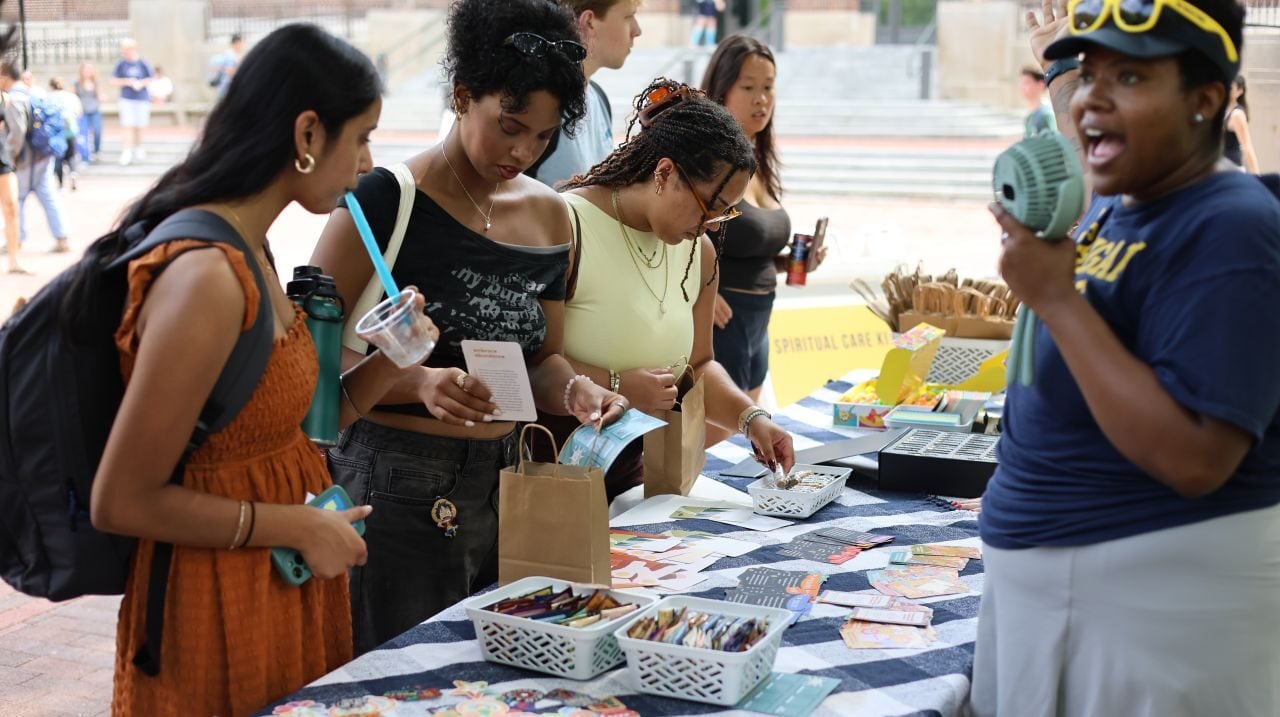
- Through IA’s Bridging the Gap program dozens of campuses across the country are educating and training their students in the skills of civic bridgebuilding alongside collaborative problem solving and sharing action. The institutions themselves represent a cross-section of American life: large public universities, community-focused liberal arts colleges, deeply Christian institutions, and activist-oriented historically Black colleges and universities (HBCUs). These campuses are proactively cultivating environments where students and staff alike practice ways to disagree on some fundamental concerns while working together on others to strengthen their community.
Interfaith America is part of a vibrant and growing bridgebuilding field working to combat the challenges of polarization and hate-based violence. The experiences, practices, and results of the bridgebuilding field can be a starting point for understanding what can be done to stem the tide of hate crimes in our country. The federal government has an opportunity to galvanize bridgebuilding organizations and movements that support spaces where people can engage across lines of difference. The Building Civic Bridges Act (BCBA), as introduced in both the Senate and the House of Representatives would create an Office of Civic Bridgebuilding within AmeriCorps. This office would, among other things, oversee a grant program to support civic bridgebuilding initiatives across the country. These programs would foster meaningful connections across lines of difference, whether politics, race, ethnicity, or religion. By encouraging empathy, understanding, shared action, and dialogue, the BCBA aims to bridge divides and build a stronger, more cohesive society. Corporate, civic, political, and religious leaders recognize the dangers and costs of hatred and polarization within their spheres, and many are supporting BCBA as a starting point for moving the national conversation on bridgebuilding forward.
We can build a pluralistic America – with decreased prejudice and more positive attitudes about diverse groups – by cultivating environments where people can learn bridgebuilding skills and provide opportunities to exercise the muscles of cooperation across difference. Barriers like racism, misogyny, Islamophobia, and anti-Semitism prevent people from making their contribution to a pluralistic society. Bigotry in all its forms must be called out and defeated. However, the eradication of prejudice is not enough; we must proactively build a pluralistic democracy that cherishes the contributions of all. When people are proactively invited into productive interreligious or intergroup engagement, they can and do serve as active bridgebuilders, creating a different world for themselves and the next generation.