A new Presidential administration, several executive orders shaking up immigration, American government, and more, a ceasefire in Gaza, several companies moving away from diversity, equity, and inclusion initiatives, raging wildfires in Southern California –– 2025 has barely started and already so much has happened.
Resolutions and goals aside, what are our prayers for this new year? How can our myriads of faith traditions offer guidance in journeying through the year to come?
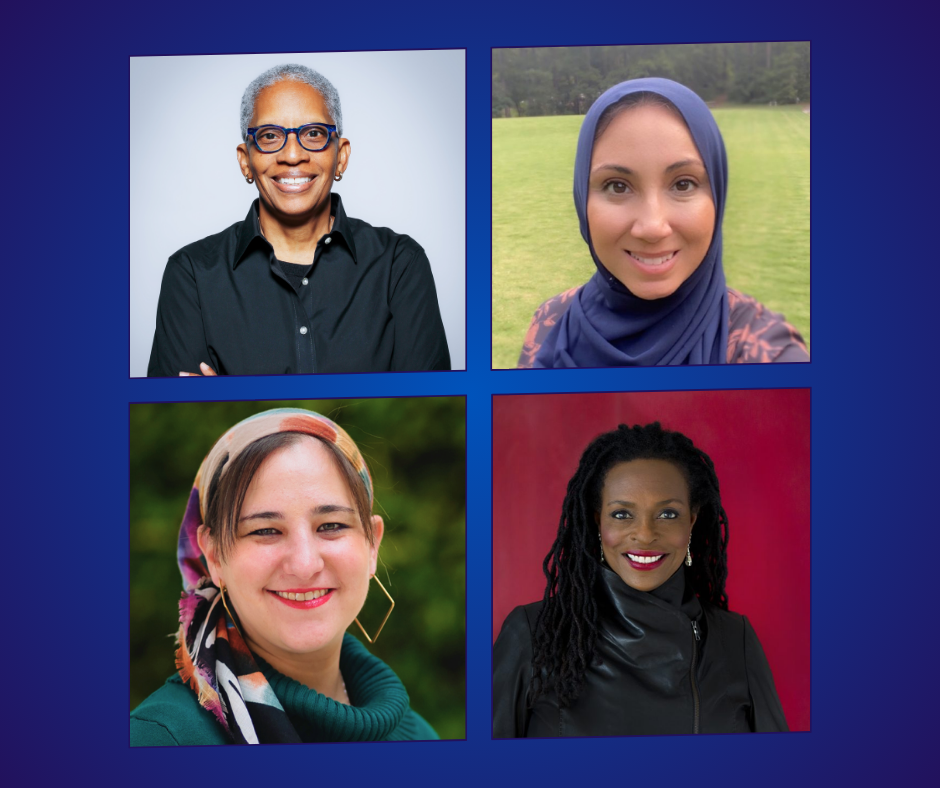
I reached out to four faith leaders and asked them,
“What are your prayers for the communities you serve and humanity at large as we journey through 2025? Are there any prayers from your faith tradition you’re drawing upon?”
Their thoughtful words and prayers offer strength, steadfastness, resilience, and hope for us all no matter what faith (or non faith) we ascribe to.

Dr. Pamela Ayo Yetunde
I “pray” that people throughout the world spend more time in prayerful contemplation on understanding the causes of suffering. Why do I put “pray” in quotation marks? I’m inviting all people, no matter the word they use, to intentionally get quiet, dwell in sacred cosmic connection, lessen ego gratification, and draw from the well of wisdom, to cultivate the ability to empathize with those who appear radically different.
When we “pray” regularly like this, we may come to know that no one is radically different than we are. With this conviction, we can come to accept that we suffer and heal in very similar ways. This revelation can guide us to ethical commitments to be in solidarity with one another. I “pray” that we adopt one another as kin and live into a sense of belonging that we may have never known, so that we can be inspired by the oneness we experience in prayer, when we are not actively in prayer.
Dr. Pamela Ayo Yetunde is one of Interfaith America’s 2025-2025 Black Interfaith Fellows. She is an interfaith pan-Buddhist universalist practitioner, a J.D., M.A., Th.D, and a pastoral counselor in private practice. Ayo is an author, editor, advocate, instructor, Buddhist lay leader and author of Dearly Beloved: Prince, Spirituality, and This Thing Called Life. She also is the author of Black and Buddhist: What Buddhism Can Teach Us About Race, Resilience, Transformation and Freedom.

Rabba Rori Picker Neiss
May we find the strength to hold firm in our convictions, rooted in the values that guide us toward justice and compassion. Let our voices be bold in the face of adversity, advocating for truth, dignity, and peace for all people.
May we discover the bravery to challenge the forces of hatred, fear, and oppression wherever they may arise. May our courage be contagious, inspiring others to join the fight for justice and equality.
May we have the fortitude to stand alongside those who are most vulnerable and threatened. May we offer them not only our words but our actions, our time, and our hearts. Let our commitment to protecting and uplifting the powerless be a constant reminder that true strength lies in our ability to love and care for one another.
May we be inspired by the wisdom of our tradition, as the Babylonian Talmud states, “Once permission is granted to the destroyer, it does not distinguish between the righteous and the wicked” (Bava Kamma 60a).
May we never assume that those of us not immediately and directly impacted are exempt from caring or immune from the dangers of cruelty, subjugation, and exploitation.
May our work bring us closer to healing a fractured world.
Rabba Rori Picker Neiss is the Senior Vice President for Community Relations at the Jewish Council for Public Affairs. Prior to that she was the Executive Director of the Jewish Community Relations Council of St. Louis. Rabba Rori is one of the first graduates of the Yeshivat Maharat, an institution that trains Orthodox Jewish Women to be spiritual leaders and halakhic (Jewish legal) authorities.

Farah Hottle
In the Holy Quran, God says, “To Allah belong the best names, so call upon Him by them.” (Quran 7:180). These names, known as the 99 attributes of God, reflect His infinite perfection and divine qualities. In prayer, we invoke these names to align our requests with His attributes, seeking His guidance and mercy for our needs. My prayer for 2025 is as follows:
Ya Aziz, the All-Mighty, all things are possible through You. Grant us the strength to spread justice, peace, and unity for all of Your children. Ya Salaam, the Giver of Peace, end the violence and oppression in Gaza, the West Bank, Congo, Ukraine, and every place of suffering. Ya Fatah, the Opener, open our hearts with mercy and forgiveness for those who have wronged us, reminding us that forgiveness is pleasing to You and a path to healing.
Ya Wadud, the Most Loving, instill love in our hearts for one another, despite the hurt and division that may come between us. Ya Hakam, the Giver of Justice, brings justice to all who have suffered at the hands of global leaders responsible for crimes against humanity. Hold accountable those who have caused harm and grant us the courage to stand firm in the face of wrongdoing, always advocating for what is right.
May 2025 be a year where we embody the virtues of compassion, unity, and courage, and work together to create a world rooted in truth, accountability, and healing.
Farah Hottle is an award-winning diversity, equity, and inclusion (DEI) leader, founder of Origins Consulting Group, and a passionate advocate for interfaith community building. For the last 20 years, she has led efforts to foster understanding and collaboration across faiths through dialogue circles and community service. She currently serves on the Board of Directors for the Virginia Interfaith Center for Public Policy, a non-partisan nonprofit focused on advancing social, racial, and economic justice through state legislation.

Reverend Jacqueline Lewis
As I think about my communities right now, my heart is cracked open for all the vulnerable people who will suffer in this next year. I am deeply moved by my ancestors’ ability to look squarely at their circumstances, to feel the pain and suffering, and to still lean into hope. They knew better days would come, and the long moral arc of the universe would bend toward justice. This poem, also known as the Black National Anthem, speaks to my prayers and my hope.
Lift Every Voice and Sing by James Weldon Johnson
Lift every voice and sing,
Till earth and heaven ring,
Ring with the harmonies of Liberty;
Let our rejoicing rise
High as the list’ning skies,
Let it resound loud as the rolling sea.
Sing a song full of the faith that the dark past has taught us,
Sing a song full of the hope that the present has brought us;
Facing the rising sun of our new day begun,
Let us march on till victory is won.
Stony the road we trod,
Bitter the chast’ning rod,
Felt in the days when hope unborn had died;
Yet with a steady beat,
Have not our weary feet
Come to the place for which our fathers sighed?
We have come over a way that with tears has been watered.
We have come, treading our path through the blood of the slaughtered,
Out from the gloomy past,
Till now we stand at last
Where the white gleam of our bright star is cast.
God of our weary years,
God of our silent tears,
Thou who hast brought us thus far on the way;
Thou who hast by Thy might,
Led us into the light,
Keep us forever in the path, we pray.
Lest our feet stray from the places, our God, where we met Thee,
Lest our hearts, drunk with the wine of the world, we forget Thee;
Shadowed beneath Thy hand,
May we forever stand,
True to our God,
True to our native land.
The Reverend Dr. Jacqueline (Jacqui) Lewis is a Senior Minister and Minister for Vision, Worship, and the Arts at the Middle Collegiate Church, a multiracial, multicultural, and inclusive 900-member congregation in New York City. She is also the executive director and co-founder of The Middle Project, an institute that trains ethical faith leaders for a more just society. Dr. Lewis advocates for racial equality, economic justice, gun control, and equal rights for all sexual orientations and genders.