I sat down for tacos with a colleague in Culver City, California, one early summer’s eve. The conversation was light.
That is, until it wasn’t.
Involved with interreligious dialogue at the local, state, national, and intergovernmental level, my acquaintance was concerned about the impact of Hamas’ attack on Israel that killed nearly 1,200 individuals and the Israeli Defense Force’s (IDF) brutal reprisal against Gaza and its people in the months that followed had done irreparable harm to cause of peacemaking in the U.S.
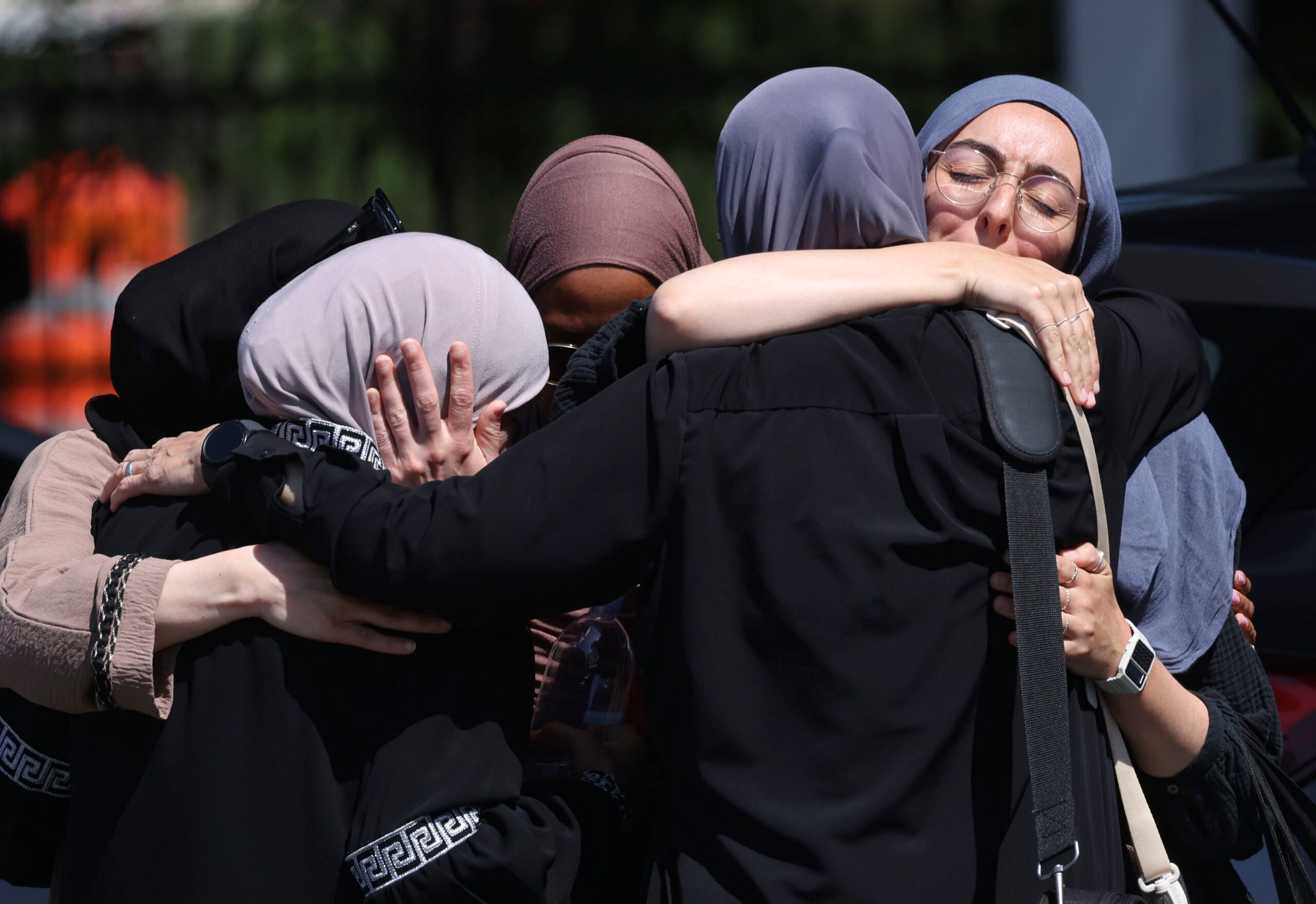
The intense, seemingly endless violence and the chilling prospect of a ceasefire without lasting peace, my acquaintance feels, is having a profound emotional, psychological, and practical impact on people who care about connecting across religious, cultural, and political differences.
“It’s set us back at least 20 years,” they said. Communities that used to connect, colleagues that used to be in conversation, groups that used to meet, and initiatives that used to be shared have all been impacted. “It’s changed everything.”
As Thomas Banchoff wrote for Commonweal, “the Israel-Hamas war illustrates the fragility of interfaith diplomacy” and dialogue.
While many said numerous theological, social, and political gains had been made through interreligious engagement in the U.S. and abroad in recent years, the damaging impact of savage violence, polarizing discourse, divisive protests, and tiptoeing around political landmines is a stark reminder of interfaith dialogue’s delicacy and potential limitations.
Can the friction be generative?
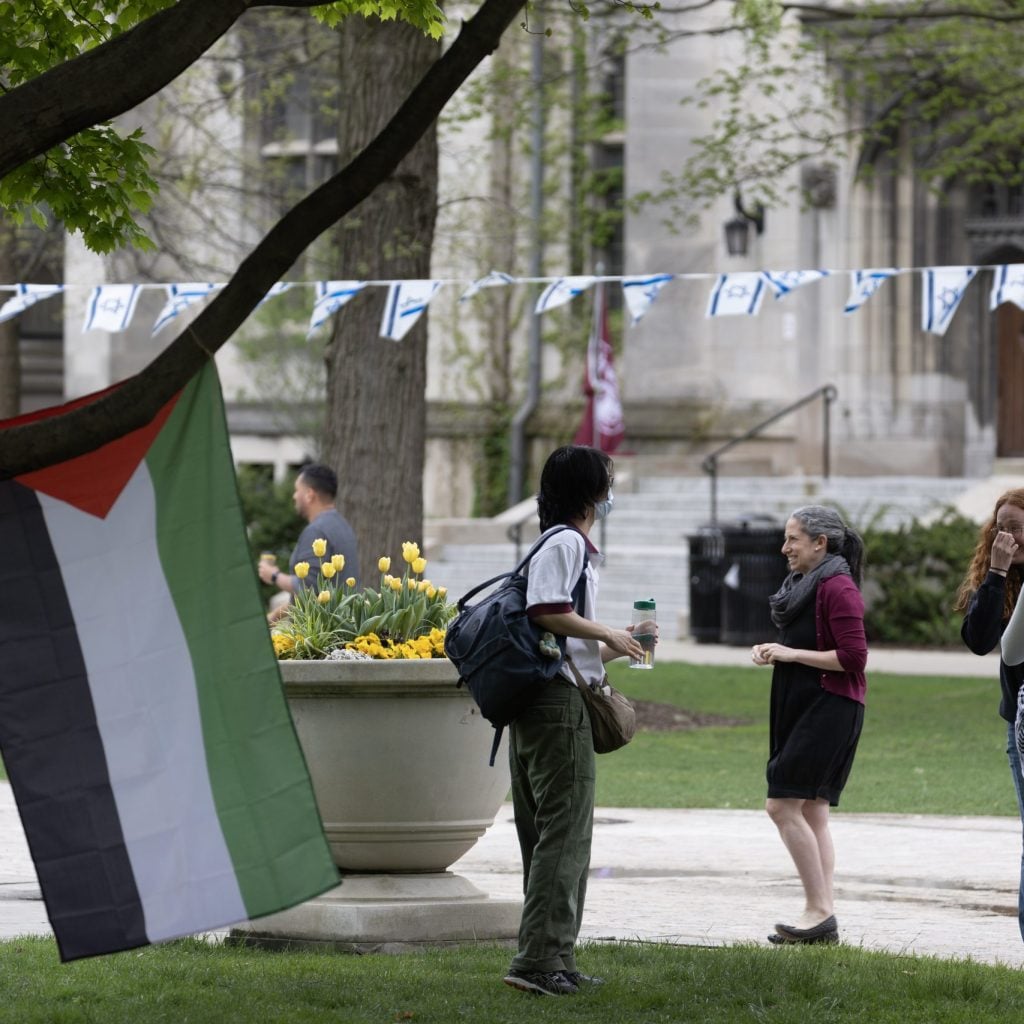
Since October 7 last year, the strain between the Jewish and Muslim communities — and beyond — has challenged the ability of interfaith spaces to function as facilitators for positive dialogue, let alone spaces for solidarity.
While various initiatives can claim decades of leadership in interreligious dialogue and relationships built between leaders and laity from numerous traditions, many have struggled to gather communities during the conflict.
In various private exchanges, leaders and community members express their frustrations with their community’s lack of speaking out but are unwilling to call out a lack of mutual accountability for what happened and continues to happen.
This, say practitioners nationwide, has eroded and stifled opportunities for sustainable peace.
A source who wanted to remain anonymous because of the incendiary nature of the subject in interfaith circles said, “I’ve grown deeply concerned with the virtue signaling and calls for nonviolence that don’t speak to the true experience of pain that continues to ripple through communities impacted by this worsening crisis.”
“So many of the communities that did not want to be ‘political’ with saying something made a very political choice to go quiet,” they said. “This has created a major lack of confidence in the ability and the impact of interfaith cooperation,” they shared.
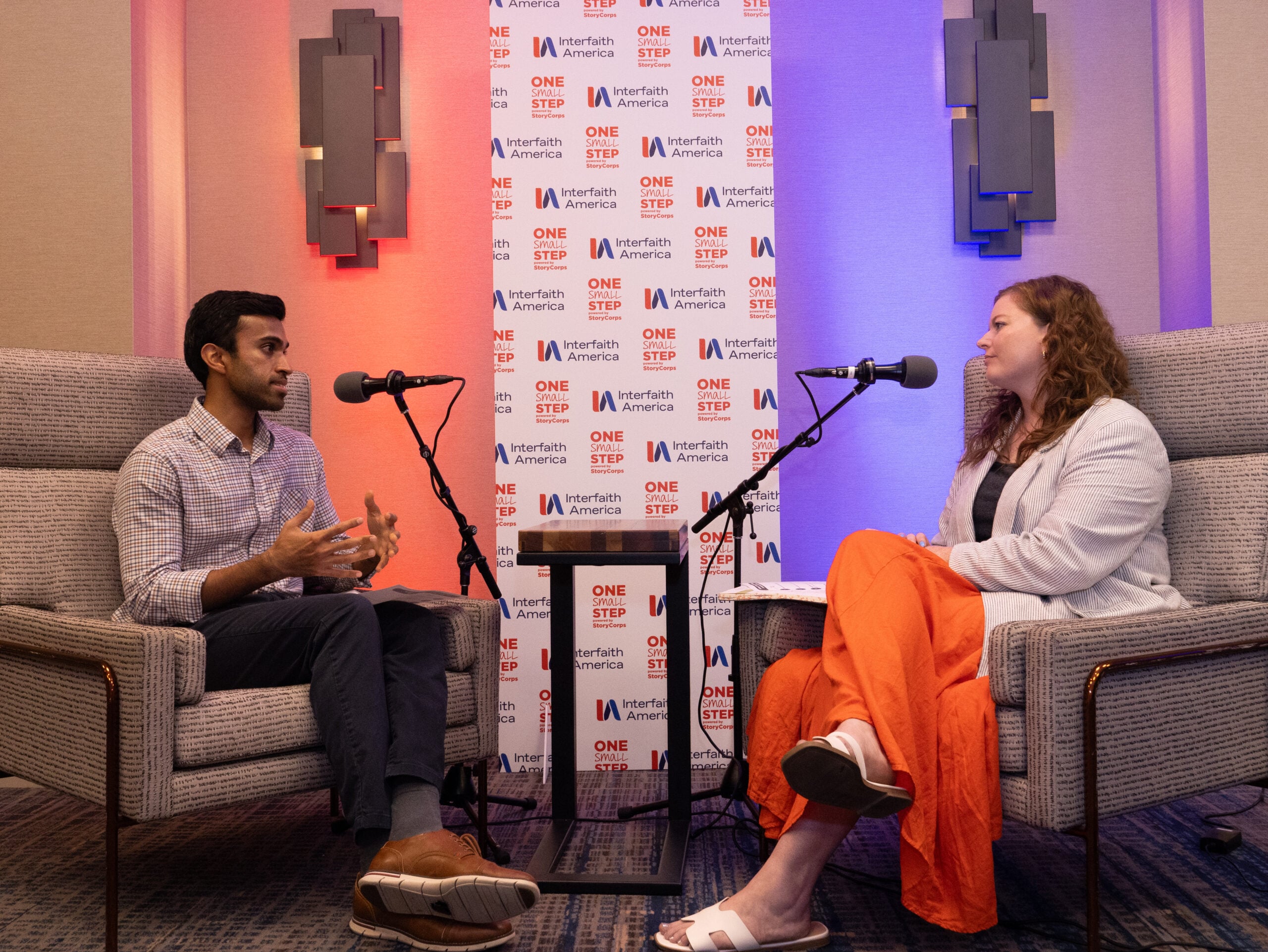
Even so, longtime dialogue partners Celene Ibrahim, who is Muslim, and Or Rose, Jewish, believe the frictions in the wake of last year’s attack and ongoing war can be generative.
“It’s been a dizzying eleven months,” said Ibrahim, “and we could always do more, but I’m proud of our conversations and the constructive, honest dialogues we are convening.”
“We grow from each interaction, every encounter,” she said.
From their base in Boston, Massachusetts, the pair — one a sociologist, the other a rabbi and Director of Hebrew College’s Miller Center for Interreligious Learning — have been working together on thorny topics in Jewish-Muslim dialogue for the last fifteen years. But none as complex as this, they said.
“These last months have been incredibly painful for untold numbers of people,” said Rose, “and as we’ve navigated this together on an ongoing basis, our relationship has evolved because of it.”
The long-term relationship that existed before the crisis has made productive conversations possible. Not only have they been able to talk with and learn from one another, but Rose and Ibrahim have also been called on to help others navigate uncertain tensions in communities across the northeastern United States.
For example, in Newton, Mass., there was pain and turmoil in the wake of a photo exhibition featuring images from the Nakba — an Arabic term meaning “catastrophe,” which is used to refer to the displacement and dispossession of Palestinians during the 1948 Arab-Israeli War.
“People in both our communities had strong feelings, strong reactions to the exhibit,” said Ibrahim, “the photos — and even the use of the term ‘Nakba’ — raised anger, frustration, and pain.”
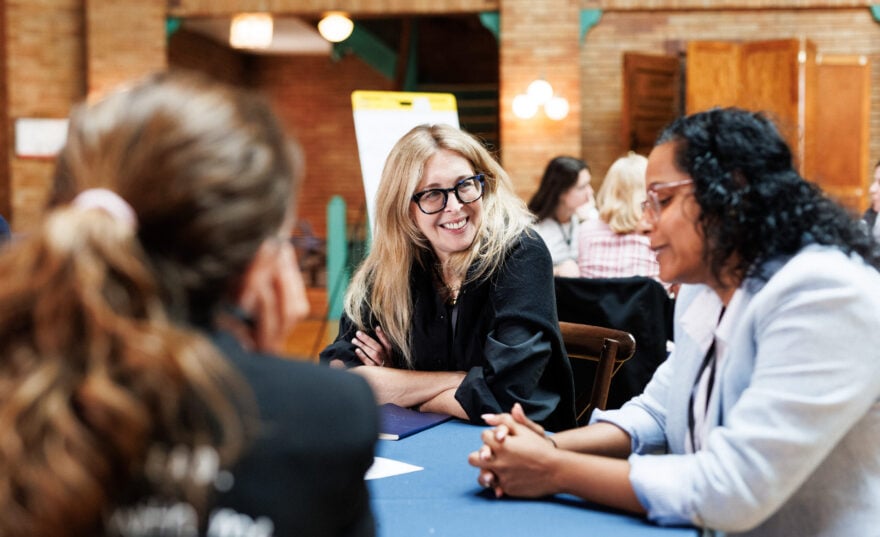
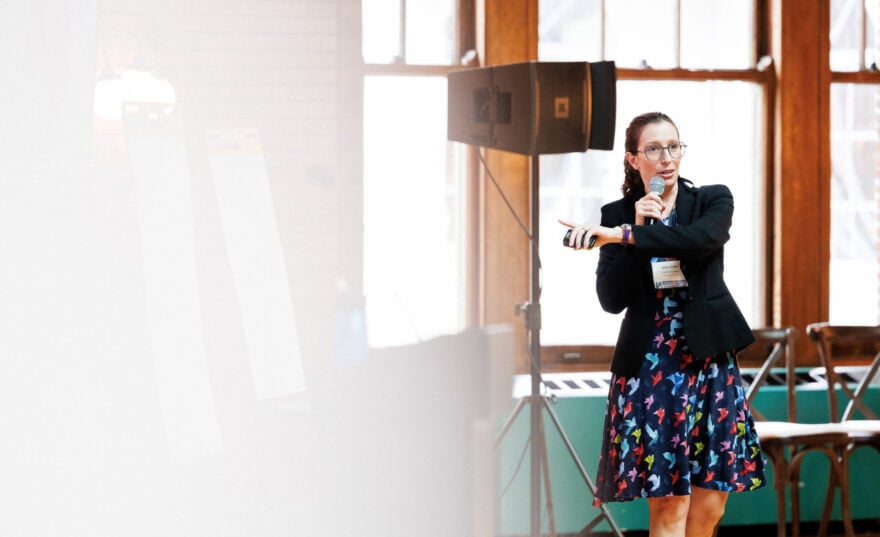
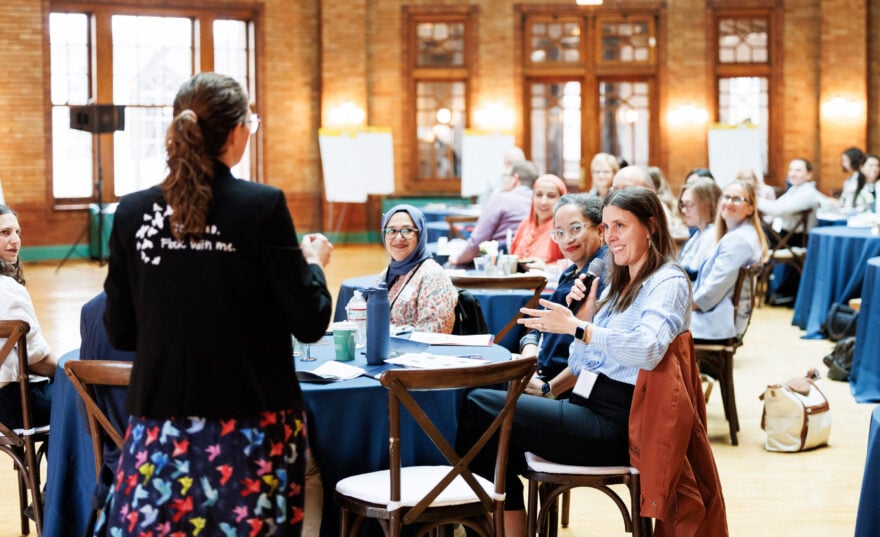
And so, Ibrahim and Rose were called in to help lead a public dialogue, facilitating what they called “courageous conversations around contentious issues.”
For the 75-plus people at the July open forum, their exchange modeled the uncertainty and potential of speaking respective truths and leaning into open questions that both sides must answer together.
Talking with one another in the lead-up to the event, they realized there were language, perspectives, and unspoken wounds they had not revealed to one another. “It was a process of hurt for both of us,” said Rose, “but we gained clarity.
“We realized we are all going to make mistakes. We will trigger and hurt people we care about. And that requires grace from everyone involved in such sacred conversations,” he said.
Rose said the honest conversations they had privately and the public dialogue they shared with others could not have happened without the longstanding relationship of trust and care they already had.
“We would not have been able to share and speak our truths without that pre-existing relationship,” said Ibrahim. “And I think there’s a lesson there — that we need to be in dialogue with our friends, family, colleagues, and neighbors before anything horrible happens,” she said. “That way, when it does, we are already there for one another.”
Rose added that both research and their own experience show that it’s much harder to keep the peace, restore it, or do anything substantive or meaningful “unless relationships are already in place.”
“Human beings need enough trust to engage authentically, empathically, across difference,” he said, “especially when there are forces at play that insist that we cannot, or should not, do this kind of bridge building.”
Dialogue is the opposite of an unfortunate exchange.
In the Bay Area of California, Miriam Zimmerman is one of the liaisons between her local synagogue and the Peninsula Multifaith Coalition. She is also involved in the Jewish-Palestinian Living Room Dialogue Group in San Mateo, founded in 1992.
The groups hold potluck and prayer gatherings in the park, an annual Eid celebration, a “freedom Seder” every spring, and an interfaith day of service each Martin Luther King Jr. Day.
Echoing Rose and Ibrahim, when they emphasized the importance of relationships, Zimmerman said, “By working together for the benefit of the community, we get to know each other. “Through those hands-on work, you build connections,” she said, “and those relationships last.”
However, Zimmerman admits that those relationships have become strained in recent months. “In October, everyone’s sympathies were with Israel,” she said. The group sponsored a community-wide interfaith service on behalf of Israel at the largest Catholic Church in San Mateo, filling the sanctuary. Since then, Zimmerman said, there have been more calls to hear “the other side.”
With more news about a dire lack of medicine, inadequate medical care, and a lack of food, water, and electricity in Gaza, Zimmerman said, “sympathies shifted a bit.”
In that shift, people wanted to hear more from Palestinians — to be more supportive of them as they were initially supportive of Israel, she said. Zimmerman herself wrote an op-ed for Jewish News of Northern California, linking the suffering of orphaned Jewish children in 1944 during the Holocaust to the suffering of orphaned Palestinian children in 2024. In it, she encouraged readers to remind themselves that God was in the other side’s children like he was in theirs — if they were brave enough to bear the thought.
At the same time, Zimmerman has noticed that some within her network are cautious when broaching the subject with her, not wanting to offend, say the wrong thing, or critique the Israeli government too strongly in her presence.
“Everyone knows I’m Jewish in the group, and I don’t think anyone would come to me saying Israel is being genocidal or immoral or that they could do more to protect the civilian population; I haven’t heard any of that,” she said, “but I wonder what happens in private when there are no Jews present.”
Zimmerman knows those are difficult conversations to have. But have them we must, she said, Jews, Muslims, Christians and others alike.
In her op-ed, she wrote, “Dialogue, as practiced by our group, is the opposite of this unfortunate exchange. It is about ‘deep listening’ rather than discussion, debate, or denial. Listeners ask questions until they can repeat the story to the teller’s satisfaction. Roles are exchanged so that both can share their stories.”
To that end, Zimmerman is helping host a Jewish-Palestinian dialogue in October, when the Jewish High Holidays and the anniversary of the Hamas attacks coincide closely. The event, to be held at Congregation Beth Jacob in Redwood City, California, has already brought together a coalition of 30 participating synagogues, churches, mosques, temples, and advocacy groups.
Zimmerman knows she and others have work to do to prepare the Jewish community for the conversation. “There will be people who are hostile, who feel we should not invite Palestinians,” she said, “but Jews have to be leading the way on this; we have not only been present but making way for these kinds of conversations.”
Still, Zimmerman knows there is much work to be done in September as the high holidays and a high-tension anniversary approach. For months, they’ve invited leaders into conflict resolution workshops to learn how to better listen to conversations and questions and still participate meaningfully and respectfully.
Zimmerman and others are banking the success of the October program on the bedrock of these conversations — and the relationships they’ve built in the years leading up to 2023 and 2024.
Called to speak
Even as those relationships provide a foundation for dialogue, the desire to remain balanced — or “hear both sides” — is not enough for some. An expert on conflict resolution and dialogue for peace, Mohammed Abu-Nimer wrote for America magazine that “interfaith peacemakers cannot remain neutral on Gaza.”
In the face of brutalism, massive bombardment, and increasing dynamics of hatred, displacement, and dehumanization, Abu-Nimer wrote that when he attempts “to discuss interfaith issues in the Middle Eastern and Muslim communities, I have been warned on several occasions that the time is not right for dialogue or the illusive neutral stand of peacemaking.”
“In fact,” Abu-Nimer wrote, “people in the Muslim and Arab communities currently use terms like interfaith dialogue and peacemaking in a mocking manner.
“Such engagement is viewed as futile and manipulative because of the lack of actions to stop the war on Gaza,” he reflected.
Other interfaith leaders reiterated what Abu-Nimer said, saying it is not enough for interfaith leaders to call for peace — they must take a stance for justice. The anonymous source quoted earlier said whatever comes for the Israel-Palestine conflict, much will be required for impacted communities to trust interfaith spaces again. “We’re overdue for the interfaith movement to examine new leadership models,” they said, “a new interfaith movement that doesn’t fear or avoid politics but develops new models for organizing that equip people with the skills necessary to take on injustice.”
Can religious leaders make a difference?
“What do you think?” the bishop asked as we sat around a breakfast table at the Chautauqua Institution in Chautauqua, New York. “If politicians can’t get his conflict figured out, could religious leaders do any better?”
The conversation continued for about an hour afterward as luminaries from Jewish, Muslim, and Christian communities in the U.S. reflected on the bishop’s provocations. In the end, however, there was no ready answer, no simple solution, and no pathway forward that promised success.
But there was hope.
Zimmerman, Rose, and Ibrahim also expressed hope of their own — even as they conveyed a reticence like the bishop mentioned above that politicians would move the needle toward peace.
“I think I’m hopeful,” Zimmerman said, but as she watches tensions rise between Hezbollah and Israel, ceasefire deal after ceasefire deal comes and goes. The war seems to only expand, and Zimmerman feels things could continue escalating.
“Somewhere along the line, our politicians have a stake in the status quo,” she said, “they are not operating in the best interests of human beings.
“If we could frame dialogue and a grassroots peace movement as an alternative to what’s happening, that gives me hope,” Zimmerman said. There must be alternatives. There must be.”
Whatever the outcome of the current conflict, the message from each interfaith practitioner I spoke to — over tacos and Zoom, around breakfast tables, and in anonymous e-mails — has been to at least have the conversation.
“We won’t find a lasting solution through politicians,” Zimmerman said. We will find it through these big and small conversations in California or the Middle East.” Just have the conversation, she said. Don’t let fear stop you from finding a way forward together.
Ken Chitwood is a religion nerd, writer and scholar of global Islam and American religion based in Germany. His work has appeared in Newsweek, Salon, The Los Angeles Times, The Washington Post, The Houston Chronicle, The Chicago Tribune, Religion News Service, Christianity Today, and numerous other publications. Follow Ken on Twitter @kchitwood.