(The Miller Center for Interreligious Learning & Leadership) — I am a Christian agnostic. For most of my life, I have doubted that there is an intervening God, a God who enters into history and tinkers with things, or who intervenes once we pray hard enough for divine intervention on our behalf. But I am also a Christian, someone who believes that what we call “God” is the Ground of Our Being, and in the person of Jesus, God shows us how to live sacred, authentically human lives.
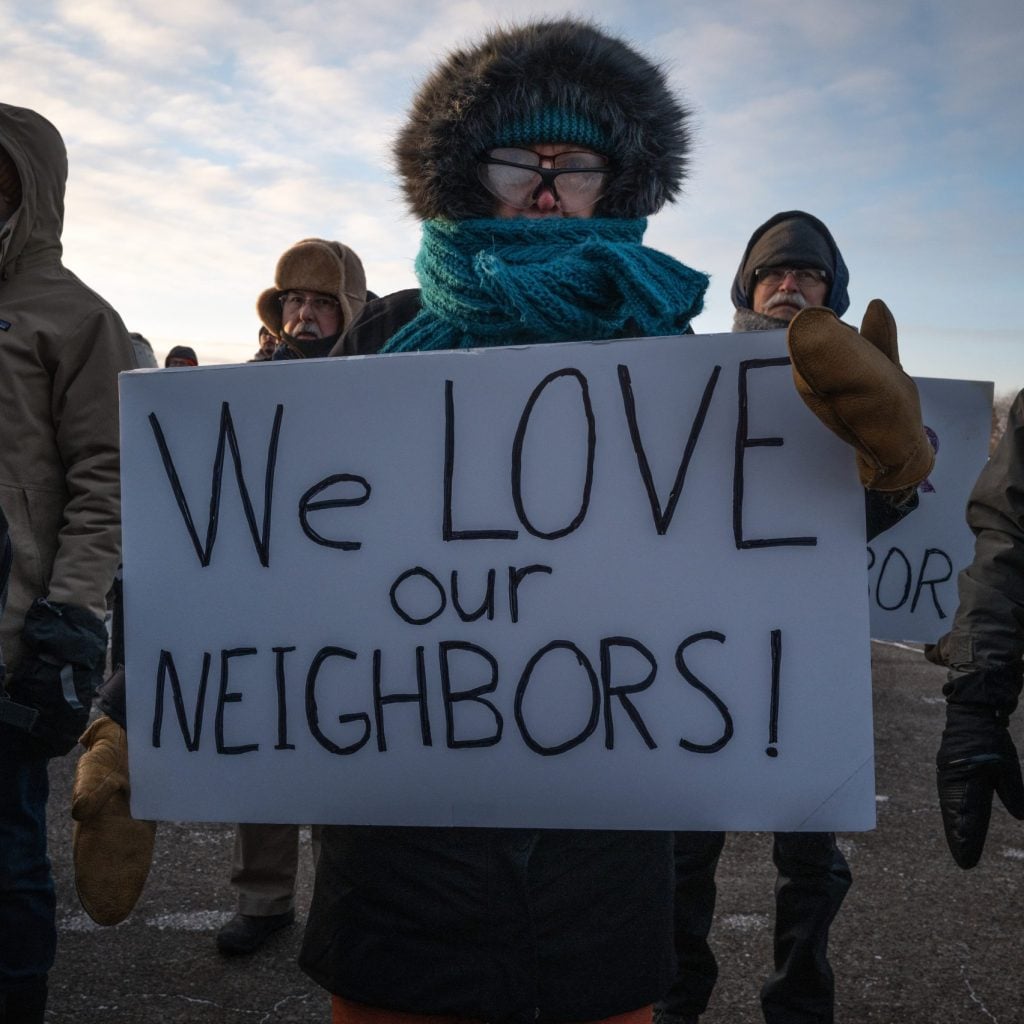
It is the Christian tradition that shapes many of my moral commitments, including my commitment to pluralism. And it shapes my response to what is happening in Minneapolis.
The Peruvian theologian Gustavo Gutierrez once defined sin as a “multifaceted withdrawal from others,” the process by which human beings selfishly turn away from others and turn inward on ourselves. In this withdrawal, we refuse to love our neighbor, and in that refusal, we pull away not only from our fellow human beings but from God.
If sin is a collective, structural reality characterized by our withdrawal from our fellow human being, then we live in a nation steeped in sin. Sin manifests itself in the deep polarization that is tearing the body politic apart. It manifests itself in government policies and political rhetoric that severs us from one another, that forces us into in-groups from which we then define our humanity and worth over against a whole host of “others.”
The targeting of immigrants and refugees is a manifestation of this collective, national sin, a sin that is prompting some agents and representatives of the U.S. government to act upon their worst, most violent impulses. All of this reflects the forces of anti-pluralism – pitting people against one another, manufacturing conflict, and framing difference as an existential threat to be eliminated.
The church has an essential role to play in all of this.
Read more at The Miller Center for Interreligious Learning & Leadership, Hebrew College blog.