Article

Civic Life

ICE Raids Reignite Rituals of Resistance in Minneapolis

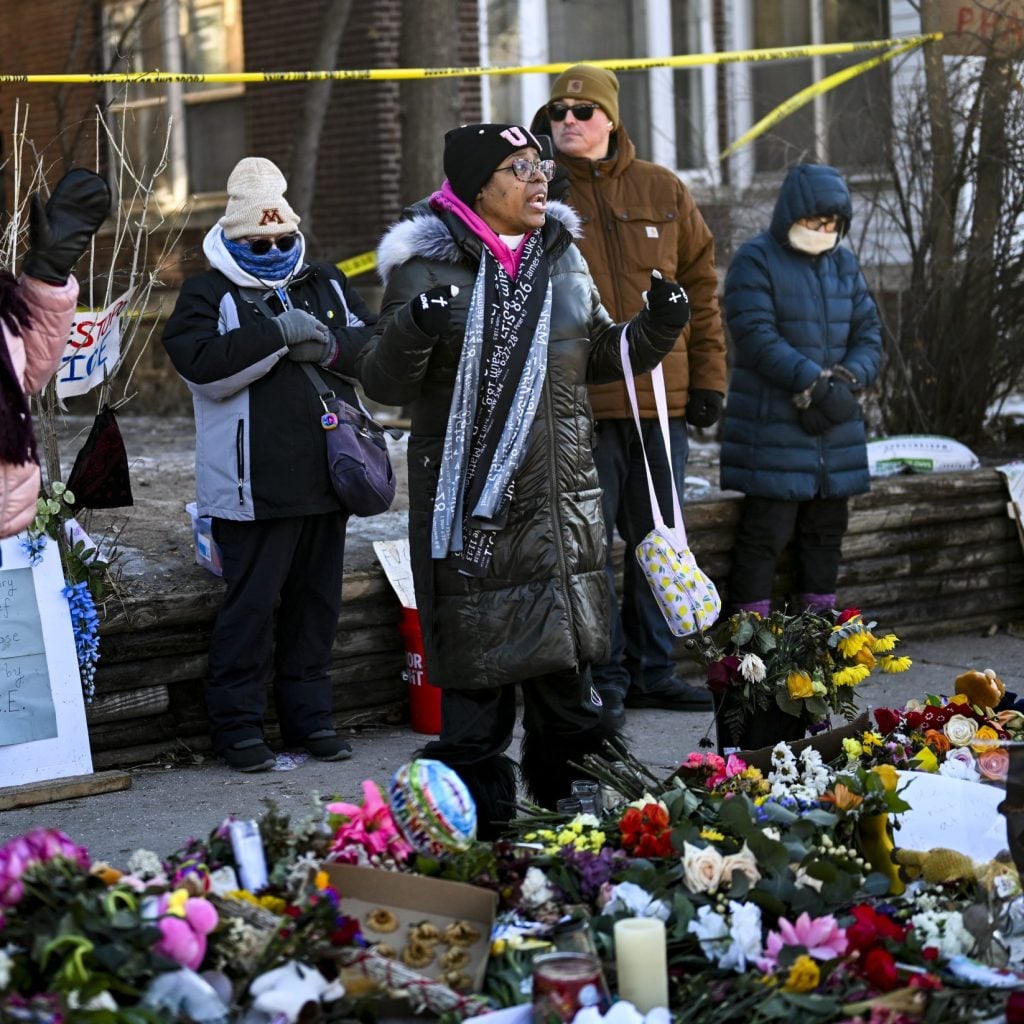
MINNEAPOLIS, MINNESOTA - JANUARY 14: June Pierce (C) prays during a vigil at a memorial near the site where Renee Good was killed a week ago on January 14, 2026 in Minneapolis, Minnesota. Good was fatally shot by an immigration enforcement agent during an incident in south Minneapolis on January 7. (Photo by Stephen Maturen/Getty Images)

While ICE’s presence in Minneapolis has propelled the city onto the national stage in recent weeks, Minnesotans have been “grappling with a changed reality on the ground for more than six weeks,” executive director of Interfaith at Augsburg University Najeeba Syeed says. “The reality is people are not okay; it’s not business as usual.” 

With this disruption to the patterns of daily life in the Twin Cities, people and communities of faith are offering support for neighbors in concrete ways — leaning on the rituals and rhythms of spiritual life. 

Syeed, writes about the “uniquely Minnesotan lived theology of neighborliness”: that for faith communities and neighbors, offering care  — both in times of heightened distress and in quieter moments  — is second nature. 

Community care in the Twin Cities has and continues to look like people joining together around shared values, like service to neighbors, hospitality, and music. 

Just as Minneapolis’ cultural fabric represents a diverse array of traditions and religious influences, from the Native Dakota tribe to Scandinavian Lutherans to the Hmong diaspora and the Somali population, so do ICE resistance and community efforts.  

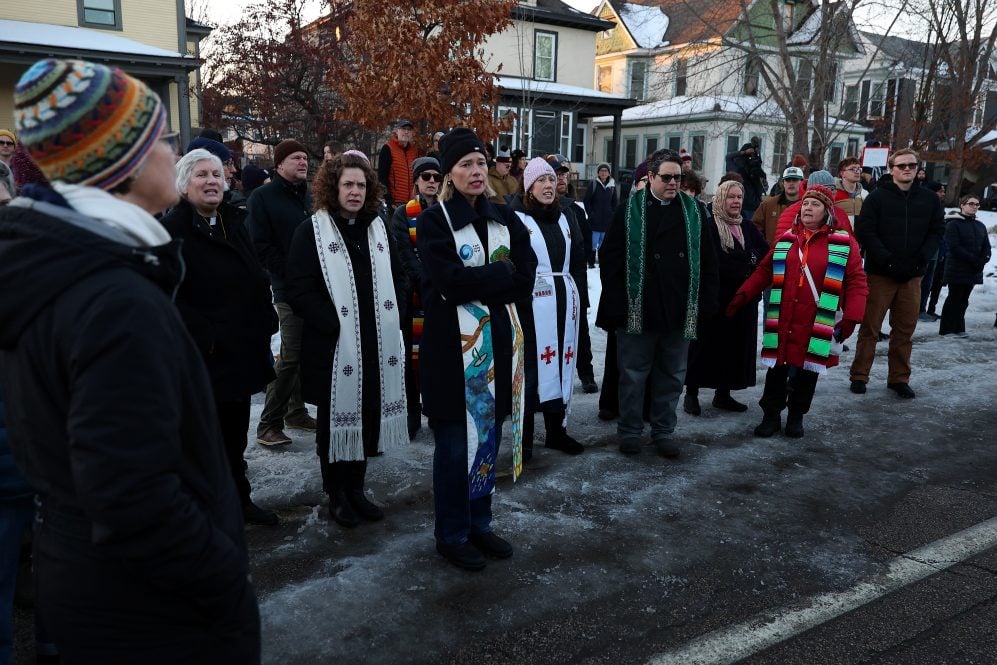
Interfaith vigils in the wake of Renée Good and Alex Pretti’s killings or gatherings on the streets might consist of multifaith choirs, percussive Native dances, and brass choruses, all surrounded by Somali aunties offering tea and food.  

MINNEAPOLIS, MINNESOTA - JANUARY 07: People gather for a vigil following a shooting by an ICE agent during federal law enforcement operations on January 07, 2026 in Minneapolis, Minnesota. According to federal officials, an ICE agent shot and killed Renee Nicole Good during a confrontation earlier today in south Minneapolis. (Photo by David Berding/Getty Images)

“For us, that seems really normal. It’s not orchestrated,” Syeed says.  

How individuals “show up,” or act on the spiritual or cultural values that guide their ethics and actions, can look different from person-to-person, and situation-to-situation.  

Hindus for Human Rights executive director and IA partner Sunita Viswanath likens the volunteer work of Minnesotans patrolling the streets in the bitter cold to the ritual of pilgrimage, which makes Minneapolis, she writes, “a holy place.”  

Brass Solidarity — a musical group founded in the wake of the killing of George Floyd — has been a consistent presence in ICE-resistance efforts. Bringing a soundtrack of spiritual songs, including “Lift Every Voice and Sing” and “This Little Light of Mine,” to protests and gatherings, the group’s presence is an extension of weekly meet-ups hosted in George Floyd Square since 2021.  

Kathleen Motzenbecker, the director of refugee and immigrant services at the Minnesota Council of Churches, relies on the ritual of prayer for spiritual grounding, especially as federal operations threaten the safety of her clients in legal refuge.  

“I turned to prayer,” she told IA, describing the first week of this tense time and pausing part-way through her account to monitor a federal drive-by outside her office window. “My college friend and I said a rosary over Zoom.” 

A lay associate in the Dominican Sisters of Sinsinawa, Motzenbecker’s career shift to refugee services was inspired by the social justice advocacy of Catholic nuns in her life and her empowerment to pray openly was influenced by her time working with Afghans in 2021.  

“I didn’t grow up praying the rosary,” she said, recalling working alongside Muslim refugees and colleagues who often took breaks to pray using prayer beads. “It reminded me of the rosary … so the rosary came back into my life during that time in a way that I’m not embarrassed about.” 

While Motzenbecker avoids large gatherings, as her family’s school community was impacted by the Annunciation shooting last summer, she joined neighbors in lighting a candle out on her street on the evening of the Jan. 23, before Alex Pretti was killed.
WASHINGTON, DC - JANUARY 28: A woman places a candle at a makeshift memorial during a candlelight vigil for Alex Pretti, the 37-year-old intensive care nurse at the Minneapolis VA Medical Center, who was shot and killed by federal immigration agents on January 24, on January 28, 2026 in Washington, DC. Pretti, who had a concealed-carry permit for guns, was the second U.S. citizen killed by federal agents in Minneapolis in January, following Renee Good on January 7. (Photo by Alex Wong/Getty Images)

“I was thinking of that Scandinavian term hygge,” she shared, referencing the Danish concept of creating warmth and comfort, often amid a dark and cold winter, as she reflected on the image of light spreading through her neighborhood. 

Though practices look different across traditions and individual circumstances, the power of ritual, according to “The Science of Happiness” podcast host Shuka Kalantari, is in its ability to draw people together, “help[ing] us heal, remember, and stay strong and connected.”  

Ritual can also be a means of processing grief in community and creating opportunities to look ahead with hope. 

As the contemplative months of Ramadan and Lent approach for those in Muslim and Christian traditions, Motzenbecker hopes “those spiritual practices give us structure and soothe us as we go through this work.

This challenging time invites “a collective bond,” as Syeed puts it, and she hopes “that some of the connections that are being made outlast this moment,” and “instead of brutality being the option that we support, endorse, and engage in, that maybe compassion is a way forward.”  

Read More

Interfaith America seeks contributions that present a wide range of experiences and perspectives from a diverse set of worldviews on the opportunities and challenges of American pluralism. The opinions expressed herein do not necessarily reflect those of Interfaith America, its board of directors, or its employees.

Related Posts

IA Today is your source for today's latest interfaith, bridgebuilding and pluralism content, including articles, videos, and podcasts.
In honor of the Semiquincentennial, Interfaith America is excited to share a positive vision of our nation's future — out of many, we can become a new whole.

Join us today!

Let’s build an interfaith America, where people of all beliefs work together for the common good.

Join the Network

Resources, funding opportunities, and articles tailored to you!