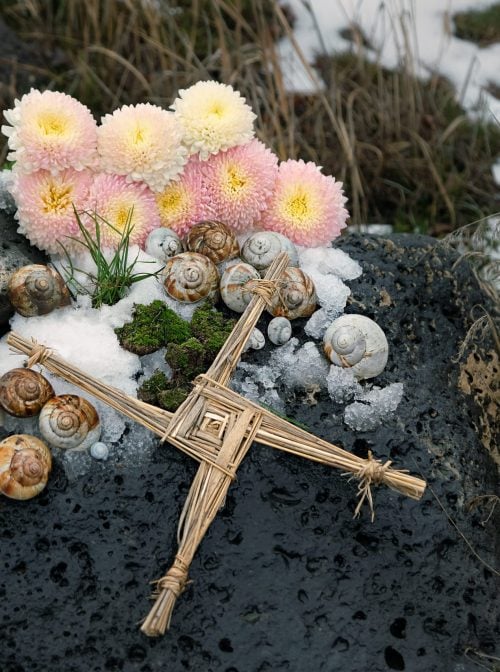
Saturday and Sunday, February 1-2, 2025, boast an array of cultural, religious, and spiritual holidays.
Practicing pagans observe Imbolc, an ancient Celtic holiday that translates to ‘in the belly,’ referencing the onset of lambing season and ewes bearing their lambs. Imbolc commemorates the midpoint between the winter solstice and spring equinox, and celebrations of the day pay homage to the ancient goddess Brigid, who is associated with ironwork, poetry, and healing.
Tied to Irish cultural observance, February 1 is also the Feast of St. Brigid, a day to venerate St. Brigid of Kildare, who is believed by some historians to be a Christianization of Imbolc’s patroness, sharing many of her characteristics, including associations with blacksmiths, cattle, and an eternal flame. This Irish national holiday is recognized by cultural observers and Irish Catholics alike.
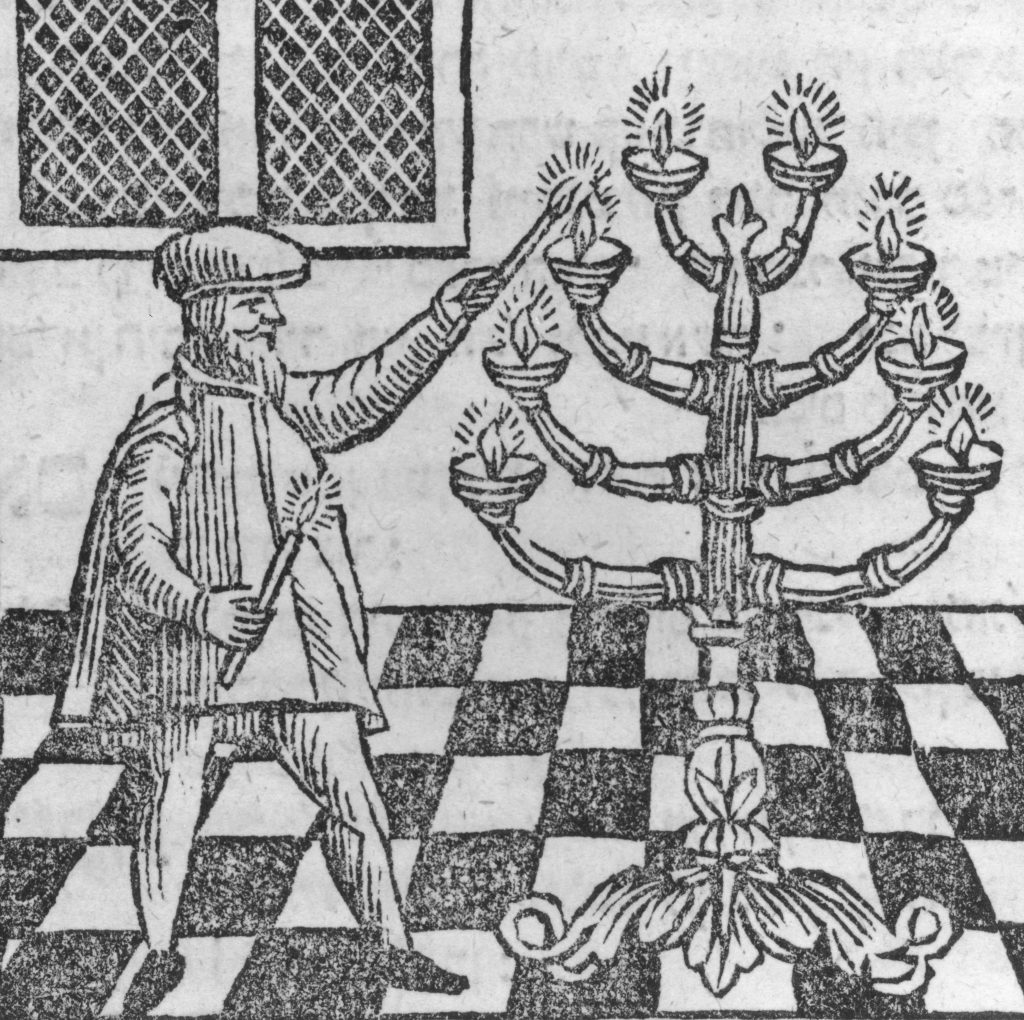
Others still, including Catholic and some other Christian denominations, recognize February 2 as Candlemas, a holy day originating in the presentation of Jesus in the Temple and the Feast of the Purification of the Virgin Mary.
A festival marking the return of Christ’s light to the world, Candlemas is also thought to inspire the lore of sunlight prognostication often associated with the folk tradition of Groundhog Day and earlier European farming proverbs.
To mark early February’s holidays, Interfaith America reached out to five leaders in their respective communities for insight into how these sacred days are celebrated and practiced through tradition, ritual and art.
Editor’s note: The following conversations have been edited for clarity and length.
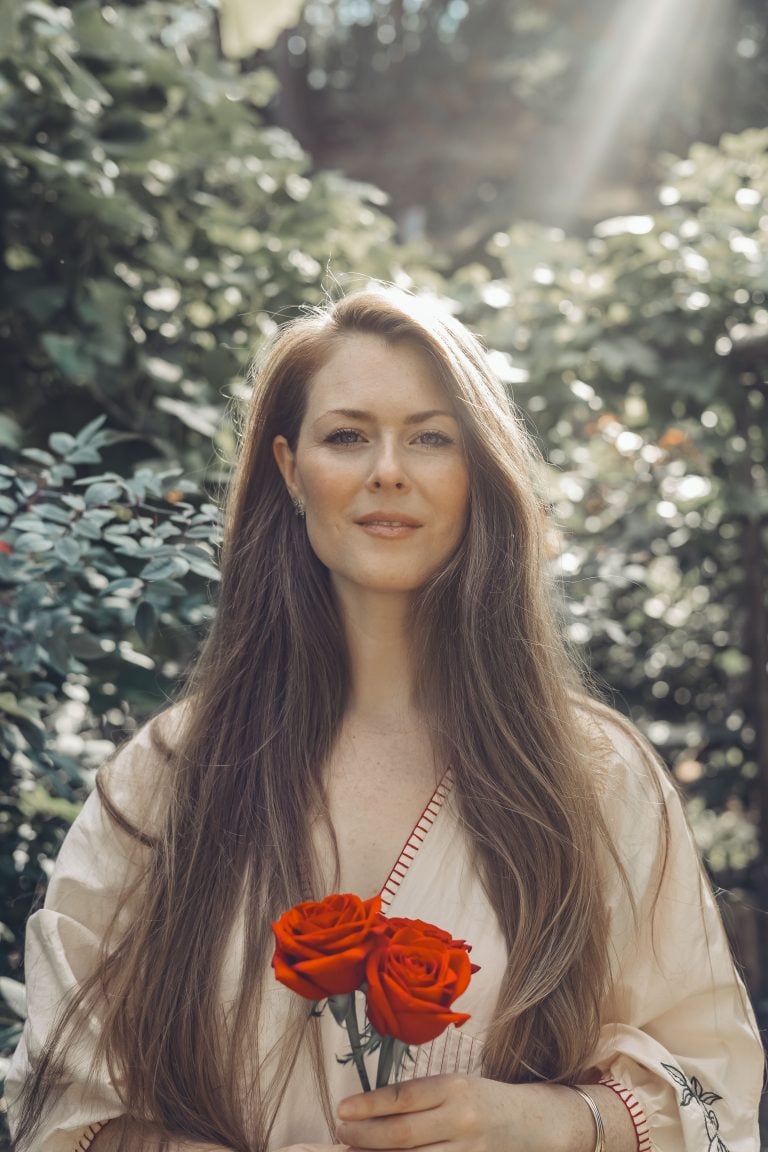
Kate Murphy, entrepreneur, ordained & initiated priestess, and founder of the Feminine Code.
Rachel Crowe: What is the significance of Imbolc? What are some key themes and ideas that resonate with you at this time of year?
Kate Murphy: Imbolc (Imbolg) is the season of early awakening, a time to honor the first stirrings of life beneath the surface. It is a moment of reconnection to prepare for the return — both of earth’s growth and our own inner life force.
It reminds us that spring is near and to protect and nourish the seeds of new beginnings. This time is about purification, the quickening of the life force and holding space for what is not yet visible. Imbolc invites us to trust that even when the first green shoots are hidden beneath the earth, transformation is already underway.
Rachel Crowe: What is the significance of Imbolc? What are some key themes and ideas that resonate with you at this time of year?
Kate Murphy: Imbolc (Imbolg) is the season of early awakening, a time to honor the first stirrings of life beneath the surface. It is a moment of reconnection to prepare for the return — both of earth’s growth and our own inner life force.
It reminds us that spring is near and to protect and nourish the seeds of new beginnings. This time is about purification, the quickening of the life force and holding space for what is not yet visible. Imbolc invites us to trust that even when the first green shoots are hidden beneath the earth, transformation is already underway.
RC: How do you celebrate Imbolc?
KM: Over the years, my observance of Imbolc has ranged from intimate candlelit ceremonies to quiet walks through the land, seeking the first signs of change. I have written prayers by firelight, woven Brigid’s Cross from rushes, offered songs to the waters and spoken aloud the dreams that winter seeded in me.
One of my most beloved rituals is the ‘Brat Bríde,’ which translates to ‘Brigid’s Cloak,’ and is a tradition of hanging a sacred cloth outdoors overnight during the Imbolc period — usually on the eve of Brigid’s Feast Day, which is January 31. It is said that Brigid herself will stop by to bless it and imbue it with healing energies!
This year, I am going to be celebrating in the Scottish Highlands in a candle-lit ceremony with some dear friends.
RC: What are your thoughts on the intersection of Imbolc with other cultural, spiritual, and religious holidays?
KM: I see these overlapping celebrations as different languages telling the same essential story: the return of light, the blessing of fire and water and the transition from what is dormant to what is beginning to stir.
The intersection of these celebrations reminds me that as humans we hold so many common threads and the old ways have been carried forward in many forms. When we look beneath the surface, we find a shared current of reverence for the sacred turning of the earth.
RC: What is a piece of wisdom from your spiritual tradition that you carry with you through this season?
KM: This season, we can embrace the wisdom of patience — nurturing what is still forming, listening deeply for what wants to emerge and allowing nature’s slow, sacred unfurling.
Kate Murphy is a spiritual entrepreneur. As an initiated high priestess and an intuitive, her passions are on both sides of the spectrum: the intellect of masculine business strategy and the mysticism of divine feminine wisdom. It is her life’s work to weave the masculine & feminine, while guiding women home to their remembering.

Stephen Buzard, canon director of music at St. James Cathedral of the Episcopal Dioceses of Chicago.
Rachel Crowe: What is the significance of Candlemas in the church year? What are some key themes and ideas shared with congregations at this time of year?
Stephen Buzard: Candlemas’ primary meaning is its celebration of the Song of Simeon, the Nunc Dimittis which we sing in every service of Choral Evensong or Compline. When Christ is presented in the temple 33 days after his circumcision, according to Jewish custom, the old man Simeon recognizes that the prophecy given to him that he would not die until his eyes have seen the Messiah has been fulfilled. Even more radically, Simeon proclaims that Christ is not just a savior for Israel but a light to enlighten the entire world!
Candlemas has taken on an element of folk religion as candles are blessed in a ritual that foreshadows the lighting of the new fire at the Easter Vigil. As Christ is proclaimed a light for all nations, light is given to the people, renewing them as the hope for spring starts to come upon us.
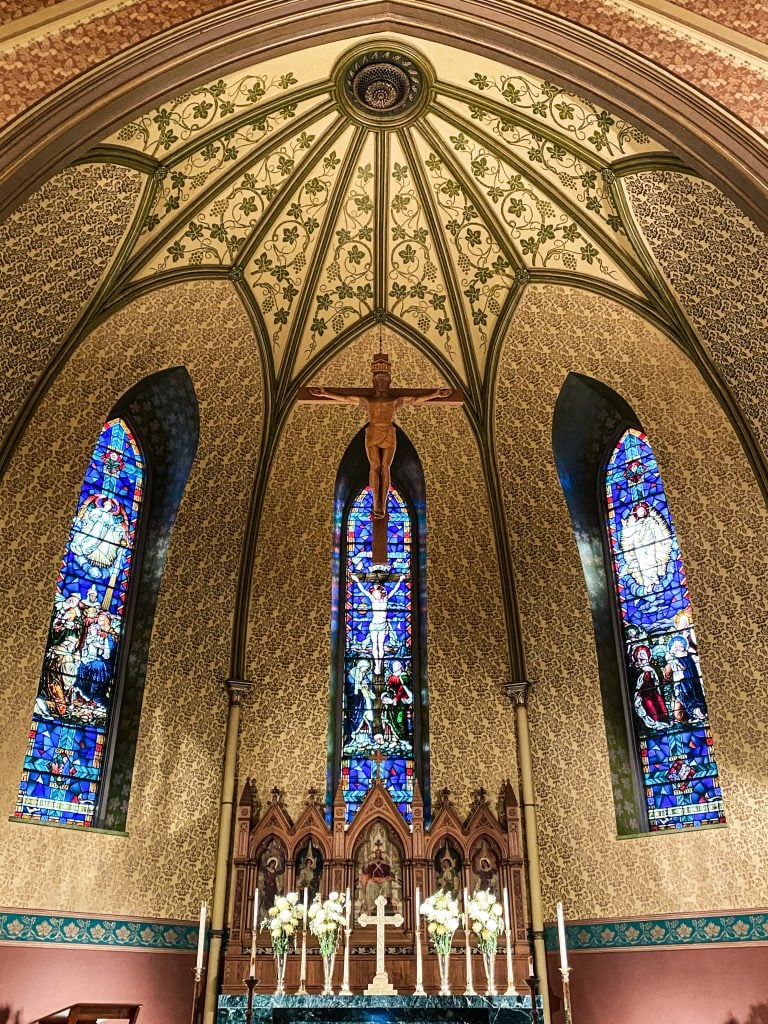
RC: What are the traditions surrounding Candlemas at St. James and in the Episcopal church?
SB: In part because candlelight is more dramatic in the evening, we observe Candlemas at Evensong rather than at a daytime Eucharistic liturgy. During the singing of the Nunc Dimittis, the congregation’s candles are lit and blessed. The lights are dimmed, and the congregation follows the acolytes and choir in procession around the Cathedral as we sing hymns. It is a beautiful and inspiring tableau to see the Cathedral encircled in candlelight!
RC: What are your thoughts on the intersection of Candlemas with other cultural, spiritual, and religious holidays?
SB: These traditions all stem from the concurrence of the Presentation with the beginning of the end of winter. We celebrate Christ the light incarnate just as the days are becoming a little bit longer, the nights a little bit shorter and the weather a little bit warmer.
Many of these traditions are tied to agrarian practice when farmers relied upon the Church calendar to time their work. Similarly, as Christian practice emerged, they adopted elements of Celtic practice that were practical and served the people. I think people have always been practically minded like that!
What is a piece of wisdom from your tradition that you carry with you through this season?
The message of hope — Christ as a light in the darkness — is especially relevant this season.
It is precisely when the darkness is deepest and the night the longest that God does wonders in this world through the most unexpected means and in the most unexpected of places.
I feel people around me succumbing to despair about the state of the world. I hope that our celebration of Candlemas gives people hope and reminds them that God is still writing the story of the world’s salvation.
Stephen Buzard is organist and choirmaster for the St. James Cathedral Choir and principal musician of the Cathedral, responsible for leading, managing and coordinating the music program as an effective part of the Cathedral’s overall ministry.
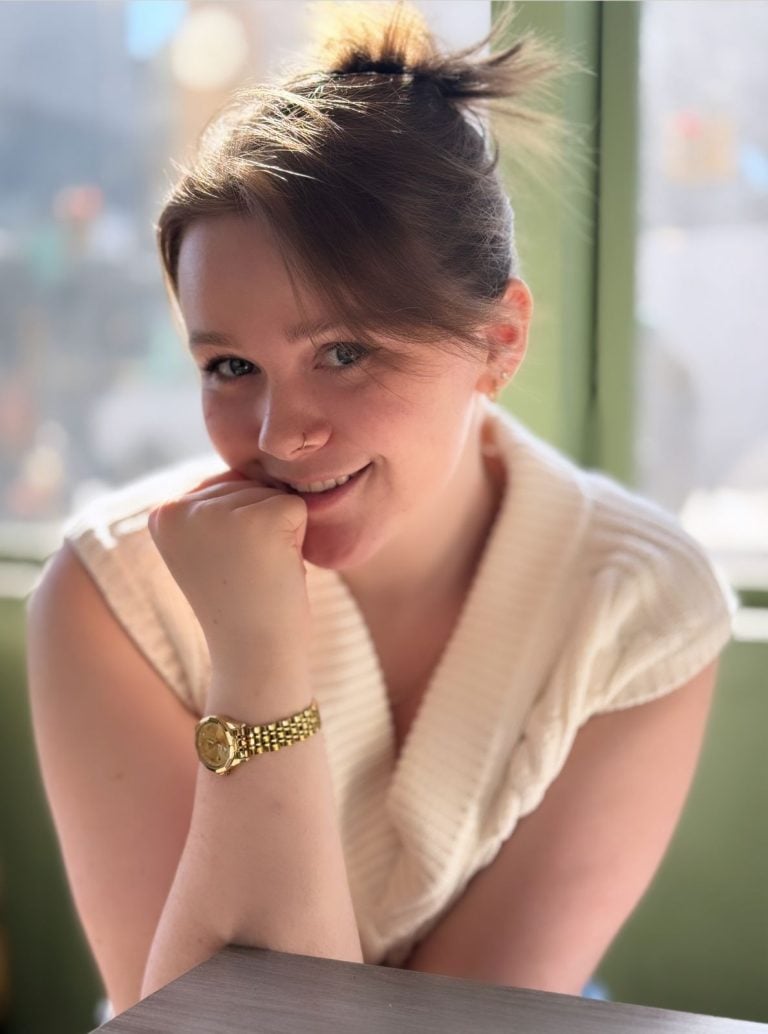
Vivienne Sayers O’Callaghan, New York based Irish content creator and advocate for the Irish language, culture and music.
Rachel Crowe: What is the significance of St. Brigid’s Day? What are some key themes and ideas that resonate with you at this time of year?
Vivienne Sayers: Brigid is a fascinating figure, both a revered Christian saint and a reimagining of Bríghid, the pre-Christian goddess of fertility, healing, and poetry.
Unlike the exuberance of St. Patrick’s Day, which celebrates Ireland’s outward identity on a global stage, St. Brigid’s Day offers something quieter, more introspective, a space to reflect on the transition from winter to spring. It is a day that honors spirituality, feminism, creativity, community, and the legacy of strong women who have shaped Ireland’s past and continue to shape its future!
RC: How do you celebrate St. Brigid’s Day?
VS: Like the rest of Ireland, I joined the time-honored tradition of making St. Brigid’s crosses with classmates, from rushes gathered in the fields. These simple symbols are hung over doorways for protection and have long been a fixture in Irish homes, passed from generation to generation as a quiet act of devotion and continuity.
Much like the rest of Ireland, my celebrations have evolved, but the essence remains the same. I have attended concerts, exhibitions and cultural gatherings that breathe fresh life into old traditions, visited St. Brigid’s Well in Kildare, and shared Brigid’s story through digital platforms, ensuring her influence reaches far beyond the borders of home.
This year, I am marking the occasion by leading a local Irish language session focused on Brigid’s legacy. Others in Ireland will be celebrating St. Brigid’s Day with a day off work as it is a newly established public holiday (2023) and the first to be named after a woman!
RC: What are your thoughts on the intersection of Brigid’s Day with other cultural, spiritual, and religious holidays?
VS: St. Brigid’s Day does not exist in isolation but is part of a much older cycle. It aligns with Imbolg, one of Ireland’s four great seasonal festivals alongside Bealtaine, Lughnasa, and Samhain, and with Imbolg marking the first stirrings of spring.
This seasonal transition is not unique to Ireland but is recognized across cultures in different ways.
In Irish folklore, it was said that if St. Brigid’s Day was bright and dry, winter would persist, but if it was stormy, spring would arrive swiftly. These beliefs, whether tied to saints, goddesses, or animals predicting the weather, all stem from the same deep-rooted connection between people and the changing rhythms of the earth.
RC: What is a piece of wisdom from your tradition that you carry with you through this season?
VS: An Irish proverb that has always resonated with me is ‘Ní neart go cur le chéile’ — there is no strength without unity.
At this time of year, as the earth begins to stir from its winter slumber, I am reminded that renewal is not a solitary pursuit but something we all navigate together.
Brigid herself was not just a saint but a leader, a builder, a protector of the vulnerable, a woman who created spaces for others to flourish. She founded a monastery that became a center of learning, she advocated for those in need, and she inspired a legacy that has lasted for centuries. Her story is one of collective strength, of the power that comes from working together to build something greater than ourselves!
That lesson remains just as relevant today. Whether in language, culture, or tradition, what we build together is what endures.
Vivienne Sayers O’Callaghan grew up in County Cork — the largest county in Ireland known affectionately as the “Rebel County” and the self-proclaimed “real capital” of Ireland! She also spent many years in County Kerry, home to Ireland’s highest mountain peak, and thriving Gaeltacht regions where Gaeilge (the Irish language) is spoken daily. Since her move to NYC, she has become an energetic content creator and advocate for the Irish language, culture, and music, connecting with the Irish diaspora through @Vivienne_in_NYC social media channels.


Interfaith America’s Anne Coyne, program coordinator, and Bex Blackburn, assistant director of Program Operations.
Rachel Crowe: What is the significance of St. Brigid’s Day? What are some key themes and ideas that resonate with you at this time of year?
Anne Coyne: I grew up only being vaguely aware of Brigid — one side of my family is Irish Catholic, so I’d seen many a St. Brigid’s Cross before, without knowing its significance. I first became interested in Brigid when I stumbled across an article about her as an unofficial patron saint and guiding figure of midwives and people working for reproductive justice.
Both older pagan stories and Christian stories about Brigid emphasize her care for people on the margins of society, and her feast day marks the beginning of spring. To celebrate Brigid, I’d like to ask: what is currently dormant, what opportunities for new life exist, and how can I be a catalyst and steward for a change that is just and merciful?
Bex Blackburn: About five years ago, my partner Jon and I began observing St. Brigid. We learned about her from different sources — Jon from a friend of Irish descent, me from my studies in Christian mysticism.
Jon’s friend taught us about St. Brigid’s vision of heaven: a lake of beer, around which people of all social classes could gather and be nourished.
Through my studies of mysticism, we learned that stories about St. Brigid are heavily influenced by the Celtic goddess Brigid, a deity of fertility and fire. We also learned about St. Brigid’s soul partnership with another sister at the abbey, Darlughdach.
Commentary on these stories often point out the blend of feminine and masculine archetypes in lore about Brigid, and the positive capacities for queer love in her relationship with Darlughdach. Brigid, whose name can be translated as “fiery arrow,” points our attention to the warmth emitted by love and connection in our lives.
RC: How do you celebrate Brigid’s Day?
AC: My more recent celebrations of Brigid have combined Imbolc with St. Brigid’s Day — a common tie between these festivities is the emphasis on fire and new or changing life. I usually celebrate by spending time in the cold night outside and lighting a candle or fire while I pray or sing. This year, I’ll be celebrating with friends and colleagues, including Bex, and I’m looking forward to sharing with them a few of the many reasons why I adore Brigid!
RC: What are your thoughts on the intersection of Brigid’s Day with other cultural, spiritual, and religious holidays?
AC: I love how the figure of Brigid has morphed over the years to fit the needs of different people, times and institutions — she was and is a goddess, an Abbess, a saint, a symbol of Ireland, a healer, a woman, a scholar, and more. For me, she perfectly shows how the sacred can be both specific and diffuse.
RC: What is a piece of wisdom from your tradition that you carry with you through this season?
BB: Holidays marking the turn of winter to spring often remind me of the universe’s propensity for renewal and growth. They offer me hope and also call me to cultivate growth wherever I can.

Anne Coyne, program coordinator, provides support and assistance to Interfaith America’s Emerging Leaders Network. She is passionate about building responsive and compassionate systems, and she loves to engage with the members of the Emerging Leaders Network.
As assistant director of Program Operations, Bex Blackburn develops systems that help Interfaith America programs run effectively. In addition to several years of work in student affairs, Bex holds a Bachelor of Social Work and a Master of Arts in Spiritual Formation & Leadership from Spring Arbor University, and she is pursuing a PhD in Biblical Hermeneutics from Chicago Theological Seminary.
Rachel Crowe is a Staff Writer at Interfaith America.