Fasting, the abstention from all or some food and drink, is a common ritual in many religions and can represent spiritual rejuvenation, a physical embodiment of self-control and a closeness with deity. It is also a common attribute of several religious observances that have spanned the month of March this year.
Ramadan is the ninth lunar month in the Islamic calendar and fell between February 28 and March 30 in the Gregorian calendar. The 40-day period of Lent observed by some Christians in the weeks leading up to Easter began March 5. Members of the Bahá’í Faith observe a nineteen-day fast which culminated in the celebration of the Persian New Year, Naw Rúz, on March 20. Other fast days, like Taanit Esther, observed by some Jews before Purim earlier in March, and the monthly fast day of Latter-day Saints, are reminders of the diverse traditions that take part in this shared ritual.
To explore the significance of the intersecting religious observances of fasting this spring, Interfaith America spoke with three interfaith leaders regarding their traditions’ teachings about fasting and how they understand the practice in an interfaith context.
Syda Segovia Taylor
Founder & Executive Director, Organic Oneness

Rachel Crowe: Can you share about your religious identity and how you observe the practice of fasting in your tradition, which happen to overlap in the calendar year this spring?
Syda Taylor: I am a member of the Bahá’í Faith. We believe that Baháʼu’lláh is the most recent messenger of God. So, we believe that all the messengers come from the same God to proclaim the same faith. It’s just as the world progresses, the teachings of God become more complex and more in depth and are applicable to the world’s developmental stage. We believe that through all the religions, the spiritual principles stay the same. It’s the ceremonies – you know, the way you say prayers, your diet, all those things – that change throughout the religions, but the spiritual teachings are all the same.
Bahá’ís have our own calendar, called the Badí’ calendar, and we have 19 days in each month and 19 months. And so, if you do the math, that leaves you with about four days in between that don’t fit within that equation, and we call them the Intercalary Days. So those are the days of Ayyám-i-Há, and that’s when we celebrate. We give gifts, we do service projects and that prepares us to then go into the fast. Naw Rúz, a new year, is at the end of our fast, and for 19 days, we abstain from sunrise to sunset from liquids and foods, and we’re to be in prayerful mode.
RC: As an interfaith leader, how do you think about the intersection of the Bahá’í fast with holy days in other religious traditions where fasting is observed?
ST: I believe that all the religions come from the same God, and I believe each of the messengers of God and who they say they are. They’re telling us a part of God’s plan. Each holy book is just letting us know who God is, and it’s this unfolding revelation.
Personally, I feel like God is saying “People, it’s the same message that I’m telling you. I’m overlapping them for a reason, so that you guys can all be unified in prayer at the same time. Do you not see that I am one God with one message, you are one humanity? You are one energy, one source, and I love all of you the same. The story has not changed. I love you. Let’s be forgiving. Let’s be merciful.” I feel like that was intentional, spiritually intentional.
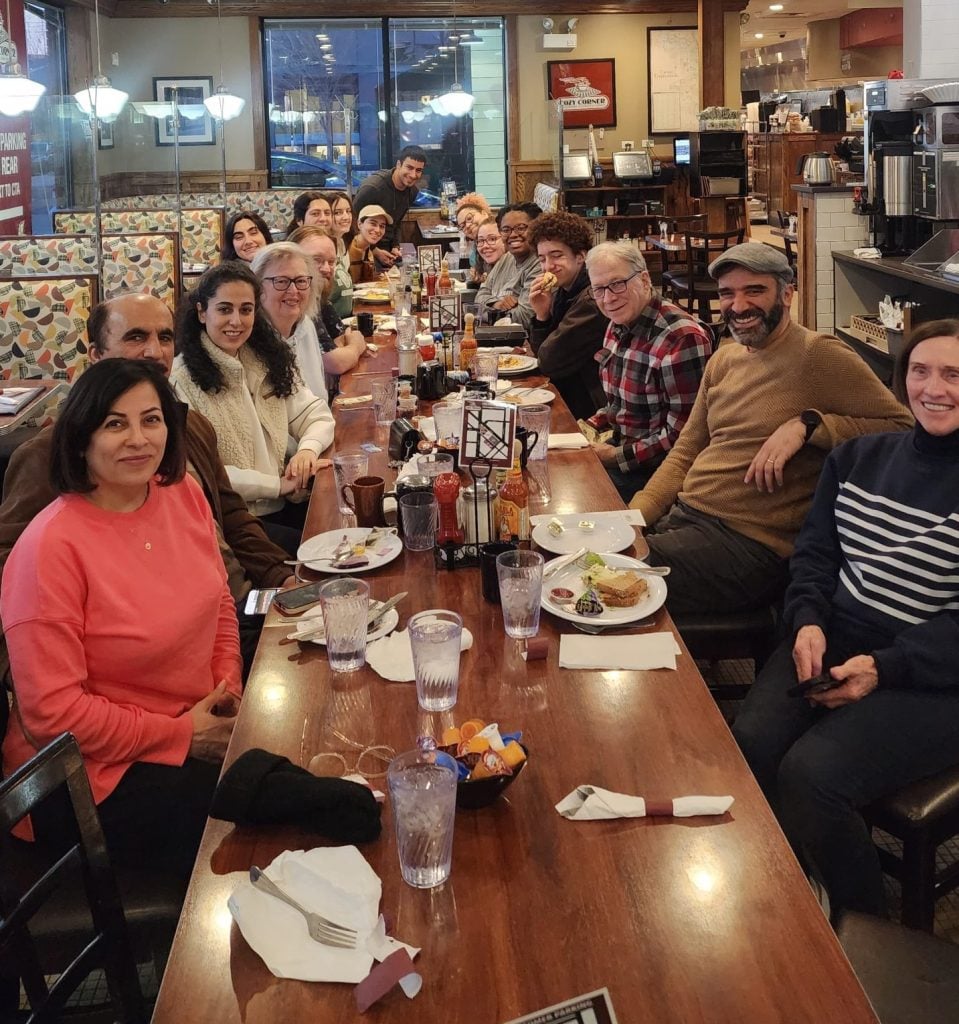
Syda Taylor is the founder and executive director of the grassroots social justice and holistic wellness non-profit Organic Oneness. She is a leader, organizer and convener of people and communities, who operates out of Chicago’s historic Bronzeville neighborhood. Syda is moved and inspired by her Baha’i faith to create a universal approach to care for oneself and one’s community.
To learn more about Syda and her work at Organic Oneness, watch her episode of IA’s United We Build series or her recent TedX Talk.
Leslie Virnelson
Senior Democracy Fellow, Interfaith America
Rachel Crowe: Can you share about your religious identity and how you observe the practice of fasting in your tradition?
Leslie Virnelson: Lent lasts 40 days and it is a time of prayer, fasting and repentance leading up to Holy Week, our celebration of Jesus’ death, burial and resurrection. It kicks off with Ash Wednesday, when Christians affirm our human mortality and limitations by putting ashes on each other’s heads and saying, “Remember that you are dust and to dust you will return.” This year, I gave up desserts during Lent, which is a pretty common option among Episcopalians. When I think about grabbing a sweet treat, I try to instead remember to say a prayer. Afterwards, I will also make sure to eat desserts during the feast of Easter (the day and the liturgical season) which follows Lent. Eating differently based on the church calendar reminds me that my life is not only governed by earthly timings, like a 9-to-5 Monday through Friday work schedule.
RC: As an interfaith leader, how do you think about the intersection of Lent with holy days in other religious traditions where fasting is observed?
LV: It’s important that religious fasting is not for the same reasons as a diet or cleanse. We get bombarded with messages encouraging us to deny ourselves food to be more beautiful—sometimes with the implication that not being thin is a moral failing. At the same time, US culture also indulges in excess, and about 30-40% of food is wasted, even though many people go hungry in our country. Fasting and feasting together in a faith community signals that even something as personal as eating is part of our shared life together. The spiritual aspects of eating are a way that I can connect with people of other faiths, and I think that religious perspectives on eating offer important resources for thinking about food in general.
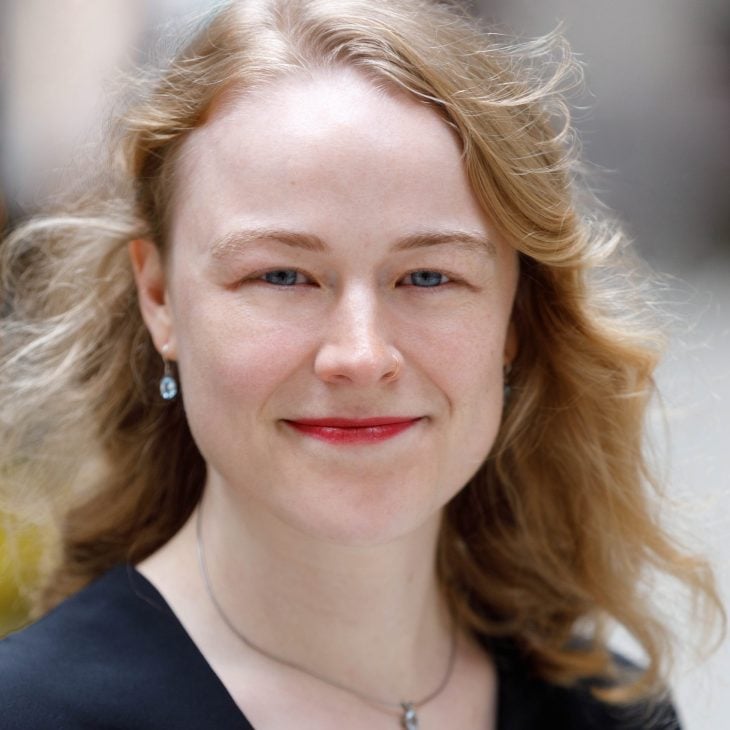
Leslie Virnelson (she/her) graduated with her doctorate in Biblical Studies from Princeton Theological Seminary in 2023 with a dissertation entitled “Women, Work, & Society in the Hebrew Bible.” She has taught classes for masters and undergraduate students at Princeton Theological Seminary, Princeton University, Mercer University, and Union Theological Seminary. She also served as the interim director of the Center for Theology, Women, & Gender at PTS from 2020-2023, organizing events and curricula to educate public and scholarly audiences on the intersections of religion and gender. She currently lives in West Windsor, NJ and enjoys hiking, foraging, and fermentation.
Mohammed Jibriel
PhD Candidate, Department of Public Health Education, University of North Carolina at Greensboro
Rachel Crowe: Can you share about your religious identity and how you observe the practice of fasting in your tradition?
Mohammed Jibriel: I am a Muslim, and fasting during Ramadan is one of the most meaningful parts of my faith. In Islamic tradition, Ramadan is a month of spiritual renewal, self-restraint, and connection with God, with community, and with those in need. It is not just about going without food or drink; it is about being more conscious of how we live, speak and treat others. Fasting helps cultivate empathy, especially for the poor, and reminds us that gratitude and generosity should shape our everyday lives. One thing I love about Ramadan is how it challenges the idea that spirituality is only personal or private. In Islam, spirituality is lived; it shows up in how we eat, how we give how we care for others. We can clearly see this during the holy month of Ramadan. Ramadan brings people together: families gather to break fast, communities come alive at night with prayer and reflection and there is a collective sense of striving for goodness. The fast is a spiritual act, but so is feeding someone, forgiving someone or praying side by side with your neighbors. Ramadan blurs the line between the spiritual and the ordinary, showing that one can be found in the other.
RC: As an interfaith leader, how do you think about the intersection of Ramadan with holy days in other religious traditions where fasting is observed?
MJ: When I think about the intersection of Ramadan with other religious traditions where fasting is observed, I see a powerful reminder that self-discipline, spiritual renewal and care for others are values that transcend any one faith. This year’s overlap of these sacred times is not new; I remember when Muslims, Jews and Christians observed Ramadan, Passover and Easter at the same time. These convergences show that our sacred calendars, though rooted in different histories, often bring us into shared seasons of reflection and devotion.
As an interfaith leader, I believe this overlap is more than symbolic; it is an opportunity. It reminds us that interfaith work should go beyond mere coexistence or simple tolerance. It calls for intentional engagement and the active pursuit of understanding across lines of difference. Our lived experiences show that we are united by our differences as much as by our similarities. We can come from different religious, racial, ethnic, and economic backgrounds and still find common purpose. Fasting becomes a shared language, a way that can help us connect more deeply with the divine and with one another. I see these intersections as an invitation to build bridges and work together for a more compassionate, peaceful world.
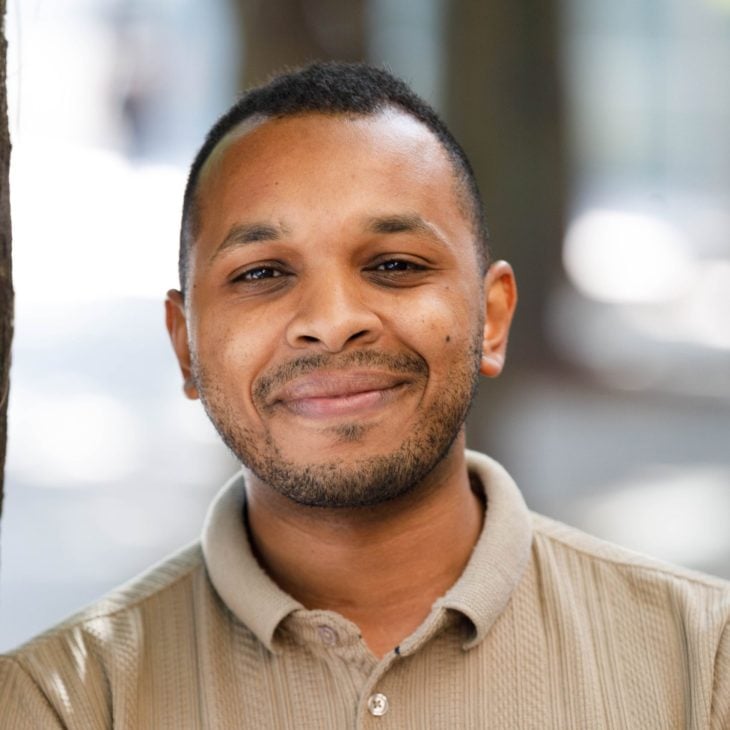
Mohammed Jibriel is a 4th-year PhD student in Public Health with a concentration in Community Health Education at the University of North Carolina Greensboro. His research explores the intersections of minority stress, religion/spirituality, and mental health outcomes. He also investigates how religion, gender, and the environment function as determinants of public health. In addition to his academic pursuits, Mohammed is an active interfaith leader, and a former Interfaith Innovation Fellow.