
Muslim students at the University of Michigan have numerous organizations they can turn to for support and advocacy, including the Muslim Students’ Association, the Islamic Society of Ahlulbayt, and the Muslim Coalition, which serves as a sort of union of Muslim and Muslim-adjacent organizations, and liaison for many other student groups.
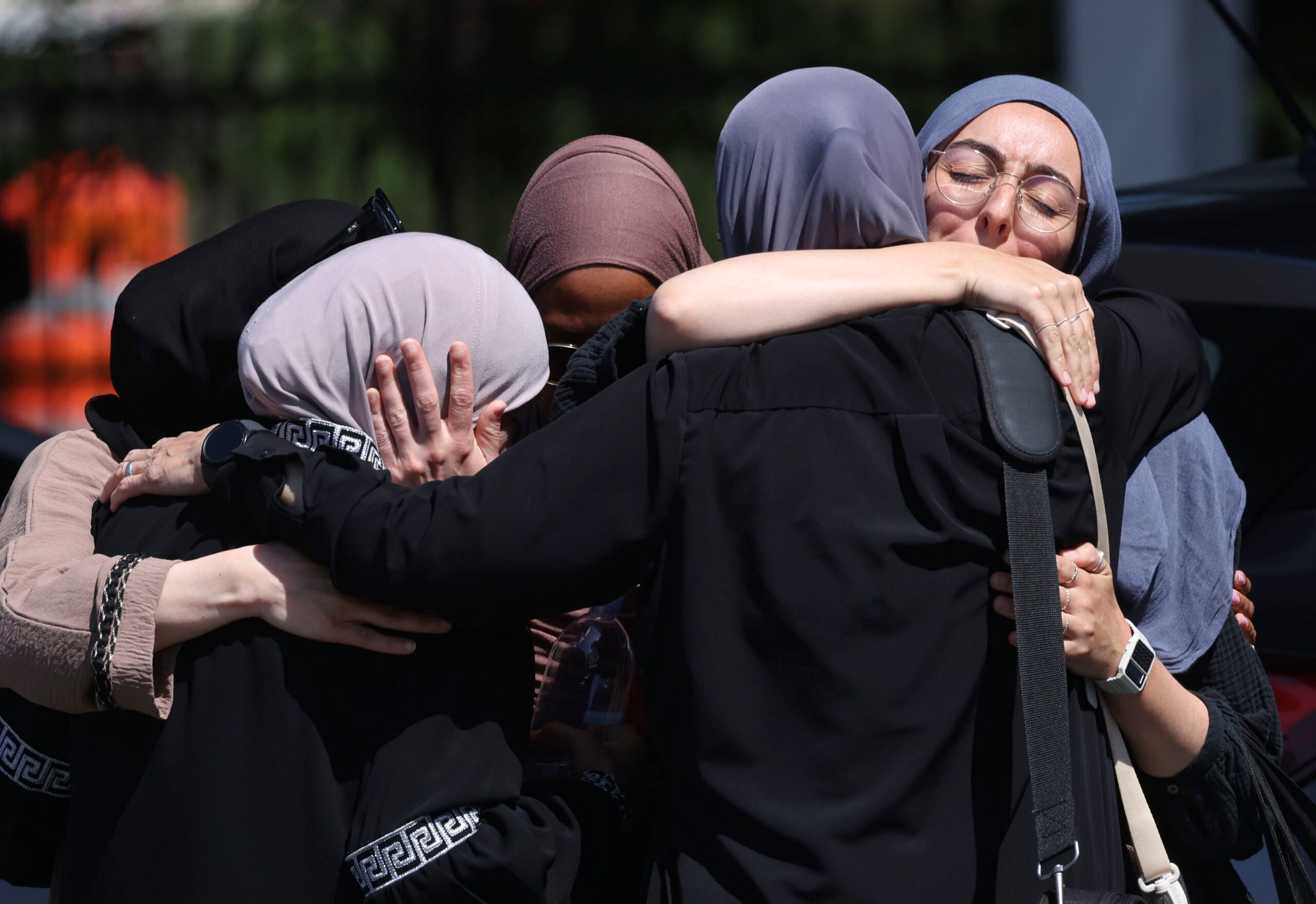
But what they were missing last year – a crucial time that began with a “Mock Apartheid Wall” encampment where anti-apartheid student advocates raised awareness about the treatment of Palestinians were met with protests, followed by the Hamas attacks on October 7, 2023 and ending with widespread protests and a long student encampment protesting what they considered to be a genocide in Gaza (based off of a United Nations investigation and a South African-led case in the International Criminal Court) as well demanding university administration to divest from Israel and military-industrial complex – was a Muslim chaplain to attend to their spiritual (and other) needs.
“You felt the absence,” said Bilal Irfan, who graduated last year and served as the student government president and the chair of the Muslim Coalition. UMich’s Muslim chaplain resigned in October 2023, a decision that predated October 7th. Irfan, who is now in a master’s program at Harvard University, said although others stepped in to fill the gap and did their best, the students felt a lack of continuity as well as the pastoral care they needed.
“You don’t have someone to establish a relationship with, someone to go talk to,” he said, recalling a time when a pro-Zionist Jewish student came to Jummah (Friday) prayers with a number of questions. “It would’ve been nice if there had been a Muslim chaplain for students such as him or others to talk to, someone whose full-time role is to work with students and could devote time to answering questions related to religious practice.”
The Institute of Higher Education noted in this article that, “As college students are now increasingly pressured to succeed despite the instability of situations that surround them – and within a historical era of conflict, change and isolation – one can credibly contend the role of chaplain has never been more important.”
The work of college chaplains can be under-appreciated, but their presence on university campuses across the country are vital and, in a year like last, can be crucial. And, depending on how they advise and care for their students, they can provide much-needed stability and support. Or, they can add to division or even cause harm.
Many university- and college-based chaplains faced numerous challenges last year, navigating their students’ spiritual needs, interfaith conversations, and how to help students navigate tumultuous and fraught campus climates.
With a daughter in college last year and numerous children of friends and family navigating college life amid a horrifying bombing campaigns in Gaza unfolding in real-time, I was interested in how they were being supported by their chaplains and campus-based religious services. And, given the numerous changes instituted by universities and colleges over the summer in regards to protests, encampments, and what constitutes protected speech, I wondered if chaplains were adjusting their approach to their pastoral care of their students and how they would be facilitating interfaith interactions.
I also wanted to better understand the expectations placed upon chaplains and their approach depending on if they were university hires, as with private institutions, or hired by outside entities as is the case in public institutions.
A New Landscape on Campuses This Fall
The return to university/college life this fall was against the landscape of numerous changes across several campuses. In several institutions, “expressive activity” is now limited to certain times: Rutgers in New Jersey only allows demonstrations between 9 a.m. and 4 p.m. Carnegie Mellon University’s new policy states that unregistered demonstrations drawing more than 25 people can be broken up at the university’s judgment.
At the University of Michigan, while stating that the freedom of speech and assembly as well as academic freedom are “essential to the core educational mission of the university,” university policy prohibits students and groups from disrupting campus life, and that it will “enforce policies to support a safe, welcoming, and inclusive environment for all.”
The University of Virginia enacted a ban on “camping,” with UVA spokesman Brian Coy saying that the university is “an institute of higher education, not a campground.”
Meanwhile, New York University updated its student conduct guidance, issuing hate-speech guidelines saying speech targeting Zionists or Zionism could violate its nondiscrimination policy. Columbia, Harvard, the University of California, Berkeley, and the University of Pennsylvania have adopted similar measures.
And this is just the tip of the iceberg. How are chaplains at these institutions and others navigating this new landscape? What kind of support are they offering their students, and how do their experiences from last year inform how they will support their students and engage in interfaith work this academic year? Are chaplains able to bridge divides?
I reached out to chaplains across the country, directly contacting more than 10 and placing interview requests through various networks. Nearly all turned me down. I knew it would be a challenge after the tumult and violent clashes of last spring, especially for those who worked at institutions that were the site of mass arrests, suspensions and expulsions, and brutal police crackdowns.
However the Jewish and Muslim chaplains at the University of Richmond, where my daughter attends, did agree to speak with me. Josh Jeffreys, the director of religious life who is nearly complete with his rabbinical studies, and Waleed Ilyas have worked together at UR a number of years. With UR being a private university, the chaplains are hired by the school and have set up a unique structure of support between chaplains and the student communities they support.
Working to Understand Each Other’s Student Communities
Jeffreys and Ilyas spoke candidly about how they navigated college life after the attacks of October 7 and the ensuing violence that unfolded in Gaza. Immediately after October 7, Ilyas said he and Jeffreys were in regular communication, which was their usual working relationship. The University of Richmond also, while having a few incidents of hate speech and minor clashes, did not have any protests or encampments. The UR chaplains also strive to support each other’s faith communities as well as meeting the needs of their own.
This, plus Jeffreys and Ilyas’ long friendship and working relationship as well as their approach to their chaplaincy work, factored into their ability to lean on each other. “Sometimes we have divergent approaches, but we pretty much have an overlapping sense of values,” Jeffreys said.
“We realized the spectrum our students were on,” Ilyas said. “Some students were less engaged, some … were highly engaged.” Students had a myriad of feelings on how they should respond. Ilyas and Jeffreys discussed how to minister to their students and “keep unity within diversity,” something that has been at times a challenging path for students to walk since October 7.
For Jeffreys, consulting with Ilyas and other college chaplains on his messaging to the campus Jewish community was critical to better understanding how their respective communities were processing. “We were able to recognize very early on that we were feeling very similar things – … grief and trauma responses, feeling unsafe [at times],” Jeffreys said.
One thing both chaplains realized quickly, something they are carrying into the 2024-2025 academic year, is that Gaza, Israel, and Palestine can enter into any unrelated conversation they may have with students at any time, and they need to be ready. “For the most part, in the immediate [weeks after October 7th], [our main work was] to listen to students, process with the students,” Ilyas said.
Jeffreys said he quickly learned that the Jewish students often didn’t know how to grieve or process trauma. “We did not jump to an educational response or political activism,” he said. “We jumped to [this question]: What are the emotional and spiritual tools students need to take care of themselves? I just want to create a space for [students] to mourn and grieve.”
Giving importance and space to the feelings and experiences of their own faith communities and encouraging students of different faiths to show up for each other is part of UR’s philosophy, and admittedly not always an easy path to get students to walk. Jeffreys said he has peers who question him and this method. “This is not an easy model for everyone to follow, but we are working in a particular context that allows us to show up for each other’s shared communities. The structure of the University of Richmond allows us to do this.”
At universities where protests and encampments calling for divestment and an end to what they consider to be a genocide (resulting in some brutal, violent clashes and numerous arrests), maintaining student trust, caring for them, and facilitating good-faith communication between chaplains of different faiths was more fraught and challenging.
When it comes to interfaith dialogue between chaplains and their student communities – perhaps more so with public university chaplains who are funded by outside sources – “It’s a two-way street,” University of Michigan graduate Irfan said.
“You can’t have your chaplains meet up for so called-authentic, respectful dialogue in a sanitized setting when students feel so deeply about their university being complicit in a genocide,” he said. “Sometimes we don’t want an imam to talk with other chaplains under the norm of this religious paradigm, especially if others are actively lending support to policies harming Muslim and pro-Palestinian, anti-genocide students.”
Irfan said at times when he attended events at UMich post October 7, he witnessed some of the harm other spiritual leaders and chaplains caused when they didn’t check student bigotry or even stoked it.
“There were significant ruptures [between student religious communities]. We saw a lot of relationships break down.” Irfan added, “We felt the lack of a permanent chaplain, someone who offers a sense of stability, a sense of continuity. And many felt it in contrast to Jewish student life, which had an assortment of rabbis across several student organizations. [They had] a direct line of communication with the administration that we didn’t have.”
A Summer to Reflect
By the time the 2024 spring semester was ending, many campuses – like UCLA and Columbia University – saw an aggressive and forceful takedown of student encampments and an often violent end to protests at the hands of campus and state police. It felt like, with the cyclical end of the semester and focus turning to graduation, protest momentum was suspended. Summertime brought numerous changes in university/college policies on protests, student gatherings, speech, and even if the wearing of a keffiyeh violated these new rules.
The summer also allowed university and college chaplains across the country a time to reflect, regroup, and in a professional sense, refresh. “I love my students, and I love being there for them,” Ilyas said. “But when you’re in it and you’re running really fast, it’s really hard to do corrections or reflections.
“This summer allowed me to sit back and reflect. What sort of things we did, what sort of things we could change or update. We did some practical updates to our programming,” he said, adding that “Going into this year, I think I am more prepared from a technical sense.”
Jeffreys agreed. “I can only show up to the best of my own ability when I’m taking care of myself. I needed to process and learn from what had happened … from a place of detox, a lens of shabbat,” he said. “When we’re … running around [nonstop crises] that came up in the year, how are we thinking four or five months ahead of time?
“[Waleed and I] had some conversations over the summer [about how religious structures and communities are speaking about Israel/Palestine and engaging with their people] off campus. Just to connect outside of crisis with my own community members [was also important],” Jeffreys said. “That way we’re mindful that we’re part of the same community on campus, but we’re each bringing with us other structures and ways of thinking.”
Ilyas and Jeffreys have engaged in “Coffee Talks” – a program where they converse on different subjects from a faith lens and take questions in real time from students – for years. This academic year they have shifted the format and the subjects they are discussing.
“The feedback we got from students was that they found it helpful to have two leaders in our respective communities have conversations particular to Israel-Palestine, because they weren’t finding those discussions elsewhere,” Ilyas said. This year, they’re doing their coffee talks as more of a fishbowl, with the two conversing and students submitting questions ahead of time, thereby giving the chaplains a way to prepare and model respectful interfaith conversation.
He acknowledged that he and Jeffreys are blessed to have a good relationship and be able to model Muslim-Jewish conversations in complex situations, which is helped by how long they have worked together, university emphasis on supportive structures, and perhaps because they weren’t tested by the type of encampments or big protests other universities and colleges had. Their positive working relationship wasn’t always the case at other institutions, something I wanted to explore more deeply but was unable to due to being shut out of other interviews.
Over at the University of Michigan, a new chaplain has been hired, Shaykh Aamir Motiwala. He didn’t respond to my request for an interview. It’s understandable, though, given everything that happened last spring. As a new chaplain, I can imagine how much time must be spent learning the students, the campus atmosphere, the administration, and a million other things a chaplain must understand to do his/her job compassionately and effectively.
Irfan, who is still working with Muslim groups at the University of Michigan through an alumni network, is hopeful about the new chaplain. “He’s learning the environment and Insha’Allah will be great for the students.”
At Harvard, where Irfan is now and where a doxxing and billboard truck targeted law students last year, he met with the Muslim chaplains, a husband-and-wife team. “On the first day of Muslim graduate students orientation [Chaplain Khalil Abdur Rashid] very clearly laid out his role … especially [about] not venturing into the vein of politics. He reports directly to the office of the president.
“As a consequence, I’ve spoken with students who really appreciate this, and others who wish the chaplaincy could take a different position on things,” Irfan said.
Chaplains, especially Muslim chaplains, were a rarity when I was in university more than 25 years ago. In witnessing the care and work of Ilyas and Jeffreys at my daughter’s college and connecting with chaplains over the years, I’ve come to greatly appreciate and admire their work.
I still wonder, though, despite all the conversations I’ve had and tried to have with chaplains and students, how they will shepherd their students through this year, especially around October 7, 2024 and beyond. With many people (including human rights experts at the United Nations) increasingly viewing what is happening in Gaza as genocide and bombings now in Lebanon, the divisive upcoming presidential election, and whatever else there is to come, it’s a heavy mantle to carry.
Dilshad D. Ali is a Senior Columnist for Interfaith America Magazine.