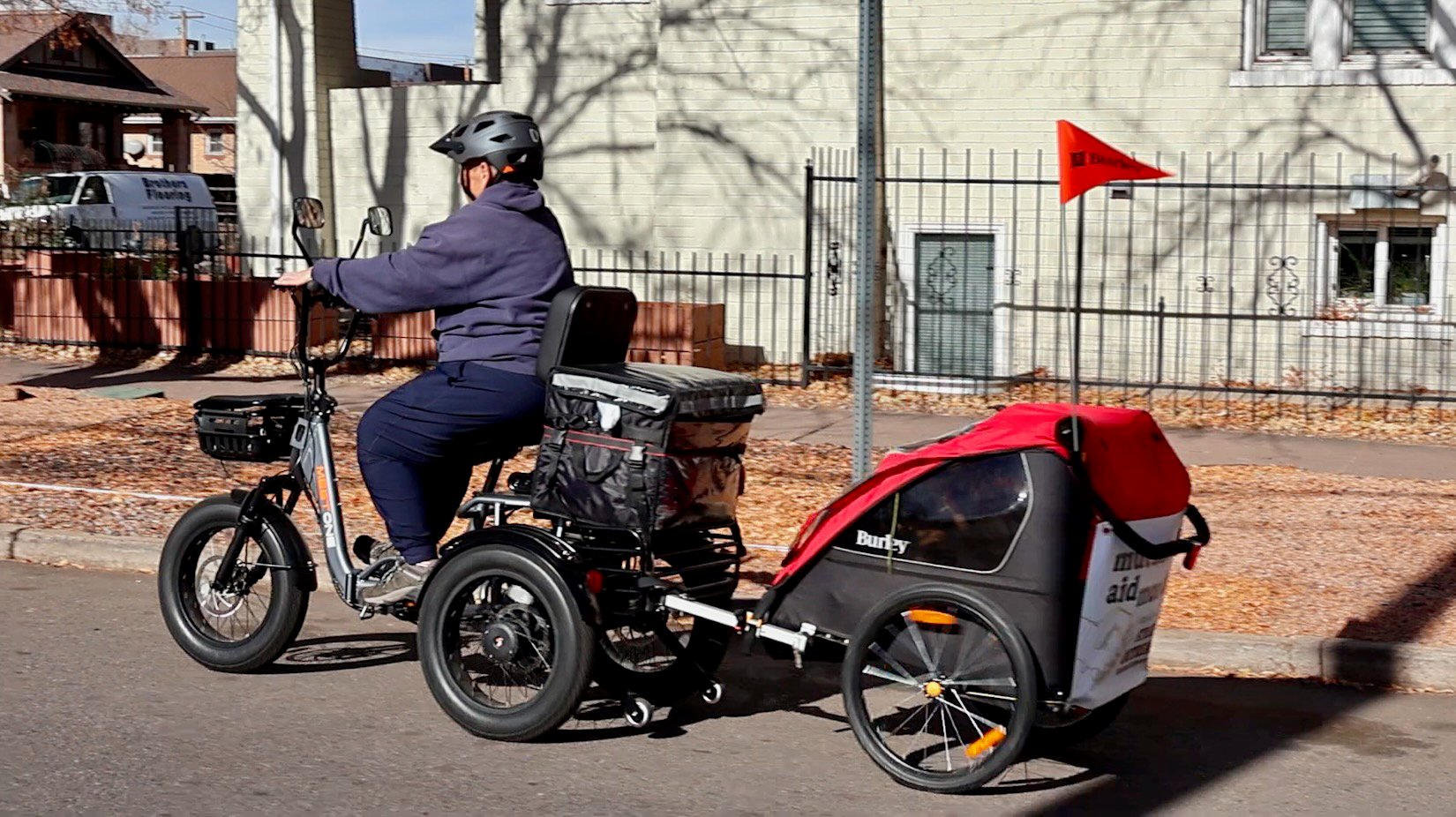
DENVER (RNS) — On a cool morning in Denver, a 70-year-old Buddhist nun pedaled their electric tricycle beneath highway overpasses and along cracked bike paths, slowing as they approached tents tucked against concrete embankments or someone sleeping under a bridge.
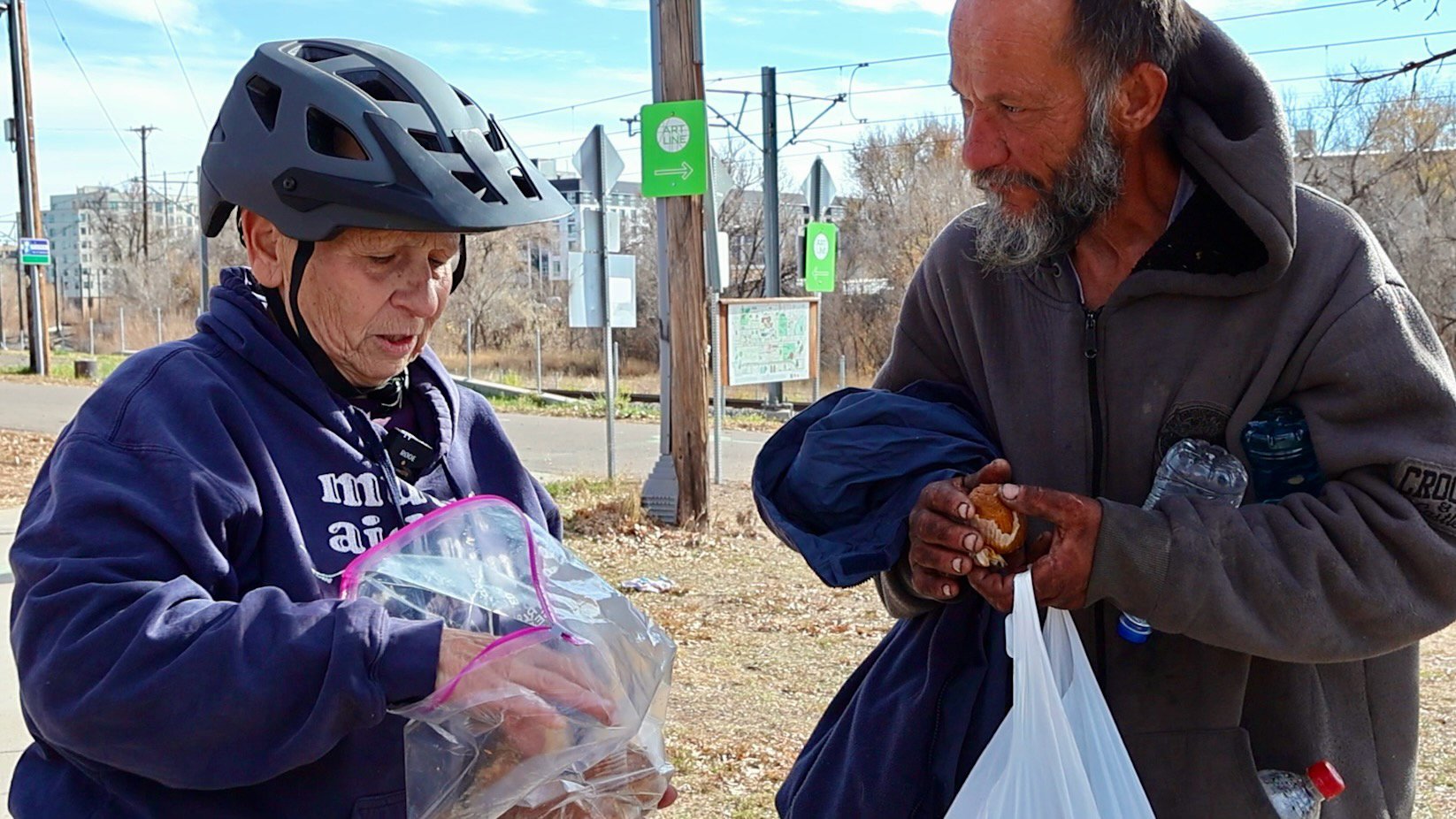
The small trailer fastened to the trike carried bottled water, bagged lunches, socks, gloves, Narcan, tents and hand warmers. The cyclist, Kelsang Virya, who uses they/them pronouns, has become a familiar presence to many people living on Denver’s streets over the past five years. The nun — who helped found Mutual Aid Monday, which now feeds more than 400 vulnerable and unhoused people a week — scans the grittiest parts of the city for familiar faces.
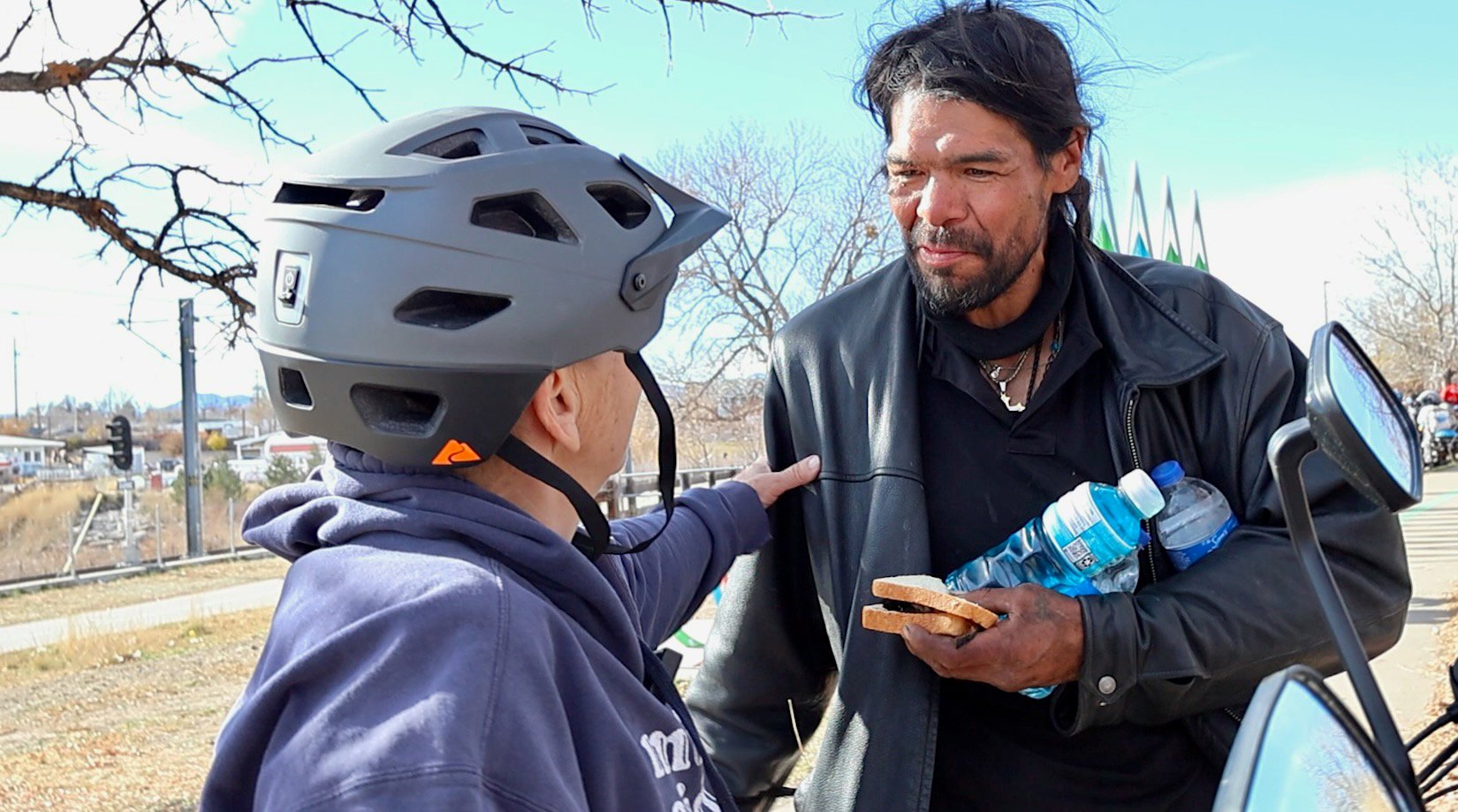
“I think I know most people here,” Virya said after handing out supplies at a homeless encampment on the outskirts of Lakewood, where about 30 people who were gathered around tents and wearing winter jackets approached them for water and food, saying “ma’am” and thanking the nun profusely.
Just before Virya arrived at the camp, the nun had stopped under a bridge to check on a man who appeared to have passed out, likely after using fentanyl, an extremely powerful opioid that has become Colorado’s leading cause of drug-related deaths in the past five years.
“He wouldn’t show me his face,” Virya said. “When I saw him under the bridge, it’s like whatever pops into my head is the mantra that’s needed.”
As Virya engages in what they call “street outreach,” the work of Mutual Aid Monday, or MAM, they feel most drawn to, the nun keeps a rotation of Tibetan Buddhist mantras running quietly in their mind.
Emerging from the dark shade of an overpass, Virya will often whisper their primary mantra, Om Mani Padme Hum, associated with the Buddha of compassion and believed to relieve suffering. Virya turns to it instinctively whenever they encounter someone in distress.
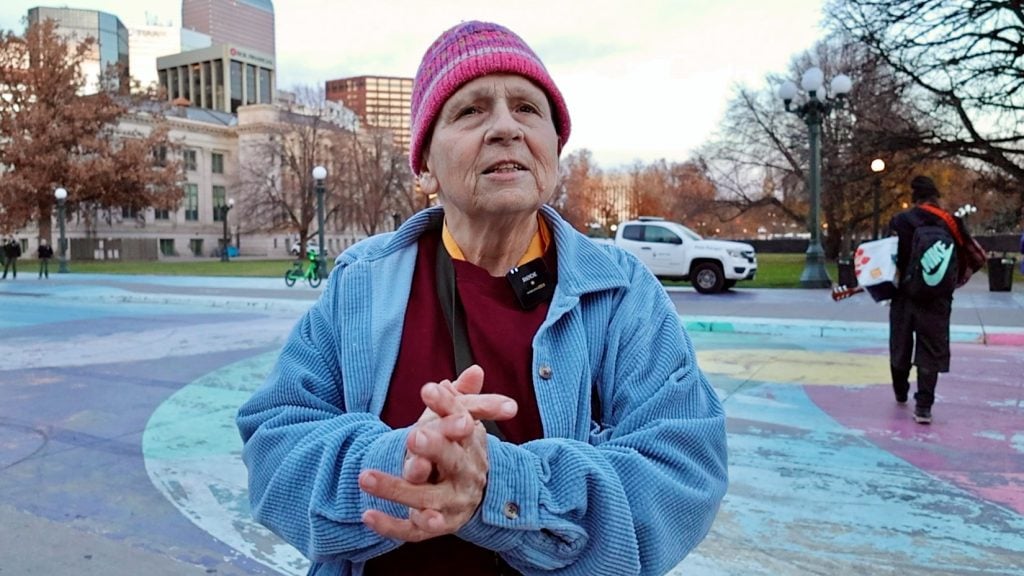
Virya grew up Lutheran in Wisconsin but as an adult, while raising children and working in hospice care, they began reading Thich Nhat Hanh and Pema Chödrön before eventually finding their way to Tibetan Buddhism.
“What really drew me to Buddhism was the compassion,” they said. Virya was ordained more than 15 years ago and follows a tradition in which daily vows, prayers and study shape monastic life. “I retake my vows every day,” they said. “I haven’t missed in 15 and a half years.”
After checking that the man under the bridge did not need Narcan, Virya murmured the Om Tara Tuttare Ture Soha mantra under their breath, saying it was the one that surfaced first because Tara is “the rescue Buddha.”
“I would be so depressed,” Virya said. “I could not do this work. I have to have my faith that grounds me every day and is a refuge.”
This work began for Virya in 2019, when they and their granddaughter started taking bagged lunches to large encampments across Denver. They had moved to the city 12 years earlier to be closer to their son, after having spent the three previous years living at a monastery in New Mexico.
In 2020, amid the pandemic and as homelessness surged in the city, the nun began showing up at encampment sweeps several times a week to protest, as police were often reportedly poking holes in people’s tents, damaging personal property and handing out tickets.
Denver has long enforced an unauthorized-camping ordinance, commonly known as the urban camping ban, which prohibits sleeping in public spaces and has shaped how homelessness is managed in the city for more than a decade. The policy has made encampment sweeps a regular feature of life for people living on the streets, often forcing them to move with little notice and limited access to shelter.
But after an unhoused person told Virya the police came down harder after protestors left, Virya changed tactics. The next day, the nun showed up with coffee and doughnuts in a small red wagon instead.
“Just be there for them and listen to them,” they said.
As they spent more time at camps, Virya began to recognize another gap. Unhoused people were losing not only their belongings during sweeps, but also any opportunity to tell city leaders what was happening to them. So Virya and a small group of activists brought their idea to the steps of the City and County Building. Monday nights at City Hall, when public comment is held, have historically drawn unhoused residents and advocates seeking to be heard. And it was there the group established Mutual Aid Mondays.
“We decided that maybe we’d have a place where they could come and get food and gear, and the other half was to try to encourage folks to go into City Council,” Virya said. “That’s why it’s on Monday … so they could let them know what’s going on on the streets.”
The idea was simple: offer food, gear and a safe place to gather so people could step out of the encampments, get what they needed and, if they chose, go inside and speak during public comment.
“Virya cooked up a lot of food and was in their kitchen on Sunday, all day, preparing for Monday,” said Jess Wiederholt, a Denver activist, mother of seven, practicing Presbyterian and one of the founding members of MAM. “And then the rest of us all brought something, you know. So like, I was the pasta person.”
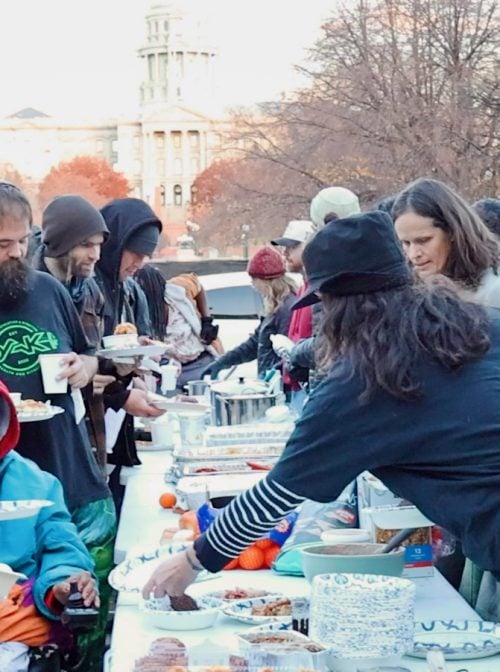
What began with about 50 people and a handful of volunteers serving food has expanded into a weekly scene outside City Hall that unfolds into a temporary village, where up to 50 volunteers unload tents, sleeping bags and hygiene kits, lay out Narcan supplies on folding tables and even set up a barber’s chair.
In the early days, Virya cooked with whatever they could source from local food banks, mostly oatmeal and fish casserole. Today, the organization relies largely on donations through platforms such as Patreon, and Virya recently received a $2,000 transportation grant from the city that paid for the electric tricycle.
“Haircuts come almost every week,” Virya said. “It just gives people so much self-esteem, you know, to get their hair done.”
Virya has also come to be known for driving a white van across Denver on the coldest winter nights, circling encampments with blankets, heaters and food, calling out for anyone who might need a ride to a hotel room where they could safely spend the night. Many unhoused Denverites still recall those late-night searches as the difference between danger and survival.
“During cold nights, for 24 hours straight, Virya would be going to every nook and cranny in Denver to find people,” said Raymond, who has been unhoused in Denver for six years. “When it was life and death, she was there.”
In 2025, about 10,774 people in the Denver metro area were experiencing homelessness, including those staying in shelters and transitional housing. A 2025 Metro Denver Homeless Initiative study puts the average number of people on the streets any given night at 785 to 2,149 in the larger Denver metro area, which Virya confirms.
Jerry Burton, a Marine veteran and former unhoused activist who now works with the Housekeys Action Network, has been involved with Mutual Aid Monday since its earliest days. Now, he moves through the weekly gathering passing out flyers about low-income housing resources.
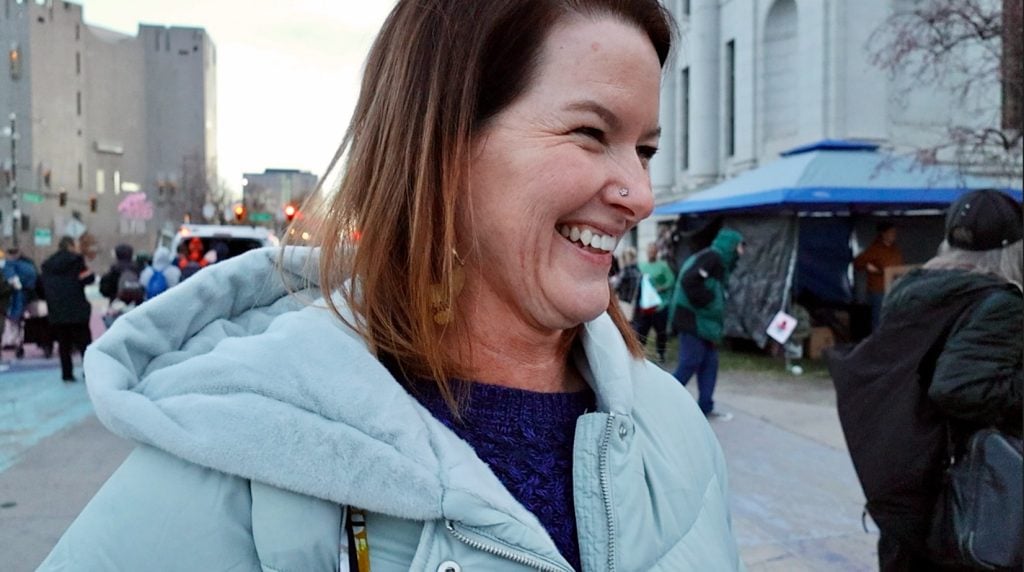
This as Virya’s dream, Burton said.
“MAM started out of protest. Now, we are trying to help people here, the unhoused neighbors, to become a better member of society by providing the necessity that I think that every man, woman and child should have, and that’s a place of their own.”
On a chilly Monday evening in late November, Wiederholt and Virya stood near a clothing distribution station staffed by several volunteers who, Virya noted, probably didn’t know them. The two reflected on how the organization has grown, and what that growth says about the city they have devoted so much of their lives to.
“Something has to drive you to do this work,” Wiederholt said. “And for Virya and me, that was our faith. No matter what that faith is, we believe in the dignity of human beings. That’s a big part of who we are and what we believe. And so we were out here because of that.”
In the past year, Virya has begun to step away from MAM’s expanding daily operations, hoping to return to the rhythm of monastic life that first grounded their work.
“I felt like my spiritual practice was suffering a little bit,” Virya said. “It wasn’t that my faith had dwindled or anything. I just wasn’t having enough time, and I felt like I was not the person I wanted to be.”
Each day, Virya recites their vows, prays, meditates and studies Buddhist texts. Still, they spend several days a week visiting encampments on their tricycle, offering supplies, conversation and whispering ancient mantras under their breath. They say that connecting one-on-one with people on the street can feel a bit like spreading the calming practice of meditation.
“They’re getting a little peace of mind, for at least a few minutes,” Virya said. “And maybe they will return to that, despite everything, again and again.”