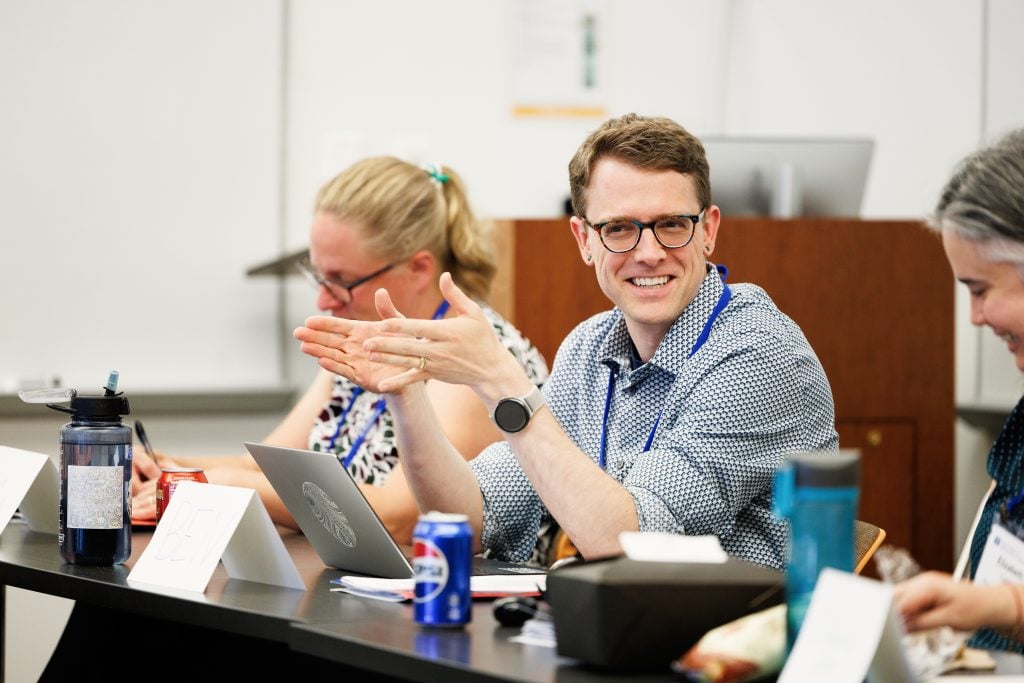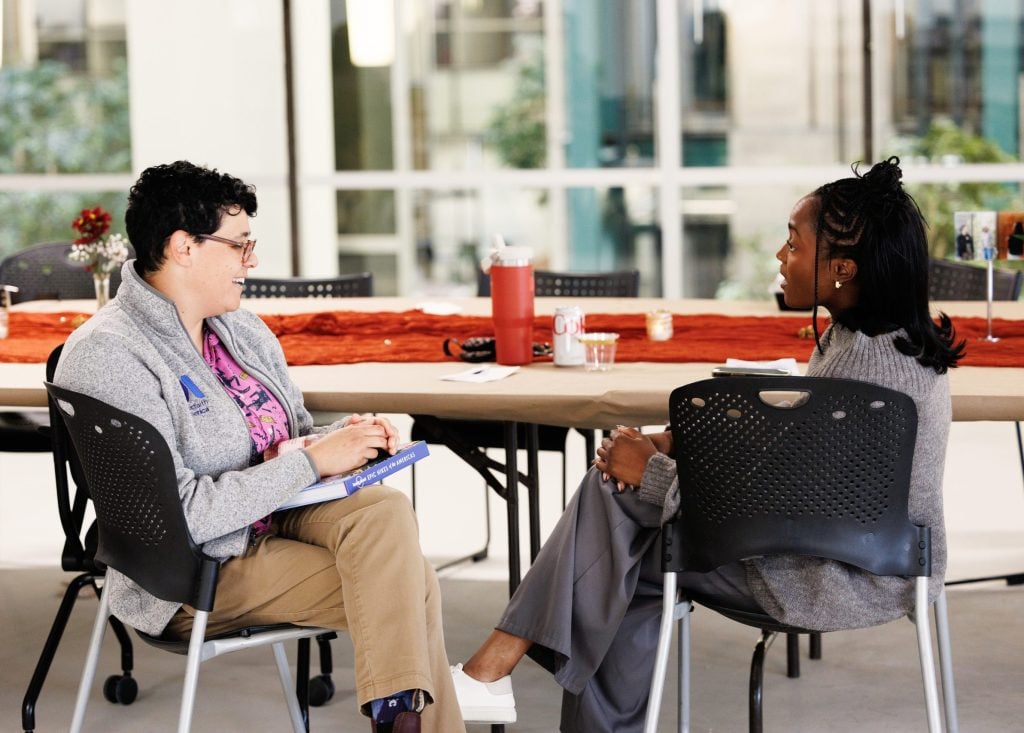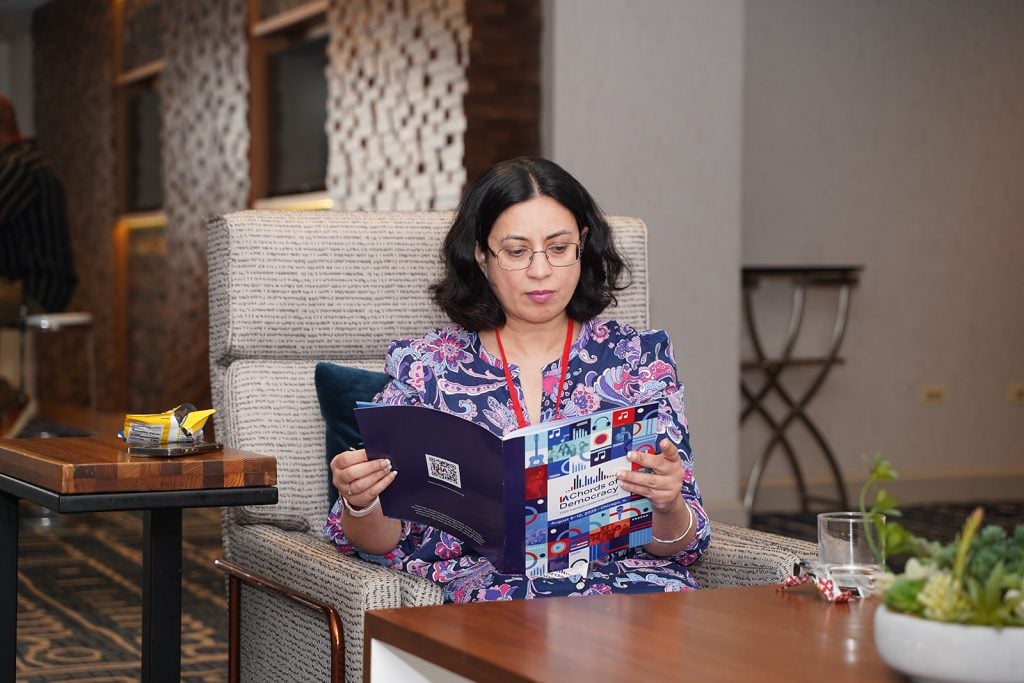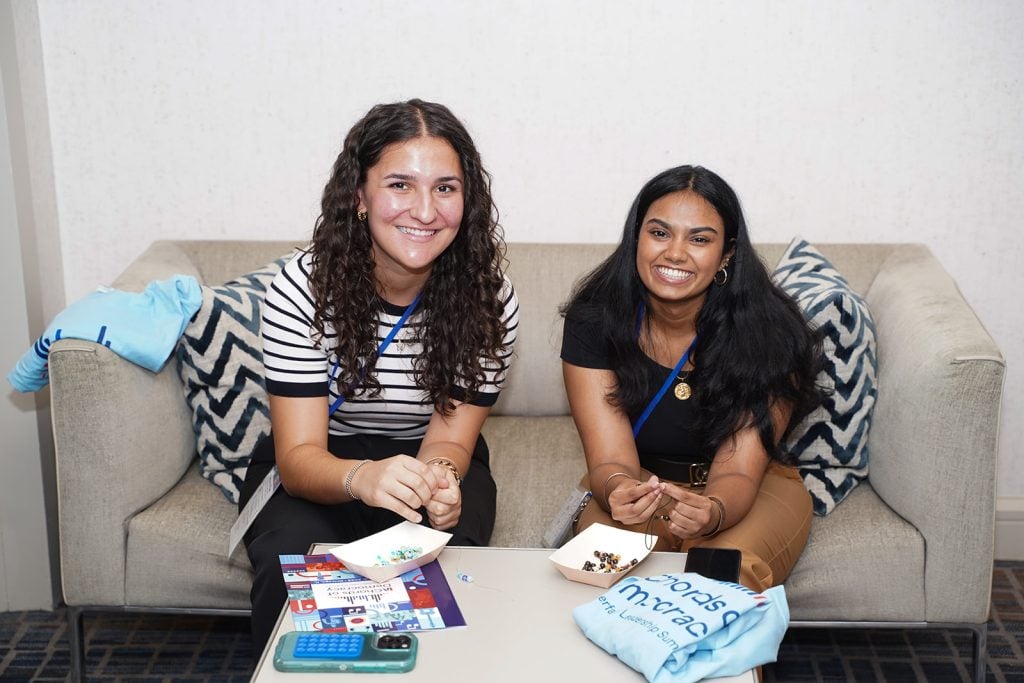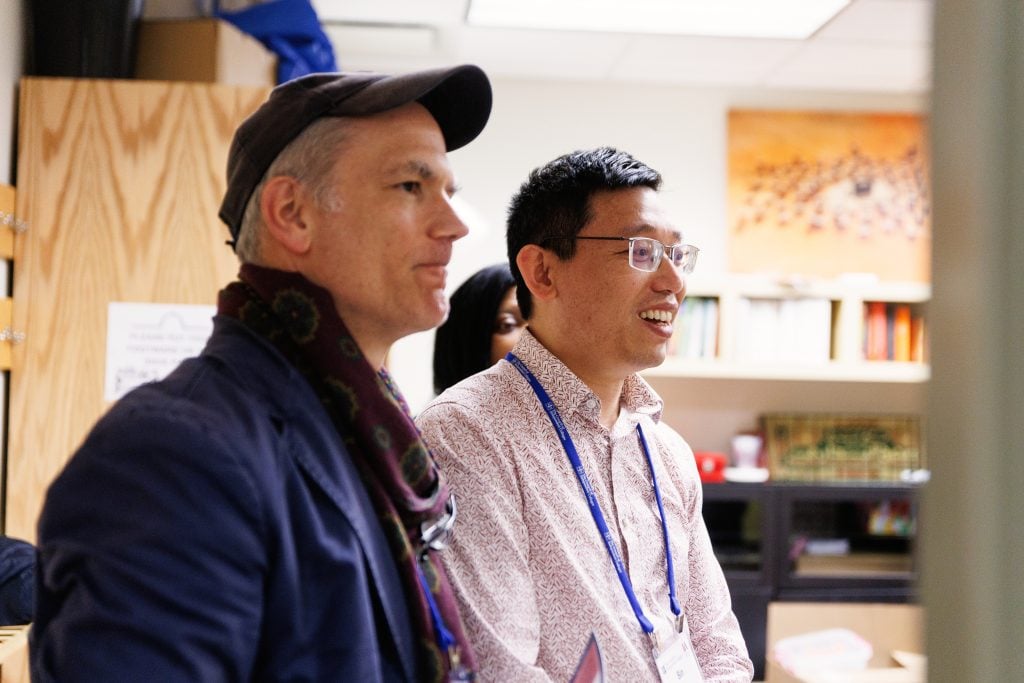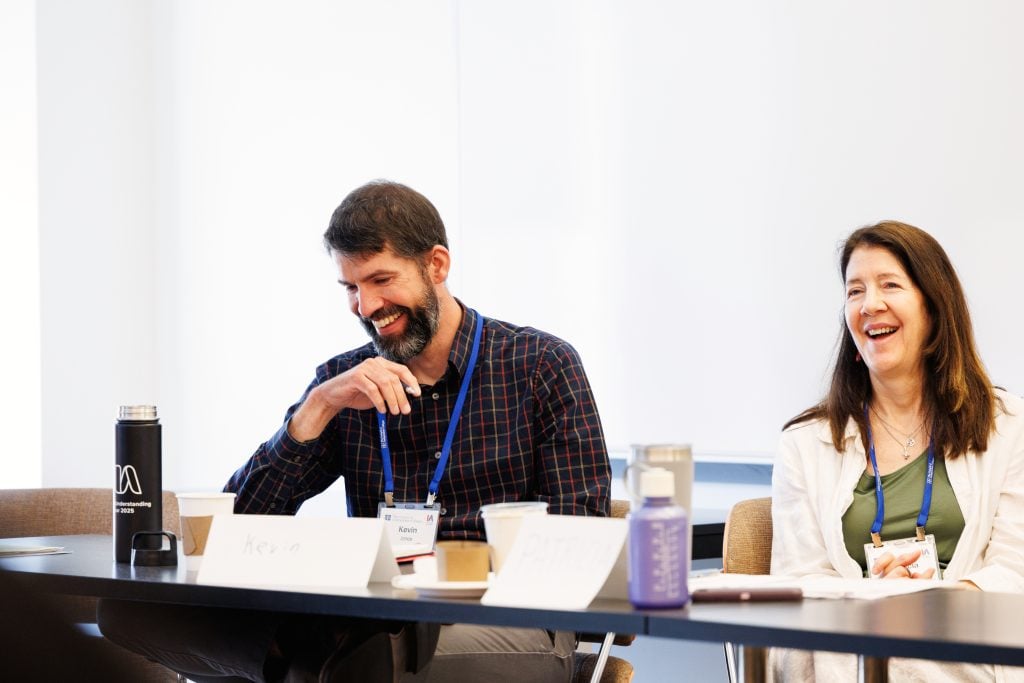

Catholic university leaders will convene to discuss “Moral Leadership for a Diverse Campus” this June 25-27, 2025, at Loyola University Chicago. The Presidents Institute, hosted by Interfaith America in partnership with the Association of Catholic Colleges and Universities (ACCU), facilitates conversations with university leaders on topics of moral leadership.
“It’s been wonderful to partner with ACCU to gather with thoughtful leaders wrestling with some of the hardest issues facing higher education today, all through a distinctly Catholic lens,” said Eboo Patel, founder and president of Interfaith America. “It’s that lens that gives this group a unique hope for the difficult but promising work ahead.” Earlier Presidents Institutes have considered topics including diversity and inclusion, campus protest and polarization, and the possibility of pluralism.
A review of the June 2023 Presidents Institute reveals the impact of these conversations. Participants were asked to connect diversity, equity and inclusion initiatives with the religious mission of their institutions. Dr. Marc Camille is entering his eighth year as president of Albertus Magnus College in New Haven, Connecticut, which was founded in 1925 by the Dominican Sisters of Peace.
“Diversity for us at Albertus Magnus is about fulfilling our mission commitments and the vision gifted to us by the Sisters,” he said. “As President, I believe if we aspire for academic excellence, diversity is a necessary element.”
Through keynote addresses, small group discussions, readings, and the sharing of resources, the Presidents Institute provided opportunities for participants to cultivate strategies in light of Catholic Social Teaching. Several presidents pointed to the value of the principle of the dignity of every human person as a valuable foundation for mission-driven, inclusive leadership.
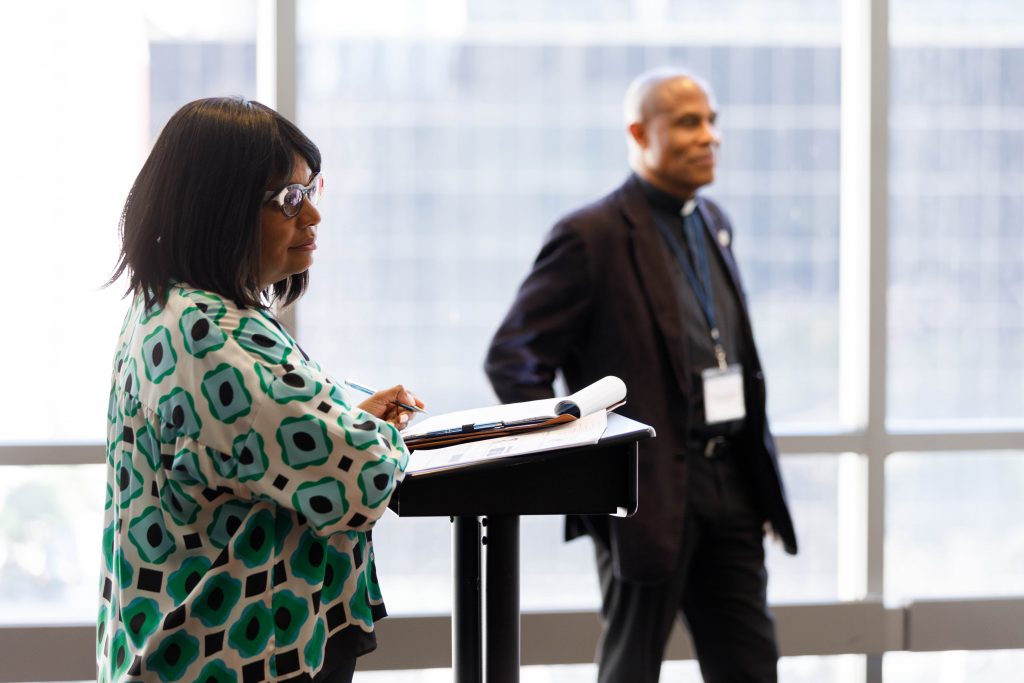
Other presidents highlighted the keynote address by Dr. Bryan Massingale, a Catholic priest of the Archdiocese of Milwaukee and the James and Nancy Buckman Chair in Applied Christian Ethics at Fordham University, who described the responsibilities of moral leadership as a relay race. “You are called to run your leg of the race the best you can, honoring those before you and doing your best for those who will come after you.”
Participants were encouraged to view the work of bringing divergent and battling views together through the lens of holiness. “This framing of holiness has stayed with me and helps me think differently about how we navigate these waters,” said Dr. Ann McElaney-Johnson, president of Mount Saint Mary’s University in Los Angeles, California. “What a powerfully challenging and life-giving image.” Other speakers included Dr. Mary Dana Hinton, president of Hollins University, Dr. Donna Carroll, president emerita of Dominican University, and Robert M. Franklin, the James T. and Berta R. Laney Professor in Moral Leadership at Emory University.
There were also opportunities for personal reflection. Presidents were invited to consider their leadership as a calling. “My role as president is not just an administrative position,” said Dr. Montserrat Fuentes, president of St. Edward’s University in Austin, Texas, “but a vocation where I can live out our values of academic excellence and ethical leadership.” Many of the participants described the Presidents Institute as deepening their commitment to the mission of their institutions.
Dr. Sandra Cassady is the first woman and first lay president of Rockhurst University in Kansas City, Missouri. She participated in the Presidents Institute after completing an eight-day Magis retreat. “The timing was perfect. I tried to prepare myself for the transformation that I would experience as a president and made a commitment to go deeper in my understanding of Ignatian spirituality,” said Dr. Cassady. “This is truly a vocation and calling – something I work at every day.”
The Presidents Institute provided support to participants as they discussed strategies to lead change on their campuses. Several institutions have created senior leadership positions in the area of diversity, equity, and inclusion including at Mount Saint Mary’s University. “Our vice president has made all the difference,” said Dr. McElaney-Johnson. “We are expanding anti-bias training that is required for all search committees and have formed an equity, diversity, and justice scholars program to equip our students with the tools they need to create positive change on campus and in the greater community.”
St. Edward’s University earned the national Seal of Excelencia in recognition of its retention and graduation rates for Latino students. “This achievement highlights our ongoing programs that support an inclusive atmosphere and foster student success on campus,” said Dr. Fuentes. “These initiatives are integral to our identity, reflecting our dedication to creating an environment where every student feels valued and empowered.”
As Albertus Magnus College approaches its centennial anniversary, Dr. Camille believes that the college’s commitment to educational excellence rooted in equity and opportunity continues to expand. “Today, Albertus Magnus has been fully coeducational since 1985 and is New England’s most diverse Catholic college and the only Catholic college in the region to achieve federal designation as a Hispanic Serving Institution,” he said.
Many of the campus programs and initiatives are aimed to increase access and retention of historically underrepresented students. Rockhurst University established the Hawk Scholars program to serve students with high financial need, many of whom are first generation college students. Hawk Scholars participate in an expanded orientation and ongoing meetings where they learn about resources to help them be successful.
The participants of the Presidents Institute said that they returned to their campuses with a renewed sense of urgency and feeling encouraged, prepared, and energized. “It was deeply moving and humbling to engage with experts and practitioners who dedicate their lives to this work,” said Dr. McElaney-Johnson. “It was so powerful to be in a space with colleagues who care deeply and who hunger, like me, for greater understanding and greater ability to do the work of real justice, to build real community where all truly belong.”
This year’s Presidents Institute will once again feature keynote addresses, small group discussions, and times for personal reflection. Participants will be supported with resources and encouraged to consider concrete strategies for their campuses. “I’m looking forward to the conversation we will have with a new group of leaders at the next Institute this June,” said Patel.