
The Susan S. Morrison School of Nursing at the University of St. Thomas strives to educate students who will “act wisely in the provision of ethical and compassionate whole-person and whole-community care that promotes human flourishing.”
A focus on “person-centered care” is at the heart of the undergraduate Nursing program and informs the partnership that we have formed between personnel in the university’s School of Nursing and in the Theology Department.
As part of the First-Year Experience at the University of St. Thomas, students have the opportunity to participate in a Nursing Living-Learning Community (LLC) with other students interested in pursuing a health-related field of study. Students take a Theology class together (taught by Dr. Myers), live near one another, and partake in a variety of co-curricular events.
With the help of an Interfaith America Religion and Health Curriculum grant, we sought to expand the opportunities that we were providing to the first year, first-semester undergraduate students interested in Nursing in Fall 2023. The course already included justice concerns with respect to gender, sexuality, and race and ethnicity, and devoted time to looking at Jewish, Christian, and Islamic feminism. We chose to expand the focus to address other religious traditions, especially as related to healthcare, by incorporating several new elements into the introductory Theology course, entitled “Person-Centered Care: Women and Theology.” By augmenting the course in five significant ways, we sought to build on the content the students were already receiving, and to focus their learning to address interreligious issues that could arise in their future work.
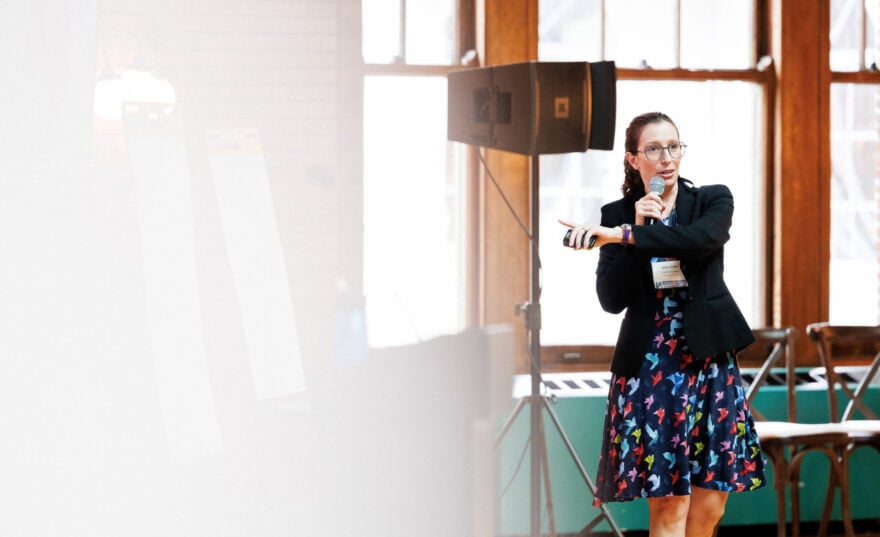
First, as the students contemplated their own futures in healthcare, Dr. Schipper inspired them with reflections on her own journey and values. She spoke personally of both the rewards and challenges inherent in the field of nursing, and offered helpful tips (for example, to request a “redo” after a misunderstanding or personal blunder). In general, Dr. Schipper emphasized the need to treat each patient as a complete person, and to try not to make assumptions or premature judgments.
The class also hosted a guest speaker who had spent most of a year of her life in the hospital being treated for cancer. A Jewish rabbi, she spoke eloquently of the importance she placed on being seen as a complete person and not simply an illness. She insisted that she be addressed by name by hospital personnel before engaging in any other interactions; posted pictures of her vibrant, pre-cancer life to remind everyone of the person they were working to save; and invited the nursing staff to join in some of the rituals that she and friends shared. Perhaps most importantly, she insisted that there be no tests or discussions of medical issues – not even reports of progress – that would occur on the Sabbath. Each week, the equipment in her room was covered and stored in a corner so that she could relax with friends and family, and have one day of genuine rejuvenation, free of healthcare concerns.
Next, the class included a “mental health day,” on which the students were assigned to watch several videos and reflect on their own self-care.
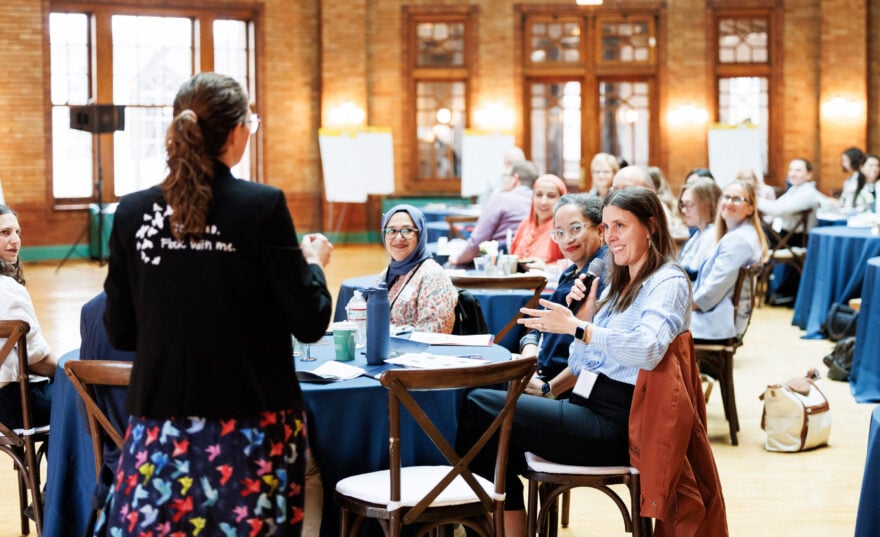
We decided to provide the students with the opportunity to address potential concerns and to practice responses in a safe environment through role-playing. We devised several scenarios that could occur and asked students to “practice” their responses, then discussed other response options. These scenarios ranged from choices that individuals might make due to their religious commitments to misunderstandings that could result from a variety of factors, including gender, ethnicity, or religion. One scenario that is especially germane to our location in the Twin Cities of Minnesota included the presence of a live chicken in a hospital hallway. Chickens are used in Hmong childbirth ceremonies and chicken-based foods are provided for a month after childbirth. Given the large number of Hmong residents in the Twin Cities, this scenario is something that healthcare providers could encounter. We were especially proud of a Hmong nursing student who explained, simply but eloquently, about the importance of the practice in her community. Indeed, the student responses to the various scenarios were sensitive and creative, even as the students indicated that these were, in general, not encounters that they had ever before considered.
Finally, the course included an assignment that asked students to examine a case study from the Interfaith America resources and to reflect on the difficulties raised and possible outcomes. This too was eye-opening for many students, and the ethical concerns that were raised proved to be challenging. Although we did not have the benefit of knowing institutional policies or, in some cases, legal stipulations that would pertain to the cases, the problems that were posed did alert the students to concerns they had not previously considered.
A few weeks after the course ended, a student contacted one of the professors to talk about a “medical mission trip” that she had just finished. With passion and sincerity, the student spoke of appreciation for what was learned in the class, which prepared her for the service she had just completed. A Christian, she spoke with special gratitude for what she had learned about Islam, knowledge that had changed her perspective and allowed her to be more effective in her service work. She demonstrated that she had put into practice another of the elements of the University of St. Thomas School of Nursing mission statement: “They will provide this care with ingenuity, dignity, and respect for diverse populations to advance health equity and social justice.”