Why Social Cohesion Matters, and What I Learned on My Journey to Singapore
September 23, 2022
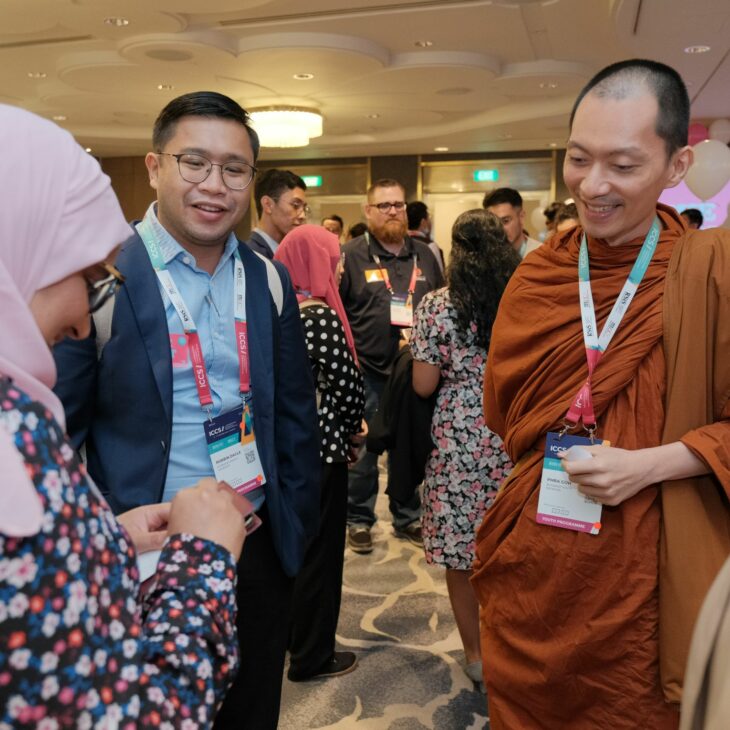
Earlier this month, I had the honor of speaking at the 2nd International Conference on Cohesive Societies in Singapore. This conference occurred from September 6-8 and was the second iteration of a conference that was started in 2019 with the purpose of bringing together thought leaders from around the globe to discuss strategies to foster social cohesion.
The Singapore Ministry of Culture, Community, and Youth partnered with the S. Rajaratnam School of International Studies in Singapore to organize the conference. The goal is to establish international relationships among participants that can help mobilize common action on key issues. Interfaith dialogue was one of the main subject areas, along with climate change, and prevention of terrorism. This year’s conference also had several sessions dedicated to the effects of the COVID-19 pandemic on these various topics.
The conference was organized into two main tracks: the plenary sessions which involved lectures from high-ranking academics and government officials; and the Youth Leadership Program, a series of workshops focused on mentorship, leadership, and issues more salient to youth such as the role of social media.
The Youth Leadership Program was the brainchild of Her Excellency Halimah Yacob, the first female and first Muslim president of Singapore. Born to an Indian father and a Malay mother, Yacob has spent much of her tenure advocating for gender equality, and racial and interreligious harmony. Such work is especially necessary as Singapore is quite ethnically diverse given its size; with a population of about 1.3 million, roughly 74% of Singaporeans are ethnic Chinese, 13% are Malay, 9% are Indian. The country is even more diverse when categorizing religious diversity: according to the U.S. 2020 Report on Religious Freedom, “33.2 percent of the population of Singapore citizens and permanent residents are Buddhist, 18.8 percent Christian (including 6.7 percent Catholic), 14 percent Muslim (predominantly Sunni), 10 percent Taoist, 5 percent Hindu, and 18.5 percent identify as having no religion.”
As such, President Yacob made it a priority to connect with the youth at this conference and held a networking session with the program speakers. As a Youth Leadership Program speaker, I had the opportunity to meet several government officials including President Yacob; Edwin Tong, Minister of Culture, Community, and Youth; Ambassador Ong Ken Yong, Ambassador-at-Large at the Singapore Ministry for Foreign Affairs and fellow Georgetown alum; and Rahayu Mahzam, Senior Parliamentary Secretary for Health and Law.
Share
Related Articles
American Civic Life
Sacred Texts Say a Lot About Skin – Here’s Why Healthcare Providers Should Care
American Civic Life
Nate Walker Fosters Connection Through a Creative New Social Learning Platform
American Civic Life
Is Social Distancing Unraveling The Bonds That Keep Society Together?
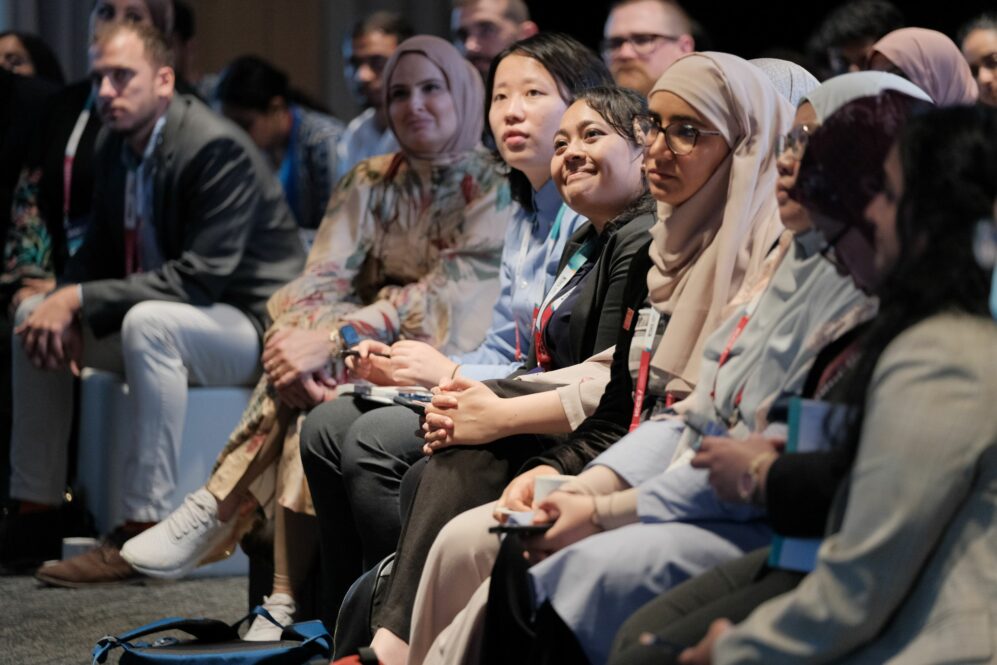
Attendees during the plenary discussion. Photo courtesy of ICCS.
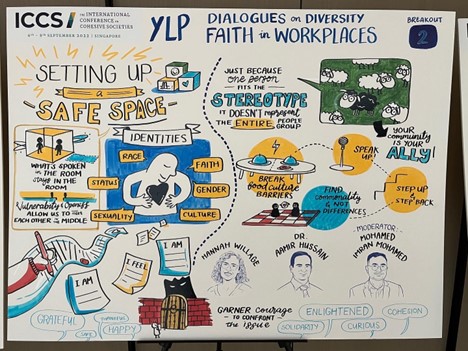
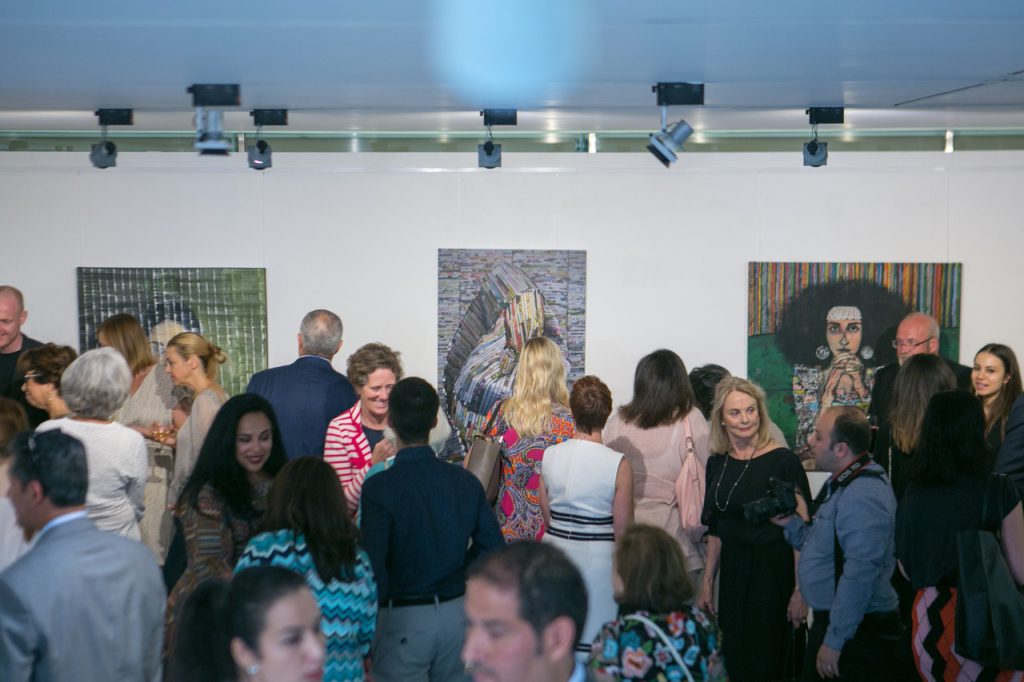
Graphic design representation of the Youth Leadership Program workshop on Faith in Workplaces. Photo courtesy of Aamir Hussain
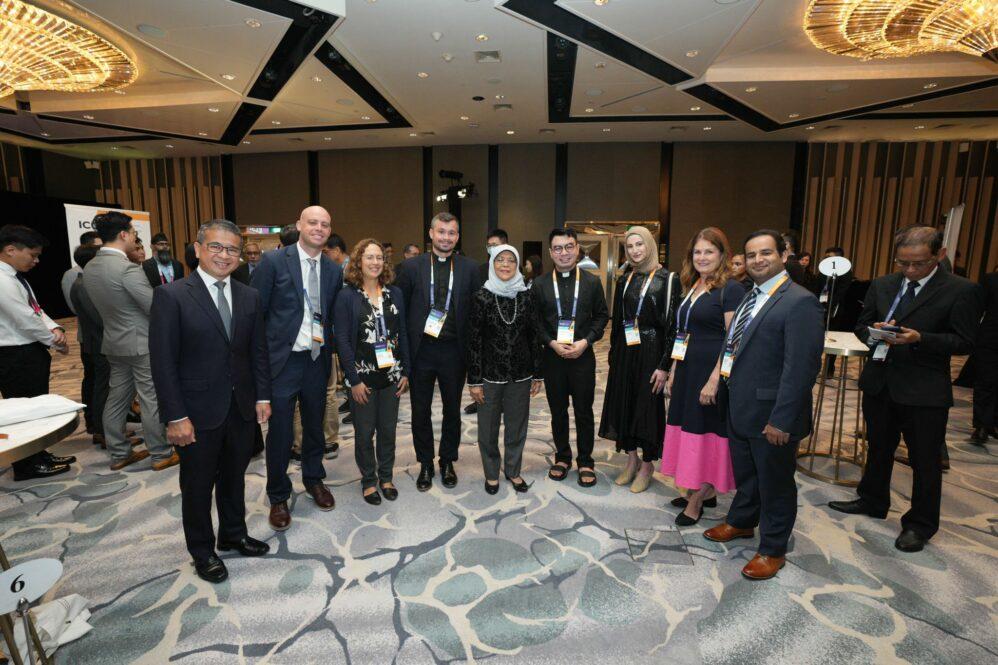
Mdm. Halimah Yacob (center) the first female and first Muslim president of Singapore at the Youth Leadership Program. Photo courtesy of ICCS
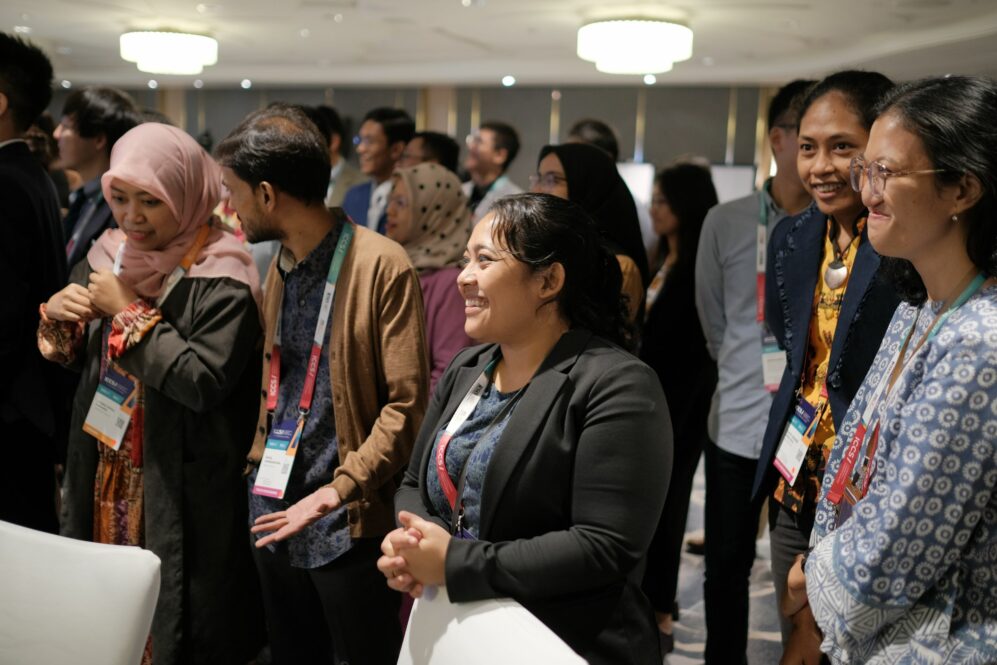
Attendees of the Youth Leadership Program. Photo courtesy of ICCS.
Interfaith America was invited to help facilitate a Youth Leadership Program breakout session on interfaith dialogue in the workplace. This session was among the most popular, and attendance needed to be capped at around 40 participants to ensure that small-group activities could occur. Attendees discussed the role of negative stereotypes in a variety of work environments from healthcare to education, and workshopped strategies for addressing these challenges such as empowering leaders to advocate for specific work policy changes, and revamping diversity trainings to be more representative of minority communities. I provided examples from my own experiences of educating physicians about religious practices that may affect their patients’ health.
The majority of conference attendees, especially in the Youth Leadership Program, were from member countries of ASEAN (an economic cooperation organization comprising 10 Southeast Asian nations). While the format of the session was similar to workshops at Interfaith America Interfaith Leadership Summits, I found the international perspectives refreshing and informative. Singapore approaches diversity quite differently from many North American and European countries. Although the country is officially secular, many religious institutions work directly with the government in order to set policies. For example, during the acute phase of the COVID-19 pandemic in 2020, faith leaders collaborated with public health scientists, doctors, and government officials to determine official guidelines for religious services. The government also enforces racial quotas in several areas including housing and education to guarantee representation from ethnic minorities.
As a student of both public policy and healthcare, I find Singapore’s example fascinating. The small size of the country enables the government to directly intervene in the private sector in ways that would be anathema in the United States. As a Muslim, I also found it refreshing to see many high-ranking government officials in the hijab, and it was convenient to have halal food available throughout the entire country.
While critics may find these approaches heavy-handed, Singapore stands out from its peer nations in social cohesion; a 2021 Pew Research Survey of 17 advanced economies found that Singaporeans were the most likely to say that their society was more united after the pandemic (86%), while the United States ranked dead last in this category (11%). The vast majority of Singaporeans also expressed that they had confidence in their nation’s public health infrastructure for future emergencies (93%).
In keeping with an International Conference on Cohesive Societies goal of fostering international collaboration that extends beyond the ICCS conference, my most memorable experiences occurred outside of the formal meetings. I developed strong working relationships and friendships with delegates all over the world including Buddhist and Taoist priests and rural medicine doctors. Even my mother, who traveled with me, was able to reconnect with many of her grade-school friends from Hong Kong who represent a wide variety of religious backgrounds.
I look forward to implementing some of the best-practices learned from Singapore’s example towards creating a more cohesive society in the United States and in the healthcare setting. One of my ideas for future conferences is to create an additional healthcare track and focus on sharing international perspectives on social cohesion in medicine. Here’s looking at the 3rd ICCS!