Is Social Distancing Unraveling The Bonds That Keep Society Together?
October 7, 2021
(The Conversation) — With birthday celebrations being downsized, religious services moving back online and indoor playdates getting canceled, millions of Americans are having fewer social interactions because of persistently high case numbers and high rates of transmission.
It’s not just interactions with friends and families that are getting cut. Routine yet beneficial interactions with people at fitness and child care centers and volunteer organizations are also being eliminated.
Social distancing is vital to combating COVID-19. But is it unraveling the social bonds that keep society together?
Social capital adds up
As a sociologist of religion and education, I study how Americans develop social ties, and how these social ties influence people’s lives. Scholars refer to relationships that exist between and among people as “ social capital.” When people interact, even briefly, they start to trust one another and feel comfortable asking each other for help. But for that trust to develop, people need to physically interact with one another.
Social capital is highly valuable during times of crisis. During Hurricane Ida, for example, people waded through rising water to save neighbors. A similar thing happened during Chicago’s 1995 heat wave when hundreds of people who lived alone without air conditioning were rescued by neighbors and acquaintances.
Having trusting relationships with people ahead of crises is key – and building those relationships requires people to spend time together.
While isolating at home in spring 2020, I started to wonder: Does the need to social distance affect how social capital gets activated during a pandemic?
From August to October 2020, I interviewed 36 middle- and low-income Jewish parents in the greater Philadelphia area who had school-aged children. There was a range among parents in how involved they were in Jewish communities and organizations. Some were regular synagogue-goers. Others rarely went to services but actively volunteered for Jewish organizations. And some rarely participated in any religious or social dimensions of Jewish life.
How does a study of Jews help us understand the flow of social capital during a pandemic?
Both Jews and non-Jews can develop social capital by participating in religious organizations. It’s not religious rituals that cultivate social capital – it’s all those social interactions that occur outside of religious rituals.
Relationships pay off
When COVID-19 hit, millions of Americans needed to avoid social contact and couldn’t participate in religious services.
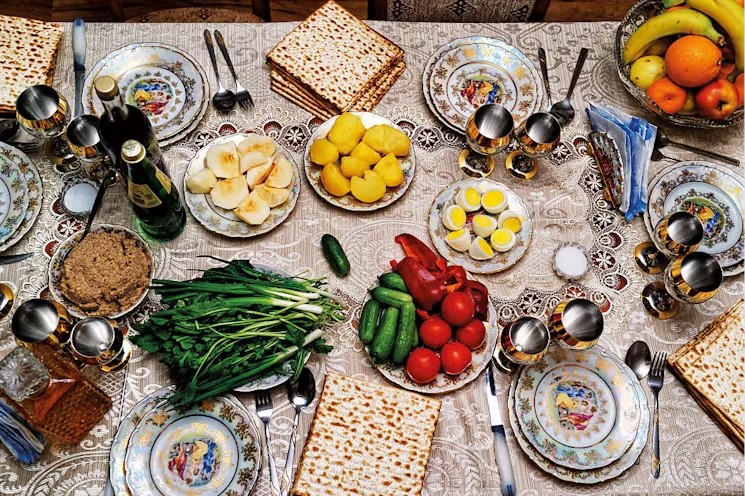
That also meant they couldn’t participate in the social dimensions of religious life – they couldn’t help people mourn their dead, volunteer in soup kitchens or gather with people for meals during holidays and the Sabbath.
For Jews, limiting social interaction was especially difficult because many rituals require a minyan – a quorum – of 10 people.
My interviews revealed two key phenomena. First, social capital gets activated differently during a pandemic than it does during weather-related disasters.
During hurricanes and heat waves, social capital manifests itself in people physically helping their acquaintances get out of dangerous situations.
But during a pandemic, the physical help itself is what’s dangerous. Working parents couldn’t turn to their neighbors or friends for child care help without putting their acquaintances, as well as their own children, at risk of contracting COVID-19.
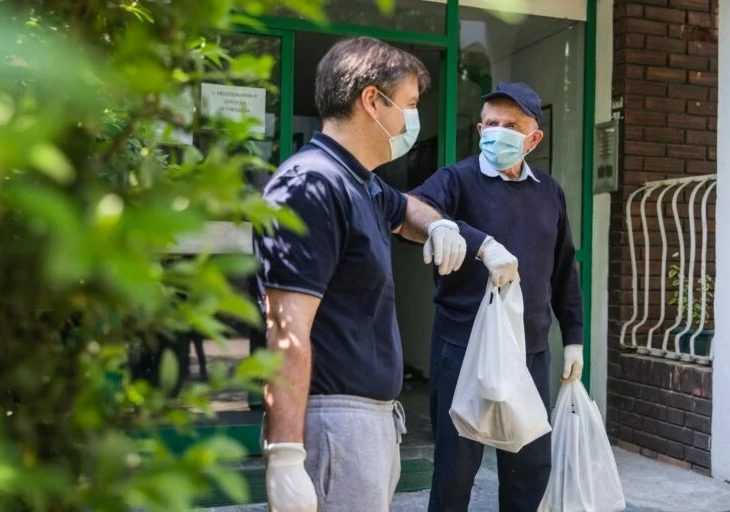
Since physical interaction was off-limits, the role of social capital transformed. Jewish parents were able to use their social connections in Jewish organizations to get supermarket gift cards, groceries and even lump sums of cash to offset lost income. For these economically fragile families, the immediate resources helped them feel secure and cared for in a time of profound uncertainty.
Parents were more likely to get these resources if they had been actively engaged in the social life of the Jewish community before COVID-19. Parents who weren’t embedded in Jewish communities didn’t even know that they could ask for help.
At the same time, rabbis who had received funds through larger Jewish organizations to help their congregants and community members knew whom to distribute funds to only if they had relationships with them ahead of the pandemic – relationships that were developed through social interactions outside of formal religious rituals like prayer.
Reciprocity required
The second major finding is that extended periods of social distancing threaten the flow of social capital.
Parents who received material resources from Jewish organizations or rabbis were often those who contributed in some capacity to the system prior to COVID-19. Some served as greeters or as security guards during synagogue events; others organized meal trains, and some volunteered for their local Chevra Kadisha or Jewish burial society.
The key point is that social capital requires reciprocity – people need to give in order to receive. Physical and reciprocal acts of generosity are crucial for maintaining the social bonds of society.
But what happens to our social bonds when social distancing limits our ability to physically help each other? While individuals can still contribute money, there is little opportunity for people to give their time and join in physical communal efforts.
If human interactions are hindered for long periods of time, social capital could break down. This could profoundly unravel the social ties that bind Americans together and motivate them to transcend their self-interests to help others. Americans may survive the pandemic, but will they have anyone left to turn to the next time they need support?
(Ilana Horwitz, Assistant Professor, Fields-Rayant Chair in Contemporary Jewish Life, Tulane University. The views expressed in this commentary do not necessarily reflect those of Religion News Service.)
Share
Related Articles
American Civic Life
American Civic Life
Higher Education